
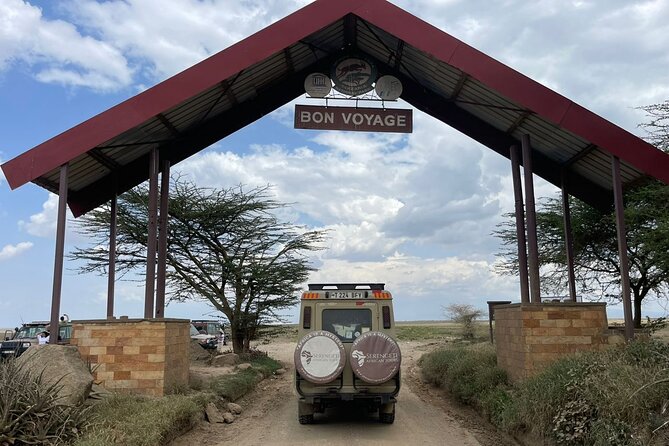
Reviewed · ARUSHA TOURS
6 Day Tanzania Wildlife Mid range Safari
The best thing about this six-day safari is its sweep. You move from Tarangire’s giant baobabs and elephant herds to Lake Manyara, the Serengeti plains, Olduvai Gorge, and the Ngorongoro Crater without having to arrange separate park entries, drivers, meals, and lodges yourself. The Serengeti gets two nights, which gives you more than a quick drive-through.
I like the small maximum of six people, since a compact 4×4 makes wildlife viewing and photo stops easier. I also like the practical package: all park fees, meals, water, lodging, and an English-speaking guide are included. The main consideration is the price and pace. At $2,500 per person, this is not a budget safari, and several days involve long drives on rough roads.
Six useful things to know before booking
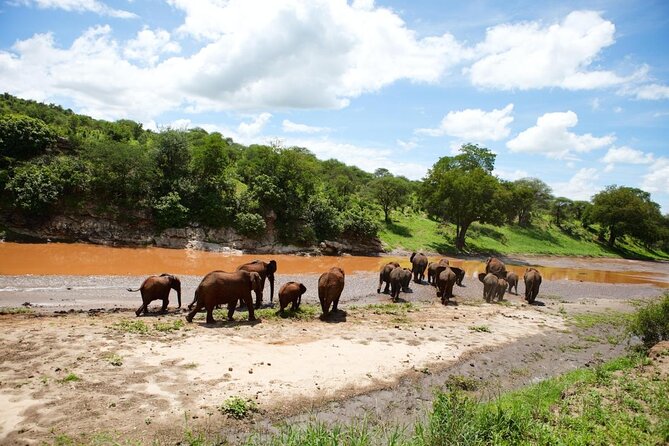
- Two full Serengeti days: You get an afternoon game drive on arrival, then a full day in the Seronera area.
- Four major wildlife zones: Tarangire, Lake Manyara, Serengeti National Park, and Ngorongoro Crater each offer a different kind of safari.
- Small group size: The vehicle holds a maximum of six participants, though you should confirm whether your departure is shared or private.
- Meals are covered: Breakfast, lunch, and dinner are included for all six days, along with mineral water.
- Guides matter here: Past departures have included guides named Godfrey, Kelvin, James, David, Aboh, and Praise. Ask who is assigned to your trip.
- Confirm the final details: The published schedule has a midnight start time and a few lodging names that may change, so confirm pickup time and accommodation before departure.
Why this route works so well in six days
This itinerary gives you a broad sample of northern Tanzania. Tarangire is especially good for elephants and baobabs. Lake Manyara packs several habitats into a small park. The Serengeti supplies the grand scale and the chance to look for predators. Ngorongoro then finishes the trip with a concentrated wildlife drive inside an ancient volcanic crater.
I like the route because it avoids making the Serengeti the only event. If you spend six days in one or two parks, you may see more of one area, but you lose the contrast that makes northern Tanzania so interesting. Here, every transfer changes the scenery and the wildlife possibilities.
The tradeoff is time on the road. Tanzania’s parks are large, and the distances between them are not small. You should expect early breakfasts, bumpy tracks, and long stretches in the safari vehicle. That is part of the experience, but it is worth knowing before you commit.
More Safaris in Arusha
- Balloon Safari & Bush Breakfast in Serengeti – Miracle Experience
★ 5.0 · 1,646 reviews - 4 Days Group Camping Safari
★ 5.0 · 1,101 reviews - 5 Days Group Camping Safari
★ 5.0 · 730 reviews
Day 1: Tarangire elephants and baobab country
The first morning begins after breakfast, with a stop in Arusha for last-minute purchases. This is useful if you need snacks, personal items, or anything you forgot before leaving town. After that, the vehicle heads toward Tarangire National Park for a game drive and picnic lunch.
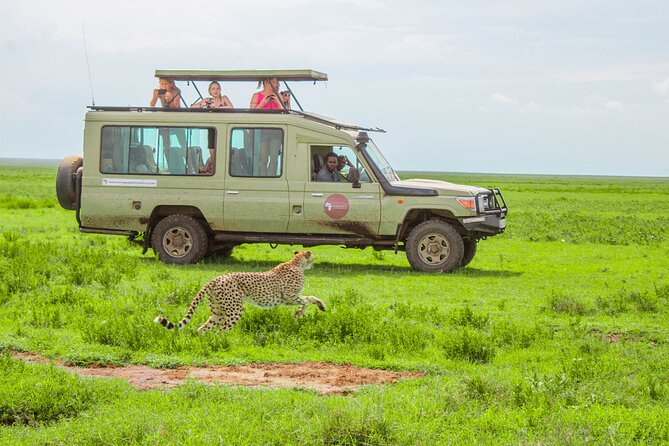
Tarangire is a strong opening act. Its signature sights are enormous baobab trees and large elephant herds. The park also supports wildebeest, zebra, and other animals as part of a seasonal movement through the area. The scale of the elephant gatherings can be impressive, but wildlife is never guaranteed on a particular drive, and seasonal conditions affect where animals are found.
A picnic lunch inside the park keeps the day moving. You do not lose time returning to town for a meal, and you can spend more of the daylight among the trees and open country. The first day can also be tiring, since it combines the Arusha departure, the drive to the park, and a full game drive.
The listed overnight accommodation is Farm of Dream Lodge. Since safari lodging can change according to availability, I would confirm the exact property before paying the balance. That matters if you have dietary needs, room preferences, or a firm idea of what mid-range lodging means to you.
Day 2: Lake Manyara’s compact wildlife mix
The Lake Manyara day is a useful contrast to Tarangire. This national park is smaller, but it contains a surprising range of habitats: acacia woodland, water forest, baobab-covered cliffs, hot springs, swamps, and the lake itself.
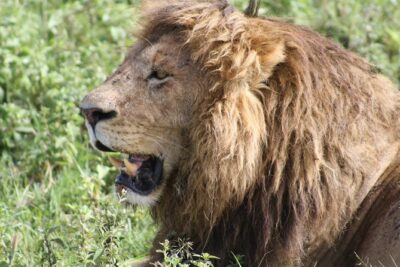
That variety gives you several different types of scenery in a single game drive. The park is particularly associated with baboons and birdlife. Its tree-climbing lions are another draw, though you should treat any specific animal sighting as a possibility, not a promise.
The itinerary includes dinner and an overnight stay at Eileen’s Tree Lodge. This kind of lodge-based evening can be a welcome break after the first two game-drive days. You will have time to eat, rest, and prepare for the longer journey toward the Serengeti.
One detail deserves clarification: the schedule repeats a morning departure from Arusha on Day 2, even though Day 1 already leaves Arusha for Tarangire. That may simply be a template error, but I would ask the operator exactly where you spend the night after Tarangire and where the Lake Manyara day begins.
Day 3: Crossing into the Serengeti
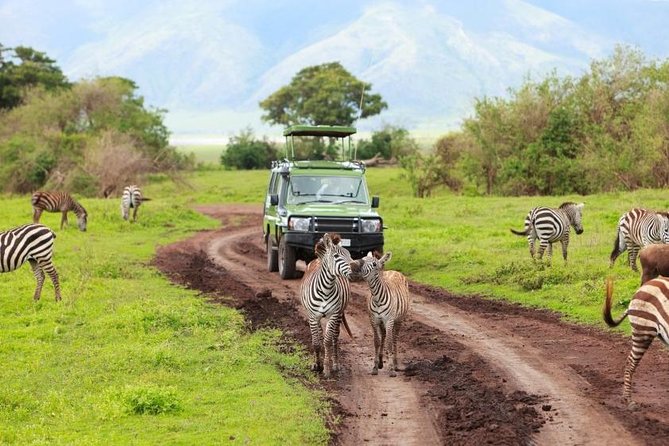
Day 3 is the big transition. After breakfast, you travel through the high farmland around Karatu and the Ngorongoro Conservation Area before descending toward the Serengeti.
The change is dramatic. The cultivated highlands give way to wide open plains, and the sense of space grows as you approach the park. The itinerary directs you toward Seronera, the central Serengeti area, where the Seronera River provides water and draws a broad mix of wildlife.
You arrive in time for lunch, followed by an afternoon game drive. This timing is smart. Instead of spending the entire day simply transferring between parks, you begin looking for wildlife soon after reaching the Serengeti.
The Seronera area is a practical base because it offers access to a central section of the park. You may look for lions, hyenas, cheetahs, elephants, zebra, wildebeest, and other species, depending on the season and the guide’s route. The itinerary also refers to following the wildebeest migration. That can be a major attraction, but migration locations change constantly, so ask the company what conditions are expected for your travel dates.
The overnight stay is at Domel Wilderness Camp. A tented camp can give you a closer sense of being in the park than a conventional hotel, but standards vary from one property to another. Ask whether the accommodation is a permanent tented camp or a seasonal setup, and confirm whether private bathrooms are included.
More Wildlife Tours in Arusha
- Tanzania Wildlife Encounters – 6 Days
★ 5.0 · 277 reviews - 5 Days 4 Nights Tarangire, Serengeti , Ngorongoro & Manyara Wildlife Safari
★ 5.0 · 40 reviews - 4 Days Wildlife Safari and Cultural Experience in Tanzania
★ 5.0 · 23 reviews - 8 Days 7 Nights Tanzania Wildlife & Culture Lodge Safari
★ 5.0 · 17 reviews
Day 4: A full day in the Serengeti
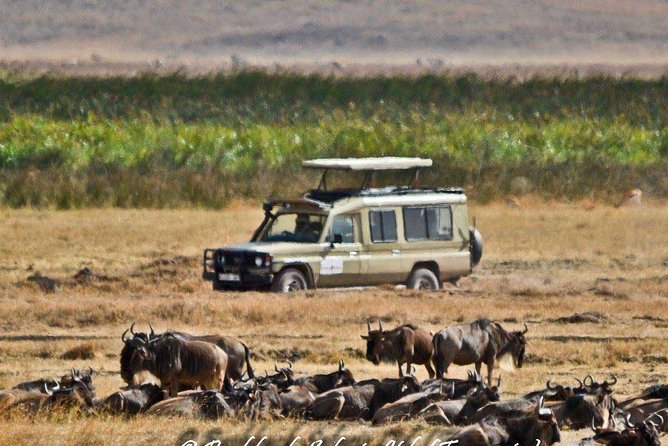
This is the day that gives the safari its breathing room. Instead of packing up immediately and transferring again, you spend the full day on a Serengeti game drive, with the stated aim of tracking the wildebeest migration.
I like having this extra day. A single afternoon in the Serengeti can produce excellent sightings, but it can also be affected by weather, animal movement, or a long transfer. A full day gives your guide more time to adjust the route and gives you more chances to stop when something interesting appears.
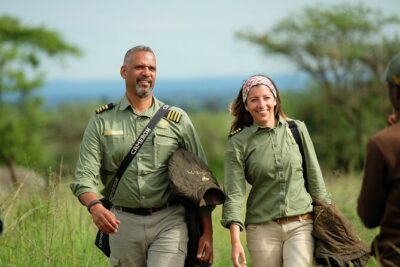
Your guide is a major part of the experience. The strongest praise connected with this company centers on guides such as Godfrey, Kelvin, James, David, Aboh, and Praise. Their reported strengths include spotting animals, explaining plants and wildlife, discussing Maasai culture, and staying patient during long photography stops. The company does not promise a particular guide, so ask in advance if you have a preference.
A full day can also be the most demanding part of the trip. You may spend many hours seated in the 4×4, often on uneven roads, while waiting for an animal to appear. Bring patience. Safari is not a parade where wildlife arrives on schedule.
The second night at Domel Wilderness Camp keeps the route efficient. You do not need to repack and change accommodation after the drive. Dinner and breakfast are included, as are the other meals listed for the trip.
Day 5: Olduvai Gorge and the crater rim
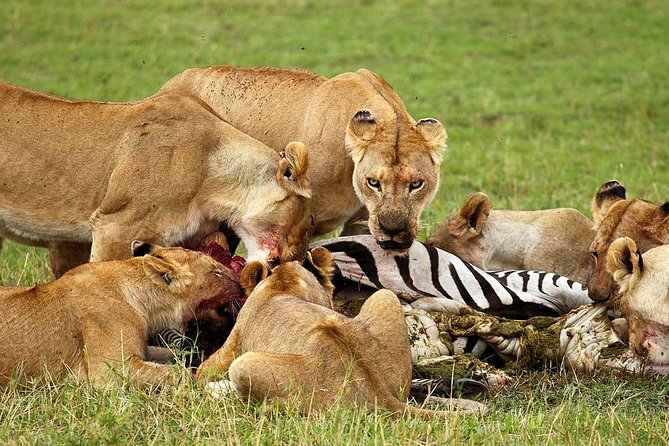
Day 5 begins with an early morning game drive in the Serengeti. Early starts are common on safari because animals can be active before the heat of the day, and the cooler hours can make the drive more comfortable.
After the morning drive, you leave for the Ngorongoro Conservation Area. The route includes a stop at Olduvai Gorge, a major archaeological site associated with the Leakeys and discoveries that helped shape modern understanding of human evolution. The itinerary specifically names Nutcracker Man and Handy Man.
Olduvai adds a human story to a trip that otherwise focuses on animals. It also helps explain why northern Tanzania matters beyond its wildlife. The stop may appeal especially to anyone interested in archaeology, anthropology, or the long story of human origins.
Late afternoon brings a transfer to Ngorongoro Wildlife Lodge for dinner and the night. The lodge’s position is useful for the next morning’s crater descent, since you will not need to make the full approach from a distant base.
This day is a mix of wildlife, driving, and cultural or scientific context. It is not as focused on game viewing as Day 4, but the variety keeps the itinerary from feeling repetitive. Again, confirm the exact accommodation, since the published names include several different properties across the route.
Day 6: Descending into Ngorongoro Crater
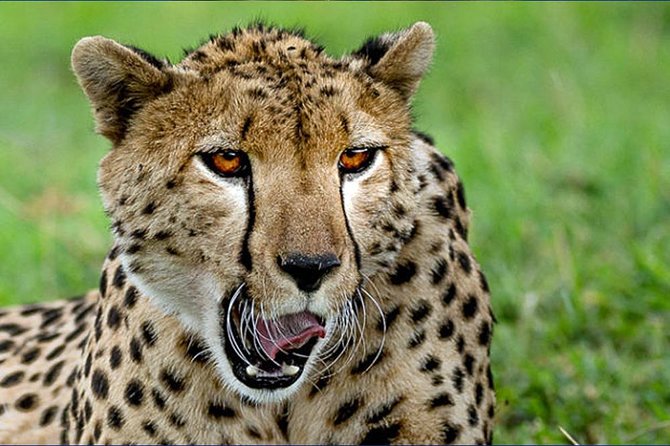
After an early breakfast, you descend more than 600 meters into the Ngorongoro Crater. The crater’s enclosed setting makes it one of Tanzania’s most concentrated wildlife areas, with water and grazing available throughout the year.
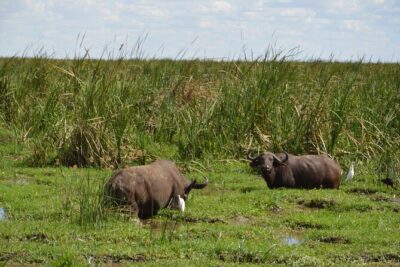
You may see wildebeest, zebra, buffalo, eland, warthog, hippo, and elephants. The predator list includes lions, hyenas, jackals, cheetahs, and the sometimes elusive leopard. A trained guide can help you scan the grass and distant trees, but even a good guide cannot guarantee every species.
The route includes Lake Magadi, a large, shallow alkaline lake in the crater’s southwest. The lake is one of the area’s main features and can attract wildlife, particularly when conditions bring animals toward water. It also gives you a strong sense of the crater’s unusual geography.
Ngorongoro is a fitting final day because you can see many kinds of wildlife in a relatively contained setting. The drawback is that the crater can feel busy compared with the more open Serengeti. Vehicles gather around notable sightings, and the descent and ascent can be rough.
The supplied schedule cuts off partway through the final day, so confirm the finish time and drop-off location. You should also ask how the operator handles your onward transport after the crater visit.
What the $2,500 price includes
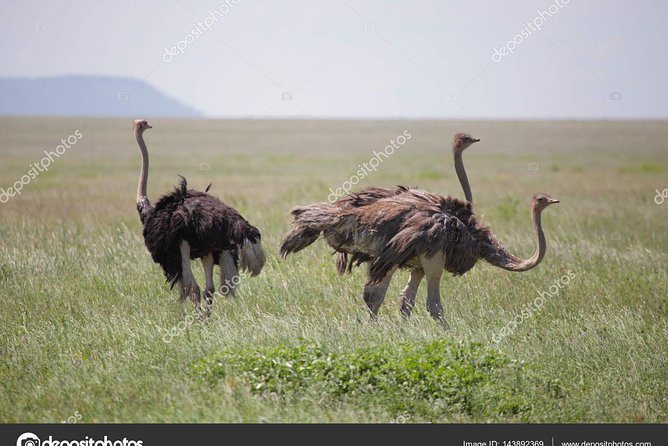
At $2,500 per person, this is a mid-range safari rather than a low-cost camping trip. The price includes transport in a 4×4 safari vehicle, an English-speaking professional guide, mineral water, overnight stays in safari lodges or tented camps, all national park fees, and six breakfasts, six lunches, and six dinners.
That bundle has real value. Park fees alone can make a northern Tanzania safari expensive, and meals add up quickly when you are moving between remote parks. Having the guide, vehicle, lodging, and food organized also saves you from coordinating several separate bookings.
The value depends heavily on the accommodation and group arrangement. A maximum of six people is a good limit for a shared safari, but you should confirm whether the quoted price assumes a group departure or a private vehicle. Ask for the lodge list, room arrangement, and any supplement for solo occupancy.
The package does not include visa fees, tips, or personal spending for souvenirs. Set aside money for those items. Tips are not included, and the guide is one of the people who most affects the quality of your experience.
Food, vehicles, and comfort on the road
Meals include breakfast, lunch, and dinner throughout the six days. The food feedback connected with this company is notably positive, including local dishes, fresh meals, vegetarian choices, and vegan options. Still, tell the operator about dietary needs before departure rather than assuming the kitchen will know.
Lunch may be a picnic during park days, while dinner is served at the lodge or camp. Picnic meals are practical, but you should not expect restaurant service in the middle of a game drive. Carry a small personal supply of snacks if you prefer frequent food breaks.
The 4×4 safari vehicle is the heart of the trip. You will use it for long transfers, game drives, and photography. A maximum of six people helps, but seating comfort still matters on rough roads. Ask whether the vehicle has a pop-up roof, charging access, and enough room for your luggage, since those details are not specified.
The tour offers pickup, but the published start time is listed as 12:00 a.m. That is unusually vague for a six-day departure. Confirm the actual pickup hour and location in Arusha, preferably in writing.
Who should book this safari
I would choose this trip if you want a classic northern Tanzania route and prefer one company to handle the major details. It suits a first safari, couples, families, solo participants comfortable joining a small group, and anyone who wants both the Serengeti and Ngorongoro without building a custom itinerary.
It also suits people who care about the guide. Names such as Godfrey, Kelvin, James, and David appear in the company’s strongest feedback, with special attention given to animal spotting, explanations, patience, and communication. Ask how guides are assigned, then make your priorities clear: photography, birds, predators, plants, or local culture.
I would think twice if you dislike long drives, rough roads, early breakfasts, or changing accommodation. I would also compare prices if you want high-end lodges, a guaranteed private vehicle, or extra nights in the Serengeti.
Solo participants can join, and the small group may make it easy to meet people. Families have also used the company with young children, including a toddler, but the long drives mean you should discuss age, rest needs, and meal arrangements before booking.
Final verdict: a strong all-round safari with details to confirm
I like this six-day Tanzania safari because it covers the country’s essential northern circuit in a sensible order. Tarangire gives you elephants and baobabs, Lake Manyara adds varied habitats and birdlife, the Serengeti provides the broad wildlife experience, Olduvai brings human history, and Ngorongoro finishes with dense animal viewing.
The strongest reasons to book are the two Serengeti nights, the small group limit, the included park fees and meals, and the repeated praise for guides and communication staff such as Linah and Lucas. The main cautions are the long driving days, the unclear midnight start time, and the need to confirm the exact lodges and final-day arrangements.
At $2,500, book it if you want a well-organized mid-range safari with broad coverage and practical inclusions. Before committing, request the confirmed pickup time, lodge list, group status, guide name if available, and meal arrangements. Those answers will tell you if the package matches your idea of comfort and value.
FAQ
How long does the safari last?
The safari lasts approximately six days, with one day each in Tarangire National Park and Lake Manyara, two days in the Serengeti, and two days connected with Ngorongoro Crater and the Conservation Area.
What parks and sites are included?
The route includes Tarangire National Park, Lake Manyara National Park, Serengeti National Park, Olduvai Gorge, and the Ngorongoro Crater.
Is transportation included?
Yes. Transportation is provided in a 4×4 safari vehicle.
How many people can join the tour?
The activity has a maximum of six participants. Confirm with Serengeti African Tours whether your booking is shared or private.
Are meals included?
Yes. The package includes six breakfasts, six lunches, and six dinners, along with mineral water.
Is a guide included?
Yes. A professional English-speaking guide is included. Guide assignments can vary, so ask the company who will lead your departure.
What is not included in the price?
Visa fees, tips, and personal spending for souvenirs or other purchases are not included. You can cancel up to 24 hours before the start time for a full refund. Changes made less than 24 hours before the start time are not accepted.
More six day trips in Arusha
- Private 6-Day Tarangire Manyara Crater and Serengeti with Mid-Range Lodges
★ 5.0 · 238 reviews - 6 Days Private Budget Safari
★ 5.0 · 163 reviews - 6 Days Tanzania Budget Camping Safari
★ 5.0 · 145 reviews - Tanzania Enticing Explorations – 6 Days
★ 5.0 · 106 reviews
Newly listed around Arusha
- 5-Day Private Safari Tour in Tanzania’s Wildlife★ 5.0 · 3 reviews
- 3 Days private safari Tarangire ,Ngorongroro crater &Manyara★ 5.0 · 3 reviews
- 3 Day Sharing Safari – Manyara, Ngorongoro Crater and Tarangire National Parks★ 5.0 · 3 reviews
- Tarangire National Park Day Trip★ 5.0 · 3 reviews
- 2 Days Tarangire and Ngorongoro Crater Tour★ 5.0 · 3 reviews
- 6 -Day Tarangire, Manyara, Serengeti & Ngorongoro★ 5.0 · 3 reviews
- 5 Days Group Camping Safari★ 4.7 · 3 reviews
- 4 Days Tanzania Safari★ 4.5 · 3 reviews
Arusha Tours, compared.
Balloon Safari & Bush Breakfast in Serengeti – Miracle Experience
Read our review →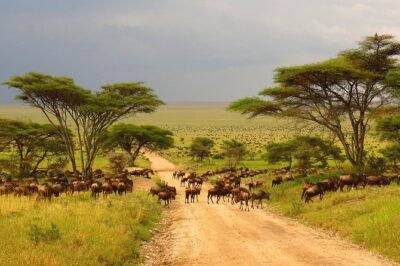
Browse the lists this tour appears in