
Reviewed · SERENGETI & NGORONGORO SAFARIS
6 -Day Tarangire, Manyara, Serengeti & Ngorongoro
The most memorable part of this safari is the change of scenery: elephant country in Tarangire, open Serengeti plains, a collapsed volcanic crater, and Lake Manyara’s forest all fit into six days. You get two nights in the Serengeti, which gives you more time for wildlife than a quick one-night pass-through.
I like the early Serengeti game drive, when sunrise and active animals set the pace, and I like the private format, since only your group takes part. The main drawback is the amount of driving. This is a packed circuit, and some days involve long hours in the vehicle.
Key points to know before booking
- Two nights in the Serengeti: More time in the park means better odds of finding wildlife and less pressure to rush through the central area.
- Four major wildlife areas: Tarangire, Serengeti, Ngorongoro Crater, and Lake Manyara each offer a different setting.
- Private departure: Only your group participates, with pickup offered from your hotel.
- Early start in the Serengeti: The day-three drive leaves around 6 a.m. with breakfast boxes.
- Optional Maasai visit: A 45-minute cultural stop offers contact with Elders, warriors, women, and children in a village setting.
- Five breakfasts, five dinners, and six lunches included: You still need to budget for a visa and tips.
A six-day route with Tanzania’s biggest wildlife names
This safari is designed as a fast but rewarding northern Tanzania circuit. You begin near Arusha, head west toward Tarangire, continue into the Serengeti, then return through Ngorongoro and Lake Manyara.
That order makes sense. The trip builds from elephant country to the wide Serengeti, then brings you to the crater and the forested shores of Manyara. You see a broad sample of northern Tanzania rather than spending all six days in one park.
The trade-off is simple: variety comes at the cost of time on the road. If you want one slow camp-based safari in a single region, this schedule may feel busy. If you want to see the main parks in one trip, it offers a strong overview.
The price is $4,800 per person. That is a serious budget, so value depends on what is included in your final arrangement, particularly lodging, vehicle details, park fees, and the number of people in your private group. The published plan includes meals, park visits, and private participation, but it does not list the accommodation by name. Ask for the full lodging plan before paying, since comfort and location make a large difference on a safari.
More Serengeti and Ngorongoro itineraries:
- Balloon Safari & Bush Breakfast in Serengeti – Miracle Experience
★ 5.0 · 1,646 reviews - 3 Days Serengeti & Ngorongoro Group Camping Safari
★ 5.0 · 574 reviews - 5-Day Highlights mid-Range Crater, Serengeti, Tarangire
★ 5.0 · 296 reviews
Day one: elephants and river country in Tarangire
After breakfast, pickup from your hotel takes you toward Tarangire National Park for a full-day game drive of about eight hours.
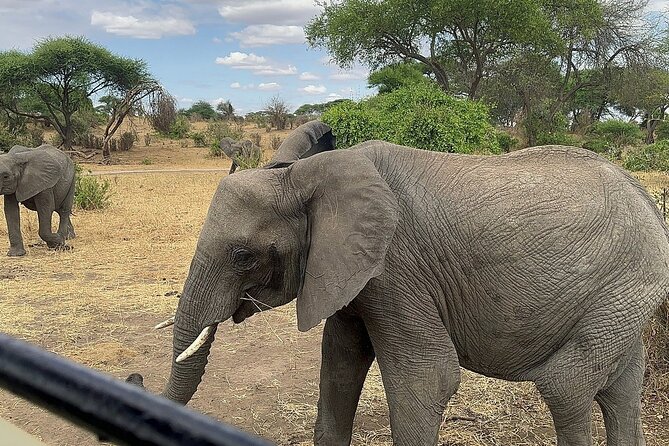
Tarangire is known for its large elephant herds, but it is not a one-animal park. You might find lions, leopards, giraffes, many bird species, and a wide range of habitats. The Tarangire River is especially important during the dry season, when it serves as the park’s only water source.
The Silale Swamp in the southern part of the park is one of the day’s most appealing areas. Water and open ground can draw animals together, making this a good place to sit quietly and watch the movement around you. The scenery also changes as you go, which keeps the drive from feeling repetitive.
I would treat this as more than a warm-up day. Tarangire has a quieter feel than the Serengeti, and that can be part of its appeal. You get a sense of wilderness and solitude before reaching the more famous plains.
The practical point is that a full day in the vehicle can be tiring on your first morning. Wear comfortable clothes, bring sun protection, and be ready for a long outing. The attraction is not only the chance to see elephants, but the slow shift from river country to swamp, bush, and open areas.
Day two: the long road to the Serengeti
After breakfast, you drive toward the Serengeti. The journey is described as taking about three hours, with wildlife viewing along the way, though actual timing can vary with road conditions, stops, and park entry procedures.
The Serengeti is enormous, roughly the size of Switzerland. Most six-day safaris focus on the central Seronera area, as this plan does, rather than trying to cover the entire park. That is sensible. A park this large rewards time in one region instead of spending the whole day chasing a distant point on the map.
The central plains are famous for acacia trees, rocky kopjes, and wide open views. Those kopjes can be useful places to scan for resting lions, while the grasslands give you long sight lines. You might also see large herds and smaller animals that are easy to miss if every drive is focused only on the Big Five.
The migration changes location during the year. The northern Serengeti is associated with dry-season Mara crossings, while the western area can be useful during the green season when herds spread toward the Grumeti River. Ndutu may suit the period between the short rains and the main migration movements. This itinerary does not promise one particular migration sighting, so ask the operator where the vehicle will concentrate during your dates.
An optional 45-minute Maasai village visit is also listed in the itinerary. The stop is in the Ngorongoro Highlands and is intended to introduce you to Elders, warriors, women, and children, along with local beliefs and traditions. It adds a human side to a trip otherwise centered on wildlife.
Because this visit is optional, ask whether it changes the driving schedule or adds a separate fee. It may be a meaningful addition if you want cultural contact, but it is not essential to the wildlife portion of the safari.
Day three: sunrise over the central Serengeti
Day three is the safari’s longest wildlife day, listed at about ten hours. You leave camp around 6 a.m. with breakfast boxes, aiming to reach the plains at sunrise.
This early start matters. The first light gives you a chance to see the Serengeti at its calmest, and animals are often more active around sunrise and sunset. The plan includes a breakfast break around 8 or 9 a.m., followed by more game viewing before returning to camp in the late afternoon.
Two nights in the Serengeti are one of the best features of this package. A single night can make the park feel like a scenic stop between other destinations. Two nights let you spend a full day looking for animals instead of packing up immediately after arrival.
You may see lions, elephants, hyenas, giraffes, zebras, and many bird species. The Big Five are possible, but no safari can guarantee them. Rhino sightings in particular are described as a matter of luck later at Ngorongoro, so keep your expectations flexible.
I also like the inclusion of breakfast boxes. They let you stay out during the productive morning hours instead of returning to camp for a formal meal. The downside is the early alarm and the long day in the vehicle. This is not a leisurely hotel holiday, and you should be comfortable with a schedule shaped by animal activity.
A few more Arusha days to compare
- Tanzania Classic – 7 Days
★ 5.0 · 1,151 reviews - 4 Days Group Camping Safari
★ 5.0 · 1,101 reviews - 5 Days Group Camping Safari
★ 5.0 · 730 reviews - Materuni Waterfalls, coffee tour & Kikuletwa Hot Springs
★ 5.0 · 643 reviews
Day four: the Ngorongoro Crater’s compact wildlife world
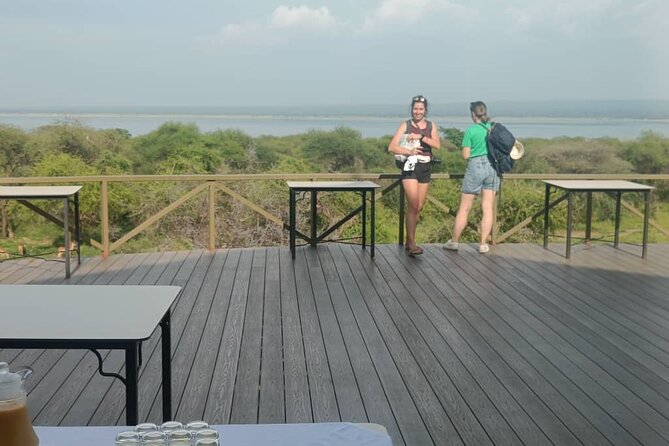
From the Serengeti, you drive about two hours to the Ngorongoro Crater. The day is listed at about ten hours, including the crater visit, lunch, game drive, and the later journey to Karatu town.
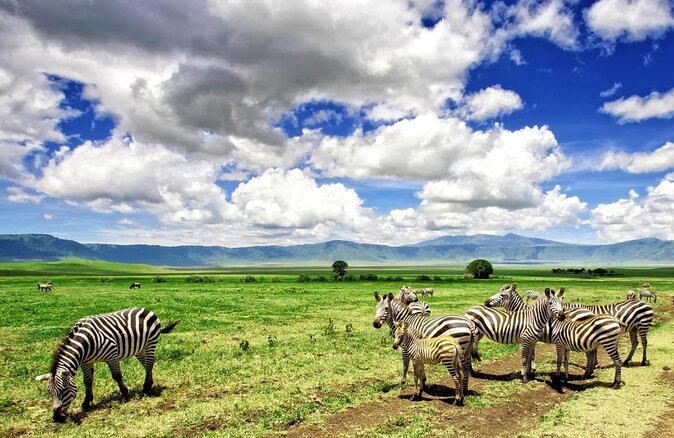
The crater is the world’s largest intact collapsed volcanic caldera. Its enclosed shape creates a compact wildlife area with striking scenery and a strong chance of seeing several species in one outing. Lions, hyenas, Cape buffalo, zebra, serval, and many birds are all possible.
This is also one of the better places on the route to hope for rhino, though the itinerary correctly presents that sighting as luck rather than a promise. The crater’s confined setting can make wildlife easier to find than in a huge open park, but it can also feel busier and more concentrated than Tarangire or the central Serengeti.
Lunch is planned inside the crater, followed by more game viewing. That saves time and keeps the day focused on the park. By late afternoon, you continue to Karatu, a practical base for the next day’s visit to Lake Manyara.
If you prefer quiet, unhurried viewing, ask how much time is allocated inside the crater and how the vehicle handles stops. A crater visit is a major highlight, but the schedule is full, and the trip does not present it as an overnight stay inside the crater itself.
Day five: forest, lake, and the final park drive
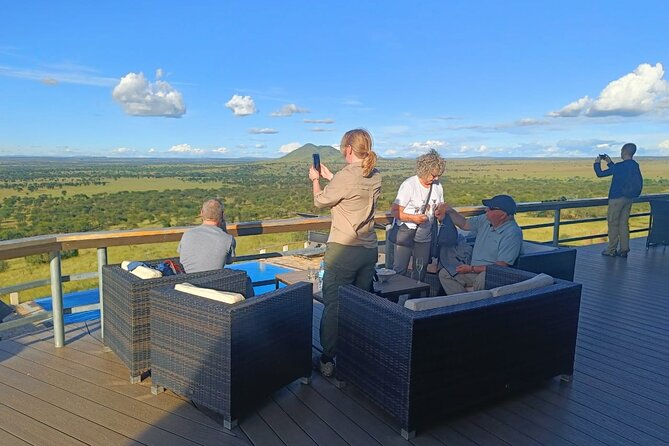
Lake Manyara National Park is the final major stop. The game drive is listed at about seven hours, giving you a shorter day than the Serengeti and Ngorongoro outings.
Manyara offers a different setting again. Its groundwater forest is home to blue monkeys, and you might also see giraffes, elephants, lions, leopards, and birds. In the distance, the lake can appear pink with flamingos, depending on conditions and where the birds are gathered.
The forest is the main reason to keep Manyara on the route. After several days of open grassland and crater views, shaded woodland gives the safari a new rhythm. Blue monkeys are a particularly appealing possibility, especially for anyone who enjoys smaller creatures as much as the large mammals.
The park entrance is near Mto wa Mbu, where village visits and school visits may be arranged. The itinerary does not clearly state that these are included, so consider them optional extras and confirm the cost and timing in advance. Nearby coffee plantations may also offer tours, with farm activity varying by season.
Seven hours is a sensible length for this final drive. You still have time to see the park without adding another exhausting ten-hour outing. At the same time, Lake Manyara is smaller than the Serengeti, and wildlife sightings can depend heavily on water levels, season, and animal location.
Day six: a flexible finish, but ask for the exact plan
The final day is described only as the end of the safari. No stop, departure time, airport transfer, or final hotel arrangement is specified.
That is the one major planning gap in the schedule. Before booking, ask exactly where the safari ends and how you will reach your next hotel, Arusha, or the airport. If your onward flight is on day six, get the transfer time in writing and leave a generous margin.
This matters because a safari route can finish in a different town from where it began. The published information confirms pickup is offered, but it does not spell out the final drop-off arrangements.
Meals, private travel, and day-to-day comfort
Five breakfasts, five dinners, and six lunches are included. That covers the listed six-day schedule, though the exact meal style depends on the accommodation and whether you are eating at camp, lodge, or during a game drive.
Dietary needs such as vegetarian, vegan, and gluten-free meals can be accommodated if you include the request when booking. Do not wait until arrival. State your needs early and ask how packed breakfasts and lunches will be handled during long drives.
This is a private activity, so only your group participates. That gives you more control than a large shared departure, especially when you want to spend extra time at a sighting or adjust the pace. It does not mean the days are unstructured. Park hours, road distances, and animal movements still shape the schedule.
The operator also advises anyone using a CPAP machine to bring a battery-operated unit. That is a useful detail for a camping or lodge-based safari, where reliable power may not always match your sleep schedule.
What the operator’s service adds
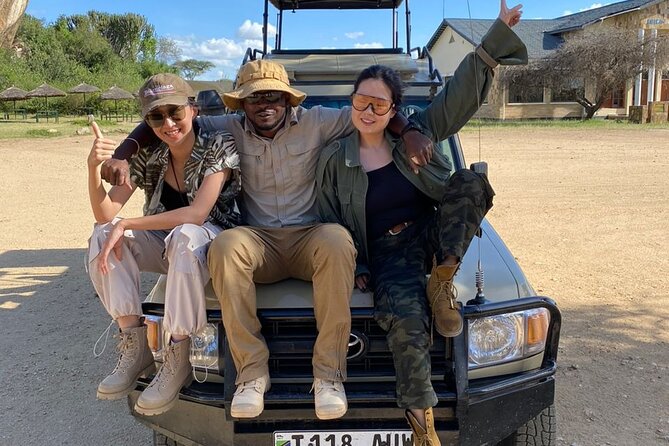
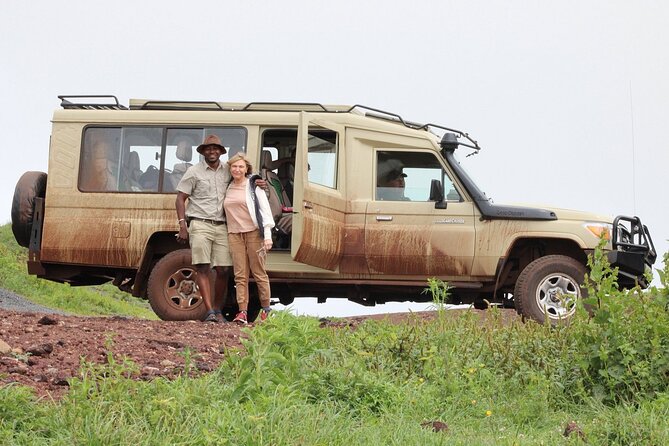
The organizer, Pendo, is described as responsive and professional in the supplied customer feedback. That matters on a safari, where airport arrivals, lodge changes, park permits, dietary needs, and long transfers all require clear communication.
One particularly useful point is that the operator helped arrange a comfortable first stay for people arriving tired after a safari in Kenya. If you are combining countries, share your arrival condition and onward plans rather than assuming the standard schedule will suit you.
The strongest praise centers on organization, accommodation quality, and the feeling of seeing animals in their natural setting. The safari is also credited with producing sightings beyond the Big Five, which is the right way to approach this kind of trip. Elephants, lions, and rhinos are exciting, but birds, monkeys, hyenas, giraffes, and smaller species often make the days more varied.
The sample feedback also mentions a Zanzibar visit, but that is not part of this six-day route. Treat Zanzibar as a possible separate extension, not as something included here.
Is $4,800 per person good value?
At $4,800 per person, this is not a budget safari. It may offer good value if your price includes comfortable accommodation, an experienced driver-guide, private transport, park fees, and the full meal plan.
The two Serengeti nights strengthen the value. So does the mix of four parks, since arranging each transfer and entry separately would take time and coordination. Private use of the vehicle can also justify a higher price if your group values flexibility.
Still, you should ask for a written list of inclusions before deciding. Visa costs, tips, and gratuities are not included. Accommodation names are not provided in the information available, and that makes it difficult to judge the price fairly.
Ask these practical questions before paying:
- What lodges or camps are used on each night?
- How many people share the private vehicle?
- Are park fees included in the $4,800?
- What is the exact pickup and day-six drop-off plan?
- Is the Maasai village visit included or optional at extra cost?
- What happens if you need a special meal or a battery charging arrangement?
Clear answers will tell you far more about value than the headline price alone.
Who should book this safari?
I would recommend it to someone visiting northern Tanzania for the first time who wants the major parks in one organized trip. It suits you if elephants, lions, open plains, crater wildlife, and changing scenery matter more than a slow pace.
It is also a good fit for a private group that wants meals arranged and a single operator handling the route. Families and small groups may appreciate the ability to travel together rather than joining a large departure, though the long game-drive days require patience.
I would hesitate if you dislike early mornings, long drives, or changing accommodation. I would also ask for a more detailed schedule if migration timing is your main goal, since the Serengeti area visited can vary by season.
Should you book the six-day route?
Book it if you want a strong northern Tanzania overview and accept that the schedule is active. Tarangire gives you elephants and river country, the Serengeti provides two nights of wide-open wildlife viewing, Ngorongoro brings animals into a compact volcanic setting, and Manyara adds forest and lake scenery.
Before committing $4,800, confirm the accommodation, park fees, vehicle arrangements, optional cultural visit, and final-day transfer. If those details meet your needs, this private safari offers a well-shaped route with strong variety and a good chance of seeing the Big Five, while leaving room for the less famous animals and quieter moments that make a safari memorable.
FAQ
Where does the safari begin?
The experience is based in Arusha, Tanzania, and pickup is offered from your hotel.
How long is the safari?
The safari lasts approximately six days.
Is this a private safari?
Yes. Only your group participates in the activity.
Which national parks are included?
The route includes Tarangire National Park, Serengeti National Park, Ngorongoro Crater, and Lake Manyara National Park.
How many nights are spent in the Serengeti?
The overview specifies two nights in the Serengeti.
Is the Maasai village visit included?
The Maasai cultural village visit is listed as optional. The 45-minute stop itself is marked as having admission included, but confirm how the optional visit fits your booking.
What meals are included?
The package includes five dinners, five breakfasts, and six lunches.
Can special diets be accommodated?
Yes. Vegetarian, vegan, and gluten-free dietary needs can be accommodated when you provide the details in the booking requirements.
Are visa costs and tips included?
No. Visa costs, tips, and gratuities are not included.
What is the cancellation policy?
You can receive a full refund if you cancel at least 24 hours before the experience start time. Cancellations or changes made within 24 hours are not accepted for a refund.
Newly listed around Arusha
- 5-Day Private Safari Tour in Tanzania’s Wildlife★ 5.0 · 3 reviews
- 3 Days private safari Tarangire ,Ngorongroro crater &Manyara★ 5.0 · 3 reviews
- 3 Day Sharing Safari – Manyara, Ngorongoro Crater and Tarangire National Parks★ 5.0 · 3 reviews
- Tarangire National Park Day Trip★ 5.0 · 3 reviews
- 2 Days Tarangire and Ngorongoro Crater Tour★ 5.0 · 3 reviews
- 5 Days Group Camping Safari★ 4.7 · 3 reviews
- Private 4×4 Vitara Safari in Arusha National Park★ 5.0 · 3 reviews
- 7-Day Mt. Kilimanjaro Hiking: Machame Route★ 5.0 · 3 reviews
Serengeti & Ngorongoro Safaris, compared.


Balloon Safari & Bush Breakfast in Serengeti – Miracle Experience
Read our review →




Private 6-Day Tarangire Manyara Crater and Serengeti with Mid-Range Lodges
Read our review →