
Reviewed · SERENGETI & NGORONGORO SAFARIS
5 Days Serengeti Camping Safari
The big appeal here is the range: in five days, you move from Tarangire’s giant baobabs and elephant families to the wide Serengeti, then down into Ngorongoro Crater and on to Lake Manyara’s flamingo-filled shallows. It is a proper northern Tanzania safari, not a quick park visit with one animal sighting and a long ride home.
I especially like two things. First, transport, meals, camping, and park fees are included, which makes the $1,100 price easier to judge. Second, the trip gives you two full days connected to the Serengeti, rather than treating it as a rushed afternoon stop. The main drawback is the pace: long drives, early starts, shared camping, and a group that may reach as many as 50 people.
Key points to know before booking
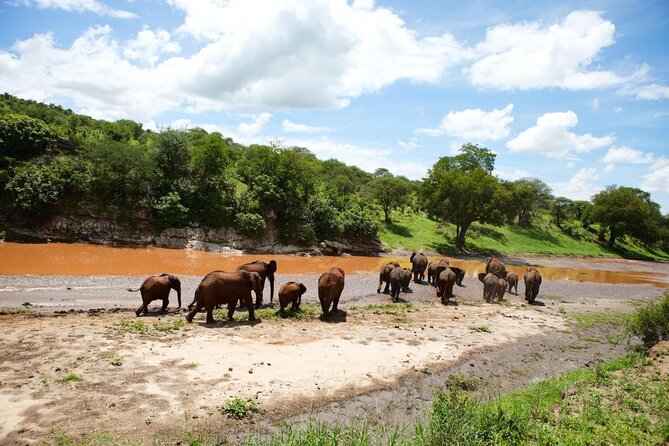
- Four major wildlife areas in five days: Tarangire, Serengeti, Ngorongoro Conservation Area, and Lake Manyara all appear on the route.
- The Serengeti gets the most time: Day 2 takes you there, and Day 3 begins with an early game drive before you leave.
- Camping keeps the price down: You sleep at Simba campsite near Ngorongoro and at a campsite near Lake Manyara.
- Meals are a real strength: Breakfast, lunch, and dinner are included on four days, and the safari chef can provide vegetarian meals and accommodate dietary needs when arranged.
- Wildlife is varied, not limited to the Big Five: Expect chances for elephants, giraffes, zebras, wildebeest, buffaloes, hippos, monkeys, birds, and perhaps lions, cheetahs, leopards, or rhinos.
- Check the pickup time carefully: The practical itinerary says hotel pickup at 7:30 am, while the booking information lists a 12:00 am start.
Why this five-day route works
This safari is built for you if you want the classic Arusha circuit without paying lodge prices. It packs in three famous parks and the Ngorongoro Conservation Area, with a camping setup that lets more of your budget go toward park access and time in the vehicle.
The route also has a sensible wildlife rhythm. Tarangire gives you a strong opening day, the Serengeti supplies the broadest game-viewing area, Ngorongoro concentrates animals into a smaller space, and Lake Manyara finishes with birds, hippos, monkeys, and the chance of seeing its famous tree-climbing lions.
I would not choose this trip if you want leisurely mornings or polished hotel comfort. The schedule calls for early breakfasts, long road transfers, packing at camp, and several hours in the safari vehicle each day. You are trading comfort and spare time for a broad look at northern Tanzania.
The group size deserves attention. The stated maximum is 50 people, though the exact vehicle arrangement is not given. A large departure can make the price attractive for solo participants and couples, but you should ask how many people will share your vehicle before paying. Your view of an animal depends partly on how easily everyone can move and communicate during sightings.
More Safaris in Arusha
- Balloon Safari & Bush Breakfast in Serengeti – Miracle Experience
★ 5.0 · 1,646 reviews - 4 Days Group Camping Safari
★ 5.0 · 1,101 reviews - 5 Days Group Camping Safari
★ 5.0 · 730 reviews
Day 1: Tarangire’s elephants and baobabs
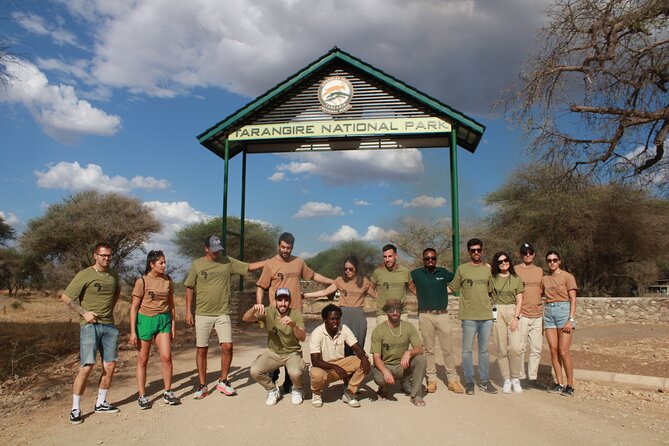
Pickup is scheduled from your Arusha hotel at 7:30 am, followed by a roughly two-hour drive to Tarangire National Park. You meet the guide, chef, and other members of the group before setting out, so the first morning also functions as a quick introduction to the safari team.
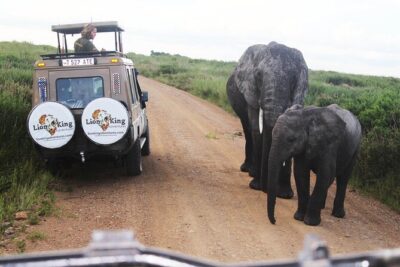
Tarangire is a fine first park because it gives you a good chance to see plenty of large animals without waiting for the Serengeti to warm up. The park is known for ancient baobab trees and one of Tanzania’s highest concentrations of elephants. Watching elephant families interact is the main draw, and it gives the day a more personal feel than simply ticking an animal off a list.
The game drive lasts about six hours. Your guide will follow reported sightings, with special attention to predators such as lions, cheetahs, and leopards. Those cats can be difficult to find, so keep your expectations sensible. Giraffes, wildebeest, and zebras are described as common sights, while predators require patience and luck.
Tarangire is also a good place to appreciate the setting between sightings. The baobabs give the park a distinctive profile, and the mix of open ground and trees creates different viewing conditions. Bring binoculars if you have them, since smaller birds and animals can be easy to miss from the vehicle.
This first day is not only about animals. It is also a test of the camping format. You will quickly learn how much you enjoy long game drives, shared meals, and a safari day that begins early and ends at camp rather than at a lodge with a private room.
Day 2: The long road to the Serengeti
After breakfast, you drive toward Serengeti National Park. The stated drive takes about six hours, including stops, and passes through the Ngorongoro Conservation Area. This is a substantial road day, so it helps to see the journey as part of the safari rather than a minor transfer.
A short stop at the Ngorongoro Crater viewpoint gives you roughly 20 minutes to see the crater from above. The view is a useful preview of Day 4, when you descend to the crater floor. It is also one of the few moments on this route when you are asked to pause and take in the scale of the area rather than search for wildlife.
There may also be an optional Maasai village visit, lasting about 20 to 45 minutes. The visit is intended to introduce you to Maasai culture, including older traditions associated with warriorhood, hunting, and the drinking of animal blood. The itinerary notes that many of these practices belong to the past, with blood drinking as an exception.
Because this stop is optional, ask what it includes and whether there is an additional charge before agreeing. The short visit can add cultural context to a wildlife trip, but it should not be treated as a full cultural program. Your main destination remains the Serengeti.
The Serengeti portion of the day is important because it gets you into the park rather than leaving you with only a distant promise of it. The drive is tiring, but reaching the open plains in the late part of the day can make the effort worthwhile. Your guide’s ability to follow current animal reports matters a great deal here, especially for cats and other harder-to-find species.
Day 3: Early wildlife viewing in Seronera
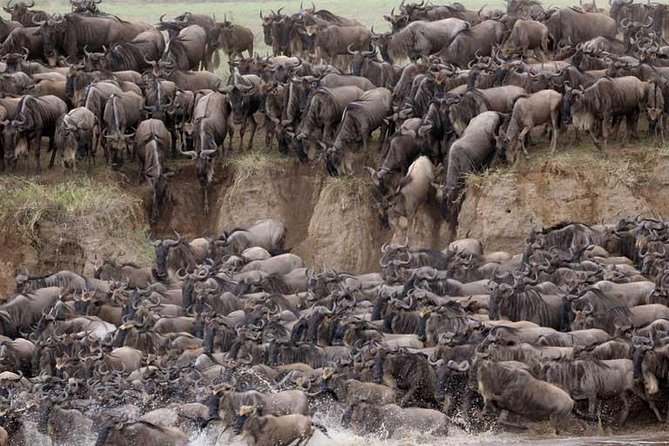
Day 3 begins with an early breakfast and an early game drive in the Seronera area of the Serengeti. This is the most wildlife-focused morning of the trip, and the early start gives you a better chance to catch animals while the day is still cool and active.
The plan is to continue seeing animals until afternoon, return to camp for lunch and packing, then continue with a game drive as you leave the Serengeti. That combination is valuable: you are not simply driving out of the park on a road while wildlife viewing ends at breakfast.
You should expect a long day. The schedule describes about six hours of activity, followed by a roughly two-hour drive toward Simba campsite near the Ngorongoro Crater rim. Some of the best parts of a safari come in the unplanned pauses, but this departure day has a clear practical task, packing camp, and moving on.
The campsite itself may still offer wildlife sightings. That does not mean you should wander around looking for animals. Follow camp rules and your guide’s instructions, particularly after dark. The possibility of animals near camp adds excitement, but it also makes ordinary campsite discipline important.
Overnight at Simba campsite puts you close to the next morning’s crater descent. This saves some backtracking and gives Day 4 an early start. The tradeoff is another night of basic camping after a demanding day in the vehicle.
More Serengeti and Ngorongoro itineraries:
- 3 Days Serengeti & Ngorongoro Group Camping Safari
★ 5.0 · 574 reviews - 5-Day Highlights mid-Range Crater, Serengeti, Tarangire
★ 5.0 · 296 reviews - 3-Day Classic Serengeti Safari
★ 5.0 · 263 reviews - Private 6-Day Tarangire Manyara Crater and Serengeti with Mid-Range Lodges
★ 5.0 · 238 reviews
Day 4: Down into Ngorongoro Crater
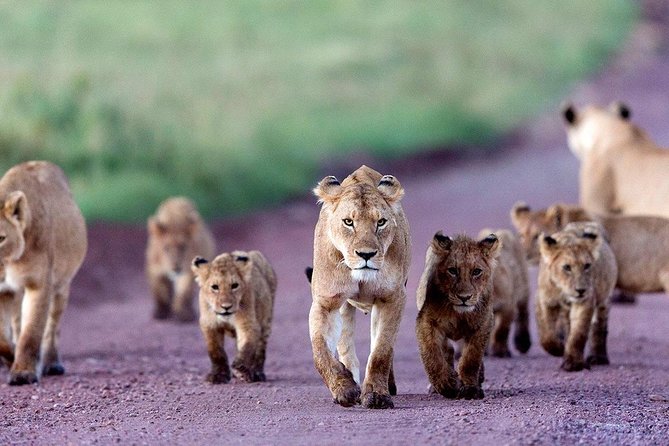
You leave camp after an early breakfast and descend into Ngorongoro Crater at about 6:15 am. The crater floor is one of the strongest parts of this itinerary because many animals are gathered within a compact natural basin. You can spend less time covering empty distance and more time looking across open ground.
The stated goal is to find the black rhino, described as the hardest animal to spot in the crater. That is a useful expectation to set. A rhino sighting is possible, but it is not guaranteed, and your guide cannot manufacture one by following a fixed route.
Other animals may be easier to see from the crater floor. The itinerary names buffaloes, wildebeest, and other wildlife, and the enclosed setting can make game viewing feel concentrated compared with the broad Serengeti. After lunch, you continue the game drive before ascending to camp.
The climb out is followed by packing and the drive toward Fig lodge and campsite near Lake Manyara National Park. This is another long transition day, with breakfast, lunch, dinner, a crater drive, packing, and a transfer all in one schedule. If you are sensitive to motion or need regular rest, make that clear to the tour coordinator before departure.
The best reason to keep this day in the plan is contrast. The Serengeti gives you space and distance. Ngorongoro gives you a contained wildlife setting and a dramatic crater view. You see two very different sides of a northern Tanzania safari within 24 hours.
Day 5: Flamingos, hippos, and Lake Manyara
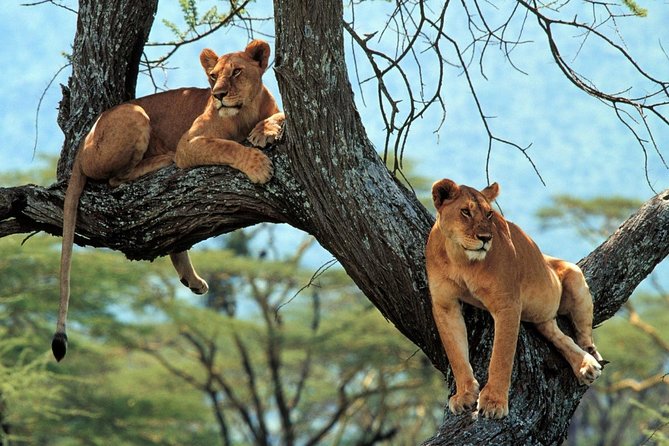
After breakfast, you enter Lake Manyara National Park for the final game drive. The park is known for flamingos and other waterfowl, so this is the day to slow down and pay attention to birds rather than focusing only on large mammals.
Lake Manyara is also associated with tree-climbing lions. The itinerary is candid that they are rarely seen, which is exactly the right way to approach this part of the trip. You might see them, but you should not book the safari solely for that possibility.
The day includes a visit to the hippo pool, where you can get a close look at hippos from the designated viewing area, plus a stop at the hot spring. The game drive may also bring buffaloes, wildebeest, warthogs, vultures, eagles, and monkeys.
This final park rounds out the animal list nicely. You get birds, primates, grazing animals, predators if luck cooperates, and large water animals. It is a pleasant finish after the more demanding Serengeti and crater days.
Lunch is included on Day 5. The schedule lists the activity duration as six minutes, which is almost certainly a clerical error rather than a realistic game-drive length. Ask the operator to confirm the final day’s timing, including the end point and expected return time, before you book flights or onward transport.
Camping, food, and the value of $1,100
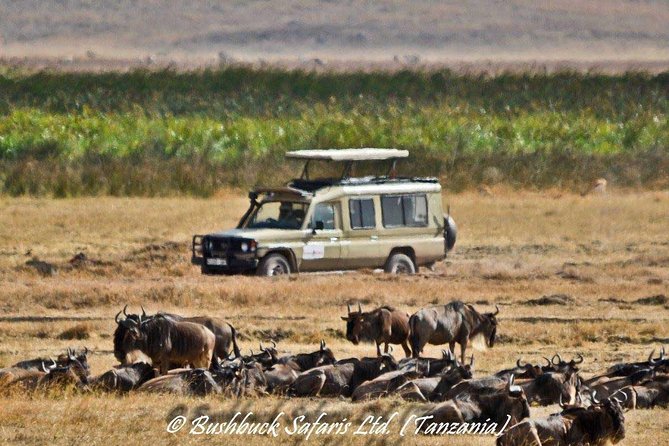
At $1,100 per person, this is priced as a budget camping safari, not a lodge-based holiday. The value comes from combining transport, park fees, and meals in one package while covering four major wildlife areas.
The included meals are a notable advantage. Breakfast, lunch, and dinner are provided on four days, with lunch on the final day. The safari chef prepares the food at camp, and the package has been able to handle vegetarian meals and gluten-free needs in individual cases. Tell the operator about dietary restrictions before departure, not when the cooking pot is already on the fire.
Food can make or break a camping trip. Here, the cooking receives unusually strong praise, including fresh-feeling menus, generous portions, and even proper plates and cutlery on some departures. That does not turn a campsite into a restaurant, but a satisfying hot meal matters after a dusty game drive.
Park fees are included, which is important in Tanzania. These charges can make independent planning expensive and complicated, so having them bundled into the price makes comparison easier. Tips and visas are not included, so keep those costs separate when setting your total budget.
The package also includes transport and mobile ticketing. Pickup is offered, and group discounts are listed. Confirmation is received at booking. The practical point is to confirm the pickup time, vehicle size, campsite names, and final drop-off details in writing.
Guides, chefs, and the human side of the trip
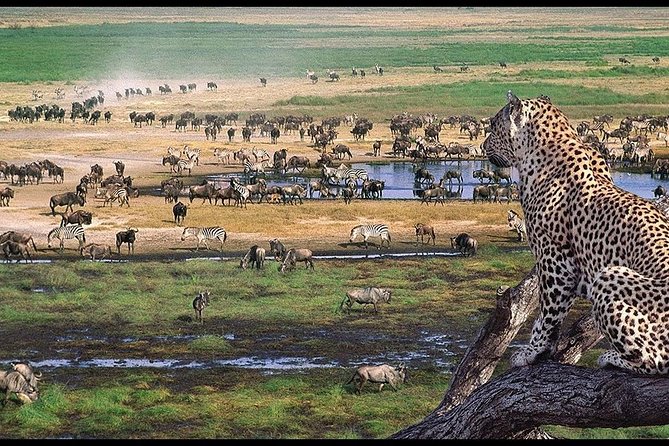
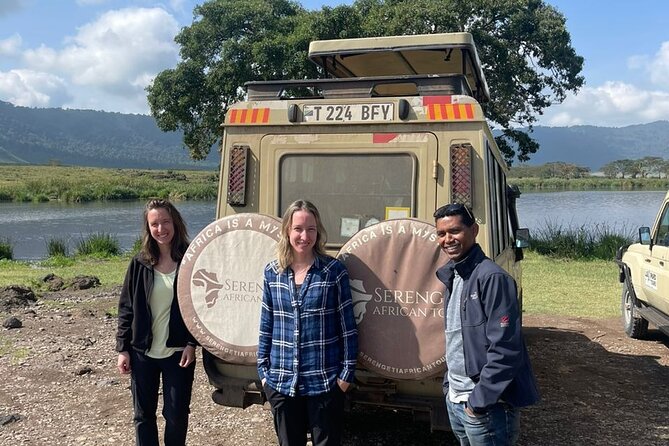
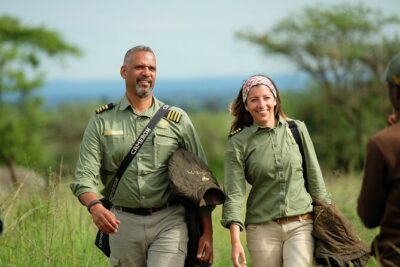
The staff can shape the safari as much as the parks do. Names associated with strong service on this route include guides David, Emmanuel, Brison, Kelvin, and Lucas, along with coordinators Linah, Viola, and Safina. Staffing can change, so treat these as examples rather than promised assignments.
The most useful guide quality here is not a rehearsed speech. You want someone who can read the reports, position the vehicle carefully, explain animal behavior, and keep the group moving when a sighting ends. Several departures have also included special touches such as birthday cakes and help when luggage went missing before the safari began.
The office coordinators appear to be an important contact point. Linah and Safina are specifically associated with quick replies and detailed planning, while Lucas is praised for giving clear briefings. Use that contact before the trip to ask the questions the standard description leaves open.
There is also a caution. One departure had complaints about poor organization despite good food, campsites, and wildlife. That tells me you should not assume every group will have the same level of coordination. Confirm the daily plan, sleeping arrangements, meal needs, and pickup details before your start date.
Who should book this safari?
I would recommend this trip to you if you want a broad first safari, prefer spending on parks rather than lodges, and are comfortable sharing a vehicle and campsite. Solo participants can meet an international group, while couples and small friend groups can keep costs lower than on a private itinerary.
It also suits people who want the classic Big Five possibility but understand that wildlife is never guaranteed. The route gives you several chances at lions, leopards, cheetahs, elephants, buffaloes, and rhinos, yet the smaller scenes, birds, monkeys, baobabs, and elephant behavior may be just as memorable.
I would look elsewhere if you need luxury, private space, short driving days, or a tightly controlled schedule. The maximum group size of 50 is the biggest question mark, so ask for the expected number in your departure and the number assigned to each vehicle.
The cancellation terms are generous if your plans change: you can receive a full refund by canceling at least 24 hours before the local start time. Changes or cancellations made later are not accepted for a refund.
Should you book it?
Book this 5-day Serengeti camping safari if your priority is seeing a lot of northern Tanzania on a controlled budget. The strongest features are the broad route, two Serengeti-focused days, included park fees, and a camp chef who may make basic accommodation easier to enjoy.
Before paying, get clear answers about the pickup time, group size, vehicle sharing, campsite arrangements, final-day timing, and dietary requests. If those details suit you, $1,100 offers a substantial wildlife itinerary with plenty of variety. If comfort and privacy matter more than coverage, choose a shorter private trip or a lodge-based plan instead.
FAQ
What parks and wildlife areas does the safari visit?
The route visits Tarangire National Park, Serengeti National Park, the Ngorongoro Conservation Area including Ngorongoro Crater, and Lake Manyara National Park.
How much does the safari cost?
The listed price is $1,100 per person. Group discounts are offered.
Are park fees and meals included?
Yes. Transport, all park fees, breakfast, lunch, and dinner are included according to the package details. Dinner is included on four days, while lunch is included on all five days.
Where does the safari start?
The tour is based in Arusha and offers pickup. The itinerary states hotel pickup at 7:30 am, but the booking information lists a 12:00 am start, so confirm the correct time with Serengeti African Tours.
Is camping included?
Yes. Accommodation includes an overnight stay at Simba campsite near the Ngorongoro Crater. The route also includes camping near Lake Manyara, listed as Fig lodge and campsite.
Is a Maasai village visit included?
The Maasai village visit is optional. It is scheduled during the journey toward the Serengeti and lasts about 20 to 45 minutes.
What is not included in the price?
Tips and visas are not included. You should also confirm any personal expenses or optional activity charges with the operator before departure.
More five day trips in Arusha
- 5 Days Camping Tarangire, Serengeti & Ngorongoro crater & Visiting Maasai
★ 5.0 · 229 reviews - Tanzania Simba Safari – 5 Days
★ 5.0 · 217 reviews - 5 Days Budget Private Safari, Tanzania
★ 5.0 · 191 reviews - 5-Day Private Northern Tanzania Safari from Arusha
★ 5.0 · 182 reviews
More camping safaris in Arusha
- 2 Days Tarangire and Ngorongoro Group Camping Safari
★ 5.0 · 146 reviews - 6 Days Tanzania Budget Camping Safari
★ 5.0 · 145 reviews - 3 Day Serengeti National Park & Ngorongoro Crater Camping Safari
★ 5.0 · 142 reviews - 3 Days Tarangire, Ngorongoro & Lake Manyara Group Camping Safari
★ 5.0 · 102 reviews
Newly listed around Arusha
- 5-Day Private Safari Tour in Tanzania’s Wildlife★ 5.0 · 3 reviews
- 3 Days private safari Tarangire ,Ngorongroro crater &Manyara★ 5.0 · 3 reviews
- 3 Day Sharing Safari – Manyara, Ngorongoro Crater and Tarangire National Parks★ 5.0 · 3 reviews
- Tarangire National Park Day Trip★ 5.0 · 3 reviews
- 2 Days Tarangire and Ngorongoro Crater Tour★ 5.0 · 3 reviews
- 6 -Day Tarangire, Manyara, Serengeti & Ngorongoro★ 5.0 · 3 reviews
- 5 Days Group Camping Safari★ 4.7 · 3 reviews
- Private 4×4 Vitara Safari in Arusha National Park★ 5.0 · 3 reviews
Serengeti & Ngorongoro Safaris, compared.
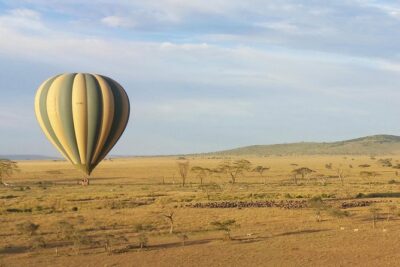
Balloon Safari & Bush Breakfast in Serengeti – Miracle Experience
Read our review →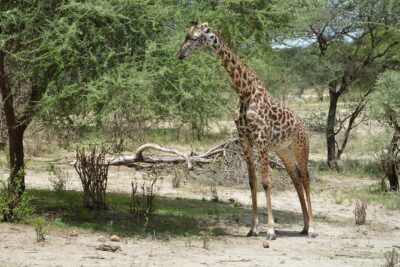
Private 6-Day Tarangire Manyara Crater and Serengeti with Mid-Range Lodges
Read our review →
5 Days Camping Tarangire, Serengeti & Ngorongoro crater & Visiting Maasai
Read our review →Browse the lists this tour appears in