
Reviewed · ARUSHA TOURS
5 Days Safari in Tanzania | Camping and Lodge Safaris
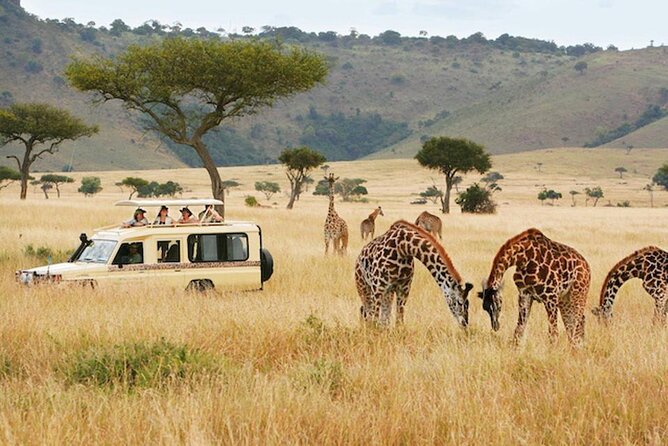
Tarangire’s elephant herds and giant baobabs make a fine opening act, but the real prize is the rhythm of the route: broad Serengeti game drives followed by an early descent into Ngorongoro Crater. You get three major wildlife areas in five days, with time for both dramatic scenery and serious animal watching.
I like the small maximum group of seven, which should give you more room in the safari vehicle than a large coach tour. I also like the practical setup: private transportation, park fees, all meals, WiFi on board, and a guide using radio contact with other safari vehicles to help locate wildlife. The main drawback is the amount of road time, especially on Day 2, and the advertised mention of Lake Manyara does not match the detailed five-day schedule, which visits Tarangire, Serengeti, and Ngorongoro instead.
Key points to know before booking
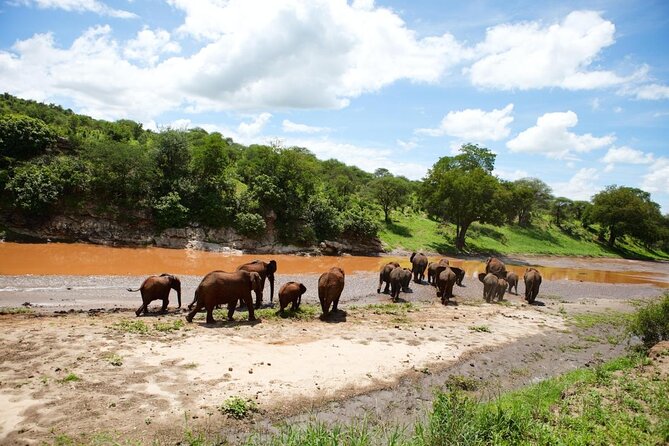
- Tarangire opens the trip with elephants and baobabs: Expect a first game drive soon after leaving Arusha, with lunch at a picnic site and more wildlife viewing until sunset.
- Two full Serengeti days give you useful search time: Day 3 is the strongest wildlife day, with an optional sunrise drive and game drives through the Seronera area.
- Ngorongoro Crater is the grand finale: An early descent improves your chance of seeing animals, including the rare black rhino, before the crater floor grows busier.
- The group is capped at seven people: This is a useful middle ground between a private vehicle and a large shared safari.
- Lodge and camping options are not identical: Your accommodation may be a camp or lodge in the Serengeti, with a mid-range lodge near Karatu on the final night.
- The operator’s strength is trip coordination: Names that appear repeatedly in the arrangements include Bruno, Meshack, Amani, Frankie, Isaac, and David, so confirm your assigned guide before departure.
From Arusha to Tarangire in about two hours
Your safari begins at Travel Wise Safari in Arusha, the main base for northern Tanzania trips. Pickup is offered, but the stated meeting point is the company location in Arusha Urban, so confirm the exact pickup arrangement before you set out.
The drive toward Tarangire takes about two hours. You pass through the Masai Steppe and along the Arusha to Dodoma road, a pleasant start that lets you watch the city give way to open country. There is also a supermarket stop if you need last-minute personal items. That small detail matters. Once you enter the parks, shopping is no longer a casual option.
At Tarangire, the driver handles the gate paperwork while you prepare for your first game drive. The park is known for large elephant groups and big baobab trees scattered across the grassland. These trees give Tarangire a strong sense of place, and the elephants make it an excellent first stop for anyone hoping to see large mammals quickly.
Lunch is served at a designated picnic site. Afterward, you continue with afternoon game viewing until sunset, then check in at a lodge or camp. The exact property is not fixed in the information provided, so ask what standard is included and whether your booking uses a permanent camp, a tented camp, or a lodge.
This first day is well paced for a safari. You do not spend the morning crossing half the country before seeing animals. The tradeoff is that Tarangire is only an introduction here. You get one afternoon rather than a full day, so the guide’s route choices matter.
More Safaris in Arusha
- Balloon Safari & Bush Breakfast in Serengeti – Miracle Experience
★ 5.0 · 1,646 reviews - 4 Days Group Camping Safari
★ 5.0 · 1,101 reviews - 5 Days Group Camping Safari
★ 5.0 · 730 reviews
The long road to the Serengeti
Day 2 is the trip’s biggest travel day. After breakfast in Tarangire, you cross the floor of the Great Rift Valley, climb the escarpment, and continue through the Ngorongoro Conservation Area toward Serengeti National Park.
The drive is scenic, but it is still a long day in a safari vehicle. The schedule allows roughly 12 hours, including stops and game viewing. If you dislike long road journeys, this is the part of the trip to consider carefully. If you see the road as part of the experience, the changing views help break it up.
Lunch is likely to be at a picnic site near Naabi Hill Gate, where you can stretch your legs before entering the Serengeti. From there, the afternoon game drive continues toward camp or lodge. You check in later in the day for dinner and overnight accommodation.
The Serengeti is famous for its seemingly endless plains, and this transition gives you a sense of its scale. You are not being taken straight to a compact wildlife park. The open distances are part of the experience, but they also explain why sightings can require patience.
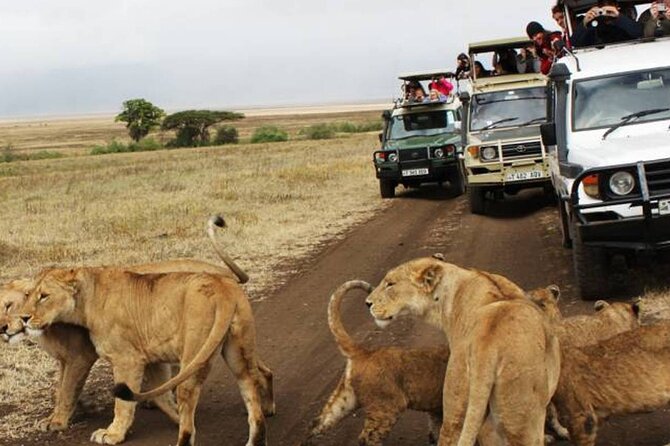
The operator says the guide stays in radio contact with other safari vehicles through VHF radios. That can be useful when animals are spread across a large area. It does not guarantee a sighting, but it gives your guide more current information when deciding where to spend the afternoon.
A full day in the Serengeti
Day 3 is the heart of the itinerary. You may begin with an early sunrise game drive, then return for breakfast before spending the rest of the day in the park.
The early start is worth considering. The schedule specifically points to rare nocturnal species and early-rising animals, as well as game gathered near roads to avoid the morning dew. You may also get softer light for photographs and cooler conditions before the middle of the day.
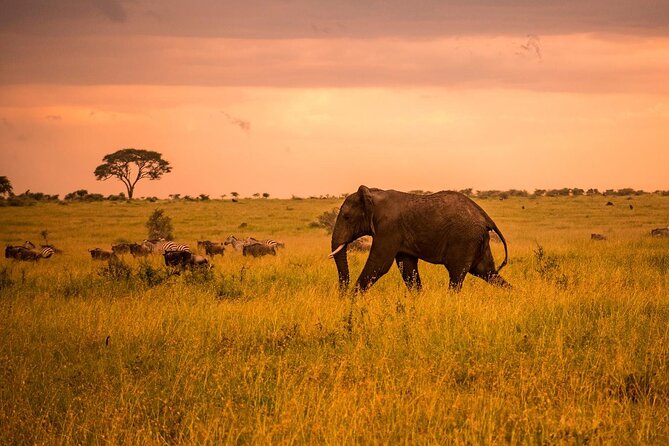
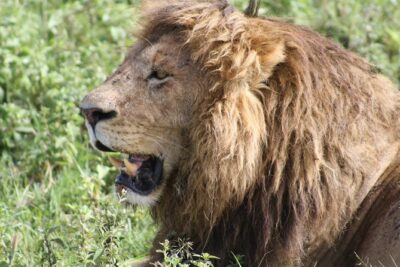
After breakfast, the plan is a full day of game drives. The Serengeti can produce a wide range of sightings, including wildebeest, big cats, and other animals of the African plains. The supplied information highlights the possibility of seeing the Big Five, and one account describes a leopard hunt. That kind of moment is never promised, but a full day gives you more opportunities than a short afternoon stop.
You should expect a search rather than a staged show. Your guide may follow fresh information from the radio, check river valleys, or spend time in areas where animal activity is likely. The Seronera River Valley is one of the places named for its wildlife and bird life, and it returns on Day 4.
The camping or lodge choice affects the feel of this night. A camp can put you closer to the sounds and atmosphere of the park, while a lodge usually offers a more conventional base. The schedule allows either, so ask before payment if you have a firm preference.
The last Serengeti drive and Karatu overnight
After breakfast on Day 4, you leave your Serengeti accommodation and take one final game drive. The guide may choose the Seronera River Valley or another part of the park, using radio reports and local conditions to decide where to go.
This morning gives you one more chance to find animals you missed earlier. It also keeps the trip from ending the moment you leave your main Serengeti camp. You are still watching the plains while heading toward the Ngorongoro Conservation Area.
Later in the afternoon, you drive to Karatu for dinner and an overnight stay. The named examples are Marera Valley Lodge or Country Lodge, both described as mid-range options near Karatu. The actual property should be confirmed in advance, since accommodation can affect comfort, room type, and the time needed to reach the crater gate.
This night is strategically placed. Instead of leaving the Serengeti and then making a very early, long approach to Ngorongoro, you sleep closer to the crater. It sets up the final morning properly.
More lodge safaris in Arusha:
- 4 Days Tanzania Lodge Safari With Two Nights at Serengeti
★ 5.0 · 62 reviews - 4 Days lodge safari Tarangire , Ngorongoro crater & Walking
★ 5.0 · 39 reviews - 4 Days 3 Nights Tarangire Serengeti & Ngorongoro Lodge Safari
★ 5.0 · 24 reviews - 7 Days Tanzania Mid-range lodge safari
★ 5.0 · 22 reviews
Early into Ngorongoro Crater
Day 5 begins with breakfast at the lodge, followed by a descent into Ngorongoro Crater. You may descend after breakfast or take a packed breakfast so you can reach the crater floor as early as possible.
That timing is important. The crater walls rise roughly 600 to 650 meters, creating a contained setting with a high concentration of wildlife. The area is often compared to a natural zoo, though the animals here are wild and the setting is far more dramatic than that phrase suggests.
The stated aim is to improve your chance of seeing rare animals such as black rhinos. Sightings are never certain, but an early start gives you more time before the morning develops. With luck, you might also see several of the Big Five in one day.
You spend most of the morning on crater-floor game drives, stopping for a picnic lunch before continuing toward the end of the tour. The final transfer details are not fully spelled out, so confirm whether you return to Arusha or simply finish back at the original meeting point after the crater visit.
The crater is a strong finale because it offers a different type of wildlife viewing from the Serengeti. The Serengeti gives you distance and open horizons. Ngorongoro gives you steep walls, a compact wildlife area, and the possibility of several major sightings in a concentrated morning.
What the $1,800 price really covers
At $1,800 per person, this is not a budget day trip. It is a five-day safari with transport, park fees, meals, and accommodation in either camps or lodges. The price also includes breakfast four times, dinner four times, and lunch on all five days.
Private transportation adds value, especially when the vehicle is shared by no more than seven people. You are not paying only for fuel and a seat. You are paying for park access, planning across several protected areas, a safari vehicle, guide services, and the time required to reach the Serengeti and return through the crater region.
The value is strongest if you want a ready-made northern Tanzania route without arranging each park, meal, transfer, and overnight stay yourself. It is less attractive if you want luxury lodges, a private two-person vehicle, or a slower schedule with more nights in each park. Those details are not clearly included, so ask what accommodation level the $1,800 price buys.
International flights are not included. Extra accommodation before or after the safari is also excluded, as are personal expenses and tips. The suggested tipping guideline is $10 per person per day. A group discount may be available, which could improve the cost for families or friends booking together.
Camping, lodges, and comfort expectations
The title allows for both camping and lodge safaris, but the daily details do not lock in one style. Tarangire and Serengeti may use a camp or lodge, while the Karatu night is described as a mid-range lodge.
That flexibility can be useful, but it also creates a question you should settle before booking. Ask for the names of the properties, the room or tent type, and whether the same accommodation standard applies to every night. If you value a hot shower and a conventional room, request lodges. If the setting matters more than formal comfort, camping may suit you better.
Past arrangements also include positive comments about attractive accommodation and a night in the middle of the Serengeti. At the same time, one safari account notes a hot-water problem and another mentions a flight delay. These are reminders to keep expectations practical. Safari accommodation can be very comfortable, but small service issues are possible.
WiFi is included on board, which helps with basic communication during the long drives. It should not be treated as a guarantee of strong service in every remote area.
Guides, vehicles, and the human side of the trip
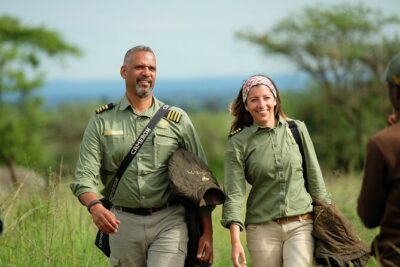
The strongest personal praise is directed toward the company’s communication and guide teams. Bruno is repeatedly described as responsive during planning, patient with changes, and willing to arrange airport pickup, hotels, transfers, and customized plans. Meshack is also named for quick communication and careful organization.
On the road, guides including Amani, Frankie, Isaac, and David are singled out for professionalism, kindness, skill, and effort. Frankie is associated with strong driving and a leopard sighting, while Amani and Sam are credited with helping one group see the Big Five. These names are useful, but your assigned guide may be different.
Ask who will drive your vehicle and how many people will be in it. The maximum is seven, not necessarily seven on every booking. The difference between a small shared group and a private vehicle can affect how much room you have for camera equipment and how easily you can choose your preferred stopping position.
The VHF radio system is another practical advantage. A guide who communicates with other vehicles can adjust the day as conditions change. Still, good guiding is not just locating an animal. It also means allowing time for the sighting, explaining what you are seeing, and keeping the pace sensible.
The Lake Manyara question
The overview refers to Lake Manyara National Park and describes its baboons and flamingos. Yet the detailed five-day plan does not include Lake Manyara. It lists Tarangire, Serengeti, Ngorongoro Conservation Area, and Ngorongoro Crater.
That difference matters. If flamingos and Lake Manyara are a priority, ask the operator to confirm the exact route before booking. You should not assume the park is included simply because it appears in the general description.
The detailed schedule is already full. Adding Lake Manyara would likely require changing a day, reducing time in another park, or extending the trip. The current route favors Tarangire, two substantial Serengeti days, and a crater visit.
Who should book this safari?
I would recommend this trip to you if you have five days, want the classic northern Tanzania circuit, and prefer having the major arrangements handled in one package. It suits first-time safari visitors who want elephants, open plains, big cats, and a strong chance of seeing many animals without organizing several separate bookings.
It is also a good fit for friends and family groups. Group discounts may be available, and the seven-person maximum keeps the party relatively small. The included meals and park fees make budgeting easier.
I would hesitate if you need a relaxed pace. Day 2 is long, and the itinerary packs three major areas into five days. I would also hesitate if Lake Manyara is essential, if you require confirmed luxury accommodation, or if you want a fully private vehicle for just two people.
The advertised rating is 4.9 from 31 ratings, with 100 percent recommending the experience. That is a strong record, and the repeated praise for Bruno’s communication and the guides’ effort supports it. Still, confirm the exact accommodation, guide, group size, and Lake Manyara question before paying.
Should you book it?
Book this safari if your priority is maximum wildlife variety in five days and you are comfortable with long drives, flexible accommodation, and a busy schedule. Tarangire gives you elephants and baobabs, the Serengeti gives you two serious days of searching, and Ngorongoro provides a memorable final morning.
Before booking, get the route and lodging details in writing. If those match your expectations, $1,800 can be a fair price for a well-organized northern Tanzania safari with meals, transport, park fees, and a small group. If you want more comfort or more time in each park, pay for a longer or more tailored itinerary instead.
FAQ
Where does the safari start?
The safari starts at Travel Wise Safari in Arusha Urban, Arusha, Tanzania. Pickup is offered, so confirm the exact pickup point when booking.
Where does the safari end?
The activity ends back at the meeting point. Confirm the final transfer details after the Ngorongoro Crater visit.
How long is the safari?
The experience lasts approximately five days. Each listed day is scheduled for about 12 hours.
How large is the group?
The maximum group size is seven travelers. The booking may be smaller, but the provided information does not guarantee a private vehicle for each reservation.
Is Lake Manyara included?
Lake Manyara appears in the general description, but the detailed five-day schedule lists Tarangire, Serengeti, Ngorongoro Conservation Area, and Ngorongoro Crater. Confirm the route with Travel Wise Safari if Lake Manyara is important to you.
What meals are included?
The package includes four breakfasts, four dinners, and five lunches. Picnic lunches are planned at designated sites during the park days.
Is accommodation included?
Accommodation is included during the safari. The plan allows for camping or lodges in some locations and names Marera Valley Lodge or Country Lodge near Karatu as possible mid-range options.
Is transportation included?
Private transportation is included, along with WiFi on board. The safari begins in Arusha and uses a safari vehicle for the park drives and transfers.
What is not included in the price?
International flights, personal expenses, accommodation before or after the safari, and tips are not included. The suggested tipping guideline is $10 per person per day.
More five day trips in Arusha
- 5-Day Highlights mid-Range Crater, Serengeti, Tarangire
★ 5.0 · 296 reviews - 5 Days Camping Tarangire, Serengeti & Ngorongoro crater & Visiting Maasai
★ 5.0 · 229 reviews - Tanzania Simba Safari – 5 Days
★ 5.0 · 217 reviews - 5 Days Budget Private Safari, Tanzania
★ 5.0 · 191 reviews
Newly listed around Arusha
- 5-Day Private Safari Tour in Tanzania’s Wildlife★ 5.0 · 3 reviews
- 3 Days private safari Tarangire ,Ngorongroro crater &Manyara★ 5.0 · 3 reviews
- 3 Day Sharing Safari – Manyara, Ngorongoro Crater and Tarangire National Parks★ 5.0 · 3 reviews
- Tarangire National Park Day Trip★ 5.0 · 3 reviews
- 2 Days Tarangire and Ngorongoro Crater Tour★ 5.0 · 3 reviews
- 6 -Day Tarangire, Manyara, Serengeti & Ngorongoro★ 5.0 · 3 reviews
- 5 Days Group Camping Safari★ 4.7 · 3 reviews
- 7-Day Mt. Kilimanjaro Hiking: Machame Route★ 5.0 · 3 reviews
Arusha Tours, compared.
Balloon Safari & Bush Breakfast in Serengeti – Miracle Experience
Read our review →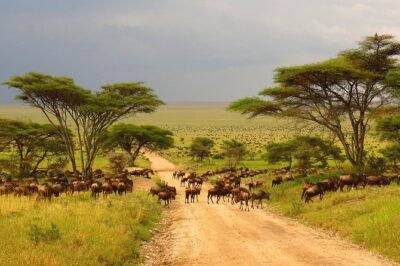
Browse the lists this tour appears in