
Reviewed · ARUSHA TOURS
6-Day Tanzania Adventures Safaris – Group Joining Camping Safaris
The big draw here is the four-park route. In six days, you move from baobab-dotted Tarangire to the endless grass of the Serengeti, then down into Ngorongoro Crater and across Lake Manyara. It is a brisk sampler of Northern Tanzania’s best-known wildlife areas, with two full Serengeti days giving the trip some needed breathing room.
I like the small group limit of seven, which keeps the safari vehicle from feeling crowded. I also like the practical package: park fees, a custom-built 4×4, camping equipment, a guide, and all listed breakfasts, lunches, and dinners are included. The main drawback is the pace. Long drives and several early starts are part of the bargain, and camping suits you best if you can handle simple nights after full days in the bush.
Key points to know before booking
- Four major parks in six days: Tarangire, Serengeti, Ngorongoro Crater, and Lake Manyara all appear on one route.
- Two full days in the Serengeti: This gives you more than a quick pass through the park and improves your chance of seeing varied wildlife.
- Small shared group: The maximum is seven people, using a private 4×4 for the group rather than a private vehicle for each person.
- Camping equipment is supplied: Tents, sleeping mats, chairs, and tables are included, along with five dinners and five breakfasts.
- A strong fit for solo visitors: The small group format can make it easier to join a social safari without paying for a vehicle alone.
- Pickup begins in Arusha at 7:30 a.m.: The tour returns to the same meeting point after Lake Manyara on Day 6.
Why this six-day route works
Northern Tanzania offers several parks within reach of Arusha, but they do not all feel alike. Tarangire is known for elephants and baobabs. Serengeti delivers wide grasslands and predators. Ngorongoro packs a great deal of wildlife into a natural bowl, while Lake Manyara adds forest, cliffs, birds, and the chance of seeing tree-climbing lions.
That variety is the strongest reason to choose this tour. You are not spending the whole trip in one type of habitat. The tradeoff is time on the road. The itinerary lists driving and game-drive days of roughly six to nine hours, so you should expect a full schedule rather than a slow, private retreat.
The group cap matters, too. A maximum of seven people is a sensible middle ground. You get the social side of a shared safari, but the vehicle should be less crowded than a large minibus. The included 4×4 is custom-built for safari use and comes with fuel and a driver-guide.
The staff named in past trip accounts include guides Giovanni and Elias, with cooks including Joaquin and Prospe. Staff assignments can change, so do not book on the assumption that one particular person will lead your departure. Still, the consistent picture is of a team that puts care into guiding, cooking, and keeping the trip moving. Amani is also described as a quick WhatsApp contact during the planning stage, a useful point for a trip that involves deposits, dates, and airport or hotel arrangements.
More camping safaris in Arusha:
- 4 Days Group Camping Safari
★ 5.0 · 1,101 reviews - 5 Days Group Camping Safari
★ 5.0 · 730 reviews - 3 Days Serengeti & Ngorongoro Group Camping Safari
★ 5.0 · 574 reviews
Day 1: Elephants and baobabs in Tarangire
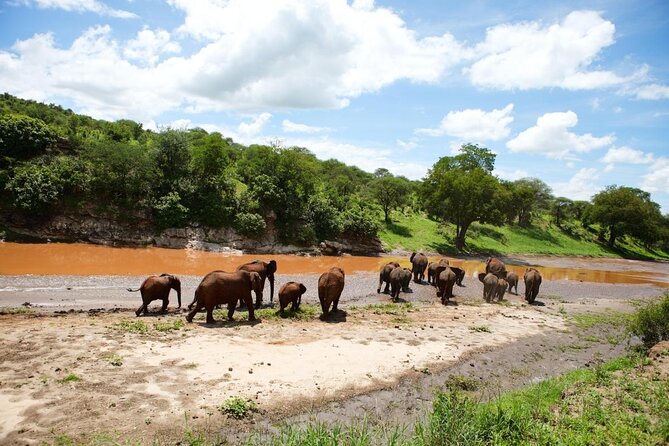
Your safari begins with a 7:30 a.m. start from Arusha and a drive to Tarangire National Park. The park is large, open, and marked by seasonal swamps, savannah, and enormous baobab trees. Those water sources help draw animals together, especially during drier periods.
Tarangire is especially good for elephant sightings. The park is known for large herds, and the animals are accustomed to safari vehicles, allowing close observation under the guide’s supervision. You may also see buffaloes, zebras, giraffes, hartebeests, antelopes, and a long list of bird species. More than 550 bird species are associated with the park.
The day is listed at about seven hours, including the drive and an extended game drive. Lunch and dinner are included, followed by a night at a campsite outside the park. That first night is a useful adjustment to the camping rhythm, though you should not expect a lodge-style room or a late, leisurely evening.
I would pay close attention to the guide’s animal-spotting skills here. Tarangire can look open at first glance, but the best sightings may be near water, in the shade of trees, or among thicker vegetation. The guide’s ability to position the vehicle and explain animal behavior will shape your first safari day.
Day 2: Crossing the highlands into Serengeti
Day 2 takes you toward Serengeti National Park through Tanzania’s highlands, where corn, coffee, and wheat are grown. This change in scenery is part of the experience. You leave the more settled agricultural areas behind and reach the broad grasslands that give Serengeti its name, a Maasai word often translated as endless plains.
The Serengeti is famous for the great migration of wildebeest and zebras. The herds move according to rain, so no fixed calendar can promise exactly where they will be. From November and December, many animals move toward the southern plains, while the longer rains from April to June are linked with movement back toward the north.
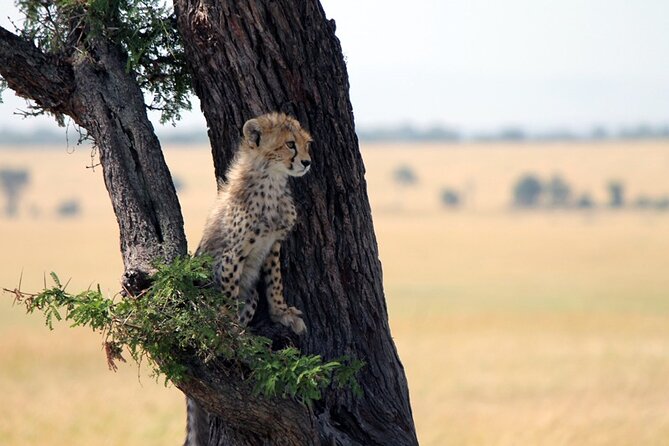
That seasonal uncertainty is important. This tour can give you a chance to see the migration, but you should not treat the route as a guaranteed migration-viewing trip at every time of year. Even without the main herds, the Serengeti offers impalas, buffalo, crocodiles, hippos, lions, leopards, and cheetahs.
The day runs about eight hours and includes the journey into the park. You will likely spend much of it seated in the 4×4, watching the scenery change and stopping for wildlife when conditions allow. Kopjes, isolated rock formations rising from the grass, are worth watching closely because predators may use them as lookout points.
Day 3: A full day on the Serengeti plains
Day 3 is the itinerary’s best gift: a full day set aside for Serengeti game drives. You are not simply passing through on the way to somewhere else. The schedule runs for about nine hours and includes breakfast, lunch, and dinner.
A full day gives your guide more flexibility. You can spend time in areas with animals instead of rushing to cover a long transfer. You might see large groups of zebras and wildebeest, or you may focus on resident wildlife such as buffalo, impala, hippos, and crocodiles.
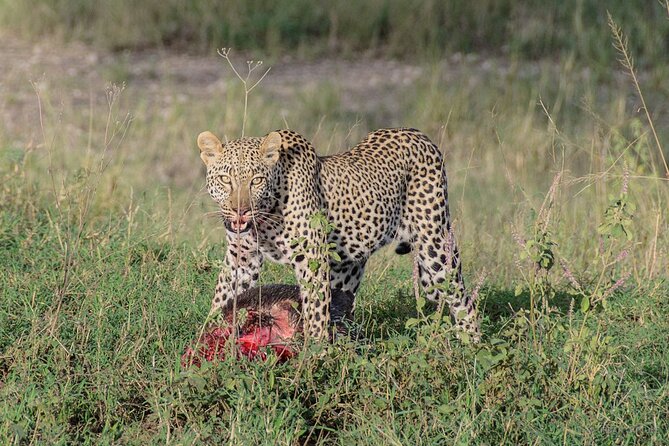
This is also your strongest chance to look for big cats. Lions may be near prey or resting in the shade. Leopards can be difficult to spot, and cheetahs are often found in more open ground. The guide’s experience matters here, since locating wildlife is only part of the job. Knowing when to wait quietly and when to move on can make the day more rewarding.
You spend the night at a campsite in the Seronera area, a central part of the Serengeti. Camping keeps the cost below a lodge-based safari and places you close to the park experience, but it also means simple facilities. The supplied equipment includes tents, sleeping mats, chairs, and tables. Ask before departure what personal bedding and other small camping items you should bring, since the package description does not list every personal item.
More six day trips in Arusha:
- Tanzania Wildlife Encounters – 6 Days
★ 5.0 · 277 reviews - Private 6-Day Tarangire Manyara Crater and Serengeti with Mid-Range Lodges
★ 5.0 · 238 reviews - 6 Days Private Budget Safari
★ 5.0 · 163 reviews - 6 Days Tanzania Budget Camping Safari
★ 5.0 · 145 reviews
Day 4: From Serengeti wildlife to the crater rim
After an early breakfast, you take another morning game drive in the Serengeti before heading toward Ngorongoro Crater. The early start is worthwhile for wildlife, when some animals are more active and the light is often better for viewing.
You may still have time to look for the Big Five: lion, elephant, buffalo, rhino, and leopard. The reserves are unfenced, so animals move freely rather than performing for visitors. That freedom is one of the great strengths of a Tanzanian safari, though it also means sightings can never be guaranteed.
The journey then changes from open plains to the high crater rim. Your first view into Ngorongoro is one of the trip’s visual highlights. The crater floor contains grassland, streams, and a large concentration of animals, while the rim offers a very different sense of scale.
You camp on the crater edge that night. The itinerary specifically places the campsite there, so sunrise and sunset views are a major part of the appeal. The day lasts about eight hours and includes all three meals.
The crater-rim campsite is also where you will notice the limits of camping most clearly. Conditions can be cooler than on the plains, and the night comes after another long day. Bring layers and keep your expectations practical. The value is the setting, not hotel-style comfort.
Day 5: Down into Ngorongoro Crater
Early risers get the best chance to see the sun come up over the crater rim. After breakfast, the vehicle takes the steep, adventurous track down into the crater.
Ngorongoro is about 610 meters deep and covers roughly 260 square kilometers. Its enclosed shape supports a dense concentration of wildlife, estimated at around 25,000 animals. In a relatively short game drive, you may see wildebeest, zebras, gazelles, elephants, and more than 500 bird species.
The crater is one of the easiest places on this route for concentrated wildlife viewing. You are not covering the huge distances of the Serengeti, so the day can feel more focused. There is also a chance of seeing the endangered black rhino, although you should treat that as a possibility, not a promise.
The game drive lasts about six hours, with lunch included. This shorter day is welcome after the longer Serengeti schedule, though the crater road and the early start still make it active. The crater is popular for good reason, and other safari vehicles may be present. The setting remains extraordinary, but do not expect solitude.
Day 6: Birds, primates, and tree-climbing lions at Lake Manyara
Your final park is Lake Manyara National Park, named for the shallow alkaline lake that covers about 200 square kilometers. It is smaller than the Serengeti and Tarangire, but its mix of habitats gives the last day a different feel.
You may pass through open plains, woodland filled with baboons and other primates, and cliffs dotted with baobabs. Hippos, elephants, and wildebeest are also found here. The park is particularly well known for birdlife, with more than 400 species, and seasonal flamingos may be seen around the lake.
Lake Manyara is also associated with tree-climbing lions. Seeing one is never certain, but the possibility adds a distinctive target to the final game drive. The park can be a good closing chapter because it offers more than large mammals. If you enjoy birds, monkeys, and changing scenery, it may be more interesting than a simple final drive back to Arusha.
After about seven hours, including the game drive and return journey, you arrive back in Arusha in the early evening. Breakfast and lunch are included. The schedule is still demanding, so do not plan an important evening flight from Arusha unless you have confirmed the timing carefully and allowed plenty of extra time.
Camping, food, and the shared 4×4
The camping setup is designed to provide the essentials without asking you to bring a complete expedition kit. Tents, sleeping mats, chairs, and tables are included. National park fees, fuel, and the safari vehicle are also covered, which removes several large costs from the final price.
Meals are unusually important on a camping safari. This package includes five breakfasts, six lunches, and five dinners. The cooks associated with the experience include Joaquin and Prospe, and food is a recurring strength of the trip. Still, the supplied information does not specify menus or arrangements for special diets, so tell the operator about dietary needs before booking.
The vehicle is described as a private custom-built 4×4, but the tour itself is group joining. In plain terms, you share the vehicle with the small group assigned to your departure. That is different from having a private vehicle for just you and your companions.
A shared vehicle makes the safari more affordable and often more sociable. The small maximum of seven limits the downside, but seating preferences can still matter. If you are particular about window space or photography angles, discuss that with the operator before departure rather than assuming the vehicle will work like a private charter.
Is $1,904.77 a fair price?
At $1,904.77 per person, this is not a budget day trip. It is a six-day, four-park safari with park fees, camping gear, fuel, guiding, and meals included. Those items are costly on their own, so the package offers solid value if you want a broad Northern Tanzania route without arranging every part yourself.
The price is especially sensible for a solo visitor who wants to join a group. A private safari vehicle can raise the cost sharply, while this format spreads transport and guiding costs across a maximum of seven people.
You still need to budget for international flights, a Tanzanian visa, tips, laundry, communication, souvenirs, and other personal spending. Those exclusions are normal, but they matter when comparing the headline price with your full trip budget.
The best value comes from the two full Serengeti days and the inclusion of Ngorongoro Crater. A shorter itinerary might visit one or two parks, but this route gives you four distinct settings. The cost is less attractive if you dislike camping, long drives, or group travel.
Who should book this safari?
I would choose this trip if you want a first taste of Tanzania’s northern parks and prefer a set plan. It suits solo visitors, couples willing to share a vehicle, and friends who want wildlife variety without building a custom itinerary.
It is also a good fit if you care about animal viewing more than luxury accommodation. The trip gives you a strong mix of elephants, possible big cats, migrating herds, rhinos, hippos, birds, and primates.
I would hesitate if you want slow mornings, private guiding, or comfortable lodge rooms every night. The early breakfasts, long game drives, campsite nights, and shared vehicle require patience. You should also confirm what camping personal items are supplied and explain any food requirements before paying.
Free cancellation is available up to 24 hours before the start time for a full refund. Changes or cancellations inside that window are not refunded, and the operator may offer another date or a full refund if the minimum group size is not met.
Should you book the 6-Day Tanzania Adventures Safari?
Book it if your priority is maximum park variety in six days at a price that includes the major safari costs. Tarangire, Serengeti, Ngorongoro, and Lake Manyara each add something different, and the two Serengeti days keep the schedule from becoming a simple tick-box tour.
The decision comes down to comfort and pace. You will spend long hours in a vehicle and sleep in camps, but you gain a small group, a supplied safari setup, and a route packed with wildlife possibilities. For a solo visitor or first-time safari-goer who wants a broad, practical introduction to Northern Tanzania, this is a strong choice. If you want privacy and luxury, pay more for a private lodge safari instead.
FAQ
Where does the safari start?
The safari starts in Arusha, Tanzania, at 7:30 a.m.
Where does the safari end?
The activity ends back at the meeting point in Arusha after the Lake Manyara visit.
Which national parks are included?
The route includes Tarangire National Park, Serengeti National Park, Ngorongoro Crater, and Lake Manyara National Park.
How large is the group?
The maximum group size is seven people.
Is the safari private or shared?
It is a group joining safari. The group uses a private custom-built 4×4 vehicle, but the vehicle is shared by the people assigned to that departure.
Is camping equipment included?
Yes. Tents, sleeping mats, chairs, tables, and other listed camping equipment are included.
Are meals included?
Yes. The package includes five breakfasts, six dinners, and six lunches.
Are park fees included?
Yes. National park fees are included. International flights, the Tanzanian visa, tips, laundry, communication, souvenirs, and personal spending are not included.
Can I cancel for a full refund?
You can cancel up to 24 hours before the experience starts for a full refund. Cancellations or changes made less than 24 hours before the start time are not refunded.
Newly listed around Arusha
- 5-Day Private Safari Tour in Tanzania’s Wildlife★ 5.0 · 3 reviews
- 3 Days private safari Tarangire ,Ngorongroro crater &Manyara★ 5.0 · 3 reviews
- 3 Day Sharing Safari – Manyara, Ngorongoro Crater and Tarangire National Parks★ 5.0 · 3 reviews
- Tarangire National Park Day Trip★ 5.0 · 3 reviews
- 2 Days Tarangire and Ngorongoro Crater Tour★ 5.0 · 3 reviews
- 6 -Day Tarangire, Manyara, Serengeti & Ngorongoro★ 5.0 · 3 reviews
- 5 Days Group Camping Safari★ 4.7 · 3 reviews
- 4 Days Tanzania Safari★ 4.5 · 3 reviews
Arusha Tours, compared.

Balloon Safari & Bush Breakfast in Serengeti – Miracle Experience
Read our review →






Browse the lists this tour appears in