
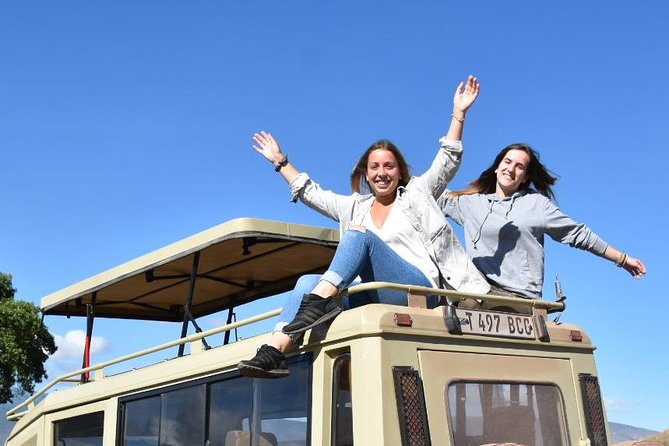
Reviewed · SERENGETI & NGORONGORO SAFARIS
4 days Tanzania group safari to Serengeti, Crater and Tarangire
A night in a tent in the Serengeti, with animal sounds carrying through the darkness, is the heart of this four-day safari. You move from elephant country in Tarangire to lion country in the Serengeti, then down into Ngorongoro Crater for one of Tanzania’s best chances to see rhinos.
I like the small group limit of six, which gives you a better chance of seeing through the vehicle windows and asking plenty of questions. I also like the practical route: Tarangire, Serengeti, and Ngorongoro each offer a different setting, so the trip feels varied rather than like four days in one park.
The main drawback is the pace. You cover long distances, rise around 6 a.m. on two mornings, and spend many hours on rough park roads. The schedule also contains a little confusion about which night is spent at which campsite, so I would confirm the exact overnight plan before paying.
Key points to know before booking
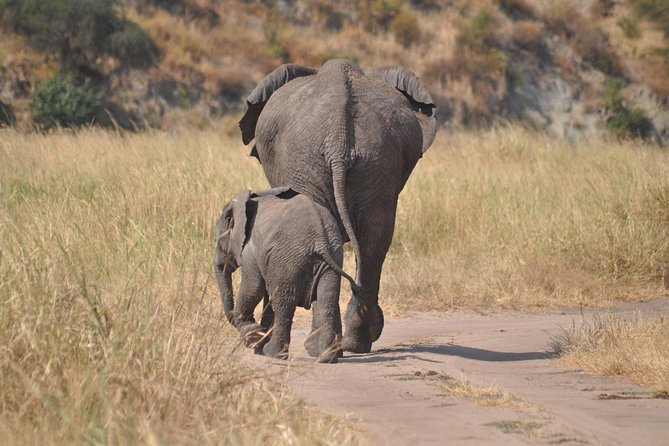
- Tarangire begins with elephants and baobabs: Your first full game drive brings large elephant groups, unusual trees, birds, and the possibility of lions, leopards, cheetahs, giraffes, zebras, and monkeys.
- Serengeti camping gives the trip its wild edge: You spend time inside the park and camp near the action, with the sounds of the bush around you at night.
- Ngorongoro is the rhino day: The crater floor is noted for rhinos, hippos, flamingos, and a dense mix of large animals.
- A guide makes a major difference: Philbert, Ayubu, and Faraja are praised for animal spotting, patience, explanations, and language skills, including German in Philbert’s case.
- Meals are part of the package: Four lunches, three breakfasts, and three dinners are included, with repeated praise for fresh, varied cooking.
- The group stays small: A maximum of six people suits anyone who wants a social safari without sharing a crowded vehicle.
What the four-day route is really like
This is a compact northern Tanzania safari from Arusha. In four days, you visit three major wildlife areas, but you do not get a leisurely lodge holiday. You get early starts, road time, game drives, camp meals, and a strong chance to see a wide range of animals.
The price is listed at $950 per person. That is a serious amount of money, but the value depends on what you want. You receive pickup in Arusha, park drives, three breakfasts, four lunches, three dinners, and camping arrangements. Flights, health insurance, and a Tanzania entry visa are not included.
For a private luxury safari, this is not the product. For a small-group trip with several parks, meals, guides, and camping, the price looks aimed at the budget and midrange end of the safari market. You should confirm exactly which park fees, camping costs, vehicle costs, and transfers are covered, since the package information lists admission differently for different days.
The days are long. Day 1 is about six hours of safari activity, Day 2 about six hours, Day 3 about eight hours, and Day 4 about five hours. Those figures do not tell the whole story because driving between parks adds road time. Bring patience, water, sun protection, and a willingness to spend much of the day seated.
More Serengeti and Ngorongoro itineraries:
- Serengeti Balloon Safari and authentic bush breakfast
★ 5.0 · 2,480 reviews - Balloon Safari & Bush Breakfast in Serengeti – Miracle Experience
★ 5.0 · 1,646 reviews - 3 Days Serengeti & Ngorongoro Group Camping Safari
★ 5.0 · 574 reviews
Tarangire: elephants beneath the baobabs
Your safari begins around 8 a.m. after breakfast, with pickup at your Arusha hotel, lodge, or hostel. The drive to Tarangire National Park takes about two hours, putting you at the gate near 10 a.m.
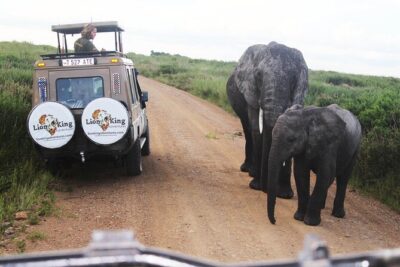
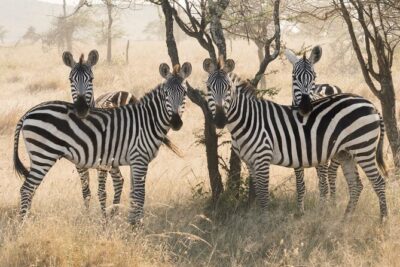
Tarangire is an excellent first park because it gives you a quick sense of Tanzania’s scale. The park is especially known for elephants and huge baobab trees. These trees give the scenery a distinctive shape, and they make even a quiet stretch of road feel unmistakably African.
The park is also a good choice if you enjoy birds. The route can produce a mix of large mammals and smaller sightings, including monkeys, giraffes, zebras, lions, leopards, and cheetahs. None of those sightings can be guaranteed, of course, but the range of animals is one reason this park earns its place on a short safari.
I like the fact that you get a full-day game drive rather than a rushed pass through the park. The guide has time to watch animal behavior, stop when something interesting appears, and explain what you are seeing. Strong animal spotting is one of the most praised parts of this company’s service, and guides such as Philbert and Ayubu are repeatedly singled out for finding good viewing points.
At the end of the day, you have dinner and spend the night at Twiga campsite outside the park. That location matters. You are not sleeping inside the national park on this night, but you are positioned for the next stage without returning to Arusha.
The road to Serengeti is part of the safari
After breakfast on Day 2, you set off around 8 a.m. for Serengeti National Park. The drive is described as taking about three hours, with arrival at the Serengeti gate around 1 p.m. The timing includes the route, the gate process, and a lunch stop.
You pass through towns and villages, with changing scenery along the way. There is also a short stop near the Ngorongoro gate, where you may see baboons and hear about the crater’s history. A viewpoint near Ngorongoro gives you a look across the surrounding country before the road continues toward the Serengeti.
That stop breaks up the drive, but this remains a transit day. You should not expect a full day of animal viewing. After lunch at the Serengeti gate, you have about an hour to eat and take a short walk, followed by a half-day game drive.
The Serengeti is famous for its broad open scenery, large groups of lions, kopjes, and high concentrations of large mammals. Kopjes are rocky outcrops that rise from the grasslands. Their rounded forms are closely associated with classic safari views and are often used by big cats as lookout points.
The great migration depends on the season and location, so do not book this trip assuming you will see a river crossing or a particular migration scene. You may still find large herds and plenty of animal activity, but the exact show belongs to nature, not the timetable.
The park also has more than 500 bird species. If birds matter to you, tell the guide early. A guide who knows your interests can spend more time on smaller sightings instead of focusing only on lions and elephants.
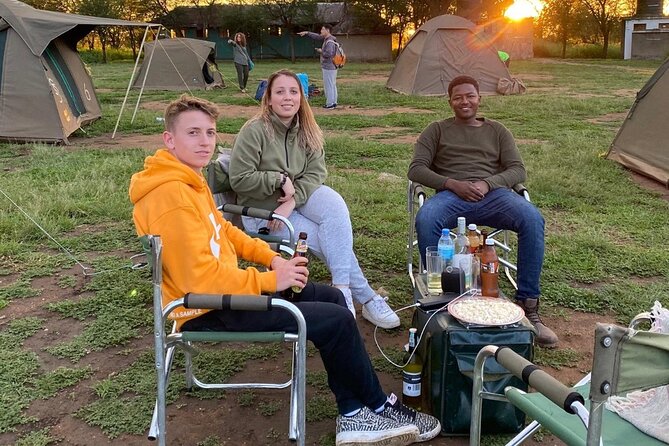
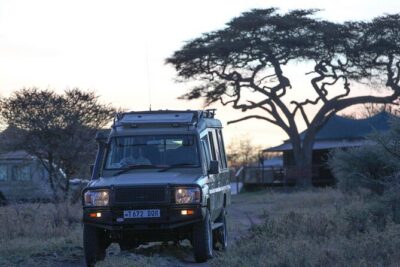
You reach camp around 6 p.m. This is where the camping side of the trip becomes real. You eat dinner, settle into your tent, and spend the night with the sounds of the Serengeti around you. It is a memorable setting, but public camping is not the same as a private lodge. Expect a basic outdoor stay rather than hotel-style comfort.
An important note about the Serengeti and crater schedule
The supplied day-by-day description has a mismatch. Day 3 is headed Ngorongoro Crater, but its details describe an early Serengeti game drive, breakfast, luggage collection, another game drive, and a night at Simba public campsite near Ngorongoro.
That likely means the practical sequence is two Serengeti game-drive periods followed by the crater visit on Day 4. Still, you should ask MyTrip2Tanzania to confirm:
- Which campsite is used on each night
- Whether the Serengeti night is inside the park
- When luggage is collected
- Whether breakfast is at camp or at another accommodation
- The exact time you leave the Serengeti for Ngorongoro
This is not a reason to reject the safari. It is simply the sort of detail that matters when you are packing, planning medication, or arranging a hotel after the return to Arusha.
More Safaris in Tanzania:
- From Zanzibar: Mikumi Safari Day Trip with Flights and Meal
★ 4.7 · 1,470 reviews - 4 Days Group Camping Safari
★ 5.0 · 1,101 reviews - From Zanzibar: Day Selous Game Reserve Safari with Flights
★ 4.7 · 1,025 reviews - 5 Days Group Camping Safari
★ 5.0 · 730 reviews
Serengeti at sunrise: the best chance for cats
The early start on Day 3 is around 6 a.m., aimed at sunrise. That is a good safari rhythm. The cooler morning hours often offer better conditions for watching animals, and the light is gentler for photography.
The planned morning drive lasts about two hours before you return for breakfast and collect your luggage. You then have another game drive while gradually heading toward the Ngorongoro area. This creates a second chance to look for lions, cheetahs, and other animals after the previous afternoon’s drive.
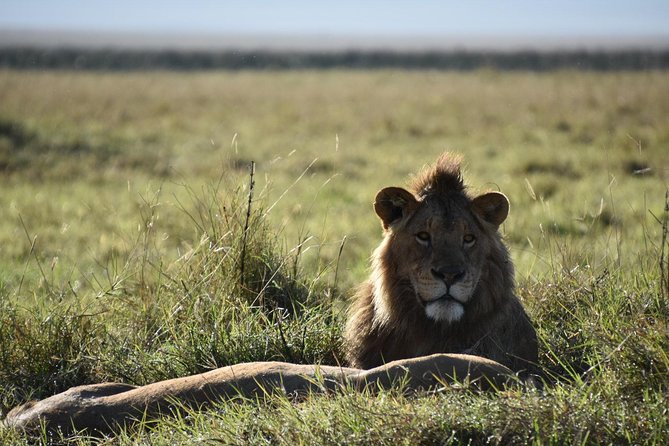
The Serengeti is described as a cat paradise, and that is a useful way to think about the day. You may see lions in groups, and the open setting can make animal viewing easier than in thick woodland. At the same time, the park is enormous. A lion sighting can be close and dramatic one hour, then absent for the next several hours. A good guide helps by reading tracks, watching other vehicles, and understanding where animals tend to rest.
The guides are one of the strongest reasons to consider this operator. Philbert is praised for patience, professionalism, and animal spotting. Ayubu is described with similar warmth, and Faraja is also named as part of a successful camping team. Philbert can guide in English and is also able to communicate in German, which may help some small groups feel more at ease.
Do not expect a lecture every minute. The best guide service combines information with judgment: when to stop, when to wait, and when to move on. The praise directed at these guides suggests that this is an area where the company earns its fee.
Ngorongoro Crater: a short, intense wildlife day
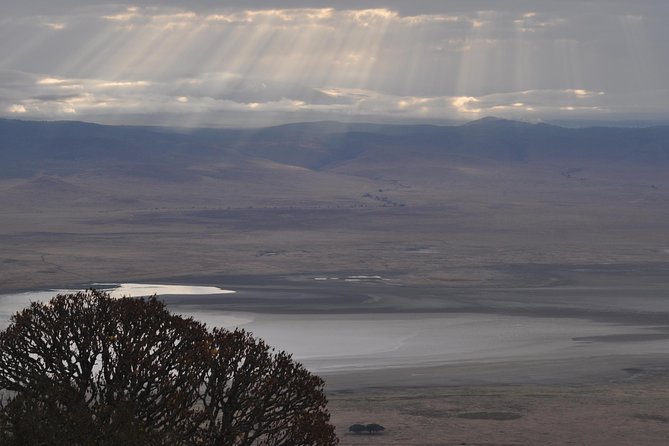
Day 4 begins around 6 a.m. for the drive into Ngorongoro Crater. The crater is an intact, inactive volcanic caldera and a World Heritage Site. Its enclosed setting can place many different animals within a relatively compact area, which makes it especially useful on a short safari.
The crater is also described as the best part of this route for rhino sightings. Rhinos are never guaranteed, but if seeing one matters to you, this is the day to keep your eyes open and your camera ready.
The half-day drive includes a stop by the lake, where you can watch hippos. Flamingos are another well-known sight in the crater, depending on conditions. The mix of open ground, water, and crater walls creates a very different scene from the wide Serengeti plains and the baobab country of Tarangire.
At around 11 a.m., you return to camp for brunch and pack for the transfer back to Arusha. That early finish keeps the day manageable, but it also means you get only a half-day crater drive. If you want a longer crater visit, ask about an extension or added accommodation. Extra accommodation can be arranged for an additional cost.
The crater is visually powerful, but the roads and early hour can make the day tiring. You will also be sharing the area with other safari vehicles. The tradeoff is efficiency: on a four-day route, you get a concentrated look at one of Tanzania’s best wildlife areas without adding another night.
Camping, food, and the daily routine
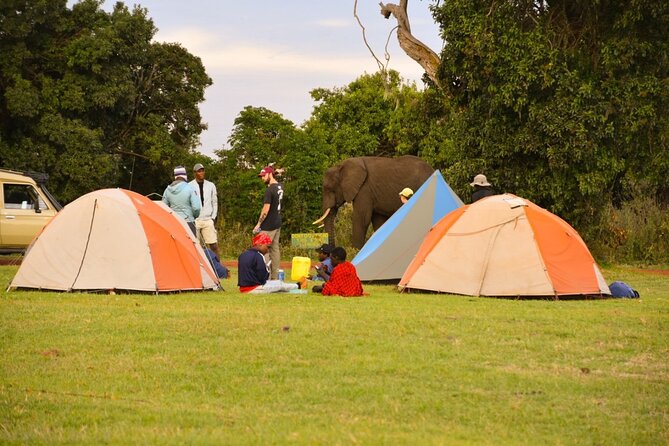
Camping is a major part of the character of this trip. You are not simply sleeping in a tent to save money. You are closer to the sounds, weather, and rhythm of the parks. Some of the strongest comments about the trip describe the tents as large and the camping as a once-in-a-lifetime part of the journey.
Still, you should choose this only if you are comfortable with basic camp conditions. The package names Twiga campsite and Simba public campsite, and the word public matters. Facilities may be simpler than those at a private camp or lodge. The information also mentions that additional accommodations can be arranged, so ask for the upgrade cost if you prefer more comfort.
Food receives unusually strong praise. The package includes three breakfasts, four lunches, and three dinners. The cooking is described as fresh, varied, and delicious, which is important when you are spending long hours outside and starting days early.
You should confirm how meals are served and whether dietary needs can be handled before departure. The supplied information does not list specific menus or dietary arrangements, so do not assume that every request is automatically covered.
The usual rhythm is simple: breakfast, a long drive or game drive, lunch, more wildlife viewing, then dinner and camp. That routine leaves little room for unscheduled rest. If you want a slower safari with long afternoons at camp, choose a longer itinerary.
Group size, pickup, and who will enjoy this most
Pickup is offered from a hotel, lodge, or hostel in Arusha. The meeting point is Arusha, and confirmation is received at booking. The company says the group can have no more than six people, a useful limit for a shared safari.
A small group can make a big difference. You have fewer people competing for window space, fewer opinions when deciding how long to watch an animal, and more room for questions. You also share the social side of camping, which can be fun if you enjoy meeting people from different places.
Most people can take part, and the tour is near public transportation. That does not mean the safari is physically effortless. The early starts, long drives, and rough roads may be demanding if you have back, mobility, or sleep concerns.
This trip suits you best if you:
- Want to see several famous northern Tanzania parks in four days
- Prefer camping to paying for a fully private lodge safari
- Like a small shared group
- Care about animal explanations and good spotting
- Are willing to accept long driving days
- Want meals handled as part of the package
It is less suitable if you need a private vehicle, a slow schedule, luxury accommodation, or guaranteed sightings.
Is $950 good value?
At $950 per person, this safari offers a lot in a short period. You get Tarangire, Serengeti, and Ngorongoro, rather than choosing just one park. You also receive meals, pickup in Arusha, camping, and the services of a guide.
The strongest value comes from the route and the guiding. A skilled guide can turn a distant animal into a worthwhile sighting by positioning the vehicle and explaining what is happening. The repeated praise for Philbert, Ayubu, and Faraja suggests that the human side of the trip is a real strength.
The price does not cover domestic or international flights, health insurance, or the Tanzanian entry visa. You should also ask for a complete written cost breakdown, especially concerning park entry, campsite charges, transfers, and any added accommodation.
Compare like with like. A cheaper safari may use larger groups, fewer parks, less experienced guides, or simpler food. A more expensive safari may provide private transport and lodge rooms. This package sits between those choices and makes the most sense for someone who wants broad coverage without a luxury price tag.
Free cancellation is available if you cancel at least 24 hours before the start time. Changes or cancellations inside that 24-hour window are not accepted for a refund.
Should you book this Tanzania safari?
I would choose this trip if I wanted a short, wildlife-heavy introduction to northern Tanzania and was happy to camp. The route gives you three distinct settings, the group stays small, and the guides receive strong praise for patience, explanations, and animal spotting.
I would not book without first confirming the Day 3 and Day 4 schedule. Ask exactly where you sleep, when you leave the Serengeti, what the $950 includes beyond meals, and what camping facilities are provided.
If those details match your needs, this is a strong choice for a first safari, a pair of friends, or a small group that wants the Big Five and dramatic scenery without arranging every piece alone. Go in ready for early mornings, rough roads, and nature’s refusal to follow a script. That is part of the bargain, and also part of the fun.
FAQ
Where does the safari start?
The safari starts in Arusha, Tanzania. Pickup is offered from your hotel, lodge, or hostel in Arusha.
How many people can join the group?
The maximum group size is six people.
Which parks are included?
The route includes Tarangire National Park, Serengeti National Park, and Ngorongoro Crater.
How long is the safari?
The experience lasts approximately four days.
What meals are included?
The package includes four lunches, three breakfasts, and three dinners.
Are flights and visas included?
No. Domestic or international flights, health insurance, and the Tanzania entry visa are not included.
Can I cancel for a full refund?
Yes, if you cancel at least 24 hours before the experience start time. Cancellations or changes made less than 24 hours before the start are not accepted for a refund.
More four day trips in Tanzania
- 4 Days Join Group tour Tarangire Serengeti and Ngorongoro crater
★ 5.0 · 219 reviews - 4-Day Safari from Arusha: Tarangire, Serengeti and Ngorongoro
★ 5.0 · 173 reviews - 4 Days safari Tour Tanzania
★ 5.0 · 159 reviews - 4 Days Tarangire Serengeti Ngorongoro Crater
★ 5.0 · 117 reviews
Newly listed around Tanzania
- Prison Island, Sea Turtles, Rock Restaurant & Relax in Beach★ 4.6 · 3 reviews
- 5-Day Private Safari Tour in Tanzania’s Wildlife★ 5.0 · 3 reviews
- Zanzibar: Nungwi/Kendwa Beach Sunset Dhow Cruise with Fruits★ 3.4 · 3 reviews
- Climb Mount Kilimanjaro: 7 Days Machame Route★ 5.0 · 3 reviews
- Starfish Beach; The Rock; Kuza Cave; Paje Beach; Salaam Cave Tour★ 4.5 · 3 reviews
- 3 Days private safari Tarangire ,Ngorongroro crater &Manyara★ 5.0 · 3 reviews
- 3 Day Sharing Safari – Manyara, Ngorongoro Crater and Tarangire National Parks★ 5.0 · 3 reviews
- Mikumi Np Mid Range Tour 3 Days★ 5.0 · 3 reviews
Serengeti & Ngorongoro Safaris, compared.
Balloon Safari & Bush Breakfast in Serengeti – Miracle Experience
Read our review →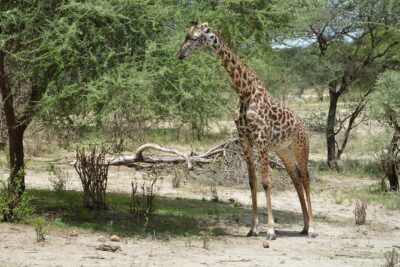
Private 6-Day Tarangire Manyara Crater and Serengeti with Mid-Range Lodges
Read our review →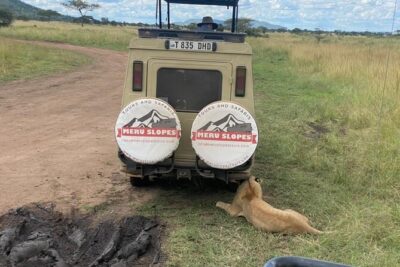
5 Days Camping Tarangire, Serengeti & Ngorongoro crater & Visiting Maasai
Read our review →Browse the lists this tour appears in