
Reviewed · ARUSHA TOURS
4-Day Group Joining Safari in Tanzania | Shared Safari
Tarangire’s giant elephants and baobab trees are the hook here, but the real appeal is the four-day circuit linking three of Tanzania’s headline wildlife areas. You start in Arusha, cross Tarangire, spend two nights or portions of two days in the Serengeti, then finish among the animals of Ngorongoro Crater.
I like the maximum group size of seven, which keeps a shared safari more personal than a large coach trip. I also like the variety: Tarangire’s trees and elephant herds, the Serengeti’s vast open plains, and the crater’s dense concentration of wildlife. The tradeoff is mileage. Several days include three to four hours of driving without game viewing, and the itinerary begins at midnight, so you need to be ready for early starts and a packed schedule.
Key points at a glance
- Tarangire brings the elephants and baobabs: The park is known for a large elephant population, striking trees, and seasonal concentrations of wildlife.
- Serengeti gets the most time: Day two reaches the Seronera area, followed by a full day of early morning to late evening game drives.
- Ngorongoro is a dramatic finale: The crater is more than 600 meters deep and supports lions, hyenas, buffalo, zebra, hippos, elephants, and other animals.
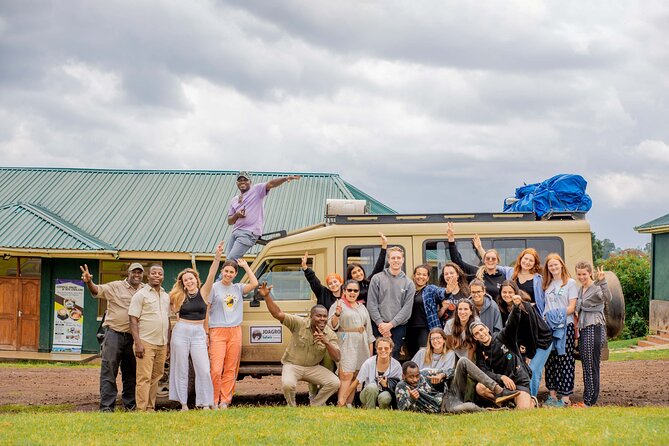
- Small-group format matters: The shared vehicle is capped at seven participants, a useful balance between price and personal space.
- Guide quality can shape the trip: Beni is specifically praised for knowing where animals appear, while Jonas is noted for clear English and careful planning.
- The $998 price buys a lot of ground: It offers access to three major parks in four days, but long road hours and a tight schedule are part of the bargain.
Why this four-day route works
This is a classic northern Tanzania safari loop, but it is not a relaxed one. At $998 per person, the tour is designed for you to see a great deal in a short period rather than settle into one park for several days.
That works well if you have limited time in Arusha and want the major names on your itinerary. Tarangire, Serengeti, and Ngorongoro each offer a different type of safari setting, so the trip does not feel like four identical days in the same park.
The shared format helps hold down the cost. With no more than seven people, you should have a better chance of seeing out of the vehicle and discussing sightings than you would in a large group. Still, you are sharing the pace, meal stops, and vehicle space with other people. If someone wants to linger at every lion sighting, the whole group may need to adjust.
I would also pay close attention to the wording around accommodation and meals before booking. The available details note a very pleasant lodge, varied food, and, on one safari, a cook who prepared meals well. They do not provide a full accommodation list, room category, or detailed meal plan, so confirm those points if they matter to you.
More Safaris in Arusha
- Balloon Safari & Bush Breakfast in Serengeti – Miracle Experience
★ 5.0 · 1,646 reviews - 4 Days Group Camping Safari
★ 5.0 · 1,101 reviews - 5 Days Group Camping Safari
★ 5.0 · 730 reviews
Day 1: Tarangire’s elephants beneath baobab trees
After breakfast, the route heads toward Tarangire National Park, about 130 kilometers from Arusha. The non-game-driving portion is listed at roughly three to four hours, with a stop in Arusha for last-minute purchases before continuing.
That town stop is practical. You can use it to check that you have water, snacks, sun protection, and any small personal items you forgot. The midnight start shown for the activity is unusual, so confirm the actual pickup time directly before the day begins. The published meeting point is TFA Shopping Center on Sokoine Road in Arusha, and the activity returns there at the end.
Tarangire is a strong opening park because it has a clear visual identity. The baobabs and acacias give the park a spare, sculptural look, and elephants are the main attraction. The area forms part of an annual movement that can include as many as 3,000 elephants, 25,000 wildebeest, and 30,000 zebras.
Those numbers describe the wider seasonal cycle, not a promise for your particular visit. Wildlife sightings vary, and the time of year matters. Even so, Tarangire gives you a good chance to begin with large animals and memorable trees rather than spending your first day only on the road.
The day is listed at about eight hours. That sounds generous, but the drive from Arusha, park entry, lunch, and game viewing use much of it. If elephants are your priority, tell your guide early. Beni is praised for knowing where animals are likely to appear, and that kind of local judgment can make a real difference when time is limited.
Day 2: Crossing the highlands into the Serengeti
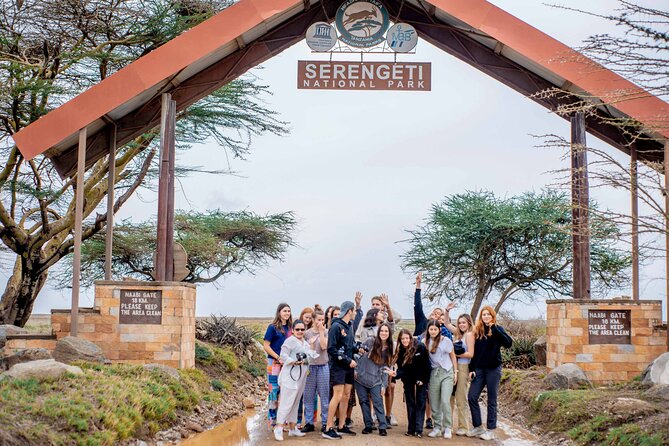
Day two covers about 200 kilometers to Serengeti National Park, with two to three hours listed as non-game-driving time. The route passes through the farmland around Karatu and the Ngorongoro Conservation Area before leaving the highlands behind.
This transfer is part of the experience, not just dead time. You move from cultivated high country into a much more open setting, and the change helps explain why the Serengeti feels so different from Tarangire. The drive is long, though, and the full day is listed at about ten hours.
The destination is the Seronera area in central Serengeti. Seronera is important because its river provides water and supports a strong concentration of wildlife. You should arrive around lunchtime, then spend the afternoon on a game drive.
I like the decision to focus on Seronera rather than spread the day across too much territory. In a four-day safari, concentrating on one productive area gives you a better chance to watch animal behavior instead of simply collecting distant sightings.
The phrase infinite plains is often used for the Serengeti, and here it makes sense. The horizon seems to keep going, with grassland rolling away in every direction. You may see the broad setting first, then gradually spot the animals: a small shape near a water source, a herd moving across the grass, or a predator that requires patience and a sharp eye.
The itinerary calls this a migration visit, but you should not treat the great migration as a guaranteed event at a particular location. Herd movements change with rainfall and season. Ask Joagro Safaris Tanzania where the herds are expected during your dates, especially if migration is the main reason you are booking.
Day 3: A long Serengeti game-drive day
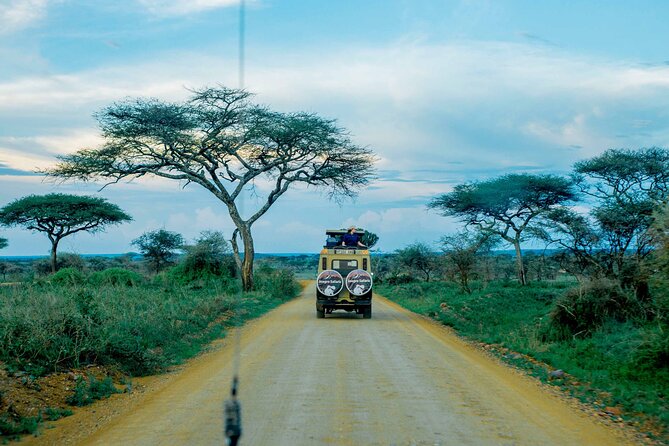
Day three begins very early so you can be out for sunrise. The plan runs from early morning to late evening, for about nine hours of searching for animals.
This is likely to be the most rewarding and most tiring day. Early light can make the plains look completely different from the previous afternoon, and the long hours give your guide more time to locate predators, herds, and animals near water.
The strength of a full day is flexibility. You are not limited to a short morning drive and a fixed return for lunch. You can spend more time watching an active sighting, then continue into another part of the Seronera area. A guide such as Beni, who is praised for reading animal locations, is especially valuable on a day built around searching.
The weakness is simple: nine hours in a safari vehicle is a lot. Roads can be rough, and you may feel the effects by late afternoon. Bring a layer for the cool morning, sun protection for the middle of the day, and patience for quiet stretches. Wildlife is not a stage show. Some of the best moments may come after a long period of seeing very little.
Food also matters on a long day. The available experience details indicate that a cook joined one group and prepared enjoyable meals. Confirm what meals are included in your own booking, since the exact arrangement is not fully explained.
If your priority is photographs, this is the day to protect your camera and phone battery. The open plains and morning light offer strong photo conditions, but the tour description does not specify charging facilities or photography equipment. Bring what you need rather than assuming the vehicle will provide it.
A change of scene while you are in Arusha:
- Tanzania Classic – 7 Days
★ 5.0 · 1,151 reviews - Materuni Waterfalls, coffee tour & Kikuletwa Hot Springs
★ 5.0 · 643 reviews - 3 Days Serengeti & Ngorongoro Group Camping Safari
★ 5.0 · 574 reviews - 7-Day Premium Luxury Tanzania Safari All-Inclusive
★ 5.0 · 426 reviews
Day 4: Ngorongoro Crater and Lake Magadi
The final day begins with an early breakfast and a drive of about 210 kilometers to Ngorongoro Crater. Three to four hours are listed as non-game-driving time, and the day is expected to last around ten hours.
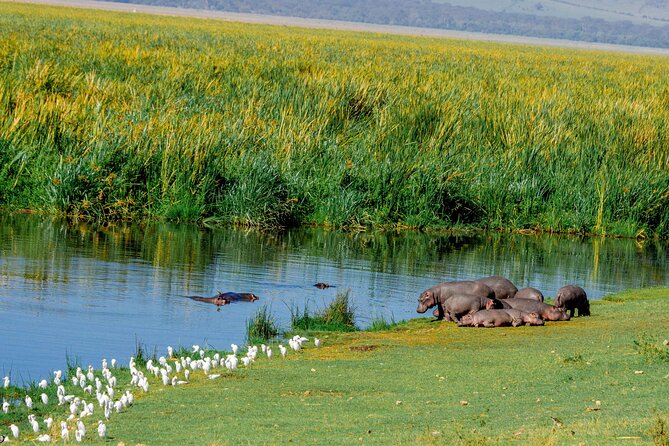
Ngorongoro is a powerful finish because the crater walls create a contained wildlife area. The crater floor is more than 600 meters deep, and the conservation area supports wildebeest, zebra, buffalo, eland, warthog, hippo, and large African elephants.
Predators are another draw. Lions, hyenas, jackals, cheetahs, and the occasional leopard are all listed among the possibilities. The leopard is not a sure thing and can take a trained eye to spot, so keep your expectations realistic. A guide can help, but no safari can promise a particular animal.
Lake Magadi is included in the crater visit. It is a large, shallow alkaline lake and adds another habitat to the day. The crater is not only about ticking off big animals. The surrounding walls, open floor, and changing groups of wildlife make it one of the most visually striking stops on the route.
The final day is also the most compressed. You have the long approach, crater access, game viewing, and the return to the Arusha meeting point. That can make for an exciting finish, but it leaves little room for delays. If you prefer slow mornings and unhurried meals, this schedule may feel too tight.
What the guide and small group can change
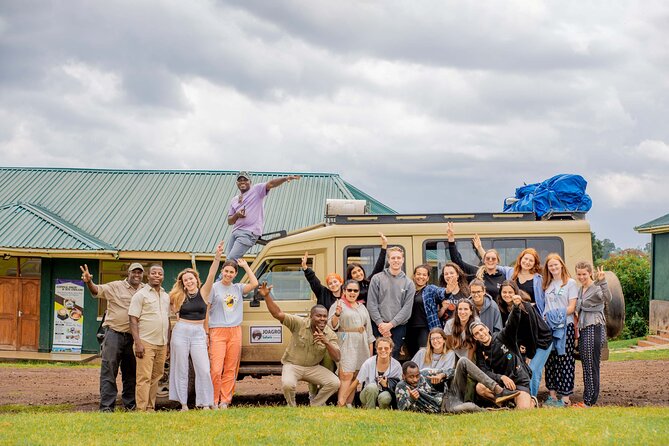
Safari quality depends heavily on the person behind the wheel. Beni is singled out for knowing where animals appear, which is exactly the skill you want when your time in each park is limited.
Jonas is associated with planning and communication, including clear English. That can be useful before departure, especially when you want to ask about pickup, park timing, accommodation, or adding extra plans. The information available does not name the guide assigned to every departure, so ask who will lead your specific safari.
A maximum of seven people is a practical size. You still get the lower cost of a shared trip, but the vehicle should not feel like a large tour bus. The group size also affects how quickly you can leave a sighting and how much room there is for bags, cameras, and personal comfort.
The small group does not turn this into a private safari. You will still need to accept a group schedule and shared decisions. For many people, that is a fair exchange for seeing three major parks at a lower price.
Is $998 good value?
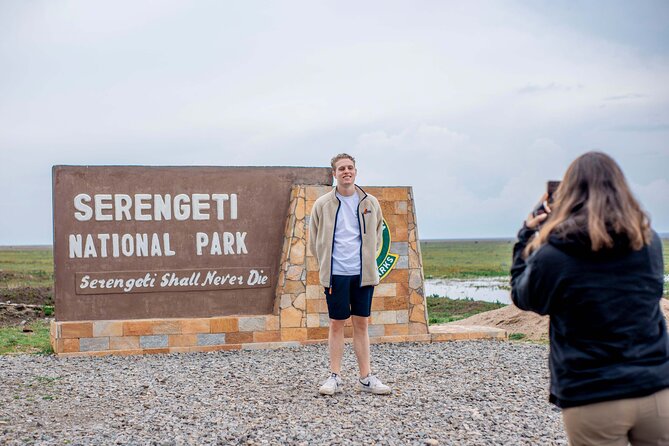
At $998 per person, the price is attractive for a four-day safari covering Tarangire, Serengeti, and Ngorongoro. You are paying for access to three of Tanzania’s best-known wildlife areas, transport between them, guiding, and a small shared group.
The value is strongest if you want breadth. You will see different habitats and have two substantial Serengeti days, including an early morning to late evening drive. The price is less appealing if you want a slow, private trip with long stays in one lodge and plenty of downtime.
Before paying, clarify what is included in the $998. The supplied information confirms the route, small group, pickup option, mobile ticket, and free cancellation up to 24 hours before the start time. It does not give a detailed list of park fees, meals, drinks, accommodation names, or transfers beyond the stated meeting point.
That is not a reason to reject the safari. It is a reason to ask direct questions. The best value is not simply the lowest headline price. It is knowing what you will receive and avoiding surprise costs.
Practical details that matter
The meeting point is TFA Shopping Center on Sokoine Road in Arusha. Pickup is offered, and the activity ends back at the meeting point, so confirm the exact pickup arrangement and time before departure.
The stated start time is 12:00 am. Because that is unusually early, do not rely on a general assumption. Get the local pickup time in writing, along with the location if you are using the pickup option.
Confirmation is provided when you book, and most people can participate. The tour has a maximum of seven participants. Free cancellation applies if you cancel at least 24 hours before the local start time. Changes made within 24 hours are not accepted, and late cancellations are not refunded.
Pack for changing conditions. You will need practical clothing for a cool early morning, strong sun later in the day, and long hours in the vehicle. The details do not list a baggage limit, so ask before bringing large luggage.
Who should book this safari?
I would choose this trip if you have four days, want the major northern Tanzania parks, and prefer a shared price over a private vehicle. It is also a good fit if elephants, the Serengeti, and Ngorongoro all matter to you and you can handle long transfers.
You may want a different format if you dislike early starts, need generous rest time, or want complete control over every stop. The route covers a lot of ground, and the final crater day is especially full.
The strongest reasons to book are the small group, the three-park route, and the chance to spend a full day in the Serengeti. The main caution is to confirm the exact inclusions, accommodation, meal plan, and pickup time before committing.
Should you book the four-day Joagro safari?
Yes, if you want a focused introduction to Tanzania’s northern safari circuit at a shared-safari price. The route has real variety, the group is limited to seven, and the guide experience associated with Beni and Jonas suggests that animal spotting and trip planning receive proper attention.
Book with realistic expectations. You are not buying a leisurely lodge holiday. You are buying four busy days, long drives, early mornings, and a strong chance to see very different wildlife settings. For a first safari with limited time, that is a sensible trade.
FAQ
Where does the safari start and end?
The safari starts at TFA Shopping Center on Sokoine Road in Arusha, Tanzania. The activity ends back at the same meeting point.
How many people can join the shared safari?
The group has a maximum of seven travelers.
Which national parks and areas are included?
The route includes Tarangire National Park, Serengeti National Park, and Ngorongoro Crater. The Serengeti portion focuses on the Seronera area, and the Ngorongoro day includes Lake Magadi.
How long is the safari?
The safari lasts approximately four days. Individual days are listed at about eight, ten, nine, and ten hours, including driving and wildlife viewing.
Is pickup available?
Yes. Pickup is offered, although the published meeting point is TFA Shopping Center in Arusha. Confirm the exact pickup details and time before departure.
What is the cancellation policy?
You can cancel for a full refund if you do so at least 24 hours before the experience start time. Cancellations or changes made less than 24 hours before the local start time are not accepted, and late cancellations are not refunded.
More four day trips in Arusha
- 4 Days Join Group tour Tarangire Serengeti and Ngorongoro crater
★ 5.0 · 219 reviews - 4-Day Safari from Arusha: Tarangire, Serengeti and Ngorongoro
★ 5.0 · 173 reviews - 4 Days safari Tour Tanzania
★ 5.0 · 159 reviews - 4 Days Tarangire Serengeti Ngorongoro Crater
★ 5.0 · 117 reviews
Newly listed around Arusha
- 5-Day Private Safari Tour in Tanzania’s Wildlife★ 5.0 · 3 reviews
- 3 Days private safari Tarangire ,Ngorongroro crater &Manyara★ 5.0 · 3 reviews
- 3 Day Sharing Safari – Manyara, Ngorongoro Crater and Tarangire National Parks★ 5.0 · 3 reviews
- Tarangire National Park Day Trip★ 5.0 · 3 reviews
- 6 -Day Tarangire, Manyara, Serengeti & Ngorongoro★ 5.0 · 3 reviews
- 2 Days Tarangire and Ngorongoro Crater Tour★ 5.0 · 3 reviews
- 5 Days Group Camping Safari★ 4.7 · 3 reviews
- 7-Day Mt. Kilimanjaro Hiking: Machame Route★ 5.0 · 3 reviews
Arusha Tours, compared.

Balloon Safari & Bush Breakfast in Serengeti – Miracle Experience
Read our review →






Browse the lists this tour appears in