
Reviewed · ARUSHA TOURS
4-Day Camping on the Big Five Private Safari
The big draw here is the sweep of Tanzania’s northern safari country in just four days. You move from elephant country in Tarangire to the open Serengeti plains, then finish among the dense wildlife of Ngorongoro Crater.
I like the private setup, since your group can spend more time with an animal instead of following a fixed bus schedule. I also like the practical all-in package: park fees, tents, meals, bottled water, airport transfers, and even sleeping gear are included. The catch is the pace. Long drives, early starts, and basic camping make this a better fit for active visitors than for anyone seeking a soft, slow holiday.
Key points to know before booking
- Three major safari areas in four days: Tarangire, Serengeti, and Ngorongoro Crater each offer a different setting and animal experience.
- A genuinely private trip: Only your own group takes part, with pickup offered and room to shape the timing of game viewing.
- Camping equipment is supplied: Tents, sleeping bags, and mattresses are included, along with meals and bottled water.
- Guide quality matters here: Godfrey, also called Godi, is praised for multilingual guiding, including fluent Spanish, and for spotting animals quickly.
- The Big Five are possible, not promised: Lions, leopards, rhinos, buffalo, and elephants live in the parks, but wildlife sightings always depend on nature.
- Expect full safari days: The first day lasts about 10 hours, Day 3 about 12 hours, and the final crater visit begins very early.
Why this four-day route works
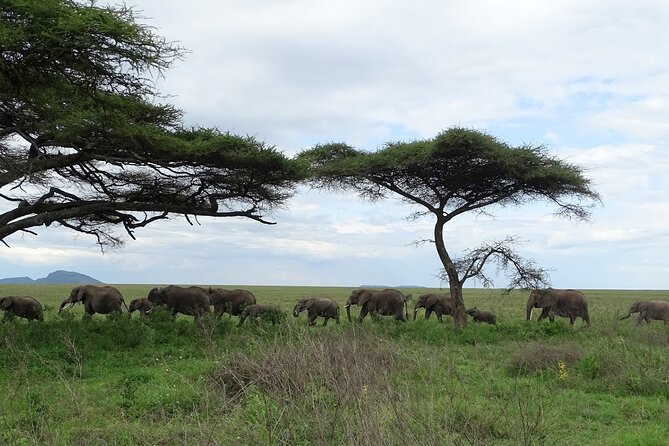
For a first safari from Arusha, this route gives you a strong sample of northern Tanzania without adding a fifth or sixth day. Tarangire brings elephants and striking trees. Serengeti supplies the grand open plains and the best-known migration country. Ngorongoro offers concentrated wildlife in a volcanic bowl.
That variety matters. A safari is not only about counting animals. It is also about how the ground changes beneath you, from acacia woodland to grassland, from rocky kopjes to swamps and forest. In four days, you get several distinct settings rather than repeating one park.
The private format is a real advantage. You are not sharing the vehicle with strangers, and the guide can respond to your interests. If you want to stay longer with lions, or move on after a quick sighting, that choice is easier in a private group. The tour is still tightly scheduled, though, because the parks are far apart and the final drive returns to Arusha.
The advertised cost is $1,436 per person. That is not a budget day trip, but it covers a great deal: park entrances and taxes, accommodation, four breakfasts, four lunches, three dinners, bottled water, soft drinks, wine, camping gear, airport transfers, and medical insurance through Flying Doctors. A recommended total tip of $40 per client is extra.
More Safaris in Arusha
- Balloon Safari & Bush Breakfast in Serengeti – Miracle Experience
★ 5.0 · 1,646 reviews - 4 Days Group Camping Safari
★ 5.0 · 1,101 reviews - 5 Days Group Camping Safari
★ 5.0 · 730 reviews
Day 1: Elephants and baobabs in Tarangire National Park
The trip begins around 7:00 a.m. with a short briefing before you head southwest from Arusha toward Tarangire National Park. The drive and game viewing together fill roughly 10 hours, so this is a proper safari day, not a quick afternoon outing.
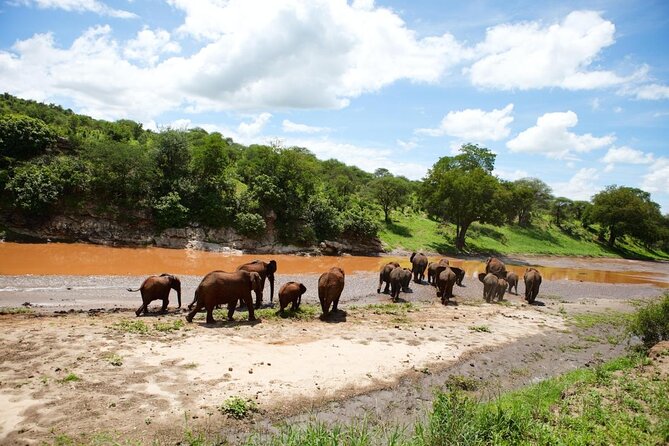
Tarangire is best known for its large elephant herds. You may also see giraffes, buffaloes, elands, kudus, gerenuks, lions, leopards, and hyenas. Birdlife is a major part of the park too, with yellow-breasted lovebirds among the smaller, brighter sightings.
I like Tarangire as an opening park because it gives you an immediate sense of variety. Grassland, acacia woodland, and forest create changing views as you drive. The park feels different from the Serengeti, and that contrast helps you notice how animals use different habitats.
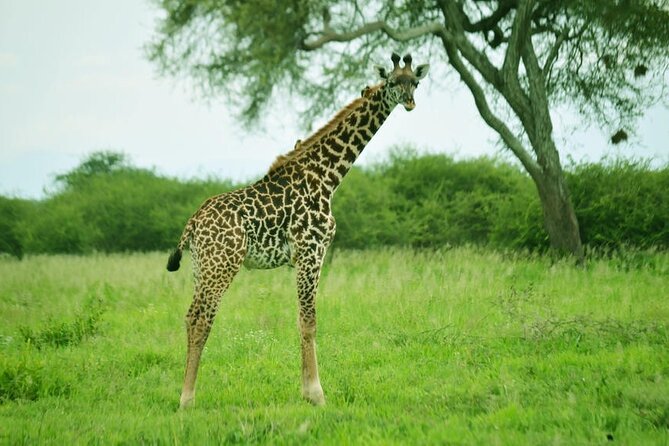
The gerenuk is a particularly good reason to keep your eyes open. This long-necked antelope can look almost awkward as it reaches for food, and it is far less familiar than a giraffe or zebra. Wild dogs are present but very rare, so you should not treat every animal listed in the itinerary as a likely sighting.
You leave the park in the late afternoon and continue to the night’s lodge or camp. The exact balance between lodge and tent accommodation should be confirmed before booking, since the experience is described as camping but also refers to a camp or lodge. Tents, sleeping bags, and mattresses are supplied, which keeps your packing list shorter.
Day 2: The long road to the Serengeti
After breakfast, you travel through the Ngorongoro Conservation Area toward the Serengeti. This is one of the longer transfer days, but it is also the point where the safari begins to feel truly grand in scale.
The route reaches the Naabi Hill Gate area, where wooded knolls mark the official entrance to the Serengeti. From there, the ground opens into the park’s famous plains. The name Serengeti comes from the Maasai word Siringet, commonly translated as the land that flows on forever. Once you see the wide grasslands, the name makes sense.
The Serengeti covers about 6,000 square miles and supports a huge range of wildlife. It is known for the annual movement of roughly 1.5 million wildebeest, along with other migrating animals. The timing and location of the migration change, so this four-day trip should not be sold as a guaranteed migration viewing tour. You are visiting one of the world’s great wildlife areas, but nature sets the schedule.
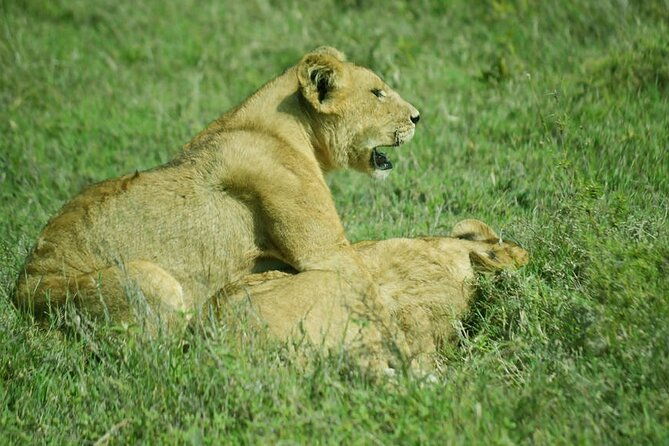
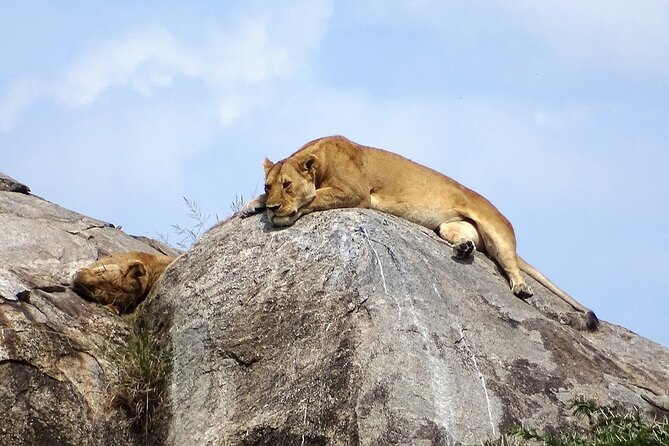
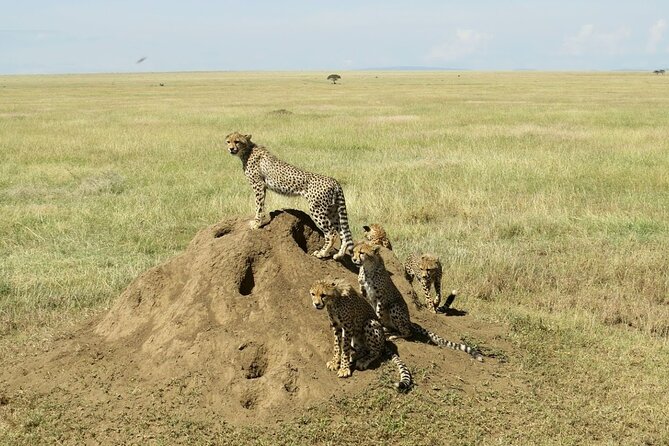
The park is also home to the Big Five: lions, leopards, rhinos, buffalo, and elephants. You might find hippos and crocodiles near rivers, lions around open grassland, and leopards in more concealed spots. A good guide makes a major difference here. Godfrey, also referred to as Godi, is praised for spotting animals at a distance and for explaining what you are seeing. He speaks several languages, including Spanish, which can be especially useful for Spanish-speaking groups.
The main drawback is the amount of time spent on the road. You should be ready for a long day in a safari vehicle, with dust, changing temperatures, and limited chances to stretch. The payoff is arrival in the Serengeti, where even an ordinary pause can bring a memorable view across the plains.
Day 3: Morning wildlife and Olduvai Gorge
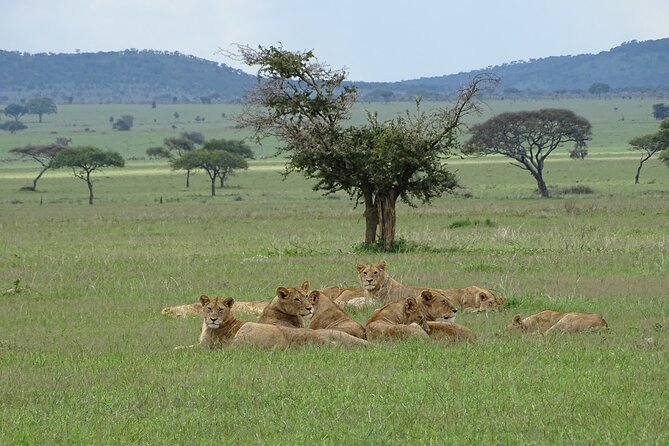
Day 3 starts with a morning game drive in the central Serengeti. This is a smart time for animal watching. The air is cooler, the sun is not yet harsh, and animals are often active before the heat of the day settles in.
You return to camp for brunch around 11:30 a.m. This pause is useful after an early start, but the day is not over. You then travel toward the Ngorongoro Conservation Area, covering about 145 kilometers, with a total day of roughly 12 hours.
Olduvai Gorge is an optional stop if you are interested in archaeology, early human history, or Maasai culture. It adds a non-wildlife layer to the route and helps break up the transfer. If your main goal is more animal viewing, ask how much time the stop will take before you commit to it. The supplied plan describes it as a visit for those with an interest in history and Maasai traditions.
This day is where the private arrangement can help. A private guide can explain the road, adjust the pace when possible, and check that everyone is comfortable during a long transfer. Godfrey is repeatedly praised for being attentive and for asking if the group wants to stay longer at an animal sighting. That kind of flexibility is more useful here than on a short park outing.
By evening, you should be ready for food and sleep rather than extra activity. The camping setup is supported by a cook, Meshak, whose meals receive especially warm praise. Dinner, a tent, a sleeping bag, and a mattress are included, but you should still pack for outdoor conditions and be comfortable with simple camp living.
A change of scene while you are in Arusha:
- Tanzania Classic – 7 Days
★ 5.0 · 1,151 reviews - Materuni Waterfalls, coffee tour & Kikuletwa Hot Springs
★ 5.0 · 643 reviews - 3 Days Serengeti & Ngorongoro Group Camping Safari
★ 5.0 · 574 reviews - 7-Day Premium Luxury Tanzania Safari All-Inclusive
★ 5.0 · 426 reviews
Day 4: Down into Ngorongoro Crater
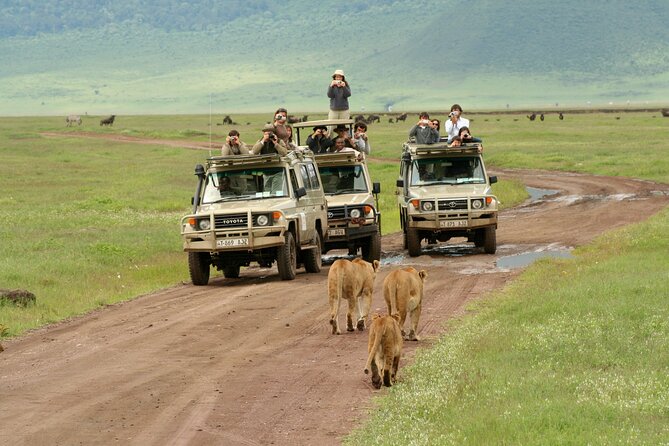
The final safari morning starts very early. With a picnic lunch packed, you descend about 2,000 feet to the floor of Ngorongoro Crater in a 4×4 vehicle.
The crater is a huge volcanic caldera with permanent water, open pasture, swamps, and forest. Those different habitats help explain why wildlife is so concentrated. Up to 25,000 larger animals may live within the crater, giving you a strong chance of seeing a wide range of species during one game drive.
Ngorongoro is one of the better places on this route to look for black rhino. You might also see the distinctive black-maned lion, buffalo, elephants, and other large mammals. Still, no ethical safari company can promise a particular animal, even in a place with such high wildlife density.
The crater floor can be busy with vehicles, particularly at popular viewing areas. That is a practical consideration, not a reason to skip it. The payoff is the compact mix of habitats and the dramatic setting. You get a sense of scale from the crater walls while watching animals in a relatively contained area.
After about six hours, you drive back to Arusha for a drop-off at your lodge or hotel. This final return makes the tour convenient if you are continuing from Arusha or catching a later part of your Tanzania trip. Confirm your onward timing carefully, since road conditions and park schedules can affect the exact arrival time.
Camping, meals, and what the price covers
This is camping with logistical support, not a self-sufficient wilderness trip. Tents, sleeping bags, and mattresses are provided. Meals include four breakfasts, four lunches, and three dinners, and bottled water is supplied at three liters or more per person per day.
Soft drinks and wine are also listed, along with fly and bug spray for use in the parks. The included spray is handy, but I would still bring personal insect repellent, sunscreen, a hat, and clothing that protects you from sun and insects.
The food is one of the stronger parts of the arrangement. Meshak is identified as the cook, and the meals are described as delicious. That matters on a safari because a hot, dependable meal after a long game drive improves the whole experience. You should not expect restaurant service or a large menu, but you can expect the trip to be organized around feeding you well at camp.
Airport transfers are included, as is Flying Doctors medical insurance. Park entrances and taxes are covered too, which avoids the unpleasant surprise of large conservation fees appearing later. The price is easier to justify if you need airport transport and camping equipment. It is less compelling if you want lodge-based comfort or already have your own arrangements.
The guide can shape the whole experience
Safari vehicles matter, but the guide matters more. Animal behavior is easy to miss if someone drives past too quickly or fails to notice a distant movement. A good guide also explains the difference between a casual sighting and a meaningful one.
Godfrey is the central name connected with this experience. He is described as friendly, helpful, multilingual, and especially strong at locating animals. Spanish speakers may find his fluency a major benefit. The praise also points to his willingness to ask if the group is comfortable and if they want to remain longer at a sighting.
The company is Rehoboth Safaris. The tour is private, so only your own group participates. Group discounts are offered, though the supplied information does not state the discount amount. Ask for the exact vehicle capacity, sleeping arrangements, and guide assignment before paying if those details affect your decision.
Who should book this safari?
I would recommend this trip to you if you want the classic northern Tanzania route in a compact format and prefer a private vehicle. It suits people who are excited by wildlife, willing to accept long drives, and happy with tent camping.
It is also a good match for groups of friends or families who want their own schedule. Spanish-speaking visitors should ask specifically for Godfrey or another Spanish-speaking guide if that is important to them.
I would think twice if you dislike early mornings, rougher road travel, or basic accommodation. Four days sounds short, but the schedule is full. The Serengeti transfer and the 12-hour third day leave little room for lazy mornings.
Booking details and practical limits
Pickup is offered, and the listed start time is 7:00 a.m. Confirmation arrives at booking, and most people can take part. The experience requires suitable weather. If poor weather causes cancellation, you can choose another date or receive a full refund.
Free cancellation is available up to 24 hours before the start time. Cancellations or changes made inside that window are not accepted for a refund. Because the days are long, I would also confirm the pickup point, camping style, and final Arusha drop-off before departure.
Should you book the 4-Day Big Five Private Safari?
Book it if you want maximum wildlife variety in a short trip, private guiding, and an all-in camping package that removes many extra costs. Tarangire, Serengeti, and Ngorongoro give you three very different safari settings, and the route includes strong chances for elephants, lions, buffalo, and perhaps rhino or leopard.
Skip it if comfort and spare time matter more than coverage. This is an ambitious four days, with early starts and long drives. For an active first safari, though, the mix of capable guiding, a private group, supplied camping gear, and a cook makes the $1,436 price a reasonable package rather than a simple park tour.
FAQ
Where does the safari start?
The safari starts in Arusha, Tanzania, with a listed start time of 7:00 a.m. Pickup is offered.
Which parks and protected areas are included?
The route includes Tarangire National Park, Serengeti National Park, and the Ngorongoro Conservation Area, including Ngorongoro Crater.
Is this a private safari?
Yes. Only your own group participates in the activity.
How long does the safari last?
The experience lasts approximately four days.
Is camping equipment provided?
Yes. Tents, sleeping bags, and mattresses are included.
Are meals included?
Yes. The package includes four breakfasts, four lunches, and three dinners. Bottled water, soft drinks, and wine are also included.
Are park fees included?
Yes. All park entrances and taxes are included in the price.
Is airport transportation included?
Yes. Transfers to and from the airport are included.
What happens if the tour is canceled because of bad weather?
You can choose a different date or receive a full refund if poor weather causes the experience to be canceled.
More four day trips in Arusha
- 4 Days Join Group tour Tarangire Serengeti and Ngorongoro crater
★ 5.0 · 219 reviews - 4-Day Safari from Arusha: Tarangire, Serengeti and Ngorongoro
★ 5.0 · 173 reviews - 4 Days safari Tour Tanzania
★ 5.0 · 159 reviews - 4 Days Tarangire Serengeti Ngorongoro Crater
★ 5.0 · 117 reviews
Newly listed around Arusha
- 5-Day Private Safari Tour in Tanzania’s Wildlife★ 5.0 · 3 reviews
- 3 Days private safari Tarangire ,Ngorongroro crater &Manyara★ 5.0 · 3 reviews
- 3 Day Sharing Safari – Manyara, Ngorongoro Crater and Tarangire National Parks★ 5.0 · 3 reviews
- Tarangire National Park Day Trip★ 5.0 · 3 reviews
- 6 -Day Tarangire, Manyara, Serengeti & Ngorongoro★ 5.0 · 3 reviews
- 2 Days Tarangire and Ngorongoro Crater Tour★ 5.0 · 3 reviews
- 5 Days Group Camping Safari★ 4.7 · 3 reviews
- 7-Day Mt. Kilimanjaro Hiking: Machame Route★ 5.0 · 3 reviews
Arusha Tours, compared.

Balloon Safari & Bush Breakfast in Serengeti – Miracle Experience
Read our review →






Browse the lists this tour appears in