
Reviewed · SERENGETI & NGORONGORO SAFARIS
4-Day Basic Safari with Serengeti, Ngorongoro, & Tarangire
Tarangire’s giant baobabs, the Serengeti’s open country, and Ngorongoro’s crowded crater floor make this a wildlife-heavy safari in a short time. The route packs in three of northern Tanzania’s big names, with a safari cook, camping gear, and a Land Cruiser already arranged.
I like the private budget-camping approach, which gives families and friends more control than a large fixed group. I also like the early Serengeti start, when lions and other predators may still be active. The main caution is the schedule: long drives are part of the deal, and the published details contain some inconsistencies about the trip length, Lake Manyara, water, and the Masai village visit.
Key points before you book
- Tarangire begins the wildlife action: Expect baobab trees, acacia woodland, swamps, elephants, and animals gathering near water in dry periods.
- The Serengeti gets two substantial game-drive days: Day two is mostly a transfer with an afternoon drive, while day three can run for about 12 hours.
- Ngorongoro is a compact wildlife arena: The crater descent brings you close to buffalo, zebra, wildebeest, hippos, predators, and the chance of a black rhino sighting.
- Camping keeps the price down: Tents, mattresses, sleeping bags if needed, meals, and a safari cook are part of the package, but bathrooms are shared.
- The guide can make or break the trip: Guides such as Jonathan, Emmanuel, Frazier, Shirima, and Damian are named in the supplied information, with particular praise for sharp animal spotting and punctual service.
- Check the final plan in writing: The title says four days, the overview says five days, and Lake Manyara and a Masai village are not clearly placed in the four-day schedule.
Three parks, one fast-moving safari
At $1,745.56 per person, this is not the cheapest way to see Tanzania, but it offers a lot for the money. You get park access, a four-wheel-drive vehicle, an English-speaking guide, a cook, food, airport transfers, camping equipment, and hotel or lodge accommodation before and after the safari. That package matters in Tanzania, where park fees, driving distances, and camp arrangements can quickly turn a basic trip into an expensive one.
The tradeoff is time. You are not lingering in one park for several days. You are moving from Arusha to Tarangire, then across to the Serengeti, and finally to Ngorongoro. That gives you variety, but it also means early starts, rough roads, and long hours in the vehicle.
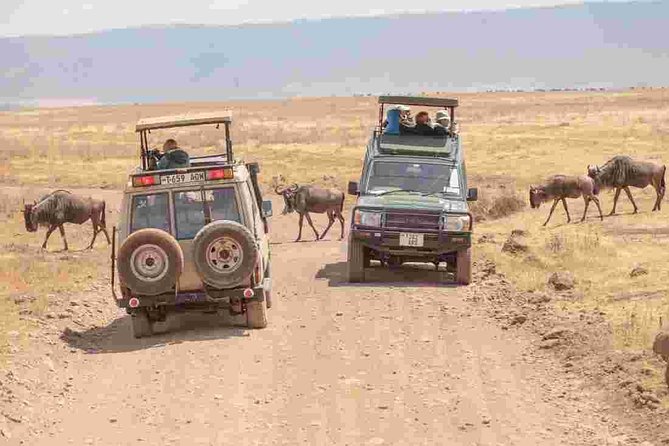
The vehicle is a Toyota Land Cruiser with a pop-up roof, six window seats, and power adapters. Those details are more important than they sound. The raised roof gives you a better view during game drives, while six window seats can help prevent the cramped, elbow-to-elbow feeling found in some safari vehicles. Still, the maximum group size is 15, so ask how many people will actually be in your vehicle.
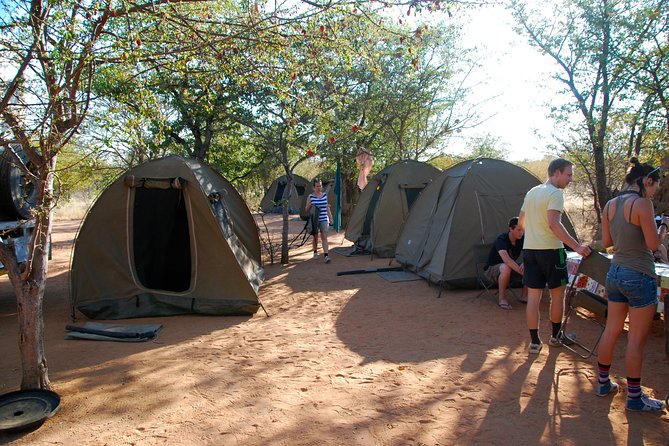
The word basic mainly refers to the camping style, not the wildlife. You sleep in tents at campsites and use shared bathrooms. A safari cook prepares breakfast, lunch, and dinner, and you can ask about favorite foods or repeated dishes. One useful warning comes from the supplied information: a tent problem occurred on one trip, so check that your tent, mattress, and sleeping bag are in good order before leaving Arusha.
More Safaris in Arusha
- Balloon Safari & Bush Breakfast in Serengeti – Miracle Experience
★ 5.0 · 1,646 reviews - 4 Days Group Camping Safari
★ 5.0 · 1,101 reviews - 5 Days Group Camping Safari
★ 5.0 · 730 reviews
Day one: Tarangire’s elephants and baobabs
You leave after breakfast and drive through Arusha and the Masai steppe toward Tarangire National Park. The route includes a stop at Makuyuni junction to drop off the safari cook before entering the park for the first game drive.
Tarangire has a very different feel from the Serengeti. The park follows the Tarangire River and includes low hills, acacia woodland, huge baobab trees, and a broad swamp area in the south. In dry periods, the river and swamp draw animals from surrounding areas, which can make this an excellent opening day for wildlife viewing.
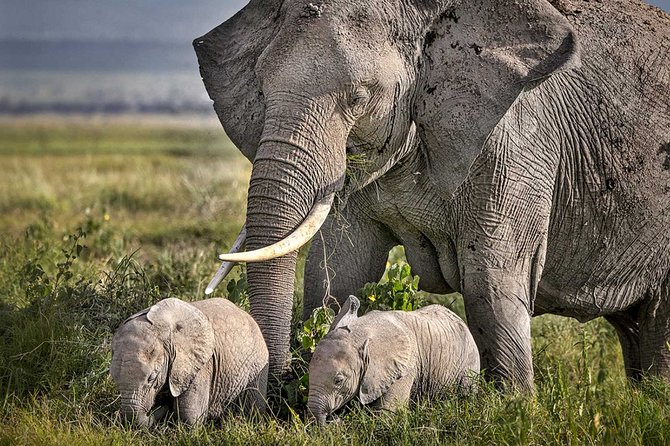
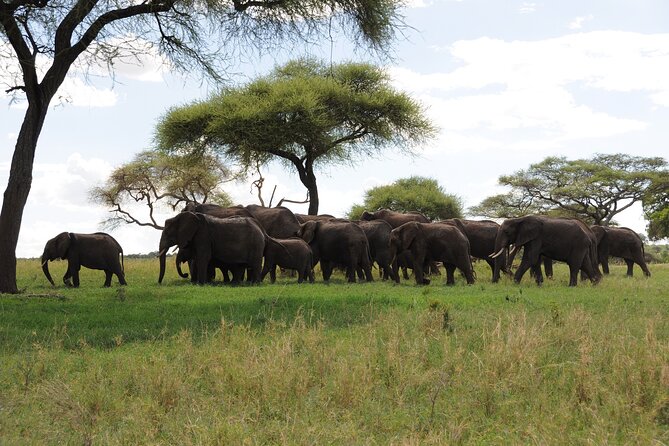
The park is especially associated with large elephant herds. You may also see animals near the water and in the woodland, though wildlife sightings can never be promised. The baobabs are part of the pleasure here. Their thick trunks and strange, high branches give the park a strong sense of place, and they make a welcome change from the wide grasslands you will see later.
The advertised driving time for this day is about six hours, but that should be read as an approximate activity duration, not necessarily six hours of uninterrupted travel. Game drives include stops, slow viewing, and time spent watching animals. You should expect a full day after breakfast, with dust, heat, and uneven roads part of the experience.
This first day also shows the value of having a guide who can read animal behavior. Several guides connected with the operator are praised for spotting wildlife at surprising distances, including lions. That skill is useful in Tarangire’s woodland, where an animal may be partly hidden behind brush or a tree trunk.
Day two: Crossing to the Serengeti
After breakfast, you drive through villages and the high farmland around Karatu before reaching the Ngorongoro gate. Registration and park formalities take time, then the route continues toward Naabi Hills Gate, the entry point for the Serengeti.
This is a long day, listed at about nine hours. You eat a packed lunch around the gate and begin an afternoon game drive after completing the formalities. The plan is to reach camp around or before sunset, though road conditions and wildlife stops can affect the timing.
The crossing is part of the safari experience, but it is also one of the harder stretches. You spend much of the day seated in the vehicle, and the road can feel tiring after the previous day. Pack water, sun protection, and anything that helps you stay comfortable without blocking the view from the pop-up roof.
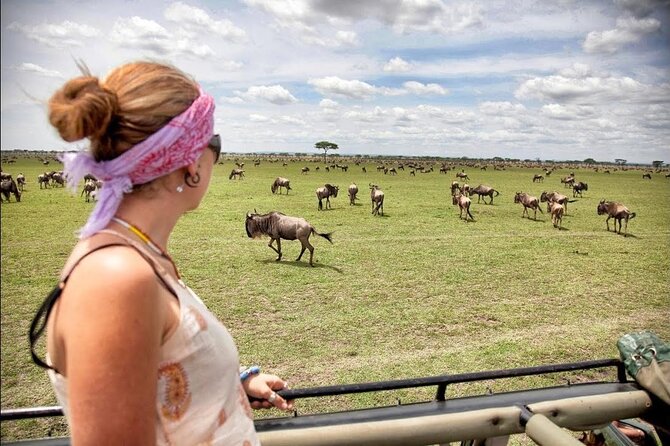
The reward is the first proper look at the Serengeti. The name is often linked with the idea of endless plains, and the park’s open spaces make it easier to scan for grazing herds and distant predators. The route is also planned around the Great Wildebeest Migration, but the animals move according to rain and pasture, not a tour calendar. You should treat migration sightings as a possibility rather than a guarantee.
Your timing may place you in the Serengeti during an afternoon change in light. The heat often softens toward sunset, and the drive into camp can become a game drive in itself. Arriving near sunset is appealing, but it can also leave little room for settling into your tent, so keep a headlamp and overnight essentials accessible.
Day three: An early Serengeti game drive
The strongest wildlife day begins around 6:30 in the morning. You leave camp after coffee with a breakfast box and lunch box, then spend up to 12 hours in the park.
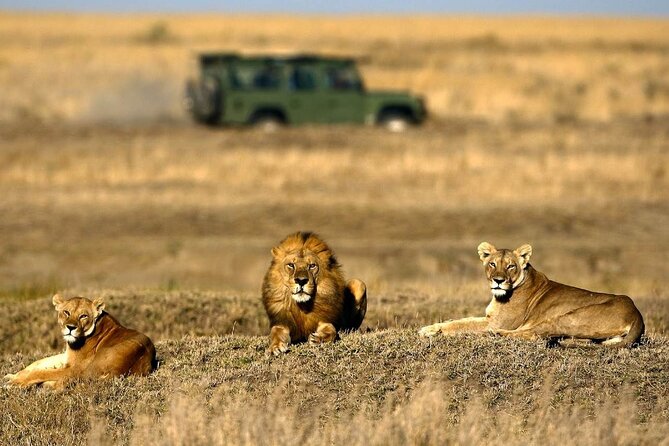
An early start is a smart choice. The supplied plan points to sunrise, morning mist, and predators returning from nighttime hunts. Lions may be resting near the road, lionesses may be planning an ambush, and other cats may be easier to see before the day becomes hot. You may also find the plains more active in the cooler hours.
A long game drive gives your guide room to respond to what is happening instead of rushing back for lunch. If wildebeest are gathered in the area, the plan is to spend more time with them. That flexibility is valuable because the best wildlife moments rarely follow a timetable.
The downside is simple: 12 hours is a very long time in a vehicle. Even with a pop-up roof and good window access, you may feel tired by late afternoon. Bring a light layer for the morning, sun protection for the middle of the day, and a camera battery plan. Power adapters are provided in the vehicle, but it is still wise to carry a charged power bank.
The guide’s role matters most on this day. Good spotting requires patience and sharp eyes, especially for distant cats, leopards, and smaller animals. Guides named in the available information include Jonathan, Emmanuel, Frazier, Shirima, and Damian. The strongest praise centers on punctuality, animal spotting, friendly service, and clear English. One guide was singled out for spotting lions from a great distance, which is precisely the sort of practical skill you want on the Serengeti plains.
More Serengeti and Ngorongoro itineraries:
- 3 Days Serengeti & Ngorongoro Group Camping Safari
★ 5.0 · 574 reviews - 5-Day Highlights mid-Range Crater, Serengeti, Tarangire
★ 5.0 · 296 reviews - 3-Day Classic Serengeti Safari
★ 5.0 · 263 reviews - Private 6-Day Tarangire Manyara Crater and Serengeti with Mid-Range Lodges
★ 5.0 · 238 reviews
Day four: Ngorongoro Crater from the rim to the floor
You leave the Serengeti after breakfast and continue with an en-route game drive toward Naabi Hills Gate. From there, the route passes the Malanja depression and reaches the Ngorongoro Conservation Area.
The main event is the descent into Ngorongoro Crater, about 600 meters down to the floor. The crater is a huge caldera formed after volcanic activity, not a small bowl-shaped crater in the usual sense. Its enclosed setting supports large numbers of animals in a relatively concentrated area.
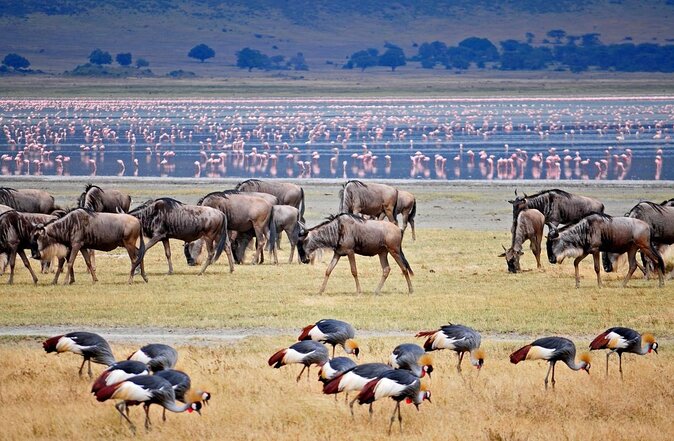
On the crater floor, you may see wildebeest, zebra, elephant, hippo, buffalo, topi, eland, and other wildlife. The area is also known for lion, hyena, cheetah, jackal, and the elusive leopard. Black rhino sightings are possible, but rare wildlife should always be treated as a bonus.
Ngorongoro can feel more concentrated than the Serengeti. That is good news if you want a strong chance of seeing several large mammals in one day. It also means more vehicles may be gathered around a notable sighting, so patience and respectful viewing matter.
The scenery changes quickly as you descend. From the rim, you look into a broad green or dry basin, depending on the season. On the floor, the view becomes more immediate: grass, water, animals, and the crater walls around you. The day is listed at about 10 hours, followed by the return to the meeting point in Arusha according to the basic tour description.
Camping, meals, and the practical side
This safari includes two nights of hotel or lodge accommodation before and after the main camping portion. The exact locations are not specified, so confirm where those nights will be spent and whether airport timing works with the arrangement.
During the safari, tents, mattresses, camping equipment, and sleeping bags if needed are included. Bathrooms are shared with other campers. If you want private bathrooms, a budget camping safari is probably the wrong format.
Meals are listed as four breakfasts, four lunches, and four dinners. The safari cook travels with the group and prepares the food. That is a real advantage on a route with long driving days, since you do not need to organize every meal yourself. You can also ask the cook about food preferences.
There is a contradiction concerning bottled water. It appears among the included items, but it is also listed under exclusions. Do not assume it is covered. Ask the company to confirm the water allowance and budget for personal water if needed.
The package does not include flights, visas, airport taxes, personal expenses, travel insurance, health requirements, or tips. Yellow Fever vaccination is described as compulsory if you are traveling to Tanzania. Check current entry and health rules before departure, because medical requirements can change.
Pickup and drop-off are offered, with Arusha as the start and end point. Airport transfer is included in the package information. The activity is open daily, and confirmation is received at booking. Cancellation is flexible only up to three full days before the start time. Inside that window, the payment is not refunded and changes are not accepted.
Who gets the best value here
I would recommend this safari to you if you want the main northern Tanzania parks without paying for luxury lodges. It suits families, friends, and private groups particularly well, and group discounts may improve the value for larger parties.
You should also be comfortable with long road days. Day two takes about nine hours, day three can run for 12, and day four is listed at 10. This is not a relaxed lodge holiday with short drives between meals. It is a focused wildlife trip that uses long transfers to connect major parks.
The package is a good fit if you care more about time in the parks than polished accommodation. You receive a proper safari vehicle, a cook, park access, meals, and camping equipment, while keeping the price below many lodge-based options.
It is less suitable if you need a fixed four-day plan with no ambiguity. The material describes a four-day activity, but the overview calls it a five-day camping safari. It also mentions Lake Manyara and a Masai village in the Ngorongoro highlands, yet the day-by-day plan supplied here covers Tarangire, Serengeti, and Ngorongoro only. Ask for a dated schedule before paying so you know exactly what is included.
Should you book this safari?
Book it if your priority is seeing Tarangire, Serengeti, and Ngorongoro with an experienced driver-guide, simple camping, and a controlled budget. The strongest practical advantages are the six-window-seat Land Cruiser, the safari cook, the early Serengeti start, and the broad mix of habitats.
I would not book without clarifying four points first: the actual number of days, the missing or optional Lake Manyara and Masai village visits, the bottled-water policy, and the number of people in your vehicle. Once those details are settled, this looks like a solid choice for an active first safari, especially if you value wildlife time and flexible private travel over comfort at camp.
FAQ
How long is this safari?
The activity title and day-by-day schedule describe four days. The overview calls it a five-day safari, so you should confirm the exact duration before booking.
Which national parks are included in the day-by-day plan?
The schedule includes Tarangire National Park, Serengeti National Park, and the Ngorongoro Conservation Area, including a descent into Ngorongoro Crater.
Is Lake Manyara included?
Lake Manyara is mentioned in the general package description, but it is not assigned to any of the four days in the detailed schedule. Confirm whether it is included or available as an alternative.
Is a Masai village visit included?
A Masai village in the Ngorongoro highlands is mentioned in the general description, but the four-day schedule does not place the visit on a specific day. Ask the provider to confirm this point.
What type of vehicle is used?
The safari uses a Toyota Land Cruiser 4×4 with a pop-up roof, six window seats, and power adapters.
Are meals included?
Yes. The package lists breakfast, lunch, and dinner, with four breakfasts, four lunches, and four dinners specified.
Are tents and camping equipment provided?
Yes. Tents, mattresses, camping equipment, and sleeping bags if needed are included. Bathroom facilities are shared at the campsites.
Is bottled water included?
The information is inconsistent. Bottled water appears under both inclusions and exclusions, so confirm the policy before departure.
What is the cancellation policy?
You receive a full refund if you cancel at least three full days before the experience start time. Cancellations or changes made within three full days are not accepted for a refund.
More four day trips in Arusha
- 4 Days Join Group tour Tarangire Serengeti and Ngorongoro crater
★ 5.0 · 219 reviews - 4-Day Safari from Arusha: Tarangire, Serengeti and Ngorongoro
★ 5.0 · 173 reviews - 4 Days safari Tour Tanzania
★ 5.0 · 159 reviews - 4 Days Tarangire Serengeti Ngorongoro Crater
★ 5.0 · 117 reviews
Newly listed around Arusha
- 5-Day Private Safari Tour in Tanzania’s Wildlife★ 5.0 · 3 reviews
- 3 Days private safari Tarangire ,Ngorongroro crater &Manyara★ 5.0 · 3 reviews
- 3 Day Sharing Safari – Manyara, Ngorongoro Crater and Tarangire National Parks★ 5.0 · 3 reviews
- Tarangire National Park Day Trip★ 5.0 · 3 reviews
- 2 Days Tarangire and Ngorongoro Crater Tour★ 5.0 · 3 reviews
- 6 -Day Tarangire, Manyara, Serengeti & Ngorongoro★ 5.0 · 3 reviews
- 5 Days Group Camping Safari★ 4.7 · 3 reviews
- 4 Days Tanzania Safari★ 4.5 · 3 reviews
Serengeti & Ngorongoro Safaris, compared.


Balloon Safari & Bush Breakfast in Serengeti – Miracle Experience
Read our review →




Private 6-Day Tarangire Manyara Crater and Serengeti with Mid-Range Lodges
Read our review →
5 Days Camping Tarangire, Serengeti & Ngorongoro crater & Visiting Maasai
Read our review →Browse the lists this tour appears in