
Reviewed · SERENGETI & NGORONGORO SAFARIS
3 Days Tanzania Safari Tarangire, Manyara, & Ngorongoro Crater.
The most wildlife-packed feature of this three-day Northern Circuit safari is its mix of habitats. You go from flamingo country and forest at Lake Manyara to the enclosed wildlife bowl of Ngorongoro Crater, then finish among Tarangire’s baobabs and large elephant herds. I like that the tour covers three very different parks without making you arrange vehicles, meals, or camp nights yourself.
I also like the maximum group size of seven, which keeps the vehicle more personal than a large coach tour, and the all-in format at $670 per person. Guides named in past bookings include Malaki, Isaac, and Norelle, with strong praise for animal spotting and communication. The main drawback is the pace: each day runs about 10 hours, with long stretches in an open-roof safari vehicle and no Serengeti visit.
Key points to know before booking
- Three parks in three long days: Lake Manyara, Ngorongoro Crater, and Tarangire each offer a different setting and wildlife mix.
- Small shared vehicle: The group is capped at seven, helping keep costs down while leaving room for a more personal safari feel.
- Big Five potential: Lion, elephant, buffalo, rhino, and leopard are all possible, though no safari can promise every sighting.
- Camping is part of the value: Tented camp accommodation, meals, transport, and park visits are handled as part of the package.
- Guides matter here: Malaki, Isaac, and Norelle are names connected with particularly strong praise for driving, animal knowledge, and service.
- Expect full days: The listed stops run about 10 hours each, so this suits you if you want maximum park time rather than a leisurely schedule.
Three parks, one compact Northern Circuit safari
This trip is built for you if Tanzania is part of a larger holiday and you have only three days to give to safari. It links three famous stops near Arusha, with the practical work handled for you from the start.
The order is Lake Manyara, Ngorongoro Crater, then Tarangire. That sequence gives you a good range of scenery and animals, but it is not a slow trip. You will spend much of the day on the road or out on game drives, and the vehicle is your base for long stretches.
The shared format is important. A private safari gives you more control over stops and timing, but it costs more. Here, a group of no more than seven lets you split major costs while keeping the vehicle fairly intimate. If you are a couple or a small group of friends, you may share with other people. That can add a social side to the trip, but it also means you will have less say over the daily rhythm.
The price is $670 per person. Judged against the included transport, park access where specified, meals, guiding, and two nights of camp accommodation, it is a useful budget option. You should still compare exactly what your booking includes, since budget safaris can differ in tent standard, vehicle comfort, and meal arrangements.
More Safaris in Arusha
- Balloon Safari & Bush Breakfast in Serengeti – Miracle Experience
★ 5.0 · 1,646 reviews - 4 Days Group Camping Safari
★ 5.0 · 1,101 reviews - 5 Days Group Camping Safari
★ 5.0 · 730 reviews
Day 1: Lake Manyara’s flamingos, forest, and tree country
After a morning briefing, you head to Lake Manyara National Park for an extensive game drive. The park is relatively small, but its changing habitats give you plenty to watch in one day.
The shallow, alkaline lake is a seasonal home for thousands of flamingos. When conditions are right, the pink birds create one of the most memorable sights of the trip. Birdlife is a major reason to pay attention here. More than 500 bird species are found in the area, so this is not only a stop for people hunting large mammals.
The park’s forests are home to troops of monkeys. Out on the grassy plains, you might see giraffes, buffaloes, zebras, and wildebeests. Acacia woodland brings elephants and the possibility of lions. The open roof of the safari vehicle gives you a clear view upward and outward, useful for spotting birds, giraffe necks, and animals at a distance.
I like Manyara as an opening day because it quickly shows you how much a safari depends on habitat. You are not simply driving across one broad field looking for lions. The scenery changes, and so does the type of wildlife you can find.
The tradeoff is time. The day is listed at about 10 hours, and the review details point to long periods spent on top of the vehicle looking for animals. Bring patience. Wildlife watching often means sitting quietly while a guide searches the trees or grass, then moving quickly when something appears.
Day 2: The Ngorongoro Crater wildlife bowl
Day two begins early with a drive into the Ngorongoro Conservation Area and down into the crater. The crater is almost 600 meters deep and about 20 kilometers wide, so the first descent gives you a strong sense of scale before the game drive begins.
Inside, the enclosed setting makes this one of the best places on the route for concentrated wildlife viewing. You may see lions, elephants, buffaloes, rhinos, and leopards, along with Grant’s gazelles, Thomson’s gazelles, and mountain reedbucks. Spotted hyenas are another possibility. The area also supports rare wild dogs and more than 500 bird species.
The crater is particularly valuable on a short safari because you do not need to cover enormous distances to sample several kinds of wildlife. Animals gather in a contained area, though sightings still depend on season, weather, and luck. A claim of seeing the Big Five is possible, and some bookings have done so in two days, but you should treat that as a fortunate result rather than a promise.
A picnic lunch is taken in the crater, followed by more game viewing before you leave. This is a long day, but it is also the trip’s most concentrated wildlife chapter. If rhino is high on your wish list, this is one of the places where you have a realistic chance, though no guide can guarantee one.
The early start and extended drive can be tiring. If you prefer late breakfasts and quiet afternoons, this itinerary may feel rushed. If you would rather use every daylight hour to search for animals, the schedule works in your favor.
Day 3: Tarangire’s elephants and giant baobabs
After breakfast, you continue to Tarangire National Park. The park is known for huge baobab trees, open grasslands, seasonal swamps, and the Tarangire River, which helps draw animals to the area.
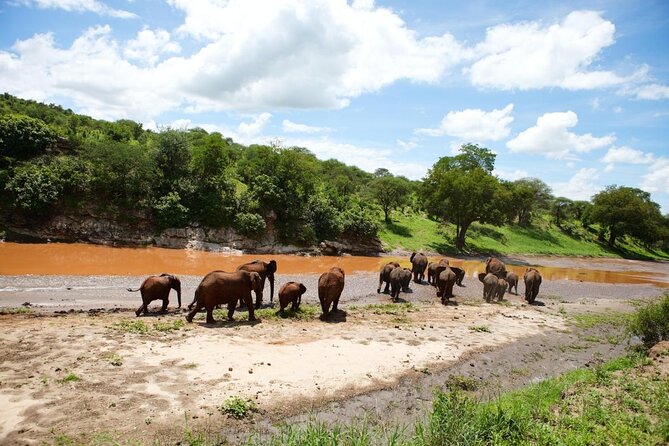
Tarangire is especially well suited to elephant watching. It is home to some of the largest elephant herds in northern Tanzania, and animals gather near water. You might also see giraffes, bushbucks, hartebeests, dik-diks, waterbucks, warthogs, and reedbucks. Buffaloes, zebras, and wildebeests are also found here, with lions often following the herds.
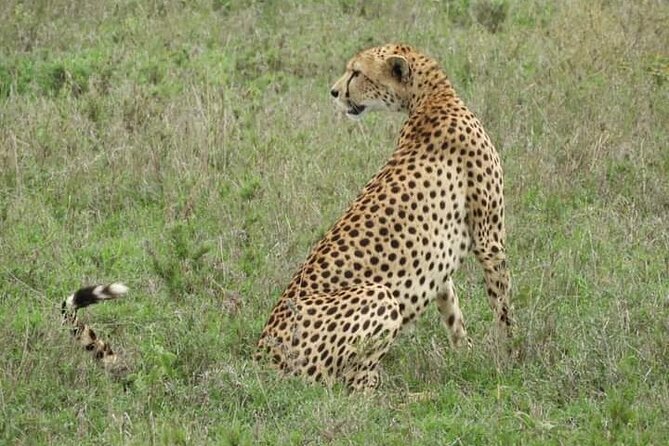
Leopards appear occasionally, while cheetahs are rarely seen. That distinction is useful. You get excellent odds for a broad range of common African wildlife, but you should not book this trip expecting a guaranteed cheetah or leopard sighting.
Tarangire gives the safari a fitting final act because it looks and feels different from Ngorongoro. The baobabs create memorable silhouettes, and elephants provide a strong chance for close, dramatic viewing from the vehicle. After the game drive, you leave in the afternoon and return to Arusha by early evening.
That final return is practical if you have onward plans, but it leaves little room for delay. Roads, animal sightings, and park traffic can affect timing. Avoid scheduling a tight flight or important connection immediately afterward unless you have confirmed the timing directly with the operator.
More Serengeti and Ngorongoro itineraries:
- 3 Days Serengeti & Ngorongoro Group Camping Safari
★ 5.0 · 574 reviews - 5-Day Highlights mid-Range Crater, Serengeti, Tarangire
★ 5.0 · 296 reviews - 3-Day Classic Serengeti Safari
★ 5.0 · 263 reviews - Private 6-Day Tarangire Manyara Crater and Serengeti with Mid-Range Lodges
★ 5.0 · 238 reviews
What the camp nights are really like
The accommodation is in camps, not high-end lodges. Details describe comfortable tents with cots and a separate dining room, along with clean facilities and meals prepared by a safari chef. One chef named in the feedback is Ben, whose food received particularly warm praise.
This is a useful middle ground for you if you want the atmosphere of sleeping under canvas without carrying camping equipment. You get a bed rather than a sleeping bag on the ground, but you should still approach the nights as camping, not hotel accommodation.
Meals are included, which makes the $670 price easier to assess. You do not need to find restaurants after a long game drive, and a camp dining room gives the group a shared place to eat. The food is part of the experience, especially after a day spent in the vehicle.
Standards can vary on budget safaris, so it is sensible to ask the provider what the current camp setup includes before paying. The supplied details confirm tents, cots, a dining room, and meals, but they do not specify private bathrooms, electrical outlets, or a particular camp at each stop.
Guides, drivers, and the value of a sharp eye
A safari guide does much more than drive. The guide chooses routes, reads animal behavior, handles park logistics, and helps you understand what you are seeing.
Names connected with this experience include Malaki, Isaac, and Norelle. Malaki received praise for being funny, capable, and attentive. Isaac was singled out for spotting predators hidden in the grass and for taking time to explain new animal sightings. Norelle was praised for animal knowledge and service.
You should not assume you will receive a particular guide unless Signature Safari confirms it. Still, these names give you useful points to raise before departure. Ask who will lead your trip, how many people will share the vehicle, and what happens if the advertised guide is unavailable.
The guide’s eyesight and patience can shape your safari. A lion in open view is easy. A leopard, hyena, or predator partly hidden in grass takes a trained eye and a driver willing to stop. The small group helps here because everyone can usually focus on the same sighting without the confusion of a large bus.
Is $670 a good price?
For three days, $670 per person is aimed at the budget-conscious safari market. The value comes from combining major park visits with transport, meals, camp accommodation, and guiding in one trip.
You are paying for access to three major Northern Circuit destinations, not just a single park. Lake Manyara gives you birds, monkeys, elephants, and varied habitats. Ngorongoro offers a strong concentration of mammals. Tarangire adds elephants, baobabs, and river country.
The compromises are clear. You share the vehicle, spend about 10 hours on each park day, and sleep in camps rather than upscale lodges. This is a good deal if you value wildlife time and simple logistics more than privacy or polished comfort.
It is less appealing if you want a private vehicle, a slow schedule, or the widest possible route. Serengeti is not included, and one booking specifically wished for more time there. Adding Serengeti would make the safari longer and usually more expensive, but it may be worth considering if the great migration or wide-open predator country is your main goal.
Who will enjoy this safari most?
I would recommend this trip to first-time safari visitors who want a practical introduction without arranging every piece themselves. It also suits solo people and couples who like sharing costs and meeting others.
A small group of up to seven is a good fit if you can be flexible. You will need to share decisions about vehicle space, stopping time, and the pace of the day. For a group of five, the format can feel especially comfortable because you may have only a few additional people joining.
This safari is also a strong choice if you want the Big Five without committing to a longer, more expensive expedition. Lions, elephants, buffaloes, rhinos, and leopards are all possible across the route, and some schedules produce excellent results quickly.
I would think twice if you dislike long drives, early starts, open-air vehicle time, or tented accommodation. One account notes spending more than three hours on the vehicle at the beginning while searching for animals. That is normal safari work, but it can feel demanding if you expect constant action.
Pickup is offered, a mobile ticket is available, and confirmation is provided at booking. The listed start time is 12:00 am, which is unusual for a safari briefing, so confirm the exact pickup hour and location before the day arrives. Service animals are allowed, the tour is near public transport, and most people can participate according to the supplied conditions.
You can cancel for a full refund up to three full days before the local start time. Cancellations or changes inside that three-day window are not refunded or accepted, and poor weather or an unmet minimum group size may lead to a new date or a full refund.
Should you book the three-day route?
Book it if you want three classic Tanzania wildlife settings in a short, organized package, and you are comfortable with long days and basic camp accommodation. The strongest reasons are the seven-person maximum, included meals and transport, and the chance to see a remarkable range of animals without paying for a private safari.
Do not book it as a substitute for a full Tanzania itinerary. There is no Serengeti stop, and the compact schedule leaves little spare time. But if Arusha is your base and three days is all you have, this is a sensible way to get serious safari time for $670.
FAQ
How long is the safari?
The experience lasts approximately three days. Each scheduled park day is listed at about 10 hours.
Which parks are included?
The route visits Lake Manyara National Park, Ngorongoro Crater, and Tarangire National Park.
What is the maximum group size?
The tour accepts a maximum of seven people.
Are meals and accommodation included?
Yes. Meals and camp accommodation are included. The accommodation is described as tented camping with cots and a dining room.
Is pickup available?
Pickup is offered. The listed meeting information gives a start time of 12:00 am, so confirm the exact pickup location and time before departure.
What is the cancellation policy?
You can receive a full refund if you cancel at least three full days before the local start time. Cancellations or changes made within three days are not refunded or accepted.
More three day trips in Arusha
- 3 Day Serengeti National Park & Ngorongoro Crater Camping Safari
★ 5.0 · 142 reviews - 3 Days Tarangire, Ngorongoro & Lake Manyara Group Camping Safari
★ 5.0 · 102 reviews - 3 Days Private Safari – manyara, Ngorongoro & Tarangire
★ 5.0 · 94 reviews - 3 Days Small Group Safari to Serengeti NP and Ngorongoro Crater Tour in Tanzania
★ 5.0 · 77 reviews
Newly listed around Arusha
- 5-Day Private Safari Tour in Tanzania’s Wildlife★ 5.0 · 3 reviews
- 3 Days private safari Tarangire ,Ngorongroro crater &Manyara★ 5.0 · 3 reviews
- 3 Day Sharing Safari – Manyara, Ngorongoro Crater and Tarangire National Parks★ 5.0 · 3 reviews
- Tarangire National Park Day Trip★ 5.0 · 3 reviews
- 6 -Day Tarangire, Manyara, Serengeti & Ngorongoro★ 5.0 · 3 reviews
- 2 Days Tarangire and Ngorongoro Crater Tour★ 5.0 · 3 reviews
- 5 Days Group Camping Safari★ 4.7 · 3 reviews
- 7-Day Mt. Kilimanjaro Hiking: Machame Route★ 5.0 · 3 reviews
Serengeti & Ngorongoro Safaris, compared.


Balloon Safari & Bush Breakfast in Serengeti – Miracle Experience
Read our review →




Private 6-Day Tarangire Manyara Crater and Serengeti with Mid-Range Lodges
Read our review →
5 Days Camping Tarangire, Serengeti & Ngorongoro crater & Visiting Maasai
Read our review →Browse the lists this tour appears in