
Reviewed · ARUSHA TOURS
10-Day Amazing Comfort Camping Safari
This safari covers Tanzania’s biggest wildlife names, but its best feature is the unhurried pace. You get time for a walking safari in Arusha, a full day in the Serengeti, two days around Tarangire, and a local visit in Mto wa Mbu rather than a trip made only of rushed photo stops.
I like the private format, since your group travels with its own driver-guide, and I like the strong human touch built into the experience. Christopher, Japhet, and Warren are praised for careful planning, wildlife spotting, patience, and practical help, including sorting out locked luggage late at night. The main caution is that comfort camping still means public campsites, long bumpy drives, and modest facilities.
Key points to know before booking
- Arusha National Park begins the safari with walking, waterfalls, birds, and views of Mount Meru.
- Mto wa Mbu adds real local contact through food, crafts, plantations, markets, and banana beer.
- Serengeti includes a full game-drive day around the Seronera and Mara rivers.
- Ngorongoro Crater gives you a strong chance to see rhinos, lions, flamingos, and many birds.
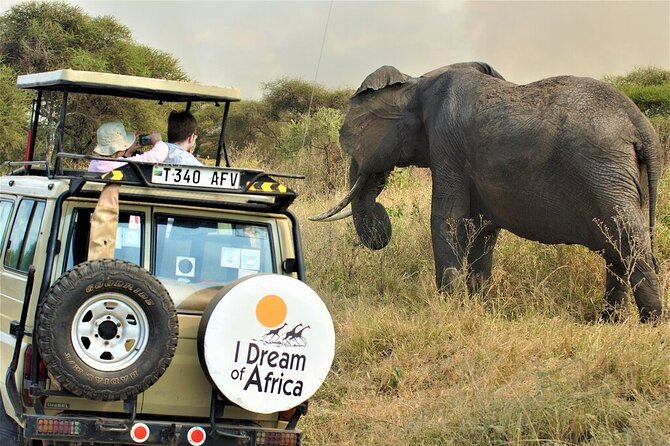
- Tarangire is the elephant portion of the trip, with game drives near the river and Larmaku Swamp.
- The $3,899 price includes park fees, camping gear, meals, water, and a private professional guide, but not flights, pre- or post-tour lodging, tips, or personal costs.
A 10-day route through Tanzania’s best-known parks
This is a classic northern Tanzania circuit with a useful twist: it starts in Arusha National Park and gives you more time on foot than many standard safari programs. You then move through Lake Manyara, Serengeti, Ngorongoro, and Tarangire before returning to Arusha or Kilimanjaro Airport.
The route is private, so you are not placed in a large shared vehicle. That matters when you want to pause for birds, ask questions, change the length of a walk, or spend more time watching a pride of lions. The advertised approach is flexible and without a rush, though the distances between parks still create some long road days.
More Safaris in Arusha
- Balloon Safari & Bush Breakfast in Serengeti – Miracle Experience
★ 5.0 · 1,646 reviews - 4 Days Group Camping Safari
★ 5.0 · 1,101 reviews - 5 Days Group Camping Safari
★ 5.0 · 730 reviews
Day 1: Arusha National Park after Kilimanjaro Airport
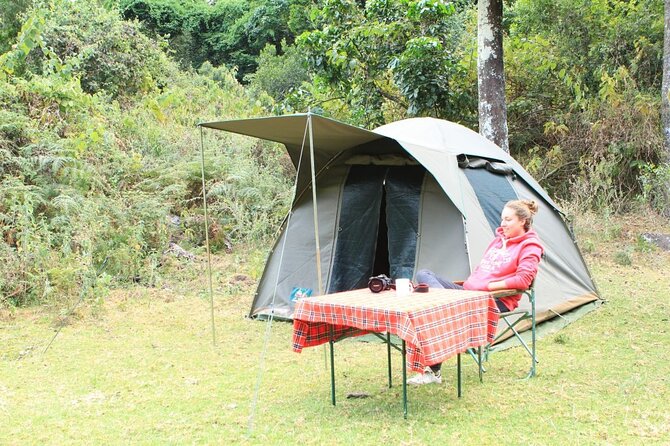
After pickup at Kilimanjaro International Airport, your driver-guide takes you toward Arusha National Park. The first night is at Momella Public Campsite, where the camping setup is arranged and your guide explains how the safari will work.
Arusha National Park is a smart opening stop. It has more than 400 recorded bird species, and its setting includes Mount Meru, forest, lakes, swamps, waterfalls, and steep cliffs. You get an early sense of Tanzania’s variety before reaching the larger safari parks.
Your arrival time matters. If your flight lands after 3 pm, the drive into the park and the first campsite night are not possible. You will need a lodge in Arusha, and that extra night is not included in the $3,899 price. I would treat this as an important booking detail, not a minor footnote.
Day 2: Walking beneath Mount Meru
The second day gives Arusha National Park room to breathe. After breakfast, you take a two to four-hour nature walk with an armed ranger, passing large fig trees, waterfalls, and local plant life. The length can be adjusted in discussion with your guide, which is useful if you want a gentle introduction or a more active morning.
Walking changes the safari experience. From a vehicle, you search for larger animals. On foot, you pay attention to tracks, insects, trees, birds, and the sounds around you. The armed ranger is an important part of this activity, and you should be prepared for a moderate level of physical effort.
After a hot lunch at camp, you head out on an evening game drive. Momella Lake is especially good for waterbirds, and the views toward Mount Meru and Kilimanjaro add a dramatic backdrop. An optional walk toward Meru’s summit is also available at extra cost, but you need to discuss that plan with your guide.
Day 3: Mto wa Mbu and Lake Manyara
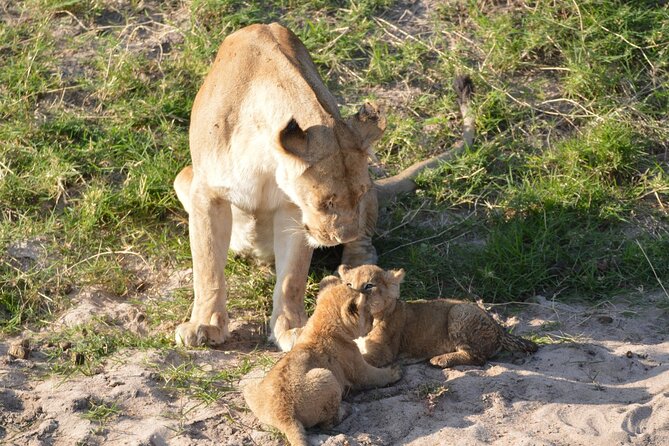
You leave Arusha after breakfast and drive about 150 kilometers to Mto wa Mbu. The road takes roughly three and a half hours, mostly on paved surfaces, then the day shifts from road travel to local culture.
The town visit is one of the most useful parts of the trip for anyone who wants more than wildlife photos. You can walk past market stalls, see plantations and traditional homes, meet local craftspeople, and learn about the Maasai and the many cultural groups living in the area. The program also includes banana beer in a local bar and lunch prepared by a Tanzanian mama.
This stop gives context to the parks. Tanzania is not only an open stretch of wild animals viewed through a vehicle window. People farm, make crafts, trade, cook, and maintain distinct traditions close to the safari route. The visit lasts about an hour or two, so it adds local contact without taking over the wildlife portion.
Later, you enter Lake Manyara National Park and camp at Endabash Public Campsite. The road day is manageable, but you should expect the schedule to feel full.
More camping safaris in Arusha:
- 3 Days Serengeti & Ngorongoro Group Camping Safari
★ 5.0 · 574 reviews - 2 Days Tarangire and Ngorongoro Group Camping Safari
★ 5.0 · 146 reviews - 6 Days Tanzania Budget Camping Safari
★ 5.0 · 145 reviews - 3 Day Serengeti National Park & Ngorongoro Crater Camping Safari
★ 5.0 · 142 reviews
Day 4: Birdlife and early-morning wildlife at Lake Manyara
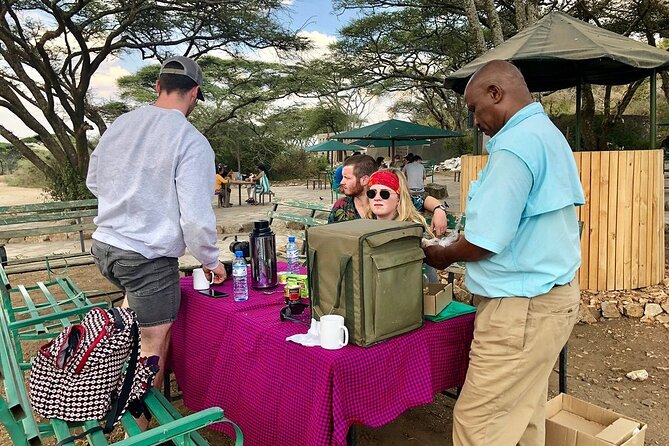
Lake Manyara is the birding highlight of the route. More than 400 bird species have been recorded here, including pelicans, herons, storks, sacred ibis, glossy ibis, and black egrets. When water levels are right, flamingos can gather in large numbers around the lake.
You may also see birds of prey, including crowned eagles and African hawk-eagles. More than 50 raptor species have been recorded in the park, so this is a good place to keep binoculars ready even when the larger animals are not nearby.
The planned early-morning game drive is a practical choice. The park is calmer at the start of the day, and carnivores are more active in the cooler hours. The rest of the day is devoted to safari viewing, with time to return to camp for food and rest as the schedule permits.
Lake Manyara is not the best part of the trip for sheer scale. Compared with the Serengeti, it is a smaller and more enclosed setting. Its strength is variety: birdlife, lake views, forest, and the chance to see animals in a different environment.
Day 5: The long road to Seronera
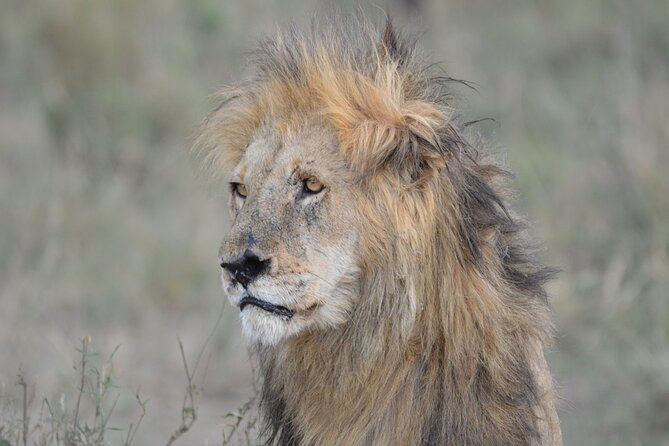
Day five is a serious travel day. You leave after an early breakfast with lunchboxes and drive about 210 kilometers through the Ngorongoro Conservation Area toward Serengeti National Park.
The route takes roughly six hours. It is partly paved, but much of the journey is sandy and bumpy. You also cross a large part of the Serengeti, so the drive itself becomes an introduction to the park rather than simple transportation from one hotel to another.
A stop for panoramic views over Ngorongoro Crater adds a memorable change of pace. The crater lies hundreds of meters below, and even a short viewing pause helps you understand the scale of the region.
You finish at Seronera Public Campsite in central Serengeti. The Seronera area is well placed for wildlife, and the park has more than 500 recorded bird species. The wider Serengeti-Mara ecosystem also supports five bird species found nowhere else, which gives birdwatchers another reason to pay attention during the long drive.
Day 6: A full Serengeti game drive
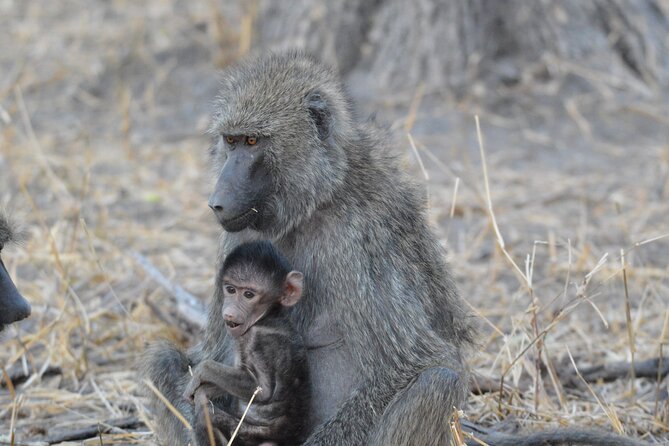
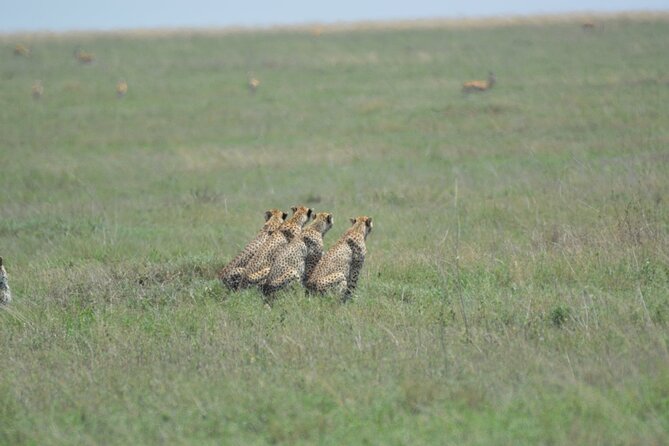
This is the trip’s main wildlife day. You spend the day on safari around the Seronera and Mara rivers, with time to search for wildebeest, lions, cheetahs, giraffes, crocodiles, and other animals.
The river areas can produce tense scenes. Crocodiles may wait near the water for an animal coming to drink or cross. Predators may be hunting, and large herds can create movement across the open plains. Nobody can promise a particular sighting, but a full day gives your guide far more chances than a short drive squeezed between transfers.
The itinerary also points toward less-visited parts of the area. That matters if you prefer patient observation to lining up at every obvious sighting. Your guide’s skill is especially important here. Christopher is praised for spotting wildlife and explaining animals, plants, and habitats clearly. That combination helps you understand what you are seeing rather than simply collecting names.
Day 7: Sunrise in the Serengeti, evening near Ngorongoro
You rise early for another Serengeti game drive. Sunrise is a strong time for wildlife because the bush is cooler and predators may still be active. After the drive, you return for brunch, check out, and travel toward the Ngorongoro area.
You can add a Maasai boma visit for an extra charge. This is the cultural option on the later part of the route, offering a look at how semi-nomadic communities continue age-old traditions. Ask about the exact cost and timing before committing, since it is not part of the base price.
The night is at Simba Public Campsite near the crater. This positioning makes the next morning easier, but it also means another change of camp after a busy day. If you like having one fixed base, the repeated moves may feel tiring. If you want to cover several major parks in one trip, they are part of the bargain.
Day 8: Down into Ngorongoro Crater
After breakfast, you drive into the Ngorongoro Crater for a game drive. The descent provides wide views into the caldera, and the enclosed setting can make wildlife viewing feel concentrated.
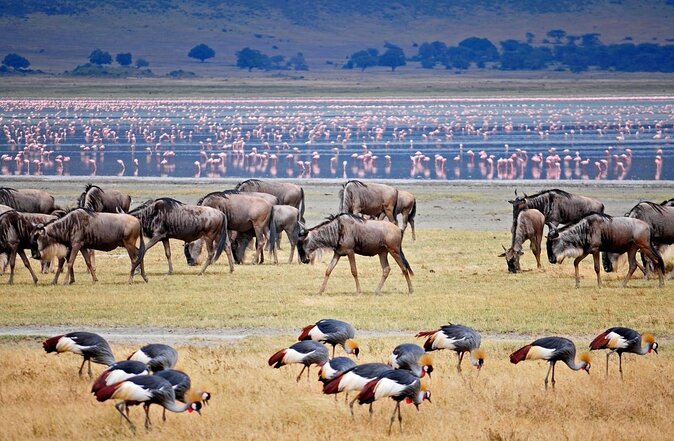
The crater is one of the strongest places on this route for a broad mix of animals. With a good guide and some luck, you might see rhinos, lions, flamingos, ostriches, crowned cranes, kori bustards, vultures, sandpipers, and storks. The lake may be covered with greater and lesser flamingos when conditions are right.
The crater is not a guaranteed Big Five checklist. Wildlife sightings are never promised, and animal movement changes from day to day. Still, this full morning gives you a serious chance to see several major species in one compact area, including the rare possibility of a rhino.
Day 9: Elephants and dry-country birds in Tarangire
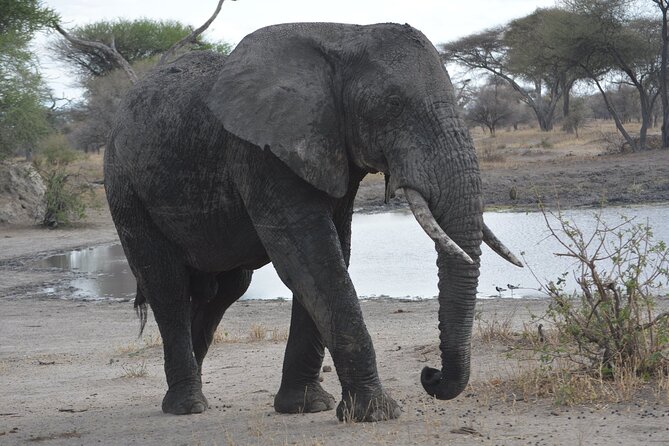
After breakfast, you travel to Tarangire National Park for another game drive. This park is known for elephants, and the route focuses on watching them near the river and around Larmaku Swamp.
Elephants may come close to the campsite as they gather near water. At the swamp, you might see animals cooling off or using the shade of acacia trees. The setting is different from the Serengeti and crater, with a stronger focus on woodland, water, and dry-country wildlife.
Tarangire also has excellent bird interest. Larmaku Swamp is described as supporting an exceptional number of breeding bird species in one habitat, and the park can produce northern pied babblers and vulturine guineafowl. I would not book this safari only for elephants, but elephant fans will find this day especially rewarding.
The schedule includes a second game drive in Tarangire, giving you more time than a quick afternoon visit. Sightings cannot be guaranteed, despite the very high stated chance of large elephant herds. Treat that figure as an expectation, not a promise.
Day 10: Return to Arusha or the airport
After breakfast, the safari ends with a drive to a lodge in Arusha, Arusha Airport for a domestic flight, or Kilimanjaro International Airport for an international departure.
Because the transfer depends on your flight plan, confirm the timing carefully. The tour does not include extra accommodation before or after the safari, so a late arrival or early flight may require you to arrange and pay for a separate night.
What $3,899 includes, and what it does not
At $3,899 per person, this is not a budget camping trip. It can still offer reasonable value if you want a private 10-day route through five major northern Tanzania areas without arranging each park, campsite, meal, and transfer yourself.
The price includes:
- Camping equipment
- Drinking water every day
- Non-resident park fees
- A professional driver-guide
- Nine dinners
- Ten breakfasts
- Ten lunches
The value comes from the coverage. You are paying for access to Arusha National Park, Lake Manyara, Serengeti, Ngorongoro, and Tarangire, along with a private guide and the logistics linking them.
The phrase comfort camping needs a clear reading. You sleep at public campsites, and bath towels are not supplied. The tour includes camping equipment and meals, but the information does not promise lodge-style rooms or hotel comforts. Bring personal items, travel insurance, visa fees, souvenirs, and a tipping budget.
The suggested tip is $10 per person per day. For ten days, that equals $100 per person if you follow the guideline.
The guide makes a real difference
The strongest personal praise centers on Christopher, also called Chris, and his team. His useful qualities are practical: he explains wildlife, plants, and animals, spots hard-to-see species, adjusts plans, and helps when problems arise.
That last point matters on a long trip. One couple needed help with luggage that had been locked accidentally, and Christopher went out of his way to assist at night. Another safari was tailored around specific wishes, including northern and central Serengeti, Ngorongoro Crater, Tarangire, and an off-the-beaten-path Maasai area.
Japhet and Warren are also named as part of the team. The company is family-run, and the service style appears personal rather than corporate. Still, guide assignment can vary, so ask who will lead your particular departure if having Christopher specifically is important to you.
Who should book this safari?
I would recommend it to you if you want a private safari with a broad route, regular meals included, and a mix of wildlife, walking, birding, and local culture. It suits people with moderate fitness who can handle long drives, uneven roads, campsite nights, and changes of location.
It is a good fit for couples, including honeymooners, and for small private groups that value flexible pacing. It also works well for first-time safari visitors who want the major northern parks in one carefully linked trip.
I would hesitate if you want a luxury lodge holiday, short transfer times, or guaranteed animal sightings. The Serengeti and crater days are special, but the route covers large distances and some roads are sandy and rough. You also need to budget for airport-day lodging if your flight timing does not match the plan.
Cancellation is simple but strict: cancel at least three full days before the local start time for a full refund. Cancellations or changes within that three-day window are not refunded or accepted.
FAQ
How long is the safari?
The safari lasts approximately 10 days, from pickup near Kilimanjaro Airport through the return to Arusha, Arusha Airport, or Kilimanjaro International Airport.
Where does the safari start?
Pickup is offered, and the first planned pickup point is Kilimanjaro International Airport. Your driver-guide then takes you to Arusha National Park.
What happens if my flight arrives after 3 pm?
You cannot drive to the campsite in Arusha National Park after that time. You will need to stay at a lodge in Arusha, and that accommodation is not included.
Is this a private safari?
Yes. Only your group participates in the private tour or activity.
What level of fitness is needed?
A moderate level of physical fitness is recommended. The itinerary includes a two to four-hour nature walk in Arusha National Park.
Is camping equipment included?
Yes. Camping equipment is included in the tour price.
Are meals included?
Yes. The price includes nine dinners, ten breakfasts, and ten lunches.
Is drinking water provided?
Yes. Drinking water is included on all days.
Are international flights included?
No. International flights from and to your home are not included.
Are tips included?
No. Tips are separate. The suggested tipping guideline is US$10 per person per day.
Can I add a Maasai boma visit?
Yes. A visit to a Maasai boma is available as an optional activity at an additional cost.
Can I cancel for a full refund?
Yes, if you cancel at least three full days before the experience start time. Cancellations within three full days are not refunded.
Should you book the 10-day route?
Book this safari if your priority is range, private guiding, and time in the parks, not polished hotel luxury. The mix is unusually broad: walking in Arusha, community life in Mto wa Mbu, birds at Manyara, open-country wildlife in the Serengeti, concentrated viewing in Ngorongoro, and elephants in Tarangire.
The decision comes down to your comfort with camping and long road days. If that sounds like part of the adventure, $3,899 buys a well-filled northern Tanzania program with meals, water, park fees, gear, and a dedicated guide. If you need private rooms and easy transfers each night, choose a lodge-based safari instead.
Newly listed around Arusha
- 5-Day Private Safari Tour in Tanzania’s Wildlife★ 5.0 · 3 reviews
- 3 Days private safari Tarangire ,Ngorongroro crater &Manyara★ 5.0 · 3 reviews
- 3 Day Sharing Safari – Manyara, Ngorongoro Crater and Tarangire National Parks★ 5.0 · 3 reviews
- Tarangire National Park Day Trip★ 5.0 · 3 reviews
- 2 Days Tarangire and Ngorongoro Crater Tour★ 5.0 · 3 reviews
- 6 -Day Tarangire, Manyara, Serengeti & Ngorongoro★ 5.0 · 3 reviews
- 5 Days Group Camping Safari★ 4.7 · 3 reviews
- 7-Day Mt. Kilimanjaro Hiking: Machame Route★ 5.0 · 3 reviews
Arusha Tours, compared.

Balloon Safari & Bush Breakfast in Serengeti – Miracle Experience
Read our review →






Browse the lists this tour appears in