
Reviewed · SERENGETI & NGORONGORO SAFARIS
Ngorongoro Crater: Full-Day Safari Tour
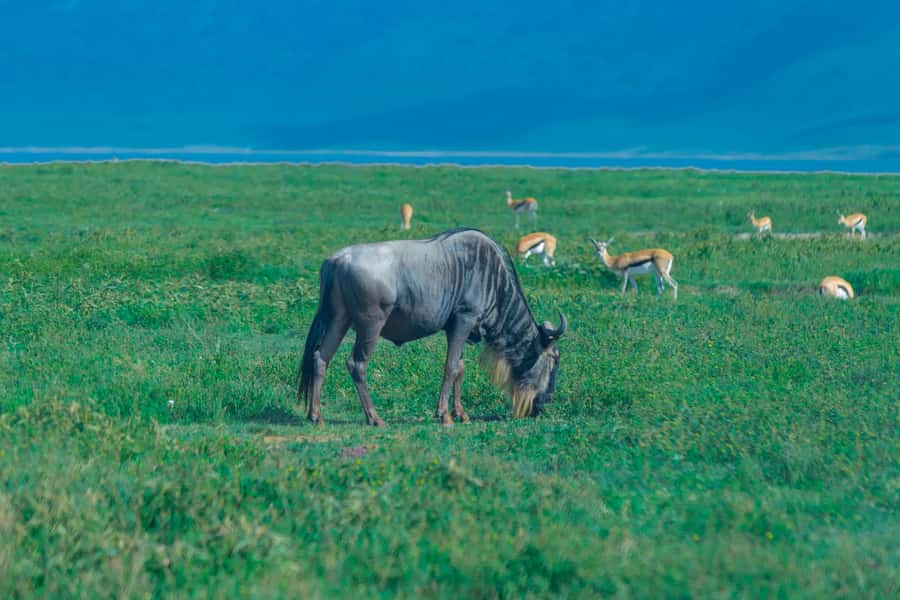
Ngorongoro Crater gives you one of Tanzania’s most dramatic wildlife days in a single setting. You descend into a vast volcanic bowl where lions, rhinos, hippos, hyenas, antelopes, and birds share open grassland and wetlands. The crater scenery is the main event, but the animals make the day memorable.
I like the small-group limit of six and the included lunch, park entry, water, guide, and hotel transfers. Guides Walter, Abdallah, and Islam have each been praised for spotting animals and explaining the crater. The main caution is timing: the advertised six-hour activity can involve a much longer road day from Arusha, and vehicle reliability has been an issue.
Key points
- Four of the Big Five may be possible in one day: Lions, rhinos, elephants, and buffalo have all been seen on successful outings.
- The crater floor is reached after a long drive: From Arusha, the road to the entrance can take about three hours, followed by roughly an hour to descend.
- A small group can improve game viewing: The stated limit is six people, though one outing carried seven.
- Lunch comes with a memorable setting: The picnic stop has views toward a rhino pool and crater wetlands.
- Guide quality matters here: Walter, Abdallah, and Islam have been singled out for animal spotting, safe driving, and useful explanations.
- Transport deserves careful attention: One vehicle broke down on the return, causing a seven-hour trip back and missed onward plans.
Why Ngorongoro Crater is worth the long road from Arusha
Ngorongoro Crater is a collapsed volcanic caldera, a huge natural bowl that holds grasslands, wetlands, acacia trees, and a remarkable concentration of wildlife. From the rim, you first see the crater as a sweeping oval of green and brown below you. The scale is hard to grasp until the vehicle begins its descent.
This is not a safari where you spend the day moving through many different habitats. Instead, you spend your time inside one contained ecosystem. That focus is useful if you have only one day and want a strong chance of seeing several well-known African animals without changing camps or parks.
The setting also gives the safari a clear visual rhythm. You may move across open grassland, pause near water where hippos gather, and then stop beneath acacia trees where lions rest. Rhinos can be difficult to find in many safari areas, so a solitary rhino grazing in the crater is a particularly valuable sight.
The crater is sometimes described as a wildlife wonderland, but you should keep expectations sensible. Animals are wild, sightings are never guaranteed, and the quality of the day depends heavily on the guide, road conditions, time available on the floor, and the condition of the vehicle.
More Safaris in Arusha
- Balloon Safari & Bush Breakfast in Serengeti – Miracle Experience
★ 5.0 · 1,646 reviews - 4 Days Group Camping Safari
★ 5.0 · 1,101 reviews - 5 Days Group Camping Safari
★ 5.0 · 730 reviews
The Arusha pickup and the four-hour approach
Pickup is included for hotels in central Arusha. You need to provide your hotel details when booking. If you stay farther from the city center, an extra transfer charge may apply, so check this before you commit to the advertised price.
The road journey is a major part of the experience. One detailed account describes about three hours from the hotel to the park entrance, followed by another hour to reach the crater floor. That means the six-hour duration shown for the activity does not tell the whole story. Your actual day can begin early and stretch well beyond six hours once road travel is counted.
This matters if you have an evening flight, a dinner reservation, or another paid activity. Do not schedule anything tight after the safari. A vehicle breakdown on one return trip turned the drive back into seven hours, with three driver changes and a hotel arrival around 8:30 p.m. One couple even missed a 7 p.m. flight.
That incident appears to be a serious exception, not the promised plan, but it is still useful information. Ask the operator about the vehicle, the expected return time, and what happens if a mechanical problem occurs. A safari vehicle is not just transport here. It is your viewing platform and your route home.
Descending into the crater
The descent is one of the most striking parts of the day. From the rim, you look down into an enormous natural amphitheater. As the vehicle travels toward the floor, the view changes from a high panorama to close views of grass, trees, water, and animal tracks.
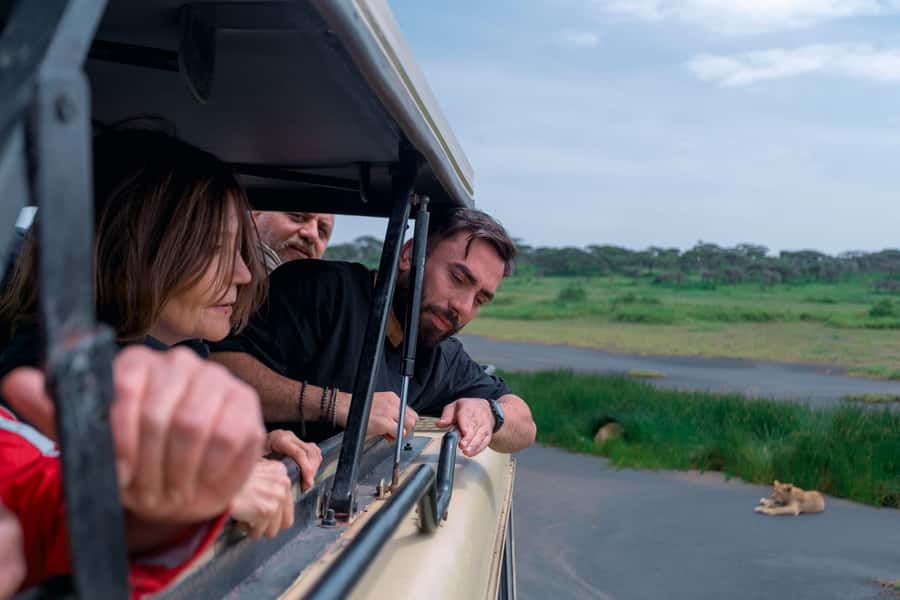
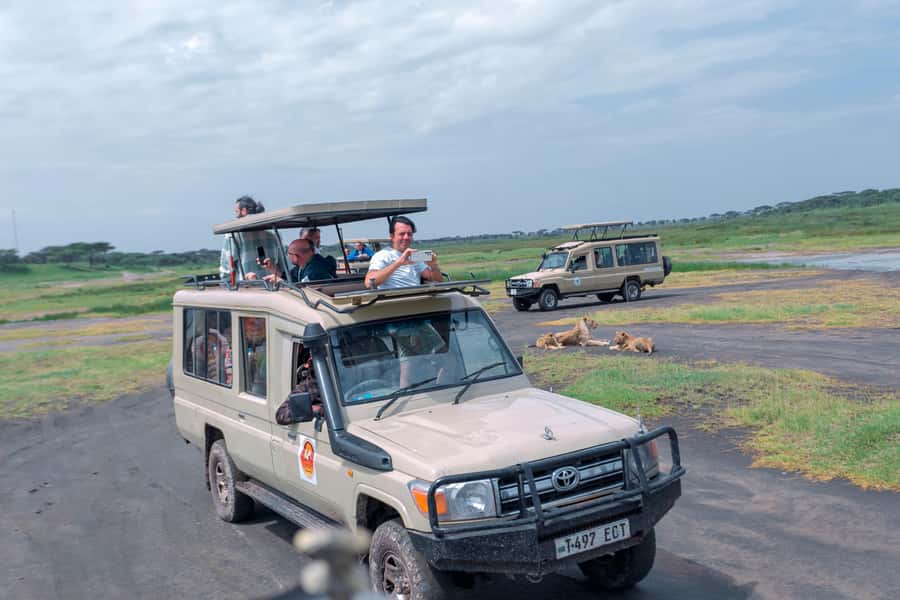
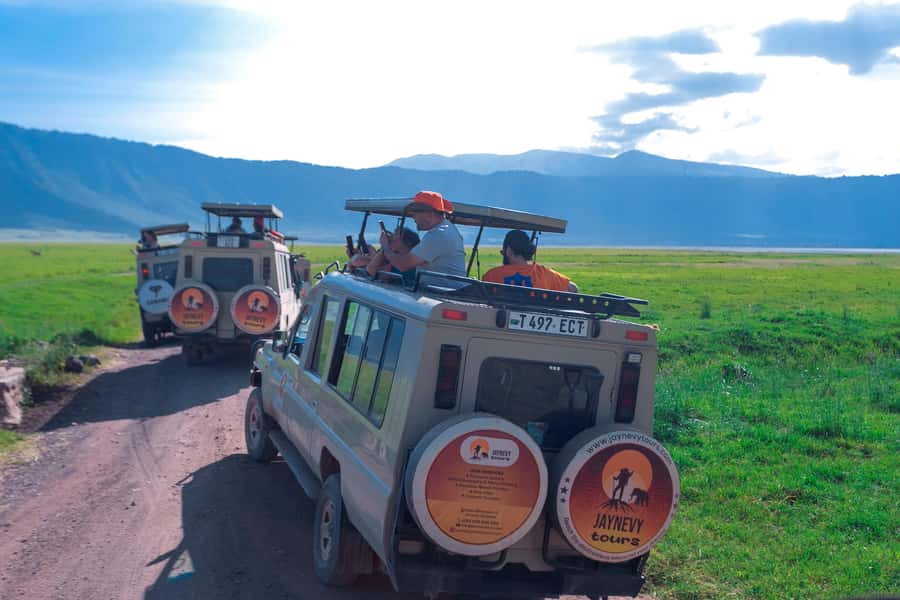
The safari vehicle is intended for game viewing, giving you a better chance to look across the open ground. A small group should make it easier to share viewing positions and ask questions without the tight feeling of a large bus.
Still, group size needs checking. The stated limit is six participants, but one outing had seven people and involved some confusion about the vehicle and operator. That does not mean every departure will have the same problem, but it is fair to confirm the number of seats and whether the vehicle belongs directly to Moraka Africa Safaris.
The crater roads can also make the ride tiring. Comfortable clothing and shoes are sensible, even though most of the animal viewing happens from the vehicle. This is not a walking safari, and you should not expect long walks on the crater floor.
Finding lions beneath the acacia trees
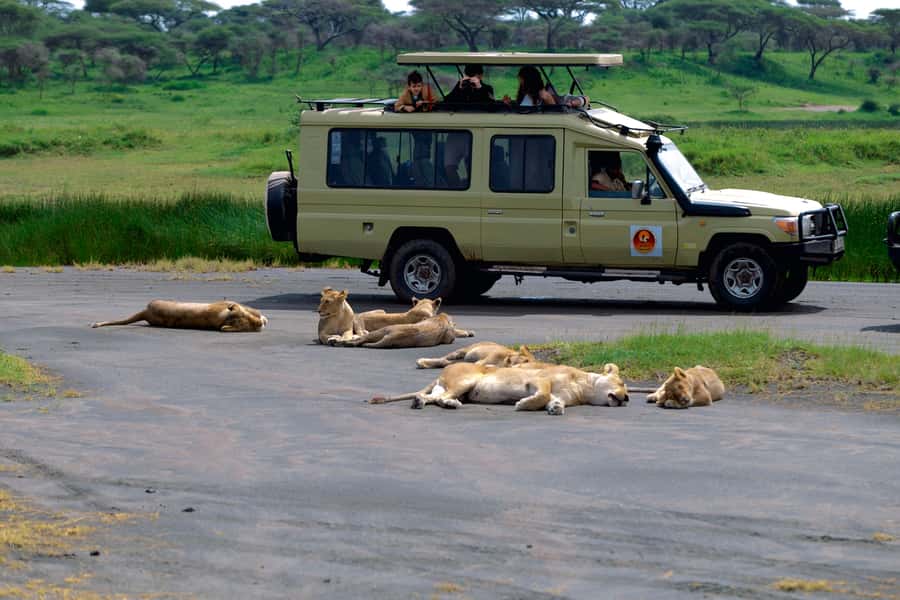
Lions are among the strongest reasons to choose this day trip. The open floor can offer broad views, and a pride resting beneath a spreading acacia tree is exactly the sort of scene you hope to find. Lions often spend quiet hours resting, so patience matters more than action-movie expectations.
A sharp guide can make a big difference. Walter has been praised for locating animals and explaining what you are seeing. Abdallah was also praised for spotting game at a distance and for explaining facts about the caldera and its animals. Islam was thanked for his driving and for helping produce a successful safari.
You might see lions close to the vehicle, or you might need binoculars for a distant sighting. The provided information does not promise binoculars, so bring your own if you have them. A camera is recommended, but keep it ready rather than expecting every sighting to sit perfectly in the open.
A successful day has produced four of Africa’s Big Five: lion, rhino, elephant, and buffalo. That is an excellent result for a one-day outing, but it should be treated as good fortune rather than a guarantee. Leopard sightings are not promised, and the phrase Big Five should not become a checklist that overshadows the place itself.
More Serengeti and Ngorongoro itineraries:
- 3 Days Serengeti & Ngorongoro Group Camping Safari
★ 5.0 · 574 reviews - 5-Day Highlights mid-Range Crater, Serengeti, Tarangire
★ 5.0 · 296 reviews - 3-Day Classic Serengeti Safari
★ 5.0 · 263 reviews - Private 6-Day Tarangire Manyara Crater and Serengeti with Mid-Range Lodges
★ 5.0 · 238 reviews
Rhinos, hippos, hyenas, and the crater wetlands
Rhinos are a major draw. Seeing one animal grazing alone in the grass can be more exciting than watching a large herd of a more common species. Your guide’s ability to scan distant open ground matters here, as rhinos may not always be close to the road.
The wetlands offer a different mood. Hippos gather in the water and can show playful interactions, though they spend much of their time partially submerged. Around the wet areas, you might also see flamingoes, pelicans, and cranes. These birds add variety to a day that could otherwise focus mostly on large mammals.
Hyenas and jackals bring another layer to the safari. Antelopes and gazelles are likely to keep the open grasslands busy, while buffalo and elephants can provide some of the larger sightings. One strong outing included lions, elephants, buffalo, rhino, gazelle, jackals, hyenas, flamingoes, hippos, pelicans, and cranes.
That list shows the value of the crater. You are not choosing between a lion trip and a bird trip. The same day can offer predators, grazers, water animals, and birds in a compact area. The tradeoff is that the compact setting can feel busy if many vehicles gather around a popular sighting.
Lunch beside the rhino pool
Lunch is included, along with bottled water. The picnic stop has been described as beautiful, with a view toward a pool used by rhinos. It is a practical pause after a long morning in the vehicle and one of the more memorable meal settings available on a safari day.
Food quality received especially warm praise, with one account describing both breakfast and lunch as delicious and thoughtfully arranged. The official inclusions specifically list lunch, not breakfast, so confirm whether breakfast is part of your booking or simply an arrangement offered on some departures.
There is an odd but important rule in the supplied information: smoking and consuming food and drinks are not allowed during the tour, while lunch is included. The sensible reading is that you should not eat, drink, smoke, or feed animals from the vehicle or outside the designated meal stop. Follow your guide’s instructions, and do not bring alcohol.
Lunch is also when you can stretch your legs briefly, but this remains a wildlife setting. Do not wander away from the group or approach animals. Feeding wildlife is prohibited, and smoking, alcohol, and drugs are not allowed.
What the guide can add to the day
A guide does more than point at animals. The crater can look simple at first, with open grass and scattered trees, but a good guide helps you understand why hippos favor one wetland, why a lion is resting in shade, or how to tell one grazing animal from another.
The best available evidence points to guide quality as one of this tour’s strengths. Walter was praised for his passion, animal spotting, and explanations. Abdallah was praised for safe driving, long-distance sightings, and facts about the caldera. Islam received thanks for his driving after a successful safari.
Language support is listed in English, French, and Spanish. If hearing every explanation matters to you, tell the operator your preferred language in advance. One outing had a quiet guide whose explanations were difficult to hear, which reduced the educational side of the experience.
You should also confirm the guide and vehicle at pickup. One departure involved a switch from an initial car to a Jeep connected with another company, leaving the group unsure who was operating the safari. Clear communication at the start can prevent much of that confusion.
Is $260 a fair price?
At $260 per person, this is not a cheap day out. The price includes a professional guide, central Arusha hotel pickup and drop-off, entrance fees, lunch, and bottled water. Those inclusions matter because park fees and transport can make a crater visit expensive even before you add a guide.
The price looks stronger when you want a simple package rather than arranging each part yourself. You do not need to find separate transport to the park, organize entry, or pack a full meal. A small group of up to six also gives the day more personal space than a large vehicle.
The value becomes less certain if your safari time on the floor is short. One outing had only about three hours of actual safari after the long drive, which felt disappointing for a product described as a full-day safari. If you are paying mainly for time among the animals, ask how many hours are normally spent inside the crater.
Vehicle reliability is the biggest value concern. A breakdown can turn a well-priced safari into a costly problem if it causes you to miss a flight or lose an evening booking. I would not book this on a day when you must reach the airport at a fixed time.
Who should book this safari?
This trip suits you if you are staying in Arusha, want to see Ngorongoro in one day, and prefer a package with transport, lunch, entry fees, and a guide handled together. It is also a good match if you value a strong chance of seeing several kinds of wildlife in one contained area.
It works particularly well for first-time safari visitors who want lions, rhinos, hippos, elephants, buffalo, and birds without planning a longer northern Tanzania itinerary. The striking crater views give the day plenty of appeal even during quieter animal periods.
You may prefer another arrangement if you dislike long road journeys, need a guaranteed return time, or have back problems. The tour is not suitable for pregnant women, wheelchair users, or people with back problems. Comfortable shoes, a hat, sunscreen, water, and a camera are sensible choices.
The stated group limit is six, but confirm it before booking if personal space matters to you. Also ask about pickup distance, breakfast, the vehicle, and the expected time on the crater floor. These are small questions that can shape your whole day.
My verdict on the six-hour crater trip
I would consider booking this tour for the wildlife potential and guide support, but only after confirming the transport details. Seeing four of the Big Five in one day, eating lunch beside the wetlands, and watching hippos and rhinos in the crater can make $260 worthwhile.
I would not use it for a departure day or any schedule that cannot absorb delays. The long approach from Arusha, the report of a short safari period, and the serious vehicle breakdown make timing the key weakness.
If Moraka Africa Safaris can confirm a reliable vehicle, a group of no more than six, a clear pickup plan, and enough time on the crater floor, this is a practical way to experience one of Tanzania’s great wildlife settings. If those answers are vague, choose a provider with firmer transport arrangements.
FAQ
Where does the Ngorongoro Crater safari depart from?
The tour is based in the Arusha region and includes pickup from hotels in central Arusha. Hotels farther away may require an extra charge.
How long does the activity last?
The listed duration is six hours, but the road journey from Arusha can make the total day much longer. One detailed schedule included about three hours to the park entrance and another hour to descend into the crater.
How much does the safari cost?
The listed price is $260 per person.
What is included in the price?
A professional guide, hotel pickup and drop-off, entrance fees, lunch, and bottled water are included.
Is lunch provided?
Yes. Lunch is included, and the picnic stop may be in a scenic area near the crater wetlands and a rhino pool.
How many people are in the group?
The tour is advertised as a small group limited to six participants. Confirm the group size before booking, since one departure had seven people.
Which languages are available?
The live guide is listed as available in English, French, and Spanish.
Which animals might I see?
Possible sightings include lions, rhinos, hippos, antelopes, hyenas, elephants, buffalo, gazelles, jackals, flamingoes, pelicans, and cranes. Wildlife sightings are not guaranteed.
What should I bring?
Bring comfortable shoes, a hat, sunscreen, water, and a camera. Wear comfortable clothing suitable for walking.
Who should not take this tour?
The activity is not suitable for pregnant women, wheelchair users, or people with back problems. Smoking, alcohol and drugs, and feeding animals are not allowed.
More full day trips in Arusha
- Private Full Day Hiking Experience to Marangu Route
★ 5.0 · 61 reviews - Full-Day Trip to Ngorongoro Crater from Arusha Town
★ 5.0 · 37 reviews - Full Day Arusha City Tour
★ 5.0 · 18 reviews - Full-Day Ngorongoro Crater private tour
★ 5.0 · 16 reviews
Newly listed around Arusha
- 5-Day Private Safari Tour in Tanzania’s Wildlife★ 5.0 · 3 reviews
- 3 Day Sharing Safari – Manyara, Ngorongoro Crater and Tarangire National Parks★ 5.0 · 3 reviews
- 3 Days private safari Tarangire ,Ngorongroro crater &Manyara★ 5.0 · 3 reviews
- Tarangire National Park Day Trip★ 5.0 · 3 reviews
- 2 Days Tarangire and Ngorongoro Crater Tour★ 5.0 · 3 reviews
- 6 -Day Tarangire, Manyara, Serengeti & Ngorongoro★ 5.0 · 3 reviews
- 5 Days Group Camping Safari★ 4.7 · 3 reviews
- Private 4×4 Vitara Safari in Arusha National Park★ 5.0 · 3 reviews
Serengeti & Ngorongoro Safaris, compared.


Balloon Safari & Bush Breakfast in Serengeti – Miracle Experience
Read our review →




Private 6-Day Tarangire Manyara Crater and Serengeti with Mid-Range Lodges
Read our review →