
Reviewed · ARUSHA TOURS
4 Days Tanzania Group Joining Safari with Mid-range Accommodation
The biggest draw here is the three-park route packed into four days. You move from Tarangire’s giant baobabs and elephant herds to the open Serengeti, then finish with a game drive inside Ngorongoro Crater. I like the sensible route and the fact that meals, drinking water, park activities, and lodge nights are built into one price.
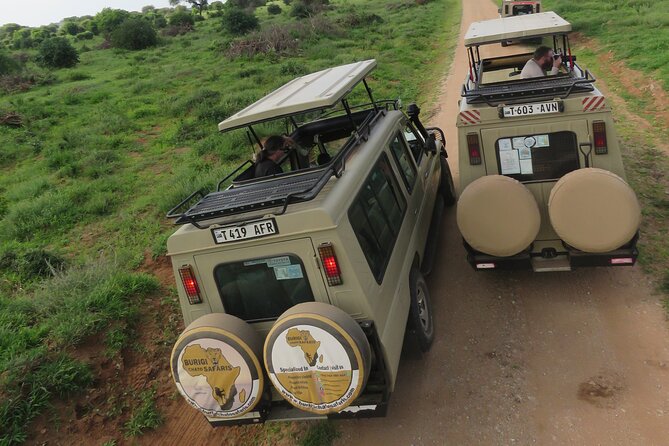
I also like that solo visitors can join a shared safari instead of paying for a private vehicle. The trade-off is clear: you spend long hours on the road, and the advertised maximum of 200 people is much larger than the usual safari vehicle. Ask how many people will share your vehicle before booking, since that detail will shape the experience.
Key points to know before booking
- Tarangire opens the trip with elephants and baobabs, including the chance to see very large herds near seasonal water.
- The Serengeti gets one full game-drive day plus travel time, with possible sightings of lions, leopards, cheetahs, and migrating wildebeest.
- Ngorongoro Crater provides the most concentrated wildlife viewing, with buffalo, rhino, lion, elephant, and leopard all possible.
- Three mid-range lodge nights are included, with breakfast, lunch, dinner, and drinking water supplied.
- The $1,283 price covers the core safari costs, but not tips, visas, insurance, alcohol, souvenirs, or lodge drinks.
- A 6:00 am start from Arusha and long driving days require stamina, especially on the Serengeti and crater transfer days.
Three famous parks in four demanding days
This safari gives you a quick but useful introduction to northern Tanzania. In four days, you see three very different settings rather than spending the whole trip in one park.
That variety is the main reason I find the route appealing. Tarangire is known for elephants and baobab trees. Serengeti delivers the huge open plains and predator sightings. Ngorongoro gives you a compact wildlife area enclosed by the walls of an old volcanic caldera.
The pace is brisk. Each day is listed at about eight hours, and that includes driving, park access, meals, and game viewing. You should expect early starts, bumpy roads, and stretches when the scenery changes but animals do not appear immediately.
The group format helps keep the cost under control. It also gives solo visitors a chance to share the road with other people. At the same time, a shared safari means less control over stops, timing, and the pace of photography. The stated maximum of 200 participants applies to the activity, not necessarily to one vehicle, but you should confirm the actual vehicle size with Tanzania Serengeti Safaris.
More Safaris in Arusha
- Balloon Safari & Bush Breakfast in Serengeti – Miracle Experience
★ 5.0 · 1,646 reviews - 4 Days Group Camping Safari
★ 5.0 · 1,101 reviews - 5 Days Group Camping Safari
★ 5.0 · 730 reviews
Tarangire National Park: elephants beneath baobabs
The first morning begins with a drive from Arusha to Tarangire National Park. The park covers roughly 2,600 square kilometers, an area comparable to Luxembourg, and its scenery changes between open savannah, seasonal swamps, and woodland marked by huge baobab trees.
I especially like Tarangire as a first stop because it offers a strong visual introduction to safari country. The baobabs give the park a character you will not confuse with the Serengeti, while the open ground makes animal spotting easier in many areas.
Elephants are the main attraction. Herds can number up to 300 animals, and Tarangire is regarded as one of East Africa’s better places to watch them at fairly close range. You may also see Masai giraffes, buffalo, hartebeest, eland, fringe-eared oryx, and the unusual gerenuk, an antelope with a long neck that often feeds upright on its hind legs.
Bird life adds another layer. More than 550 bird species are recorded in the park, so you will have plenty to watch during quieter periods of the drive. You do not need to be a dedicated bird watcher to appreciate the flashes of color and the different shapes around the swamps and trees.
After the game drive, you continue to Mto wa Mbu, near Lake Manyara, for the night. The first day is listed as about eight hours, so do not expect a relaxed afternoon at the lodge. This is a full safari day, with the reward of reaching the first park quickly.
Mto wa Mbu to the Serengeti on day two
After breakfast, you leave Mto wa Mbu and head toward the Serengeti through a cooler highland region. This transfer is not simply dead time. It shows how quickly northern Tanzania changes from lower, drier country to higher terrain and then toward the broad plains associated with the Serengeti.
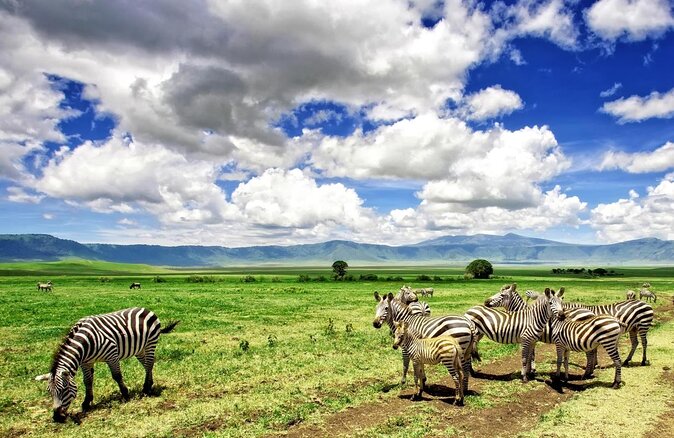
The Serengeti covers a large ecosystem of grass plains, dry savannah, marshy areas, and wooded sections. That variety supports both grazing animals and predators. Depending on the season and your exact route, you may see wildebeest, zebra, gazelles, impalas, lions, leopards, or cheetahs.
The annual wildebeest movement is a major reason people choose this park. The herds generally move from northern areas toward the southern plains around the short rains in November and December, then head north again during the longer rainy period from April through June. The exact location changes, so a four-day safari cannot promise that you will meet the migration or see a river crossing.
That is important when comparing this trip with a dedicated migration safari. You get a broad Serengeti experience, but the timing of the animals depends on the month, recent rain, and the route chosen by the guide. The wildlife is present year-round, but the spectacle changes with the season.
Day two is another eight-hour day. You should think of it as a transfer combined with safari viewing, not as eight uninterrupted hours at one viewpoint. By the time you reach your Serengeti lodge, you will likely appreciate the included dinner and an early night.
Serengeti predators and the long road to the crater
Day three begins with an early Serengeti game drive as the sun comes up over the plains. Early hours are useful because many animals are active before the heat of the day, and the low light can make the scenery especially striking.
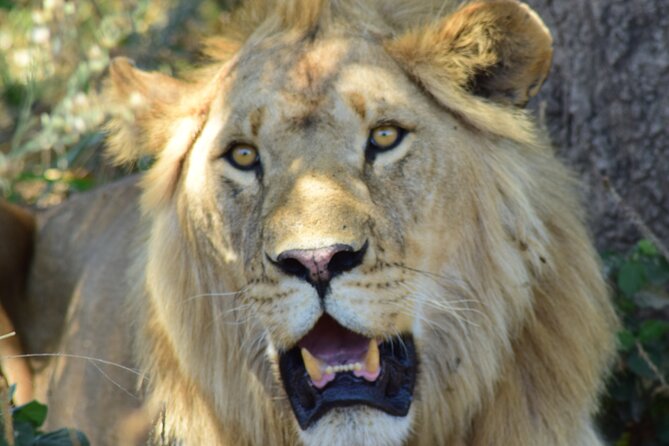
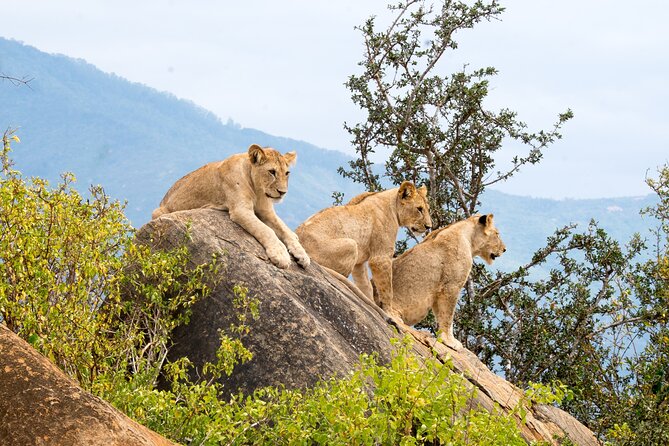
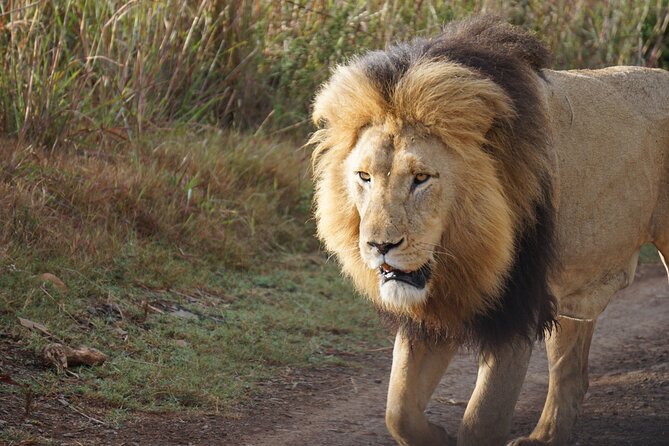
The Serengeti supports large numbers of prey animals, including gazelles and impalas. That food supply helps support one of Africa’s largest lion populations, along with leopards and cheetahs. You might also see other predators, but no safari can guarantee a particular animal, even in a park as productive as this one.
The schedule then returns you to the lodge for breakfast before the journey toward Ngorongoro Crater. This arrangement gives you a real morning in the Serengeti, but it also means the day has two distinct parts: an early game drive and a substantial transfer.
The reward comes when you reach the crater rim. The caldera is about 600 meters deep, and the view down to its floor is one of the most memorable moments on this route. You spend the night at a lodge on the rim, with a chance to watch the sunset over the crater and its springs.
The rim accommodation is a practical choice, not just a scenic one. It puts you near the crater entrance for the early descent on day four. You also avoid returning to a lower base after an already long day in the Serengeti.
A change of scene while you are in Arusha:
- Tanzania Classic – 7 Days
★ 5.0 · 1,151 reviews - Materuni Waterfalls, coffee tour & Kikuletwa Hot Springs
★ 5.0 · 643 reviews - 3 Days Serengeti & Ngorongoro Group Camping Safari
★ 5.0 · 574 reviews - 7-Day Premium Luxury Tanzania Safari All-Inclusive
★ 5.0 · 426 reviews
Ngorongoro Crater and the final wildlife drive
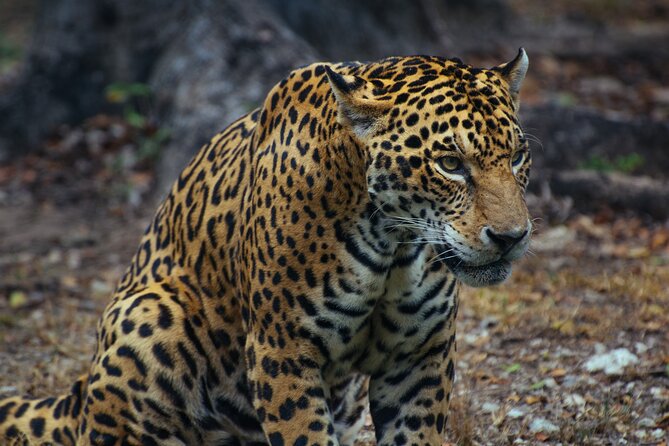
Day four starts with breakfast before you descend a narrow, steep road into Ngorongoro Crater. The drive down is part of the experience, but it also explains why you should wear comfortable clothes and keep your camera ready. The route quickly changes from the rim view to close-up views of the crater floor.
The crater contains a remarkable mix of animals in a relatively compact area. You might see zebra, hippos, hyenas, wildebeest, and warthogs. The Big Five are also possible: buffalo, rhino, lion, elephant, and leopard.
Ngorongoro is the best part of this itinerary if your main goal is to see a wide range of large animals in one game drive. Still, the crater should not be treated as a guaranteed checklist. Rhino and leopard sightings are never certain, and wildlife moves freely.
Lunch is served at a picnic spot after extensive game viewing. The included picnic lunch is useful because the crater drive is designed as a full day rather than a short morning visit. Afterward, you leave the crater in the evening and return to Arusha.
This final transfer can be tiring. The program works well for someone with limited time in Tanzania, but it gives you little room for rest or unexpected delays. If you prefer slow mornings, long stays at one lodge, or repeated visits to the same area, a longer safari would suit you better.
What the $1,283 price really covers
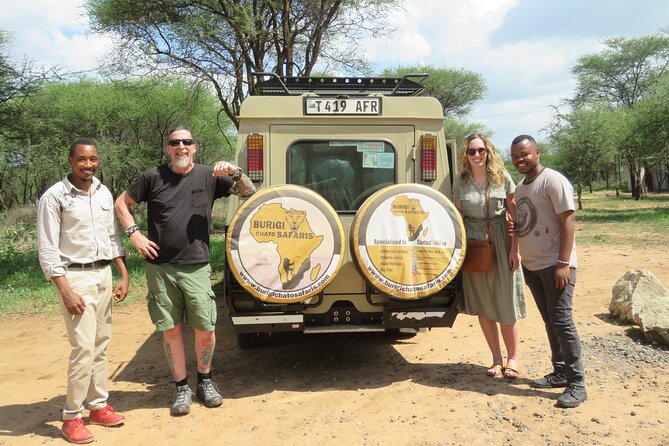
At $1,283 per person, this is not a cheap day trip, but a four-day safari across three major parks involves substantial park access, transport, guiding, food, and lodging costs. The price includes all fees and taxes, all listed activities, a professional driver-guide, drinking water, and three nights of mid-range accommodation.
Meals are also well covered:
- Three breakfasts
- Four lunches
- Three dinners
- Drinking water on all days
That makes the price easier to understand. You are not paying only for wildlife drives. You are paying for the vehicle, guide, park access, accommodation, and most meals across a route that covers considerable distance.
You should budget separately for guide tips, souvenirs, travel insurance, medical insurance, visas, alcohol, and drinks or beverages at the lodges. Those exclusions are normal for this type of safari, but they can add up. Check visa and insurance requirements before you arrive rather than treating them as last-minute details.
The mid-range label is also worth interpreting carefully. It tells you the accommodation is intended to be comfortable, but it does not identify the individual lodges or room standards. If a particular property matters to you, request the lodge names before paying.
Shared safari advantages and compromises
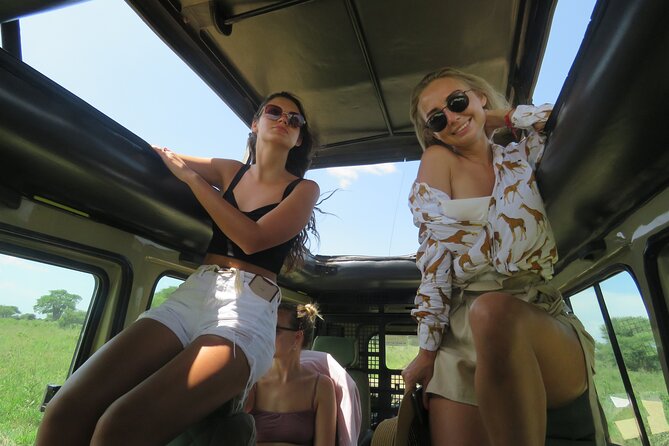
The group format is the reason this trip works for solo visitors and couples watching their budget. You can split the cost of transport and guiding with other people, which is often far better value than hiring a private vehicle for the same route.
I also like the social side. A shared safari can turn long drives into a chance to meet people from different countries. That can make the trip feel less expensive in more ways than one.
The compromise is flexibility. You may need to follow the group’s agreed schedule, wait while someone else takes photographs, or leave a sighting before you would prefer. The information provided does not state the number of people in each vehicle, only that the activity may have a maximum of 200 participants.
That is the most important question to ask before booking. Find out the usual vehicle size, how luggage is handled, and whether the guide can adjust the route for wildlife conditions. These details matter more than the general group size.
The professional driver-guide is central to the experience. The provider is Tanzania Serengeti Safaris, but no individual guide names are supplied. You should not expect a named guide unless the company confirms one in advance.
Timing, pickup, and practical comfort
Pickup is offered, and the meeting point is in Arusha. The stated start time is 6:00 am, so arrange your previous night carefully. You want to be ready with your luggage and breakfast plan rather than rushing through the first morning.
The activity ends back at the meeting point in Arusha. Since the return is scheduled for the evening of day four, avoid booking a flight or tight onward connection that same night.
Most people can participate, and the meeting point is near public transportation. That does not remove the physical demands of the route. You should be comfortable with early breakfasts, long vehicle rides, steep crater roads, and repeated entry and exit from a safari vehicle.
Pack lightly and keep essentials close during drives. A camera, sun protection, comfortable walking shoes, and a light layer for the cooler highlands are sensible choices, though the supplied details do not specify a packing list.
The booking is confirmed at the time of purchase. The experience is non-refundable and cannot be changed for personal reasons, so only book once your dates are firm. If poor weather forces cancellation, you are offered another date or a full refund.
Who should book this four-day route
I would recommend this safari to you if you want to see Tanzania’s best-known northern parks but have only four days. It is also a strong fit for solo visitors who prefer a shared price, couples who want a social trip, and first-time safari visitors who value variety over a slow pace.
It suits you particularly well if elephants, the Serengeti, and a crater game drive all matter. Tarangire gives you a different setting from the Serengeti, while Ngorongoro adds a strong final day with a good chance of seeing several major species.
I would hesitate to recommend it if you dislike long drives or need a private schedule. It may also disappoint you if your only goal is to witness the wildebeest migration at a specific river crossing. The migration moves with the seasons, and this program does not promise a particular location.
The strongest praise connected with this experience focuses on the Serengeti’s scenery as much as its animals. That is good advice. Do not spend every minute scanning for lions. Watch the kopjes, the open grass, the changing sky, and the way the plains stretch toward the horizon. The setting is a major part of the safari.
Should you book Tanzania’s four-day group safari?
Book it if you want a compact northern Tanzania safari with three major parks, mid-range lodging, meals, water, and a professional driver-guide included in one price. The route offers excellent variety, with Tarangire elephants, Serengeti predators, and Ngorongoro’s concentrated wildlife all in four days.
Before you commit, confirm the vehicle size, lodge names, and how the guide handles seasonal wildlife movements. If you accept the early starts and long road days, the $1,283 cost can be a sensible way to reach several of Tanzania’s signature parks without paying for a private safari.
FAQ
Where does the safari start and finish?
The safari starts in Arusha, Tanzania, at 6:00 am. It ends back at the meeting point in Arusha on day four.
Which national parks are included?
The route includes Tarangire National Park on day one, Serengeti National Park on days two and three, and Ngorongoro Crater on day four.
How long is each day?
Each itinerary day is listed as approximately eight hours. The days include driving, game viewing, meals, and transfers between parks and lodges.
Are meals included?
Yes. The experience includes three breakfasts, four lunches, three dinners, and drinking water on all days.
Is accommodation included?
Yes. You spend three nights in mid-range lodges. One night is in the Mto wa Mbu area, one or more nights are connected with the Serengeti route, and the final night is at a lodge on the Ngorongoro Crater rim.
What is not included in the price?
Tips, souvenirs, travel insurance, medical insurance, visas, alcohol, and drinks or beverages at the lodges are not included.
Can I cancel or change the booking?
The experience is non-refundable and cannot be changed for personal reasons. If poor weather causes the provider to cancel, you are offered a different date or a full refund.
More four day trips in Arusha
- 4 Days Join Group tour Tarangire Serengeti and Ngorongoro crater
★ 5.0 · 219 reviews - 4-Day Safari from Arusha: Tarangire, Serengeti and Ngorongoro
★ 5.0 · 173 reviews - 4 Days safari Tour Tanzania
★ 5.0 · 159 reviews - 4 Days Tarangire Serengeti Ngorongoro Crater
★ 5.0 · 117 reviews
Newly listed around Arusha
- 5-Day Private Safari Tour in Tanzania’s Wildlife★ 5.0 · 3 reviews
- 3 Days private safari Tarangire ,Ngorongroro crater &Manyara★ 5.0 · 3 reviews
- 3 Day Sharing Safari – Manyara, Ngorongoro Crater and Tarangire National Parks★ 5.0 · 3 reviews
- Tarangire National Park Day Trip★ 5.0 · 3 reviews
- 2 Days Tarangire and Ngorongoro Crater Tour★ 5.0 · 3 reviews
- 6 -Day Tarangire, Manyara, Serengeti & Ngorongoro★ 5.0 · 3 reviews
- 5 Days Group Camping Safari★ 4.7 · 3 reviews
- 4 Days Tanzania Safari★ 4.5 · 3 reviews
Arusha Tours, compared.

Balloon Safari & Bush Breakfast in Serengeti – Miracle Experience
Read our review →






Browse the lists this tour appears in