
Reviewed · ARUSHA TOURS
7 Days Great Wildebeest Migration Mara River Crossing
The great prize here is a Mara River crossing, where wildebeest and zebras may plunge into crocodile-filled water on their long run toward Kenya. The seven-day route gives you several chances to search for this dramatic scene, rather than making one rushed visit and turning straight around.
I like the private 4×4 format and the mix of parks. Tarangire brings elephants and baobabs, northern Serengeti puts you near the migration, and Ngorongoro adds a strong final day. The main catch is simple: a river crossing cannot be scheduled. You can spend hours waiting and still see no crossing at all.
Key points to know before booking
- Multiple nights near Kogatende: Days four and five focus on the northern Serengeti and the Mara River.
- Private safari vehicle: Only your group takes part, with a Toyota Land Cruiser and driver-guide.
- Strong park variety: Tarangire, Serengeti, Ngorongoro Conservation Area, and Ngorongoro Crater all appear in one trip.
- Long driving days: Expect several full days in the vehicle, including the route to and from northern Serengeti.
- Olduvai Gorge is optional: The museum costs an extra USD 36 per person.
- Price includes core safari services: The USD 4,428 rate includes transport, guide, soft drinks, tea and coffee, and six days of meals, but not flights, insurance, tips, alcohol, or some activities.
Why the Mara River is worth building a safari around
The wildebeest migration is often described as a single event, but it is really a moving cycle across the Serengeti and Maasai Mara. The Mara River crossing is one of its most dramatic moments because large herds gather at the bank, hesitate, scatter, regroup, and sometimes suddenly rush into the water.
That uncertainty is part of the experience. You are not watching a scheduled performance. A crossing may begin after a long wait, or the herd may turn back. Crocodiles and strong currents make the river dangerous, while steep banks can send animals tumbling into the water.
This seven-day plan makes sense for the crossing because it gives you two concentrated days in the Kogatende area. Day four brings you north through the Serengeti, and day five is devoted to searching around the kopjes, river area, and migration herds.
I would choose this trip for the chance to spend time in the right region, not as a promise of a crossing. That distinction matters. If the river is your only goal, you may leave disappointed despite seeing excellent wildlife. If you value the whole safari, the crossing becomes a possible climax rather than the only measure of success.
More week long trips in Arusha:
- Tanzania Classic – 7 Days
★ 5.0 · 1,151 reviews - 7-Day Premium Luxury Tanzania Safari All-Inclusive
★ 5.0 · 426 reviews - Group Safari 7 Days in Tanzania’s Main Parks
★ 5.0 · 240 reviews
Day 1: A gentle arrival in Arusha
Your first day is a transfer from Kilimanjaro International Airport or Arusha Airport to Tulia Boutique Hotel. The airport routine includes meeting assistance, immigration, baggage claim, customs, and onward transport.
This is a useful soft landing after an international flight. There is no forced game drive or long road journey on arrival, so you can settle in before the safari proper begins.
The meeting information also lists Aardvark Expeditions Limited on Swahili Street in Arusha as the start and end point, with a stated start time of 9:30 a.m. At the same time, the day two plan gives an 8:30 a.m. hotel pickup. I would confirm the exact pickup time and location before departure, especially if you are arranging your own hotel night or arriving separately.
Day 2: Tarangire’s elephants and baobab country
After breakfast, the guide picks you up in Arusha for the roughly two-hour drive to Tarangire National Park. The roof of the Toyota Land Cruiser opens as you enter the park, giving you a better view and a useful angle for photography.
Tarangire is a good first safari park because its scenery differs from the open Serengeti. Seasonal marshes, tree-covered savannah, and large baobabs give the park a strong sense of place. The park is especially known here for large elephant herds, but you may also see giraffes, buffaloes, lions, zebras, wildebeests, antelopes, and gazelles.
The planned game drive lasts about six hours. That is enough time for a broad introduction without trying to squeeze in every corner of the park. Your guide’s skill matters during these hours. One of the strongest themes connected with this operator is attentive guiding, including help locating big game and explaining plants, animals, and local history.
You spend the night at Marera Valley Lodge on a full-board basis. Full board is useful on a route with long drives because meals are already built into the daily rhythm. Six breakfasts, six lunches, and six dinners are included across the trip, along with soft drinks, coffee, and tea.
Day 3: From Ngorongoro’s forests to the Serengeti
Day three begins with an early breakfast and a long scenic drive toward Serengeti National Park. The route passes through the Ngorongoro Conservation Area, where misty rainforest replaces the drier open country around Tarangire.
This is a travel day, not simply a transfer between hotels. You may spot cape buffalo, baboons, elephants, or even leopards in the thicker vegetation, though wildlife sightings are never guaranteed. The drive to the Serengeti park gates takes close to four hours before you add any stops.
You can break up the journey with a visit to Olduvai Gorge Museum for an extra cost. The museum sits near the gorge rim and presents archaeological and cultural material tied to the discoveries made in the area. Its location gives the stop more weight than a standard roadside museum because you are looking across the gorge itself.
The museum fee is USD 36 per person and is not included. I would choose it if human origins, archaeology, and the story of early research interest you. If your priority is reaching the Serengeti early for wildlife viewing, skipping it keeps the day simpler.
The schedule lists around seven hours for this section, but the road distance and optional stop mean you should expect a full day. Carry anything you need close at hand, including water and personal items, rather than packing them deep in your luggage.
A few more Arusha days to compare
- Balloon Safari & Bush Breakfast in Serengeti – Miracle Experience
★ 5.0 · 1,646 reviews - 4 Days Group Camping Safari
★ 5.0 · 1,101 reviews - 5 Days Group Camping Safari
★ 5.0 · 730 reviews - Materuni Waterfalls, coffee tour & Kikuletwa Hot Springs
★ 5.0 · 643 reviews
Day 4: Kopjes, open plains, and the road to Kogatende
After breakfast, you travel across the plains of Togoro and through the Mbuzi Mawe kopjes toward the northern Serengeti. Kopjes are small rocky hills scattered through the grasslands. They break up the view, create lookout points for animals, and give the drive more variety than a flat run across open plains.
The route may bring you close to dik-dik, elephants, giraffes, and other animals as the scenery shifts between wooded hills, rocky outcrops, and wide savannah. You are also entering the area that matters most for the stated purpose of this safari: Kogatende, near the Mara River.
This is a long nine-hour game-drive day. That number likely includes both travel and wildlife stops, so expect a lot of time on the road. The tradeoff is worthwhile if reaching the northern Serengeti during the migration is your main aim, but it may feel tiring after the previous day’s long drive.
You spend the night at Heritage Mara Tented Camp on full board. The camp location is important because staying in the northern part of the park avoids treating the Mara River as a quick day trip from far away. That gives you more practical time to search for herds and river activity.
Day 5: Waiting for the crossing at the Mara River
This is the central day of the safari. After breakfast, you search the Kogatende area for large migration groups, predators, kopjes, hippos, and Nile crocodiles.
The key skill here is patience. Herds may gather near the river without crossing. They may approach the bank, change direction, or split into smaller groups. If the animals do enter, the scene can unfold quickly, with dust, rushing water, steep banks, and crowded vehicles all adding to the tension.
The river itself is not just a photo backdrop. Hippos and crocodiles occupy the water, and the current creates a real obstacle for the animals. A crossing can be thrilling, but it can also be difficult to watch. The description openly presents both death-defying leaps and painful near misses, so this is not a gentle wildlife encounter.
The planned game drive lasts about eight hours. That allows time to search rather than simply stop at one viewpoint. You should still understand that the result depends on herd movement, recent rain, river conditions, and timing. The best guide in the world cannot make wildebeest cross on command.
Dinner and overnight accommodation are provided in the Serengeti, with the exact standard depending on the accommodation option selected. That wording is worth clarifying before paying, since the named camp appears earlier while day five leaves the accommodation type more open.
Day 6: Returning through the Serengeti
After breakfast, you begin the road back toward the Ngorongoro area, using a different route through the Serengeti. This return journey is more than a simple reversal. A new route gives you another chance to find animals missed earlier.
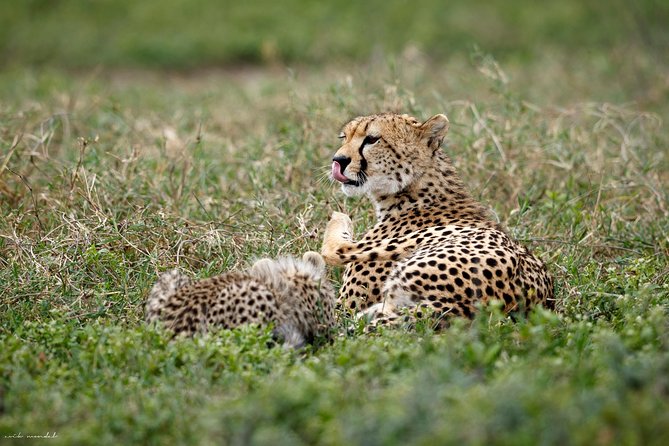
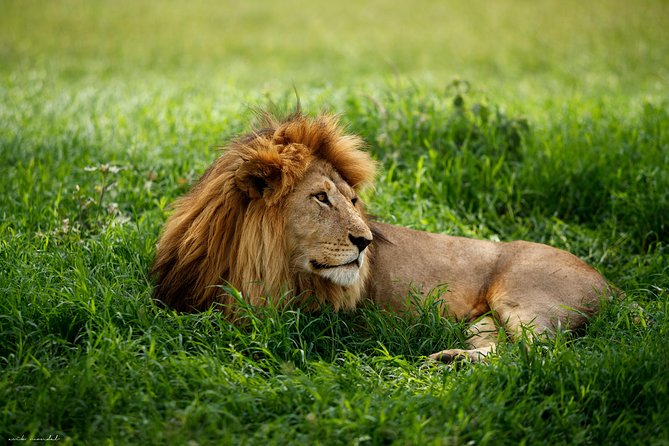
The day may bring huge herds of wildebeests and zebras, giraffes, gazelles, elephants, and predators. The listed possibilities include cheetahs, leopards, hyenas, and lions. The variety is one reason I like having several Serengeti days rather than making the park a single overnight stop.
The schedule allows about seven hours. As with the other long days, your comfort depends on how well you handle extended vehicle time. The private format helps because your group can discuss the pace with the guide, but the route still covers serious distance.
One useful feature of this safari is that the wildlife focus does not end if the river crossing fails to happen. You still have this return day and the final crater visit, both of which can produce strong sightings in very different settings.
Day 7: Ngorongoro Crater’s compact wildlife viewing
The last morning begins with an early breakfast and a 7:00 a.m. departure for Ngorongoro Crater. From the panoramic viewpoint, you first see the vast caldera from above before descending for the game drive.
The crater is a useful final stop because its enclosed setting can offer a concentrated wildlife experience. More than 120 mammal species are associated with the conservation area, including the Big Five. The plan specifically points to black rhinoceros on the grass plains and hippos in the water.
You have about six hours here. An early start gives you a better chance to use the cooler part of the morning and makes room for the return to Arusha at the end of the trip.
Ngorongoro also changes the mood of the safari. Tarangire gives you baobabs and elephants. Serengeti gives you movement, distance, and the migration. The crater brings a broad wildlife setting into one final basin. It is a satisfying finish, although the route is demanding if you have already spent several days on rough park roads.
The private 4×4 setup and guide service
Only your group takes part in this private activity. The vehicle is a 4×4 Toyota Land Cruiser with an opening roof, and a driver-guide leads the safari.
That private arrangement is valuable during a river-focused trip. You are not sharing every decision with strangers, and the group can keep its attention on wildlife rather than negotiating space with a larger party. It also gives you a more personal setting for questions about animals, plants, and the route.
The operator has been associated with guides and staff who put strong emphasis on safety, local knowledge, and service. Philemon is one staff name connected with especially positive safari experiences, so I would ask whether he is available if personal guide selection is possible. The supplied information does not promise a particular guide, so treat that as a request, not a guarantee.
There is an important cost detail here: an air-conditioned vehicle is specifically excluded, while the listed vehicle is a Toyota Land Cruiser with an opening roof. Confirm the exact vehicle specification if climate control is important to you.
What the USD 4,428 price really covers
At USD 4,428 per person, this is a major purchase. The value comes from the length of the route, private transport, a driver-guide, park time in four major areas, airport transfer on arrival, accommodation, and six days of included meals.
The price is easier to defend if you want a private safari built around northern Serengeti access. Getting to Kogatende takes time, and the itinerary gives you two nights and substantial game-drive time in that region. You are not paying only for a single river viewpoint.
Still, several costs sit outside the headline price. International and domestic flights, visas, travel and medical insurance, tips, alcohol, laundry, Maasai visits, and hot-air-balloon activities are excluded. Olduvai Gorge Museum costs USD 36 per person.
The accommodation level also needs careful confirmation. Marera Valley Lodge and Heritage Mara Tented Camp are named, but day five says the accommodation depends on the requested standard and option. Ask for the precise camp and room category before booking, since that can change the value considerably.
Who will enjoy this safari most
I would recommend this trip to you if the migration is a top priority and you want a private itinerary with enough time in northern Serengeti. It also suits a first Tanzania safari because Tarangire and Ngorongoro add two very different wildlife settings.
You should be comfortable with long drives. Day three takes you toward Serengeti, day four reaches Kogatende over roughly nine hours, and day six returns through the park. This is not a relaxed lodge holiday with short outings each morning.
It is also a good match if you enjoy uncertainty in nature. You may see the Mara River crossing, but no honest itinerary can guarantee it. If you need a fixed schedule and predictable results, choose a trip based less heavily on one natural event.
The tour is private, and most people can participate. The supplied details do not promise specific accessibility arrangements, so ask directly about mobility needs before booking.
Practical details to settle before you go
Confirmation is provided when you book, and free cancellation is available if you cancel at least 24 hours before the local start time. Changes or cancellations inside that window are not accepted for a refund.
The meeting point is Aardvark Expeditions Limited on Swahili Street in Arusha, and the activity ends back at the meeting point. Pickup is offered, but the schedule lists both a 9:30 a.m. start and an 8:30 a.m. hotel pickup, so confirm which time applies to your booking.
Bring patience, a camera, and a willingness to spend long stretches watching rather than moving. The river crossing is the headline, but the real value is the full sequence: elephants in Tarangire, forested Ngorongoro routes, Serengeti herds, Kogatende’s river search, and the crater finale.
Should you book it?
Book this safari if you want a private, seven-day route with a serious attempt at the Mara River crossing and enough extra park time to make the trip worthwhile even if the herd stays put.
Think twice if USD 4,428 is beyond your budget, if you dislike long road days, or if you need a guaranteed crossing. Before paying, confirm the day five accommodation, exact pickup time, vehicle air conditioning, and what is included in the selected accommodation level. With those points clear, this is a strong choice for a focused Tanzania migration safari.
FAQ
How long is the safari?
The experience lasts approximately seven days, beginning with arrival assistance and transfer to a hotel in Arusha and ending back at the listed meeting point.
Is the Mara River crossing guaranteed?
No. The itinerary offers the chance to see a crossing, but animal movement and river conditions are unpredictable.
Is this a private tour?
Yes. Only your group participates in the activity.
What vehicle is used?
Transport is provided in a 4×4 Toyota Land Cruiser with an opening roof for viewing. An air-conditioned vehicle is not included.
Is Olduvai Gorge Museum included?
No. The museum is an optional stop and costs USD 36 per person.
What meals are included?
Six breakfasts, six lunches, and six dinners are included, along with soft drinks, coffee, and tea. Alcohol is not included.
Newly listed around Arusha
- 5-Day Private Safari Tour in Tanzania’s Wildlife★ 5.0 · 3 reviews
- 3 Days private safari Tarangire ,Ngorongroro crater &Manyara★ 5.0 · 3 reviews
- 3 Day Sharing Safari – Manyara, Ngorongoro Crater and Tarangire National Parks★ 5.0 · 3 reviews
- Tarangire National Park Day Trip★ 5.0 · 3 reviews
- 6 -Day Tarangire, Manyara, Serengeti & Ngorongoro★ 5.0 · 3 reviews
- 2 Days Tarangire and Ngorongoro Crater Tour★ 5.0 · 3 reviews
- 5 Days Group Camping Safari★ 4.7 · 3 reviews
- 7-Day Mt. Kilimanjaro Hiking: Machame Route★ 5.0 · 3 reviews
Arusha Tours, compared.

Balloon Safari & Bush Breakfast in Serengeti – Miracle Experience
Read our review →






Browse the lists this tour appears in