
Reviewed · SERENGETI & NGORONGORO SAFARIS
2 days Tour Tarangire & Ngorongoro
Tarangire’s huge elephants and Ngorongoro’s crowded crater floor make this two-day safari a smart short introduction to northern Tanzania. You get two very different wildlife settings: open country and baobab country at Tarangire, then a compact natural bowl where animals are often easier to find.
I like the way the price covers the big-ticket items, including park fees, camping equipment, meals, and at least three litres of bottled water per day. I also like the variety: lions, cheetahs, leopards, buffaloes, zebras, wildebeest, and the chance of black rhino all fit into a tightly planned trip. The main drawback is the pace. A full game drive on day one and a long crater visit on day two leave little room for rest.
Key points to know before booking
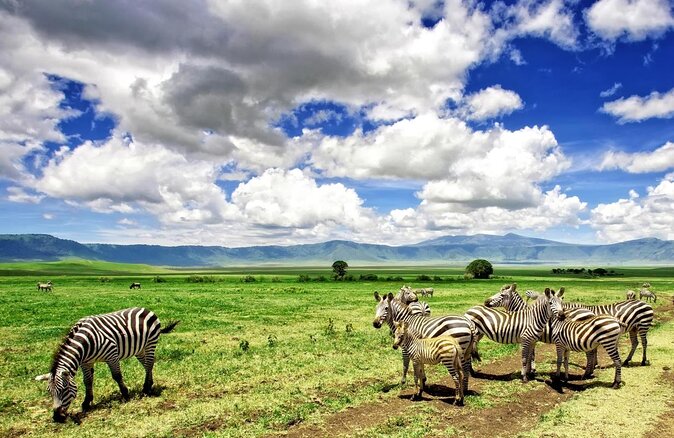
- Tarangire brings the elephants: The first day focuses on a full six-hour game drive, with elephants, lions, zebras, buffaloes, wildebeest, monkeys, warthogs, impalas, and other animals possible.
- Ngorongoro offers two major stops: You first spend about 30 minutes at the crater viewpoint, then descend for roughly six hours on the crater floor.
- The $750 price covers major costs: Park entrances, taxes, camping gear, sleeping bag, mattress, meals, bottled water, and airport transfer are included.
- Camping keeps the cost lower: You receive a tent, sleeping bag, and mattress, but the provided details do not specify the campsite or sleeping arrangements.
- Groups can reach 15 people: That keeps the safari within a manageable size, though it is not a private safari.
- The schedule starts early: Pickup begins at Arusha Airport at 7:30 a.m., and day two begins after an early breakfast.
Why this two-day route works
Northern Tanzania offers several famous parks, but Tarangire and Ngorongoro give you a useful contrast in very little time. Tarangire is known here for elephant sightings and a broad mix of animals. Ngorongoro is different: its crater floor concentrates wildlife in a smaller area, making it easier to spend a day looking for animals without covering such a wide range.
I like that this trip does not try to squeeze in too many parks. Two days is short, but the route has a clear purpose. You get one full day at Tarangire, then one long day centered on Ngorongoro. That is more satisfying than racing through three parks and barely seeing any of them.
The tradeoff is that this is still a demanding two days. The driving between Arusha, Tarangire, Ngorongoro, and back to Arusha is not given in exact hours, so you should expect substantial time in the vehicle in addition to the listed game drives. The safari suits you best if wildlife matters more than a slow holiday schedule.
More Serengeti and Ngorongoro itineraries:
- Balloon Safari & Bush Breakfast in Serengeti – Miracle Experience
★ 5.0 · 1,646 reviews - 3 Days Serengeti & Ngorongoro Group Camping Safari
★ 5.0 · 574 reviews - 5-Day Highlights mid-Range Crater, Serengeti, Tarangire
★ 5.0 · 296 reviews
Day one at Tarangire: elephants and open-country wildlife
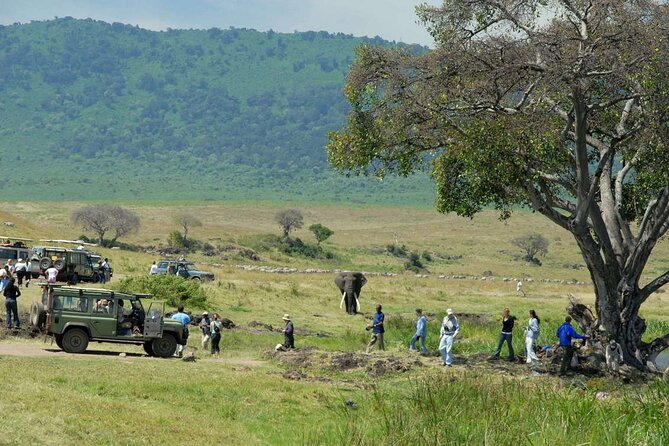
The tour begins at Arusha Airport at 7:30 a.m. From there, you travel to Tarangire National Park for a full game drive lasting about six hours. The drive from Arusha is not assigned a precise duration, so the first day is likely to feel full from the moment you are collected.
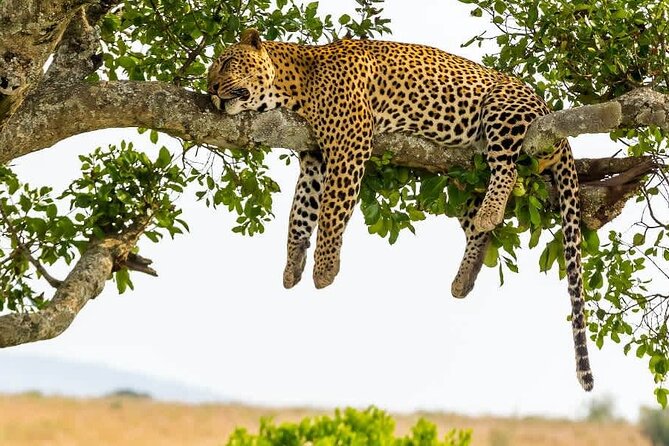
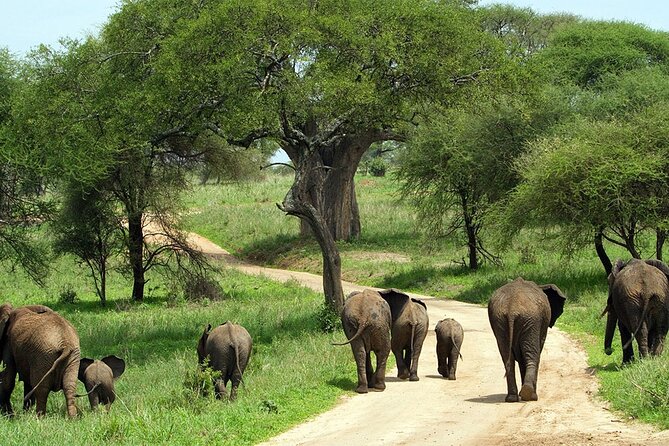
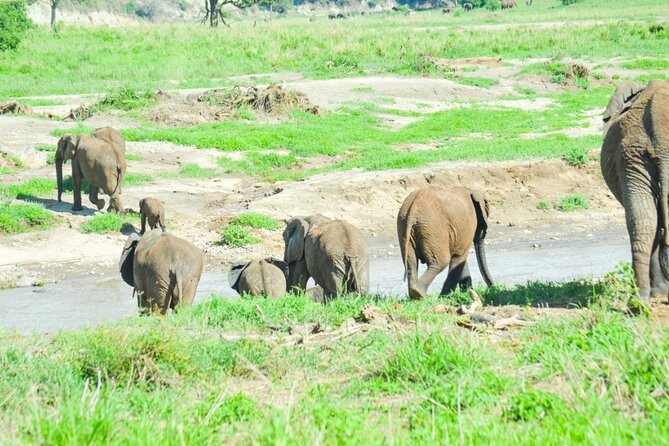
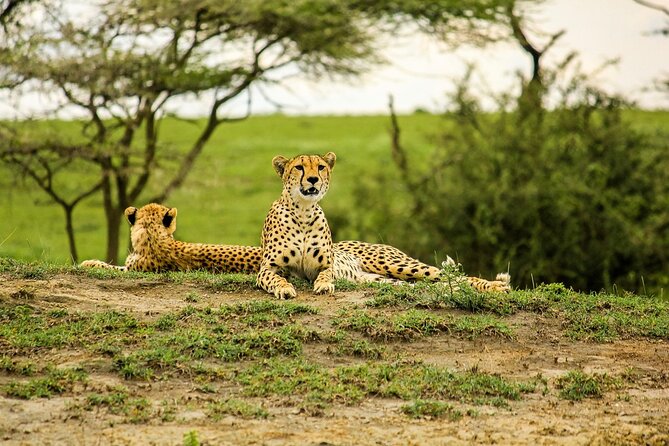
Tarangire’s main appeal on this route is the chance to see large herds of elephants. The provided plan also calls out lions, cheetahs, and leopards, along with buffaloes, wildebeest, deer, gazelles, zebras, impalas, monkeys, and warthogs. No safari can promise a particular animal, but the range listed gives you a good sense of the day’s focus.
I like the balance between predators and herbivores. Big cats are exciting, but a safari can be just as memorable when you watch elephants close by or see a large group of zebra and wildebeest moving through the park. Buffaloes, impalas, gazelles, and warthogs add variety to the hours between major sightings.
The six-hour drive is long enough to give the guide time to search for different species rather than stopping at one quick viewing point. It also means you should pace yourself. Bring a hat and comfortable clothing, and be ready for extended periods of sitting while the vehicle moves between animal sightings. Those basic details matter on a compact safari because there is no spare day to recover.
The itinerary says the admission ticket is free, but the inclusion list separately confirms that all park entrances and taxes are covered. Read this as included admission, not as a promise that the park itself has no fee. That distinction is useful when comparing this tour with cheaper options that add park charges later.
What makes Tarangire different from Ngorongoro
Tarangire and Ngorongoro are not interchangeable stops. Tarangire gives you a broader wildlife search, with the excitement of finding animals across a large park. Ngorongoro offers a more concentrated setting, where many animals can be easier to spot from the crater floor.
That difference is the strongest reason to choose this pairing. If you only visited Ngorongoro, you would get one of Tanzania’s most famous wildlife settings but miss Tarangire’s elephant focus. If you only visited Tarangire, you would miss the crater viewpoint and the chance to search for black rhino in a distinctive setting.
The route also works well for someone with limited time in Arusha. The operator describes it as a lower-cost way to keep the safari adventurous, and the included camping setup helps control expenses. At $750 per person, the value depends on how many people share the vehicle and how the camping arrangements work, but the list of inclusions is substantial.
Still, the price should be judged against the pace and group size. Up to 15 people may join, so this is not the choice for a private vehicle or a quiet, highly flexible schedule. Before paying, I would confirm the exact group size for your departure and ask how seating works if the group reaches the maximum.
Day two begins above the Ngorongoro Crater
After an early breakfast, you head to the Ngorongoro viewpoint. The stop lasts about 30 minutes, and it is more than a quick photo break. The crater view gives you a sense of the enormous bowl below before the vehicle descends to the floor.
I would use this stop to get your bearings. Look at the curve of the crater rim, the scale of the floor, and the difference between seeing Ngorongoro from above and exploring it from inside. The view is described as surreal, and that is a fair expectation for a place where the geography is the main event before the wildlife search begins.
Thirty minutes is enough for a look and photographs, but not enough for a long walk or a slow morning. Keep your camera ready and do not wander far from the agreed meeting point. The schedule moves on quickly to the descent.
The tour does not give a specific viewpoint name, and it does not state how long the descent takes. That makes it hard to predict the exact order of the morning. You should treat the viewpoint as a short, scenic stop rather than a separate half-day excursion.
More two day trips in Arusha:
- 2 Days Tarangire and Ngorongoro Group Camping Safari
★ 5.0 · 146 reviews - 2 Days Group Joining Camping Safari Tarangire Park and Ngorongoro Crater
★ 4.5 · 28 reviews - 2 days Mid Range Safari in Ngorongoro and Tarangire Big 5 Parks
★ 5.0 · 27 reviews - 2 Days Joined Group Tarangire and Ngorongoro Crater National Park
★ 4.5 · 17 reviews
Six hours on the crater floor
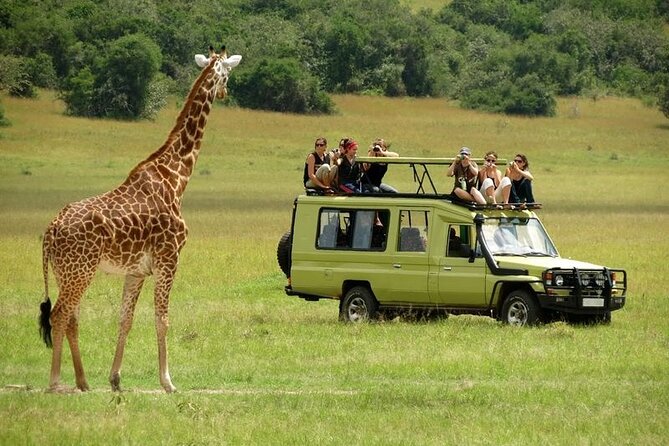
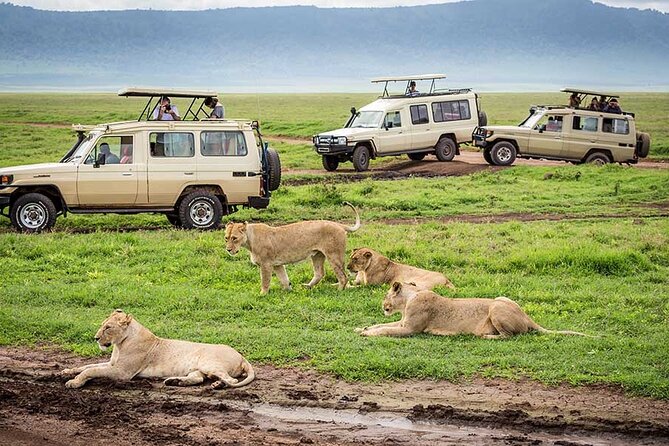
After the viewpoint, you descend into the Ngorongoro Crater for a game drive lasting about six hours. The stated goal is to search for black rhinos, which are described as the hardest animals to spot in the crater.
That detail is important. Rhinos are possible, not guaranteed, and even a long game drive may not produce a sighting. The appeal lies partly in the search itself. You will also have many other animals to watch, and the crater floor is presented as a place where wildlife is generally easier to see because animals are concentrated within the enclosed area.
The crater visit gives you a different kind of safari from Tarangire. Instead of spending the day covering a wide park in search of changing habitats, you spend more time examining a compact area. That can be especially useful if this is your first safari and you want repeated chances to see animals rather than a quick glimpse before moving on.
After lunch, you continue the game drive, then ascend the crater for the return trip to Arusha. The plan assigns about six hours to the crater activity, but it does not say exactly when lunch takes place or how much time is allowed for the ascent. For that reason, do not arrange an evening flight or a fixed appointment in Arusha unless the operator confirms the return time.
The long second day is the tour’s clearest weakness. An early start, a viewpoint stop, the descent, lunch, a game drive, the climb out, and the return drive to Arusha add up to a tiring schedule. I would choose this plan for a short safari window, not for a relaxed break.
Camping, meals, and what the $750 covers
The $750 per person cost includes dinner, breakfast, two lunches, and bottled water of at least three litres per day. Those provisions reduce the need to organize food during a remote trip and make the budget easier to understand.
Camping equipment is also included: a tent, sleeping bag, and mattress. This is useful for keeping the tour in the lower-budget safari category, but the information provided does not name the campsite or describe the tent setup. If sleep quality matters to you, ask where you will camp, how many people share each tent, and whether any additional camping services are supplied.
The inclusion of meals does not mean you should ignore personal snacks. The schedule is long, and food preferences are not explained. Ask ahead if you have dietary restrictions, and confirm what the two lunches include. That is practical planning, not fussiness.
Airport transfer is listed as included, while the meeting point is Arusha Airport. The details do not explain whether this means pickup only, a later airport drop-off, or transfers connected with your arrival and departure. Confirm the transfer arrangement before booking flights.
Tips, flights, and visa fees are not included. Those costs can affect the real total, especially if you are arranging an international trip around a short safari. The free cancellation rule is straightforward: cancel at least 24 hours before the start time for a full refund. Cancellations or changes made inside that window are not accepted for a refund.
Group size, timing, and comfort
The maximum group size is 15 people. That is small enough to avoid a huge coach-style outing, but large enough to affect how quickly the group can load, stop, and make decisions. If you want the most personal attention, ask if a smaller departure or private option is available.
The tour is described as suitable for most people and near public transportation. No detailed mobility information is provided, so you should ask directly if you have concerns about getting in and out of the safari vehicle, camping, or managing the crater descent and ascent.
The timing requires a willing early riser. Day two starts after an early breakfast, and day one begins at 7:30 a.m. at the airport. You will get more from the safari if you accept that the best use of two days is to follow the schedule rather than expect leisurely mornings.
I also appreciate that the operator’s help can extend beyond the safari itself. The information indicates that the guide assisted with outside tours and arrangements in Arusha. No guide name is provided, so you cannot select a named guide in advance, but you can ask who will lead your departure and what help is available before or after the park visits.
Who should book this safari
I would recommend this trip to you if you want a short, relatively contained introduction to Tanzania’s wildlife and do not want to build a longer itinerary. It suits people who are excited by elephants, big cats, rhinos, and wide animal variety, and who are comfortable with camping and long days in a vehicle.
It is also a good match if you value an all-in-one price. Park fees, taxes, meals, water, camping equipment, and airport transfer are the costs most likely to complicate a safari budget, and they are included here. The price is not cheap in absolute terms, but it can be fair if those inclusions are delivered as stated and the group is not full.
I would hesitate if you want a private guide, a slow pace, luxury lodging, or a precise return time to Arusha. I would also hesitate if camping is not appealing or if you need a detailed accessibility plan. The supplied information leaves some operational points open, so ask questions before you commit.
Should you book the Tarangire and Ngorongoro tour?
Book it if your priority is maximum wildlife variety in two days and you are happy to trade comfort and flexibility for a well-filled schedule. Tarangire gives you the elephant and big-cat search, while Ngorongoro adds the viewpoint, concentrated wildlife, and a chance to look for black rhino.
Before booking, confirm the campsite, vehicle arrangements, actual group size, airport transfer details, meal options, and expected return time to Arusha. If those answers suit you, the included fees and equipment make $750 per person a reasonable short-safari package. If you have extra time, a longer itinerary would be more restful, but for a compact wildlife trip, this pairing has real appeal.
FAQ
Where does the tour start?
The tour starts at Arusha Airport in Arusha, Tanzania.
What time does the tour begin?
The stated start time is 7:30 a.m.
How long is the tour?
The tour lasts approximately two days.
Which parks and areas does the tour visit?
It visits Tarangire National Park and the Ngorongoro Conservation Area, including the Ngorongoro viewpoint and crater floor.
How long is the Tarangire game drive?
The Tarangire game drive lasts about six hours.
How long is the Ngorongoro crater visit?
The crater activity lasts about six hours, following a separate 30-minute stop at the Ngorongoro viewpoint.
Is camping equipment included?
Yes. The package includes tents, a sleeping bag, and a mattress.
Are meals and water included?
Yes. Dinner, breakfast, two lunches, and bottled water of at least three litres per day are included.
Are park fees included?
Yes. All park entrances and taxes are included.
What is not included in the price?
Tips, flights, and visa fees are not included.
How many people can join the tour?
The tour has a maximum group size of 15 people.
Can I cancel for a full refund?
Yes. You can cancel at least 24 hours before the start time for a full refund. Cancellations and changes made less than 24 hours before the start time are not accepted for a refund.
Newly listed around Arusha
- 5-Day Private Safari Tour in Tanzania’s Wildlife★ 5.0 · 3 reviews
- 3 Days private safari Tarangire ,Ngorongroro crater &Manyara★ 5.0 · 3 reviews
- 3 Day Sharing Safari – Manyara, Ngorongoro Crater and Tarangire National Parks★ 5.0 · 3 reviews
- Tarangire National Park Day Trip★ 5.0 · 3 reviews
- 2 Days Tarangire and Ngorongoro Crater Tour★ 5.0 · 3 reviews
- 6 -Day Tarangire, Manyara, Serengeti & Ngorongoro★ 5.0 · 3 reviews
- 5 Days Group Camping Safari★ 4.7 · 3 reviews
- 7-Day Mt. Kilimanjaro Hiking: Machame Route★ 5.0 · 3 reviews
Serengeti & Ngorongoro Safaris, compared.


Balloon Safari & Bush Breakfast in Serengeti – Miracle Experience
Read our review →




Private 6-Day Tarangire Manyara Crater and Serengeti with Mid-Range Lodges
Read our review →
5 Days Camping Tarangire, Serengeti & Ngorongoro crater & Visiting Maasai
Read our review →Browse the lists this tour appears in