
Reviewed · SERENGETI & NGORONGORO SAFARIS
4 Days Tarangire , Ngorongoro ,Manyara and lake Eyasi village
Ngorongoro Crater is the star here, but this four-day trip works because it pairs Tanzania’s famous wildlife with a visit to the Hadzabe and Datoga communities near Lake Eyasi. You get lions, elephants, flamingos, baobabs, and a 600-meter-deep crater, then spend time learning about hunting, tracking, medicinal plants, and village life.
I like the private format, since your group can set the pace and ask the guide to linger when something interesting appears. I also like the homemade hot lunches, spacious safari vehicles, and guides such as George, who has been praised for his patience and clear explanations. The main drawback is the pace: four long days include several road transfers, and Lake Manyara and Lake Eyasi can feel rushed beside the larger Ngorongoro experience.
Key points to know
- Tarangire brings the elephants: The park is especially known for large elephant numbers, baobab trees, pythons, and dry-season wildlife around the Tarangire River.
- Ngorongoro is the visual high point: The crater combines dramatic views with strong chances of seeing lion, buffalo, elephant, leopard, and black rhino.
- Lake Manyara packs in variety: A shallow soda lake, Rift Valley scenery, tree-climbing lions, baboons, elephants, giraffes, and more than 400 bird species fill a compact park.
- Lake Eyasi adds human connection: You visit Hadzabe and Datoga communities and learn about tracking, plants, homesteads, and traditional ways of life.
- The tour is private: Only your group participates, with pickup offered and a mobile ticket.
- The days are full: The planned stops run about eight to nine hours each, so early starts and time in the vehicle are part of the deal.
Why this four-day route works
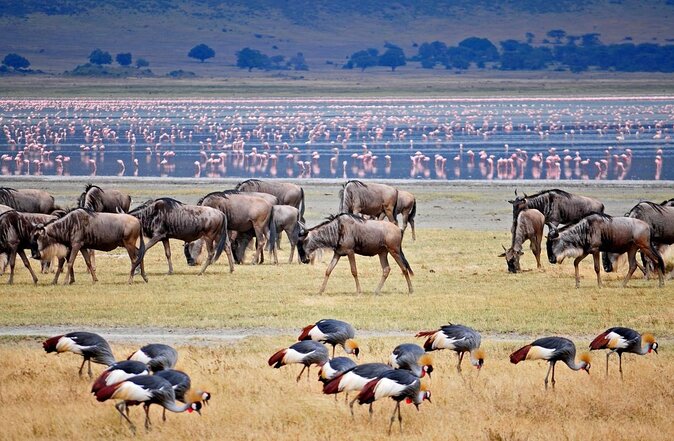
Northern Tanzania gives you several different kinds of safari in a short stretch. Tarangire is dry and open, with giant baobabs and elephants. Manyara is greener in feel, with water, forest, birds, and the steep wall of the Great Rift Valley. Ngorongoro offers a concentrated wildlife setting inside a huge volcanic crater. Lake Eyasi shifts the focus from animals to people.
That variety is the tour’s strongest feature. You are not spending four days looking at the same type of scenery or chasing the same animal list. Each stop has a different purpose, and the final day gives you a cultural experience that many standard northern circuit safaris leave out.
The private setup matters. A safari guide can explain animal behavior, adjust the pace, and respond to your interests more easily with only your group in the vehicle. The available information does not specify the exact vehicle model, accommodation, or meal plan, so I would confirm those details before paying. The price is listed at $1,945.39 per person, and its value depends heavily on what lodging, park fees, meals, and transfers are included.
More Serengeti and Ngorongoro itineraries:
- Balloon Safari & Bush Breakfast in Serengeti – Miracle Experience
★ 5.0 · 1,646 reviews - 3 Days Serengeti & Ngorongoro Group Camping Safari
★ 5.0 · 574 reviews - 5-Day Highlights mid-Range Crater, Serengeti, Tarangire
★ 5.0 · 296 reviews
Day one: Tarangire and its elephant country
After breakfast, pickup is scheduled for 7:00 a.m. The route heads toward Tarangire National Park in the Manyara Region. The planned park visit lasts about eight hours, making this a proper game-drive day rather than a quick stop on the way to somewhere else.
Tarangire is famous for its elephants, and this is the place to pay attention to family groups near water. The park is also known for giant baobabs, rolling savannah, acacia woodland, and unusual sightings such as pythons climbing trees. That mix gives the day plenty of visual variety even when larger animals are not close to the road.
The dry season, especially June through September, is presented as the strongest period for wildlife here. During those months, animals move toward the Tarangire River from the dry Maasai steppe. Wildebeest, zebra, eland, hartebeest, buffalo, and oryx may gather around water, with lions and leopards following the herds.
I would set realistic expectations about predators. Tarangire can offer excellent sightings, but animal movement is never guaranteed, and leopard sightings are less predictable than elephant sightings. The park’s appeal is not only a checklist of big animals. Baobab silhouettes, dusty tracks, bird calls, and elephants moving through dry country are part of what makes it special.
A long game drive can be tiring, especially after an airport arrival or an early start. The positive side is that the private vehicle and driver-naturalist guide should make it easier to stop for photographs and explanations. Hot park lunches have been an important part of the company’s service, and that is useful on a full day when returning to town for food is not practical.
Day two: Lake Manyara below the Rift Valley wall
Day two takes you to Lake Manyara National Park after breakfast. The scheduled visit lasts around nine hours. The park is more compact than some of Tanzania’s better-known safari areas, so you spend less time simply crossing from one end to another and more time watching the scenery change.
Lake Manyara itself covers about two thirds of the park. It is a shallow soda lake set below the wall of the Great Rift Valley, and that combination gives the area its strongest visual character. Water, cliffs, woodland, and open ground appear within a relatively small area.
Manyara is especially well known for tree-climbing lions. Seeing one is never promised, but the park gives you a chance to look upward as well as across the grass. Elephants may be seen drinking or playing in the water, while giraffes, baboons, zebras, and buffalo add more regular action.
Birdwatchers have plenty to watch here. More than 400 bird species are found in the park, including pink-hued flamingos, pelicans, cormorants, and storks. Flamingo numbers and exact locations can change, so think of them as a welcome possibility rather than a guaranteed pink blanket across the lake.
The compact scale is both a strength and a limitation. You can see a wide range of habitats in one day, but the park may feel less grand than Tarangire or Ngorongoro. If your main goal is large herds and open plains, Manyara is not the strongest day of the route. If you enjoy birds, forest edges, water, and a chance at tree-climbing lions, it earns its place.
Day three: Ngorongoro Crater’s concentrated wildlife
The third day is devoted to the Ngorongoro Conservation Area, with about eight hours planned for the visit. This is the day most people will anticipate, and the crater usually provides the most dramatic setting of the trip.
Ngorongoro is not strictly a national park. It is a conservation area created to protect wildlife and natural resources while also recognizing the interests of indigenous people. That distinction matters because Maasai herders and their cattle share parts of the area with wildlife, creating a setting where conservation and daily life exist side by side.
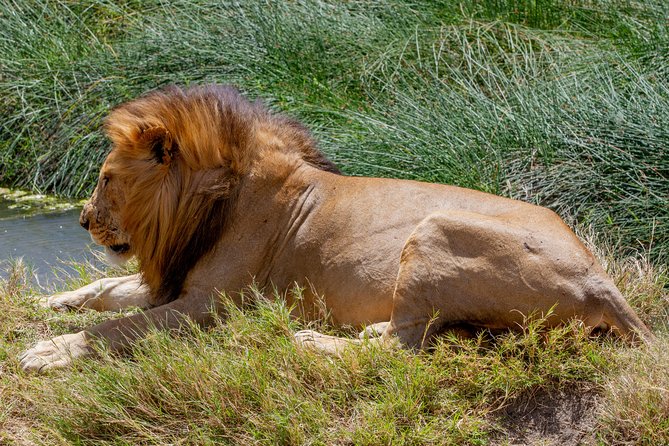
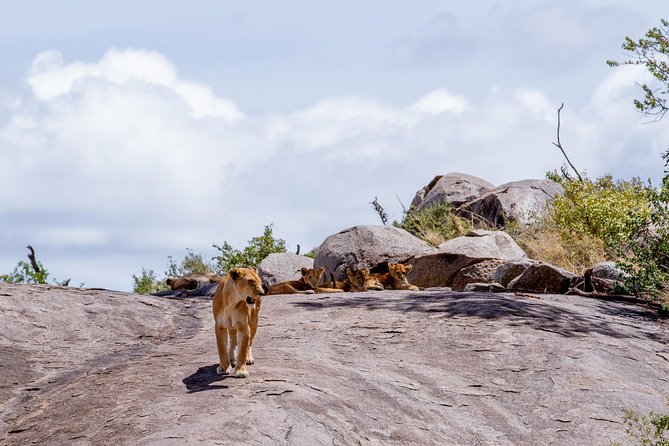
The crater is roughly 600 meters deep, and its enclosed form helps concentrate animals. You may see lion, buffalo, elephant, leopard, and black rhino in the same broad area. The crater is also famous for its black-maned lions, though the behavior and location of any animal will depend on the day.
This is where a good guide makes a real difference. A guide such as George has been praised for being friendly, attentive, and clear in his explanations. You want someone who can identify animals, explain what you are seeing, and also give you time to enjoy the view without turning every moment into a lecture.
The crater can be busy, particularly at popular wildlife stops. You should also expect a full day of driving on roads that may be rough in places. The reward is the sense of entering a self-contained wildlife world, with steep crater walls, grassland, water, and animals spread across a remarkable natural bowl.
Try not to judge the whole safari by whether you see all of the Big Five here. Lion, elephant, buffalo, leopard, and black rhino are all listed as possible residents, but no responsible operator can promise every sighting. The experience remains worthwhile for the crater itself, the scale of the views, and the chance to see Maasai pastoral life in the wider conservation area.
More four day trips in Arusha:
- 4 Days Group Camping Safari
★ 5.0 · 1,101 reviews - 4 Days Join Group tour Tarangire Serengeti and Ngorongoro crater
★ 5.0 · 219 reviews - 4-Day Safari from Arusha: Tarangire, Serengeti and Ngorongoro
★ 5.0 · 173 reviews - 4 Days safari Tour Tanzania
★ 5.0 · 159 reviews
Day four: Hadzabe and Datoga life at Lake Eyasi
The final morning heads toward Lake Eyasi, a scenic soda lake on the southern border of the Ngorongoro Conservation Area. It lies below the Eyasi escarpment on the western wall of the Rift Valley and receives fewer visitors than the major parks on this route.
This day is different by design. Instead of focusing on a game-drive checklist, you visit Hadzabe and Datoga communities. The program includes time at homesteads and lessons about daily life, animal tracking, medicinal plants, and other local knowledge.
The Hadzabe are described as an indigenous hunter-gatherer people living near the lake. The Datoga are a Nilotic-speaking community in the same region. Meeting both groups gives you a broader view of the area than a wildlife-only itinerary can provide.
You should approach this visit with respect and curiosity. This is not a staged wildlife show, and it should not be treated as one. Listen carefully, ask before taking photographs, and remember that the people you meet are not scenery. The quality of the experience will depend on how your guide introduces the visit and how much time is allowed for conversation.
The nine-hour schedule makes this another long day. Road conditions, the distance from the parks, and the length of the village visit can affect the exact rhythm. Still, the day gives the trip a strong ending. After three days of observing animals, you have a chance to think about how people have adapted to this dry, demanding region.
What the private format adds
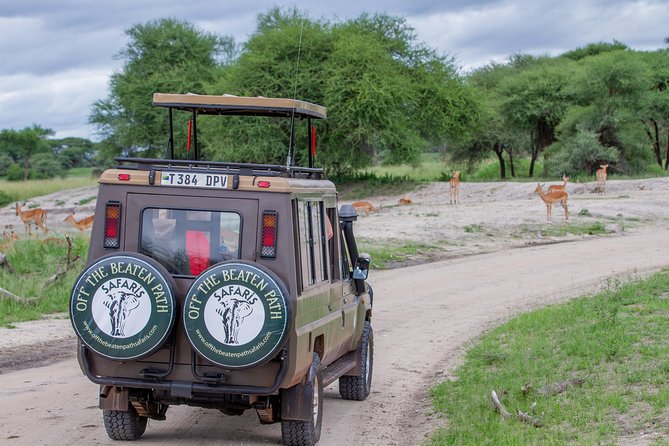
This is a private tour, so only your own group participates. That can be a major advantage if you are traveling as a couple, family, or small group with different interests. One person can ask about birds while another wants to stop for elephants, and the guide can usually balance those needs more easily than on a large shared departure.
The reviews supplied with the experience repeatedly praise the staff for kindness, patience, flexibility, and personal care. The company’s team is also described as professional and helpful from the start of the trip to the end. Those qualities matter on safari, where long drives, changing plans, and early mornings can test everyone’s patience.
Comfort is another clear selling point. The safari vehicles are described as spacious, and the hot homemade lunches are singled out as a special part of the service. I would still ask exactly what vehicle features are included and whether meals are packed or prepared on site, since the booking details do not spell that out.
The guide’s role goes beyond spotting animals. You need explanations about why elephants gather near water, how flamingos use soda lakes, and how conservation works around Ngorongoro. You also need someone who can make the Lake Eyasi visit thoughtful rather than hurried.
Is $1,945.39 a fair price?
At $1,945.39 per person, this is not a budget outing. But four days of private guiding across three major wildlife areas and Lake Eyasi can offer solid value if the price includes the major costs of a northern Tanzania safari.
The booking information confirms pickup, a private activity, and admission inclusion for Lake Manyara and Lake Eyasi. It does not clearly list accommodation, meals, vehicle fees, park fees for every stop, or airport transfer details. Before booking, ask for a written breakdown. A low headline price can look attractive until extra park charges or lodging costs appear.
The value is strongest for someone who wants more than a basic wildlife circuit. You are paying for route variety, private attention, cultural access, and a guide who can tie the pieces together. If your only goal is to see the most animals possible, you might prefer a longer safari with more nights in the Serengeti. This four-day plan is better for a compact introduction to the northern circuit.
Who should book this safari?
I would recommend it to first-time visitors who want a clear sample of Tanzania without committing to a week or more. It also suits couples, families, and small private groups that value flexibility and direct contact with a guide.
Families can take encouragement from the fact that the company has handled a safari with children aged 12, 8, and 6. Still, the long daily schedules and road time mean you should discuss your family’s comfort level before booking.
This tour is less suitable if you want slow mornings, luxury lodge time, or several days in one park. It is also not ideal if you dislike bumpy roads or prefer a tightly fixed timetable. Every day is active, and the Lake Eyasi visit asks for cultural openness as well as physical stamina.
Pickup is offered from Kilimanjaro Airport, and the activity ends back at the meeting point. Confirmation is received at booking, the start time is 7:00 a.m., and the tour is near public transportation. Most people can participate, according to the supplied information, but you should raise any personal mobility concerns before departure.
Should you book it?
Book this safari if you want four distinct Tanzanian experiences in one private trip: elephant country at Tarangire, water and birds at Manyara, crater wildlife at Ngorongoro, and community life at Lake Eyasi.
I would book it after confirming the accommodation, meals, park fees, vehicle details, and exact airport arrangements. If those costs are covered, the price can be sensible for a private northern circuit safari. If they are extra, compare the final total with longer or slower itineraries before deciding.
The strongest reason to choose this route is its balance. You get famous wildlife, unusual scenery, hot lunches, personal guiding, and a final cultural visit. The main compromise is speed, but for a short introduction to northern Tanzania, that trade can be worthwhile.
FAQ
Where does the tour start?
The listed meeting point is Kilimanjaro Airport in Kilimanjaro National Park, Tanzania. The activity starts at 7:00 a.m.
Where does the tour end?
The activity ends back at the meeting point.
Is this a private tour?
Yes. Only your group participates in the activity.
How long is each day?
The planned stops last about eight hours on day one, nine hours on day two, eight hours on day three, and nine hours on day four.
Which parks and areas are included?
The route includes Tarangire National Park, Lake Manyara National Park, the Ngorongoro Conservation Area, and Lake Eyasi.
Will I visit local communities?
Yes. At Lake Eyasi, the program includes visits connected with the Hadzabe and Datoga communities, including homesteads, animal tracking, medicinal plants, and daily life.
Can I cancel for a full refund?
You can cancel up to 24 hours before the experience start time for a full refund. Cancellations or changes made less than 24 hours before the start are not accepted for a refund.
Newly listed around Arusha
- 5-Day Private Safari Tour in Tanzania’s Wildlife★ 5.0 · 3 reviews
- 3 Days private safari Tarangire ,Ngorongroro crater &Manyara★ 5.0 · 3 reviews
- 3 Day Sharing Safari – Manyara, Ngorongoro Crater and Tarangire National Parks★ 5.0 · 3 reviews
- Tarangire National Park Day Trip★ 5.0 · 3 reviews
- 2 Days Tarangire and Ngorongoro Crater Tour★ 5.0 · 3 reviews
- 6 -Day Tarangire, Manyara, Serengeti & Ngorongoro★ 5.0 · 3 reviews
- 5 Days Group Camping Safari★ 4.7 · 3 reviews
- Private 4×4 Vitara Safari in Arusha National Park★ 5.0 · 3 reviews
Serengeti & Ngorongoro Safaris, compared.


Balloon Safari & Bush Breakfast in Serengeti – Miracle Experience
Read our review →




Private 6-Day Tarangire Manyara Crater and Serengeti with Mid-Range Lodges
Read our review →
5 Days Camping Tarangire, Serengeti & Ngorongoro crater & Visiting Maasai
Read our review →Browse the lists this tour appears in