
Reviewed · SERENGETI & NGORONGORO SAFARIS
Tanzania Safari – The Great Migration in the North of the Serengeti and Lake Natron
The main event here is the Great Migration in northern Serengeti, where huge herds of wildebeest and zebras gather between July and October. I like the smart mix of famous parks and less usual stops, especially the Ngorongoro Crater and the stark shores of Lake Natron. I also like that private 4×4 transport, meals, park fees, water, and transfers are built into the price.
The catch is the amount of road time. You spend several long days in a safari vehicle, and the rough route toward Lake Natron is not a quick hop. At $4,974 per person, this is a serious investment, though the private format and broad list of inclusions make the cost easier to assess.
Key points to know before booking
- Migration timing: The northern Serengeti portion is designed for July through October, the period when wildebeest and zebras may gather near the Mara region.
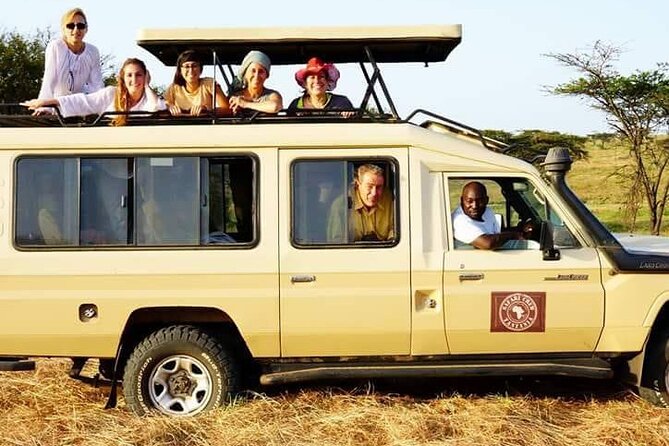
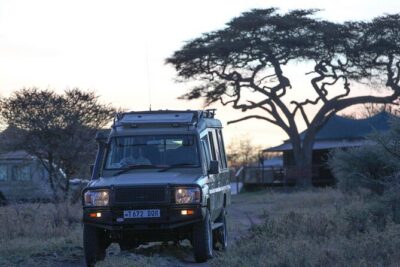
- A private safari vehicle: Only your own group takes part, with private 4×4 transportation throughout the circuit.
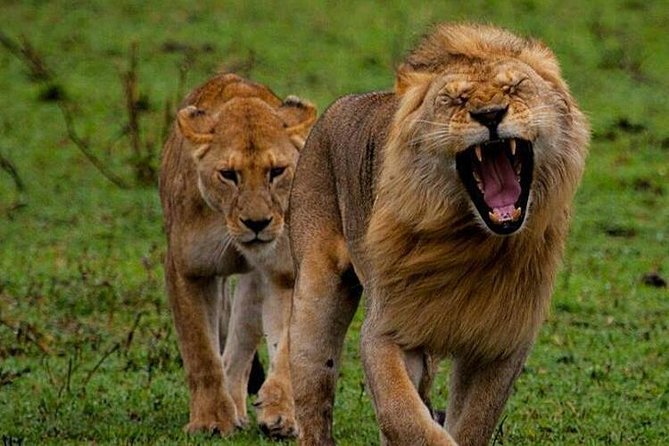
- More than the Serengeti: Lake Manyara, Ngorongoro Crater, Lake Natron, Ol Doinyo Lengai, and Tarangire all add very different scenery and wildlife.
- A full-board price: Seven breakfasts and dinners, eight lunches, park fees, transfers, water, taxes, and AMREF insurance are included.
- A demanding route: Several days run for about eight hours, and the track to Lake Natron is described as rough and difficult.
- A guide matters: Past trips have included guides named John, Naftal, Beni, and Mussa, while Rocco handles the Safari Crew Tanzania operation.
Why this route works for a first Tanzania safari
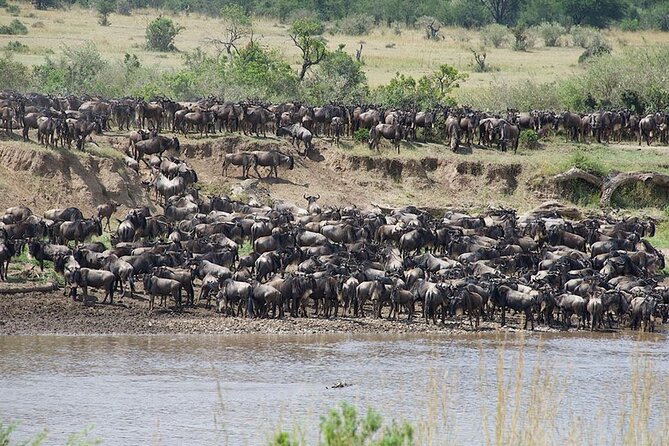
This eight-day circuit gives you a strong introduction to northern Tanzania without limiting the trip to one famous park. You begin with Lake Manyara, reach the Ngorongoro Crater, spend several days in the Serengeti, then head to Lake Natron and Tarangire before returning to Arusha.
I like that progression. The trip moves from a compact park with forests and lake wetlands to a volcanic crater, then to the open plains of the Serengeti. After the migration focus, Lake Natron changes the mood completely. Tarangire finishes the safari with baobabs, elephants, and a different pattern of animal activity.
The route is not built for people who want a leisurely holiday with short transfers. It is built for people who accept early starts, bumpy roads, packed days, and long stretches in a 4×4 in exchange for a broad look at northern Tanzania.
The private format is a real advantage. You are not sharing the vehicle with strangers, so your group can discuss the pace and spend time watching an animal rather than rushing to match a larger party. The itinerary does not state the vehicle size or the exact lodge list, so ask for those details before paying.
More Safaris in Moshi
- Safari Serengeti And Ngorongoro
★ 5.0 · 288 reviews - Big Five Safari In Tanzania
★ 5.0 · 99 reviews - Unforgettable Tanzania Safari And Zanzibar Beach
★ 5.0 · 97 reviews
Day 1: Lake Manyara brings forests, wetlands, and birds
You leave Arusha in the morning for Lake Manyara National Park, with about seven hours set aside for the day. The park is small by northern Tanzania standards, but it packs several habitats into one area.
Springs flowing from the Rift Valley escarpment feed dense forest, while open grassland and marsh sit closer to the lake. That variety gives you a good chance to see different animals in a short period. Baboons and vervet monkeys are especially associated with the park, along with elephants and giraffes.
Birdlife is one of Lake Manyara’s main draws, with about 380 recorded species. From December through March, pink flamingos gather in large numbers before moving toward Lake Natron. If your trip is in the July to October migration season, you should not expect the largest flamingo display here, but the park still makes a useful opening day.
The main drawback is time. After leaving Arusha, you have a game drive and then need to continue toward the next overnight area. This is an excellent first safari stop, but it is not a full, slow exploration of the park.
Day 2: The Ngorongoro Crater is compact and wildlife-filled
Day two is devoted to a photographic safari in the Ngorongoro Crater, with around eight hours planned. The crater formed when an ancient volcanic cone collapsed about 2.5 million years ago. Its floor is roughly 16 to 20 kilometers across, enclosed by walls that rise about 600 meters above the interior.
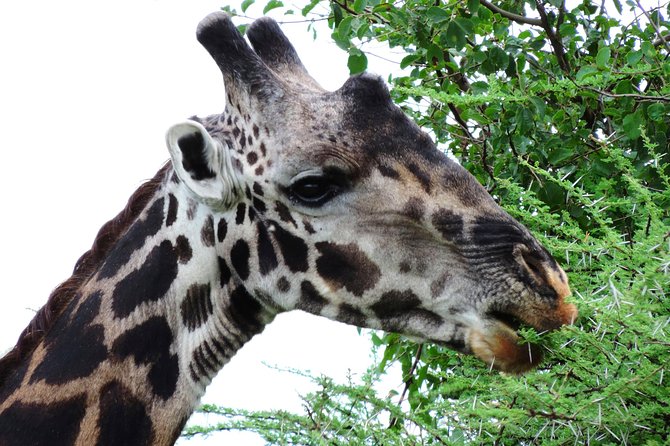
That natural bowl concentrates wildlife. More than 25,000 large animals live within the crater, and you can find most of the region’s typical species here. Giraffes are the notable exception because the crater does not provide the food they need.
I like the crater as an early stop because it offers a different kind of safari from the Serengeti. Instead of searching across a huge open area, you look down into a contained world of grassland and wetlands. The high crater rim also gives you dramatic views, though the altitude reaches about 2,300 meters, so the air can feel cooler than you expect.
This is another full day. The crater can be busy, and the enclosed setting gives it a more concentrated feel than the wide Serengeti. Still, for a first safari, it is hard to ignore. You have a strong chance of seeing a broad mix of animals without covering enormous distances.
Days 3 and 4: Northern Serengeti is the heart of the trip
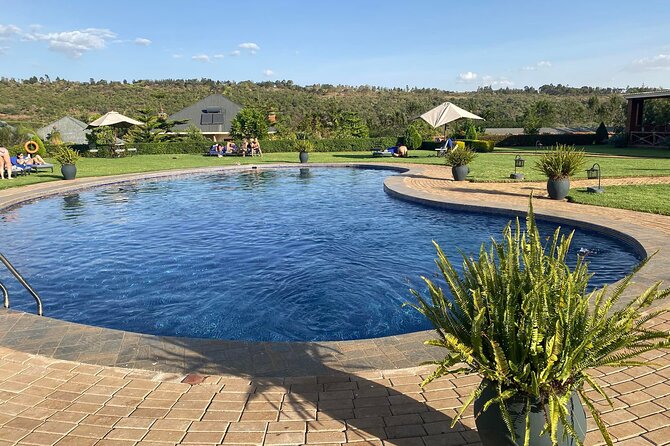
The itinerary gives two days to the Serengeti, followed by a day focused on the Mara region. That is the right emphasis for a migration safari, though three days is still a limited window in a very large ecosystem.
The Serengeti National Park covers about 15,000 square kilometers and forms part of a much larger ecological system that includes the Ngorongoro Plains and northern areas near the Mara River. The grasslands are open in many places because volcanic soils limit the growth of tall trees. That makes animal watching easier, especially when your guide is scanning the horizon.
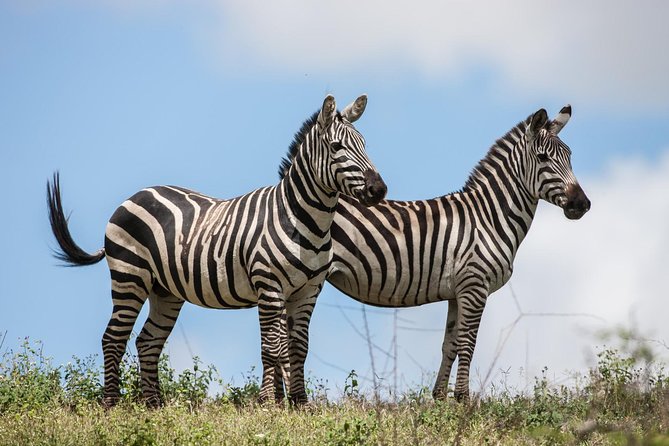
The figures are enormous: around 1.5 million wildebeest, 300,000 zebras, and 500,000 Thomson’s gazelles move through the wider ecosystem in search of water and fresh pasture. Lions, leopards, cheetahs, elephants, giraffes, crocodiles, hippos, and more than 400 bird species add to the spectacle.
The key point is that the migration is a moving event, not a scheduled performance. July through October is the stated period for herds in the north and for the famous river crossings, but no itinerary can guarantee a crossing on a particular day. You might see a vast herd spread across the plains, a predator following the movement, or animals gathered near water instead.
That uncertainty is part of the experience, but it matters when you are spending nearly $5,000. Ask the operator how much time is planned in the northern Serengeti, which camps or lodges are being used, and how the route changes if the herds move early or late.
The long days are worthwhile for serious wildlife viewing, but they can test your patience. A private vehicle helps because you can pause for photographs and discussion. Guides named John and Naftal have led past safaris connected with this operator, but your assigned guide may be different. Ask for the name and language arrangements before departure.
More Serengeti and Ngorongoro itineraries:
- Serengeti, Ngorongoro and Tarangire 4 Days Safari
★ 5.0 · 59 reviews - 5 Days Camping Tarangire, Serengeti & Ngorongoro crater & Visiting Maasai
★ 5.0 · 58 reviews - 4 Days Group Joining Camping Safari to Tarangire Serengeti Ngorongoro Crater
★ 5.0 · 50 reviews - 3-Day Ngorongoro Crater Manyara and Tarangire Safari from Arusha
★ 5.0 · 49 reviews
Day 5: Lake Natron trades game drives for volcanic scenery
After a final morning game drive in the northeastern Serengeti, you leave the park on a rough track toward Lake Natron. The journey takes about four hours on the itinerary, but road conditions can affect how the day feels.
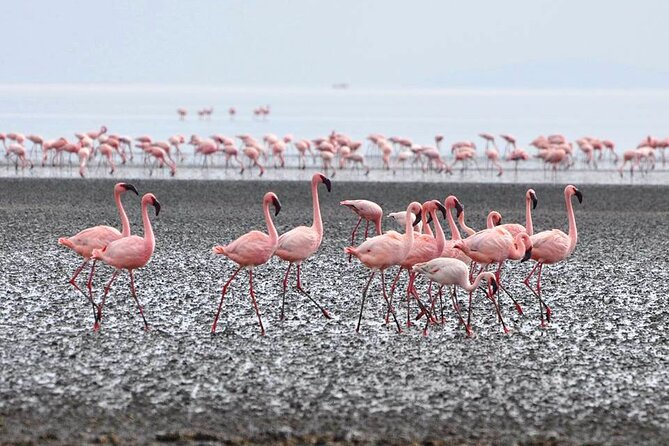
Lake Natron is about 50 kilometers long and 25 kilometers wide. It sits in a Rift Valley depression surrounded by rugged volcanic country, and its strongly alkaline water supports large concentrations of cyanobacteria. That food source attracts millions of pink flamingos, especially during the dry season from June through October.
This is one of the most unusual parts of the circuit. The Serengeti is about moving herds and predators. Natron is about color, heat, salt, volcanic rock, and birds gathering beside a highly alkaline lake. You are still in a safari region, but the focus shifts from large mammals to geology and birdlife.
The same day includes a visit connected with Ol Doinyo Lengai, the sacred volcano of the Maasai people. At nearly 3,000 meters, it is the only volcano known for natro-carbonatitic lava.
In the afternoon, you walk along the Engare Sero stream through a narrow rocky gorge to a waterfall where swimming is possible. This is not described as a difficult trek, but you may walk through water up to around knee height. Bring a swimsuit and shoes with good grip. That advice is practical, not optional, since ordinary smooth-soled footwear would be a poor choice.
Day 6: A closer look at Natron, then Tarangire
The sixth day begins with another walk near Lake Natron through rugged, almost lunar volcanic scenery. The route then crosses a valley flanked by peaks shaped by Rift Valley earthquakes before continuing toward Mto wa Mbu and Tarangire National Park.
The itinerary allows about four hours for the Natron excursion and another four hours for the afternoon safari in Tarangire. That makes this a transition day rather than a full day in either place.
Tarangire covers about 2,600 square kilometers and feels different from the Serengeti. Its signature sights are giant baobabs and large elephant herds. Lions, leopards, buffaloes, wildebeest, zebras, antelopes, and gazelles also live here, along with around 500 bird species.
If your trip takes place in the dry season, the Tarangire River and Silale Marsh become especially important. They can be the only dependable water sources in the area, drawing animals together. This gives the park a different wildlife rhythm from the migration plains.
Day 7: Tarangire rewards a full final safari day
You spend the seventh day in Tarangire, with about eight hours for game viewing. I like placing this full day after Lake Natron. By now you have seen the Serengeti’s open grassland and Natron’s volcanic basin, so Tarangire’s trees, baobabs, and river corridor feel like a fresh chapter rather than another version of the same park.
The park is often called a place of giants, and the description fits its scale and mood. Elephants are a major attraction, while the baobabs give the scenery a distinctive shape. The river draws many species during dry periods, and the bird count is among the highest in Tanzania, with resident and migrating species.
The drawback is that this day comes after a demanding journey. If you are tired, tell your guide what pace suits you. Since the safari is private, your group has more room to make sensible choices, although the exact flexibility should be confirmed in advance.
Day 8: Returning to Arusha requires careful flight planning
The final day allows about seven hours to return to Arusha for lunch and transfer to either Kilimanjaro International Airport or Arusha Airport.
Do not book a tight onward flight without checking the actual transfer plan. The itinerary includes airport transfer, but it does not give a guaranteed arrival time. Safari roads, park exits, and vehicle delays can all affect the schedule. Send the operator your arrival and departure flight details when booking so the transfer can be arranged around them.
What the $4,974 price includes
At $4,974 per person, this is not a budget safari. The value comes from the amount included and from the private setup.
The package covers private transportation, a 4×4 safari circuit, full board, transfers, park fees, all taxes, water in the vehicle, and AMREF insurance. You receive seven breakfasts, seven dinners, and eight lunches. Those inclusions remove several costs that can add up quickly on a safari.
International and local flights are not included. You also pay separately for an entry visa, lodge drinks, personal extras, and the listed gratuity item, which appears as Mance in the supplied details and should be clarified before booking.
Accommodation is described in the trip material as lodges and tented camps, but the exact properties are not named. That is an important omission for a trip at this price. Ask for the accommodation list, room arrangements, and any differences between standard and upgraded options.
Past safari arrangements associated with this company have included comfortable lodges and tented camps, but you should judge value from the specific properties offered for your dates, not from a general promise of comfort.
Who should book this safari
I would recommend this route to you if the Great Migration is the main reason you are going to Tanzania and you also want several major northern parks. It suits couples, families, and private groups that value having their own vehicle.
It is also a good choice if you want something beyond the standard Manyara, Ngorongoro, and Serengeti circuit. Lake Natron, the Engare Sero waterfall walk, and the Ol Doinyo Lengai area add a more active and geological side to the trip.
You should think twice if you dislike rough roads, long drives, or changing scenery every day. The Natron section is especially different from a classic game-drive holiday, and the route does not leave much spare time.
The operator has received strong praise for organization, responsive planning, guides, and accommodation. Specific guides previously connected with trips include John, Naftal, Beni, and Mussa. Rocco is also repeatedly associated with planning and customer communication. Since guide quality can shape a safari, ask who will lead your group and how much experience that person has in the northern Serengeti.
Booking confirmation is sent within 48 hours, subject to availability. Reservations are handled by email, and you need to provide a mobile number, passport information, and both arrival and departure flight details. Most people can take part, and public transport is nearby, although the safari itself is private.
The cancellation terms are worth noting. A full refund requires cancellation at least six full days before the start time. Cancellation two to six days ahead allows a 50 percent refund, while cancellation less than two days before departure is nonrefundable.
Should you book it?
Book this safari if you want the northern Serengeti migration season but do not want to spend all eight days in one ecosystem. The combination of Ngorongoro, Serengeti, Natron, and Tarangire gives you wildlife, volcanoes, flamingos, waterfalls, and varied scenery in one carefully packed trip.
Before committing, confirm the exact accommodation, vehicle setup, guide, daily driving times, and plan for locating the herds. If those details suit you, the private format and broad list of included costs give this expensive safari a reasonable case. If you prefer slower days and fewer transfers, choose a longer itinerary or a shorter route focused mainly on the Serengeti.
FAQ
How long is the Tanzania safari?
The safari lasts approximately eight days.
Where does the tour begin?
The tour begins in the Moshi area, with departure from Arusha on the first day.
When is the best stated period for the Great Migration section?
The itinerary focuses on July through October, when large herds of wildebeest and zebras gather in northern Serengeti and the Mara region.
Is transportation included?
Yes. Private transportation, a 4×4 safari circuit, transfers, and water on board are included.
Is this a shared group tour?
No. This is a private activity, and only your group takes part.
Are meals included?
Yes. The package includes seven breakfasts, seven dinners, and eight lunches.
Are park fees and taxes included?
Yes. Park fees, all fees and taxes, and AMREF insurance are included.
Are flights included?
No. International and local flights are not included. Transfers are provided to or from Kilimanjaro Airport or Arusha Airport.
What should you bring for the Engare Sero waterfall walk?
You should bring a swimsuit and non-slip shoes because parts of the walk take place in water that can reach around knee height.
More Safaris in Moshi & Kilimanjaro
- 8-Day Essence of Tanzania Safari – Luxury
★ 5.0 · 72 reviews - Great Migration Safari In Tanzania
★ 5.0 · 71 reviews - 6 Days 5 Night Safari
★ 5.0 · 57 reviews - 7-Day Magical Tanzania Safari -Premium High End Package
★ 5.0 · 53 reviews
Newly listed around Moshi & Kilimanjaro
- Climb Mount Kilimanjaro: 7 Days Machame Route★ 5.0 · 3 reviews
- 6 Days Mount Kilimanjaro Climbing via Rongai Route★ 5.0 · 3 reviews
- Explore 1 day Ngorongoro Crater Budget Group Safari from Arusha★ 5.0 · 3 reviews
- Mt. Kilimanjaro Day Hiking★ 5.0 · 3 reviews
- Chemka (Kikuletwa) Hot Springs, Tanzania★ 5.0 · 3 reviews
- Guided City tour of Moshi★ 4.3 · 3 reviews
- 8 Day Tanzania Family Safari★ 5.0 · 3 reviews
- Rongai Route 7 Days★ 5.0 · 3 reviews
Serengeti & Ngorongoro Safaris, compared.
Balloon Safari & Bush Breakfast in Serengeti – Miracle Experience
Read our review →


Private 6-Day Tarangire Manyara Crater and Serengeti with Mid-Range Lodges
Read our review →
5 Days Camping Tarangire, Serengeti & Ngorongoro crater & Visiting Maasai
Read our review →Browse the lists this tour appears in