
Reviewed · SERENGETI & NGORONGORO SAFARIS
Cycling from Kilimanjaro to Ngorongoro Crater
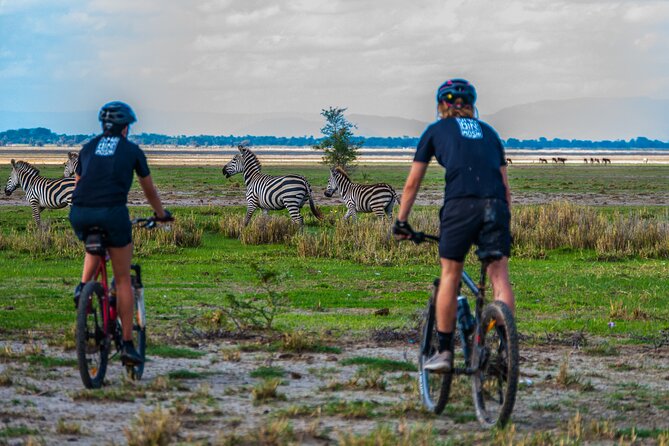
The remarkable thing here is the change under your wheels. You start among Kilimanjaro’s Chagga villages, banana groves, coffee farms, and forest, then cross dry Maasai country before reaching Tarangire, Lake Manyara, and Ngorongoro. It is a proper point-to-point journey, not a string of short rides from one lodge.
I like the close contact with village life and the way the route mixes dirt roads with smoother tarmac. I also like the support vehicle and flexible guiding, especially for groups with different fitness levels. The main catch is that this is a serious six-day ride. Exact distances are not provided, and the fifth day includes a tough climb up the Great Rift Valley escarpment.
Key points to know before booking
- Six days from Moshi to Ngorongoro: You cover much of Tanzania’s northern circuit by bicycle, with transfers and support along the way.
- A real mix of surfaces: Expect tarmac, dusty gravel, rolling roads, small climbs, and a steep final approach.
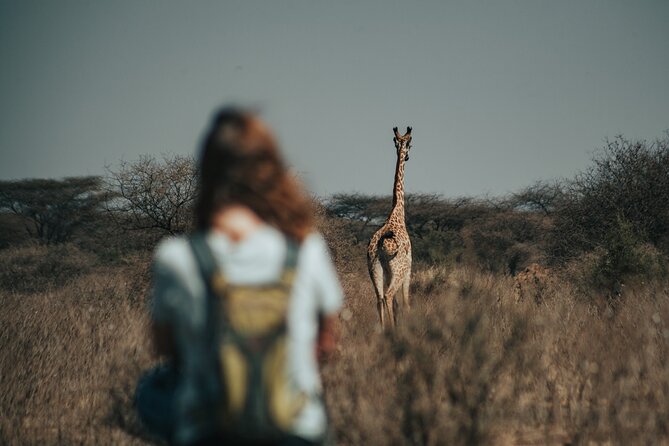
- Wildlife country without a safari-only schedule: The route follows migration paths and wildlife corridors, with possible animal sightings from the road.
- Strong cultural contact: Chagga villages, Maasai settlements, and everyday Tanzanian life are part of the ride.
- Optional final-day safari: A Ngorongoro Crater game drive can be arranged while you wait for departure.
- Private and adjustable: Only your group takes part, and the guides can adapt the pace to the group’s abilities.
The ride from Kilimanjaro to Ngorongoro
At $2,820.52 per person, this is not a cheap bicycle outing. It is priced as a six-day supported journey with accommodation, meals, a vehicle, guiding, and the hard work of linking several major northern Tanzania sights into one continuous route.
That price makes more sense if you want a complete trip rather than a collection of separate day rides. You are paying for logistics as much as pedaling. The support vehicle can carry supplies and offer practical help, while the guides manage the route and adjust the day when needed.
The experience is private, so your pace is not tied to a large group. That matters here. One day is long and mostly dusty, another is the toughest climb, and the earlier sections vary between easy rolling roads and rougher tracks. A flexible group can make better use of the day than a fixed departure with a strict pace.
The route begins at One Bike Shop on Mailimoja Road in Moshi at 7:00 am. Pickup is offered, and the activity ends back at the meeting point, though the final day also includes a transfer toward the airport or another departure point. Confirm the exact transfer plan before booking, especially if your international flight leaves the same day.
More Serengeti and Ngorongoro itineraries:
- Safari Serengeti And Ngorongoro
★ 5.0 · 288 reviews - Serengeti, Ngorongoro and Tarangire 4 Days Safari
★ 5.0 · 59 reviews - 5 Days Camping Tarangire, Serengeti & Ngorongoro crater & Visiting Maasai
★ 5.0 · 58 reviews
Day 1: From Chagga farms to Maasai plains
Your first ride heads west from the One Bike Tanzania shop at the base of Kilimanjaro. The opening section gives you a clear sense of why cycling works so well here. You pass through Chagga villages, banana plantations, coffee-growing areas, and green forest before the surroundings gradually dry out.
The road surface changes as well. You can expect both broad tarmac and dirty gravel roads, with small uphills and downhills rather than one major sustained climb. This is a useful first day because it introduces the physical demands without throwing the hardest section at you immediately.
As you move farther west, the dense plant life gives way to open, arid plains associated with Maasai communities. The change is not only visual. You are moving from cultivated highland life into a more open setting with a different cultural character.
Wildlife may cross the roads in this part of the trip. That possibility is one of the route’s special features, but it also means you should listen closely to your guides and remain alert around animals and traffic.
The overnight stop is in Ngabobo village. The available information does not give a cycling distance or detailed accommodation description, so ask for the day’s mileage, elevation profile, and room arrangements before you set off.
Day 2: Dusty Ngasurai and views of Mount Meru
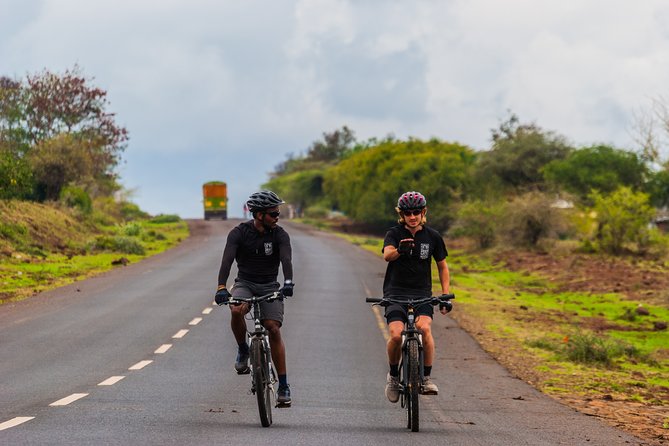
Day 2 is described as long, mostly on a dirty and dusty road, but without major uphills. That combination is worth taking seriously. Lack of steep climbs does not make a long gravel day easy, especially in heat, wind, or loose dirt.
You cross the Ngasurai open plains, a wildlife route used by migrating animals, including elephants moving from Kenya’s Amboseli National Park. Seeing animals is never guaranteed from a bicycle, but the setting gives the ride a safari feel without placing you inside a game-drive vehicle all day.
Once you join the main tarmac road toward Arusha, the cycling should feel easier. You pass several villages with Mount Meru in the background, a fine visual marker as you approach the city.
The night is spent at a lodge in Arusha. This stop breaks up the long route and gives you a more settled base before the longest ride of the trip. If you are concerned about the dusty road, bring eye protection and a way to cover your mouth. Those are sensible precautions for any long ride on an unpaved road, though the tour data does not specify equipment supplied by the operator.
Day 3: The longest ride toward Tarangire
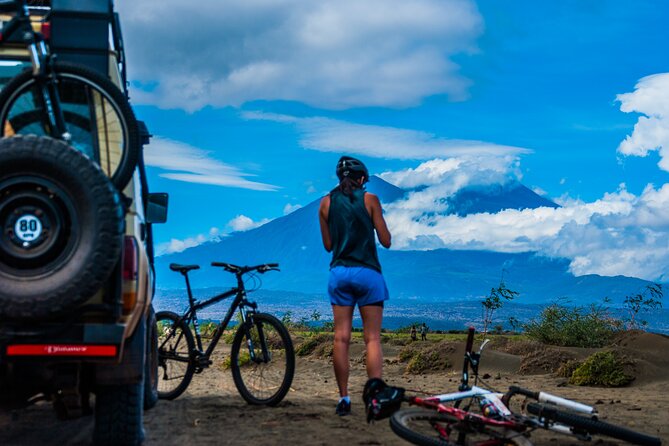
Day 3 is the longest cycling day, but it is described as less demanding because most of the route follows an undulating tarmac road. That is an important distinction. You still need endurance, but smooth pavement usually makes a long day more manageable than the rough roads of Day 2.
The route passes colorful Tanzanian villages and offers repeated glimpses of ordinary life. Cycling lets you move slowly enough to notice homes, roadside activity, and changing scenery in a way that is hard to match from a closed vehicle.
The day ends near the border of Tarangire National Park, known for its high concentration of elephants. You overnight at Roika Tented Lodge, where you have time to rest.
This is a good point in the route to judge your energy honestly. If the first two days have left you worn out, the support vehicle becomes especially useful. The supplied details do not explain exactly how much of a ride can be shortened or how bikes are transported, so discuss backup options with the guides in advance.
More Bike Tours in Moshi & Kilimanjaro:
- 1-Day Moshi Villages bike tour
★ 5.0 · 59 reviews - Chagga Villages in Mount Kilimanjaro Cycling Day Trip
★ 5.0 · 42 reviews - Moshi city bike day trip
★ 5.0 · 17 reviews - Kilimanjaro bike park safari
★ 5.0 · 16 reviews
Day 4: Wildlife corridors and the Rift Valley
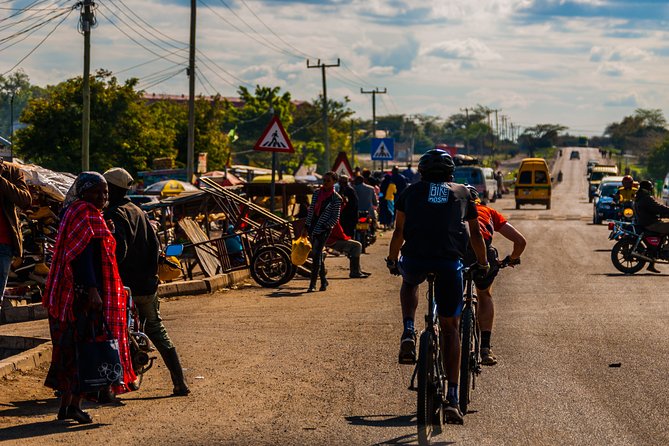
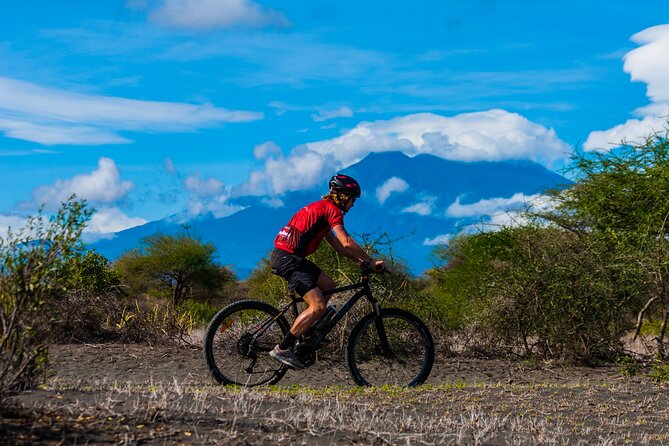
Day 4 brings some of the most scenic riding in the northern circuit. You pass through wildlife corridors between Tarangire National Park and Lake Manyara, along with Maasai settlements and views across the Great Rift Valley.
Most of the day is on tarmac. The final few kilometers shift to dirt on the way to Migombani Camp, where you spend the night. That surface change is small on paper, but it can feel significant after several days in the saddle.
The cultural element remains central. You are not simply being driven between park gates. You move through inhabited areas and see how settlements sit alongside wildlife routes and major natural features.
The Rift Valley views also help explain the physical shape of the final part of the tour. You are heading toward an escarpment, and the climb on Day 5 will be the route’s major test.
Day 5: Lake Manyara and the hard climb to Ngorongoro
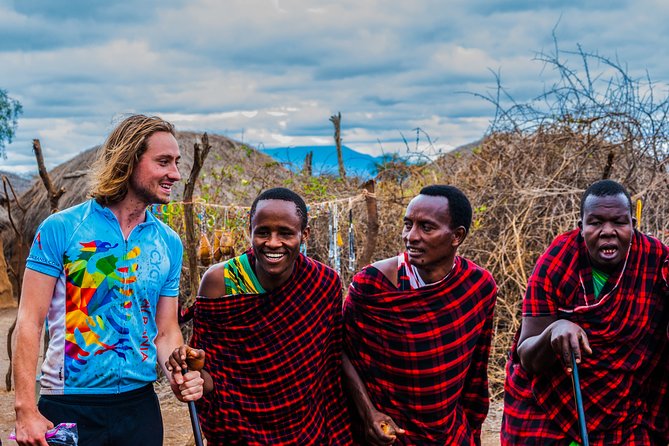
The final cycling day is described as the toughest and most rewarding. You first ride to the entrance of Lake Manyara National Park, then begin the steep ascent up the Great Rift Valley escarpment.
A stop on the climb offers a broad view over Lake Manyara and the surrounding area. This is the kind of break that gives a hard physical effort a clear purpose. You can pause, take in the view, and see the ground you have covered.
After reaching the top, you continue through Karatu, a colorful town, before riding to the gate of the Ngorongoro Conservation Area. The route ends there, followed by a transfer to your lodge for rest and a celebration of completing the challenge.
Do not underestimate this day. The steep escarpment is the clearest reason the tour asks for moderate physical fitness. You should be comfortable riding for several hours, handling changing surfaces, and managing consecutive days of effort. Since no distances are supplied, ask for the estimated riding time and climb details before paying.
The finish is satisfying because you arrive at Ngorongoro under your own power. You have crossed from Kilimanjaro’s cultivated slopes through open plains, villages, wildlife routes, and the Rift Valley rather than simply checking off separate destinations.
Day 6: Rest, departure, or a Ngorongoro game drive
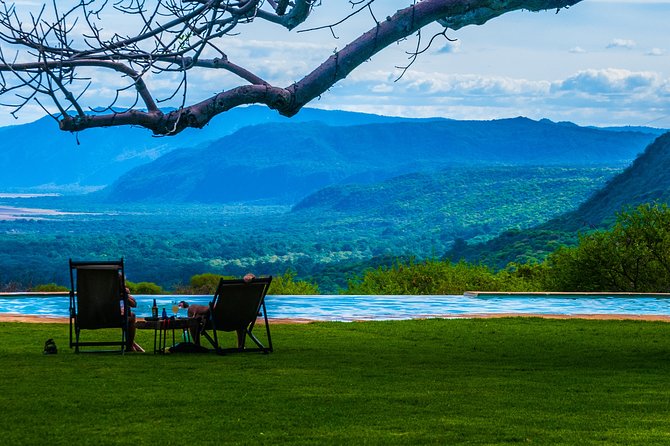
Day 6 is deliberately lighter. You relax at the lodge while waiting for a transfer to Kilimanjaro Airport or another departure point. A game drive in the Ngorongoro Crater can also be arranged for this day.
That optional safari can add real value, especially if you have not booked a separate wildlife trip. It also changes the shape of the experience. After five days of cycling, you can see the crater from a vehicle without having to pedal through the conservation area.
The game drive is not clearly stated as part of the base price, so confirm whether it costs extra, how long it lasts, and where the pickup takes place. Also check your flight time. A crater excursion and an airport transfer may require careful scheduling.
Guides, support, and the feel of a private trip
The guiding team named in the available information includes Hilary, Goodluck, and Joseph. The strongest practical point about the staff is their ability to adjust the daily plan to the group’s abilities and requests.
That flexibility matters more than a fixed promise of speed. One group may be comfortable with the longest ride, while another may need more breaks or vehicle support. The tour is private, so only your group participates. This gives you more control over pace and stops than a large shared departure.
A supporting vehicle is included. The details do not specify its exact capacity or how much luggage it carries, so clarify what you can place in it and what must remain on your bicycle. Ask about bicycle size, helmet supply, repair support, water arrangements, and the backup plan for a mechanical problem. These are normal questions for a multi-day cycling trip.
The tour information says travel insurance is provided for the cycling journey in one place, but the inclusion details also list insurance as not included. That is a real inconsistency. Get written confirmation about insurance coverage before booking, including medical treatment, evacuation, bicycle damage, and the dates covered.
Meals, accommodation, and what the price covers
The package includes accommodation, a supporting vehicle, six lunches, six dinners, and five breakfasts according to the supplied details. Because the meal count is unusual for a six-day trip, confirm which meals are included on arrival and departure days.
Overnight locations include Ngabobo village, a lodge in Arusha, Roika Tented Lodge near Tarangire, Migombani Camp, and a lodge after reaching the Ngorongoro Conservation Area. The exact lodge on the final night is not named, and room categories are not provided.
This means you should ask direct questions about single supplements, shared rooms, hot water, luggage storage, and dietary needs. Do not assume that every overnight stop offers the same level of comfort. The route crosses rural areas, and the accommodation changes as the scenery does.
Tips are not included. Build gratuities into your budget, but ask the operator for a suggested amount if you want to plan fairly for the cycling guides, driver, and lodge staff.
Who will enjoy this six-day challenge
This trip suits you if you want active travel, local contact, and a strong sense of progress. It is especially good for someone who would rather cycle between major sights than spend the whole northern circuit inside a safari vehicle.
You do not need to be an elite cyclist, but you should have moderate fitness and be ready for long days. The first four days include a mix of surfaces and rolling roads. Day 3 is the longest, and Day 5 includes the steepest climb.
The tour can also work for older cyclists who are reasonably fit and willing to communicate clearly with the guides. The guiding team has tailored days for groups with different abilities, but that should not be mistaken for an easy ride.
You may prefer another option if you want exact mileage, fixed elevation figures, luxury accommodation, or a relaxed schedule with short daily rides. The lack of published distances makes it harder to judge the workload in advance.
Is the $2,820.52 price good value?
I see the price as fair only if you want the full supported package. Six days of cycling, accommodation, meals, a vehicle, guiding, and the route planning required to connect Moshi, Arusha, Tarangire, Lake Manyara, and Ngorongoro add up quickly.
The value is strongest for a private group. You are not paying for a standard ride where everyone must follow one pace. You get a route that combines cultural encounters, wildlife country, major scenery, and a possible final safari.
The value is weaker if you only want bicycle hire or a short guided ride. You are paying for a full northern Tanzania journey, so compare the package with the cost of arranging separate transport, rooms, meals, park-area transfers, and a crater excursion.
Before booking, confirm insurance, the game-drive price, exact accommodation, daily distances, and what the supporting vehicle covers. Those answers will tell you much more about the real value than the headline price alone.
Should you book the Kilimanjaro to Ngorongoro ride?
Book it if the idea of earning your way across northern Tanzania appeals to you. The route offers a rare combination of Kilimanjaro foothills, Chagga and Maasai communities, open wildlife country, Tarangire, Lake Manyara, the Rift Valley, and Ngorongoro in one continuous trip.
I would be cautious if you are not used to consecutive riding days or if you need detailed mileage and elevation information before committing. Ask for that information, settle the insurance contradiction, and confirm the final-day schedule.
For fit cyclists who want a private, supported challenge with culture and wildlife along the way, this is a strong choice. For everyone else, the optional vehicle support may make it workable, but you should agree in advance on how flexible the ride really is.
FAQ
Where does the cycling tour start?
The tour starts at One Bike Shop on Moshi Mailimoja Road in Tanzania. The stated start time is 7:00 am, and pickup is offered.
Where does the tour finish?
The cycling route ends at the Ngorongoro Conservation Area gate on Day 5. You are then transferred to a lodge. The activity information also says the activity ends back at the meeting point, so confirm the exact final transfer arrangement with One Bike Tanzania.
How long does the tour last?
The tour lasts approximately six days. The main cycling takes place from Day 1 through Day 5, while Day 6 is for resting, departure transfers, or an optional game drive.
Is a supporting vehicle included?
Yes. A supporting vehicle is included as part of the tour.
Are meals included?
The supplied details include six lunches, six dinners, and five breakfasts. Since the breakfast count does not match the six-day duration exactly, confirm the meal schedule before departure.
Is insurance included?
The information is inconsistent. One section says travel insurance is provided for the cycling journey, while another lists insurance as not included. Ask One Bike Tanzania to confirm the coverage in writing before booking.
Can I arrange a Ngorongoro game drive?
Yes. A game drive can be arranged on Day 6 while you are waiting for your transfer. The supplied information does not state whether it is included in the price, so confirm the cost and schedule.
What fitness level is required?
You should have a moderate level of physical fitness. The tour includes long dusty-road sections, a long undulating tarmac ride, several smaller climbs, and a tough ascent up the Great Rift Valley escarpment on Day 5.
Can I cancel for a full refund?
You can cancel up to 24 hours before the experience start time for a full refund. Changes or cancellations made less than 24 hours before the start are not accepted or refunded, and weather or minimum-participant cancellations may result in a different date or a full refund.
Newly listed around Moshi & Kilimanjaro
- Climb Mount Kilimanjaro: 7 Days Machame Route★ 5.0 · 3 reviews
- 6 Days Mount Kilimanjaro Climbing via Rongai Route★ 5.0 · 3 reviews
- Explore 1 day Ngorongoro Crater Budget Group Safari from Arusha★ 5.0 · 3 reviews
- Mt. Kilimanjaro Day Hiking★ 5.0 · 3 reviews
- Chemka (Kikuletwa) Hot Springs, Tanzania★ 5.0 · 3 reviews
- Guided City tour of Moshi★ 4.3 · 3 reviews
- 8 Day Tanzania Family Safari★ 5.0 · 3 reviews
- Serengeti Safari with Sirikwa Travel★ 5.0 · 3 reviews
Serengeti & Ngorongoro Safaris, compared.


Balloon Safari & Bush Breakfast in Serengeti – Miracle Experience
Read our review →




Private 6-Day Tarangire Manyara Crater and Serengeti with Mid-Range Lodges
Read our review →
5 Days Camping Tarangire, Serengeti & Ngorongoro crater & Visiting Maasai
Read our review →Browse the lists this tour appears in