
Reviewed · MIKUMI NATIONAL PARK SAFARIS
5 Days safari Selous GR and Mikumi NP
The best part of this five-day trip is the mix of safari styles. You get a Rufiji River boat safari, a walking safari with an armed ranger, and classic game drives in two major southern Tanzania reserves. That variety gives you a much fuller feel for the bush than a drive-only trip.
I like the route for two clear reasons: Selous offers a wilder, quieter setting, while Mikumi is easier to reach from Dar es Salaam and gives you another chance to see lions, elephants, giraffes, buffaloes, and birds. I also like the final drop-off choice, since you can finish at your hotel, airport, or ferry terminal for Zanzibar.
The trade-off is the road time. Several days involve five to ten hours of driving, and the journey from Selous to Mikumi can be tiring. This is a good safari for you if you value variety and access over a relaxed schedule with short transfers.
Key points at a glance
- Three safari experiences in five days: Take a boat ride, walk with a ranger, and spend full days on game drives.
- The Rufiji River is the star opening: Hippos, crocodiles, elephants, waterbuck, and birdlife gather along the banks.
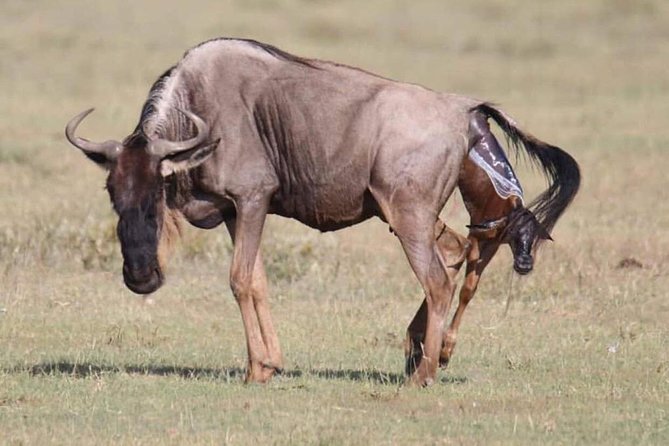
- Selous, now also called Nyerere Game Reserve: This huge southern reserve is known for elephants, wild dogs, lions, buffaloes, zebras, and antelope.
- Mikumi adds an accessible second park: It sits closer to Dar es Salaam and offers another strong wildlife day.
- Private touring keeps the plan flexible: Only your group takes part, with pickup offered and mobile ticketing.
- Good final connections: The return drive can end at your hotel, airport, or ferry terminal for the last ferry to Zanzibar.
Why this southern Tanzania route works
Many first-time safari plans focus on northern Tanzania. That makes sense for the Serengeti and Ngorongoro, but southern Tanzania offers a different pace and feel. Selous Game Reserve covers about 54,600 square kilometers, making it one of Africa’s largest protected areas. It is now commonly known as Nyerere National Park in the northern part of the former reserve, though Selous remains widely used for the wider area and safari routes.
Mikumi National Park covers about 3,230 square kilometers and is the fifth-largest national park in Tanzania. Its position north of Selous makes it a natural addition to a southern-circuit trip from Dar es Salaam.
I like this pairing because the parks do not simply repeat the same activity. Selous gives you river scenery and a walking safari, while Mikumi provides a full day of vehicle-based wildlife watching. You see the bush from several angles, and that matters. A hippo viewed from a boat behaves differently from a lion watched from a safari vehicle, while tracks and droppings become much more meaningful after a guided walk.
The route is private, so your group is not combined with strangers. That can make long drives easier, since you do not need to match your schedule to a larger group. It may also help when you want to pause for a question, a photograph, or a short break, though the exact vehicle setup and accommodation should be confirmed before booking.
More Safaris in Dar es Salaam
- 2 nights 3 days safari to mikumi national park
★ 5.0 · 62 reviews - 3 Days Safari to Mikumi NP – Accommodation Inside the Park
★ 5.0 · 40 reviews - 2 Days and 1 Night Mikumi Safari Private Tour
★ 5.0 · 32 reviews
Day 1: The Rufiji River after a long road transfer
The first day begins around 7:00 a.m. in Dar es Salaam. You drive south toward Selous, with the road journey taking roughly five to six hours. A hot lunch stop in Kibiti breaks up the trip, but you should still expect a substantial day in the vehicle.
The reward comes in the afternoon with a boat safari on the Great Rufiji River. This is not just a scenic ride. The river draws wildlife to its banks, and the low position of a boat can give you a close view of animals at the water’s edge.
You might see hippos surfacing nearby, crocodiles slipping into the water, and elephants or waterbuck coming down to drink. Birdlife is another strong point, especially along the river margins. The boat also lets you watch animal behavior without the engine noise and bouncing roads of a game drive.
The closeness can be thrilling, but it also demands attention. Hippos and crocodiles are wild animals, not photo props, so listen carefully to the boat crew and keep your hands inside the boat. The description of hippos appearing at frightening proximity is not hard to understand. You may be close enough to hear grunts, splashes, and heavy breathing.
This first day is best viewed as a travel day with a major safari activity at the end. If you dislike long transfers, the schedule may feel hard. If you want to reach a less-developed safari area without taking an internal flight, it offers good value.
Day 2: Footprints, droppings, and a full day in Selous
Day two begins early with tea or coffee, followed by a two to two-and-a-half-hour walking safari led by an armed ranger. This is one of the most useful parts of the trip because it changes what you notice.
From a vehicle, you focus on large animals. On foot, you learn to read smaller signs. Tracks, droppings, insects, plants, and sounds begin to tell you what passed through the area. You may not see a large predator at close range, and that is exactly why the ranger matters. The walk is about understanding the bush, not simply collecting animal sightings.
After the walk, you return to camp or lodge for breakfast. Then you head back into the reserve for a game drive that continues until sunset. Selous is associated with elephants, lions, African wild dogs, buffaloes, bushbuck, impalas, elands, baboons, zebras, wildebeest, and greater kudu.
A full day in the reserve gives your guide time to search different areas rather than rushing from one sighting to the next. Wildlife does not follow a timetable, so the long game-drive window is useful. Guides such as Davis have been praised for spotting animals and answering questions, and that skill can make a real difference in a huge reserve.
You should keep expectations sensible. No safari can promise every species, and a large reserve can mean longer periods between sightings. That quiet time is part of the experience, but it can test your patience. Bring a hat, water, sun protection, and something warm for the early start and late afternoon.
Day 3: The long transfer from Selous to Mikumi
After breakfast, you leave Selous for Mikumi National Park. The journey takes about eight hours and includes game viewing along the way. You travel through a less-developed part of Tanzania, passing small villages and farms, crossing rivers, and heading toward the Uluguru Mountains.
This is the most demanding transfer of the five days. You should not book it expecting a short hop between parks. Roads and conditions can make the ride tiring, but the route also shows you more of rural Tanzania than a flight would.
The drive matters because it connects two different safari settings. The southern circuit is less about ticking off famous names and more about seeing how protected areas, farms, villages, rivers, and mountain areas fit together. You will spend much of the day seated, so comfortable clothing and a willingness to enjoy the changing views are important.
A game drive en route helps break up the transfer. The precise amount of wildlife viewing will depend on road conditions, timing, and where the guide finds animals. Treat this day as a scenic transfer with safari value, not as another full game-drive day.
More Mikumi safaris:
- MIKUMI NATIONAL PARK – 3 Days
★ 4.5 · 63 reviews - 2 Days 1 Night Mikumi National Park from Dar es salaam
★ 5.0 · 60 reviews - Private Full-Day Trip to Mikumi National Park from Dar es Salaam
★ 5.0 · 54 reviews - Private 3 Days 2 Nights Mikumi Adventures
★ 5.0 · 47 reviews
Day 4: A full Mikumi game drive with packed lunch
Day four is devoted to Mikumi National Park. After breakfast, you set out with packed lunch for a full-day game drive lasting about ten hours.
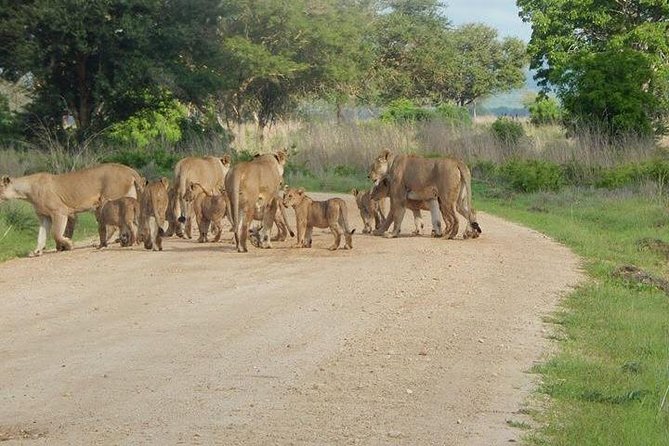
Mikumi is a practical choice from Dar es Salaam because it is among the most accessible parks in Tanzania throughout the year. Its accessibility does not make it uninteresting. The park supports buffaloes, giraffes, elephants, lions, pythons, zebras, leopards, crocodiles, and many other species. More than 300 bird species have been recorded there.
The full-day timing gives you a better chance to see the park at different times of day. Early hours can be useful for active animals, while later hours may bring changing light and movement near water. The guide’s ability to read tracks and notice distant animals matters here, just as it does in Selous.
Packed lunch keeps the day moving, but it also means you should prepare for a basic outdoor meal rather than a long restaurant stop. Ask ahead about what is supplied if you have dietary needs, since the information provided does not give a menu.
Mikumi is a good second park because it may offer sightings that you missed in Selous. It also gives you a final full safari day without another long inter-park transfer. Still, it is worth remembering that the two parks are not guaranteed wildlife shows. You may have an excellent day, but sightings depend on season, weather, animal movement, and guide skill.
Day 5: Sunrise sightings and a useful return route
The final morning starts with an early game drive lasting about two and a half hours, but this applies to people staying inside the park. You return to camp for breakfast, then begin the drive back to Dar es Salaam, stopping for a hot lunch along the way.
If you stay outside the park, no game drive is scheduled on this day. That detail is important when comparing accommodation options. Staying inside the park gives you a final morning wildlife outing, while staying outside may mean a simpler or potentially more convenient overnight arrangement, depending on your booking.
The return drive takes about nine hours. It is a long finish, so do not plan a tight onward connection unless you have confirmed the timing carefully. The useful part is the choice of drop-off. You can be taken to an airport, hotel, or ferry terminal for the last ferry to Zanzibar.
That makes this tour especially practical if you are linking a mainland safari with Zanzibar. Still, road times can vary, so allow a sensible buffer before a flight or ferry. A private transfer is helpful, but it cannot remove traffic, road delays, or weather problems.
What the $1,300 price means
At $1,300 per person, this is not a budget day-trip safari. It is a five-day private route with two protected areas, a boat safari, a ranger-led walk, game drives, road transfers, and pickup from Dar es Salaam. The price works best for you if you want several safari formats without arranging separate transport and park visits yourself.
The value comes from variety and logistics. Organizing a Rufiji boat trip, a walking safari, two park entries, accommodation, guides, meals, and the long road connection independently would take time and careful coordination. Here, the route is built around those pieces.
The price is harder to judge without details about accommodation, meals, park fees, vehicle type, and exactly what is included at each camp or lodge. Ask for those inclusions before paying. The schedule says some admission tickets are included and others are marked free, but it does not spell out every cost. You should also confirm whether drinks, tips, and personal expenses are separate.
For a private group, the cost may feel more reasonable than for a solo participant. If you are traveling alone, ask how the per-person price is calculated and what level of lodging is included.
Guides, communication, and the private format
A safari guide can shape the whole trip. Davis is specifically associated with strong wildlife spotting, clear answers, and a real interest in the work. John and Frank are also named in connection with southern Tanzania safari arrangements. Since guide assignment can vary, ask who will lead your departure.
Good communication before departure is worth paying attention to. Elizabeth has been associated with efficient trip coordination and help when schedules changed. That is useful for a route with long road transfers and a possible Zanzibar connection.
The experience is private, meaning only your group participates. Most people can take part, according to the provided information, but the walking portion still requires you to manage a two-hour-plus outing in the bush. Ask the operator directly if you have mobility concerns or need a slower pace.
The tour offers pickup and mobile ticketing, which makes the start simple. The listed meeting time is 7:00 a.m., so have your bags ready and confirm the exact pickup address.
The practical drawbacks to weigh
The main weakness is the amount of time on the road. Day one takes five to six hours, day three about eight hours, and day five around nine hours. Day four is another ten-hour safari day, so this is an active schedule rather than a restful break.
The second consideration is accommodation uncertainty. The final morning game drive depends on staying inside the park, and the supplied details do not name the camps or lodges. Ask for the accommodation category, room arrangements, meal plan, and location.
Weather can affect the operation. The experience requires good weather, and a cancellation for poor conditions should result in another date or a full refund. If the minimum number of participants is not met, you should also be offered another date, another experience, or a full refund.
Cancellation is free up to 24 hours before the 7:00 a.m. start time. Inside that window, the amount paid is not refunded, and changes are not accepted. Keep that cutoff in mind when arranging flights, ferries, and hotel nights.
Who should book this safari
I would choose this route if you want a varied southern Tanzania safari and you are comfortable with long drives. It suits people who want more than vehicle viewing, especially anyone interested in the feel of the bush at walking pace or the close river encounters of a boat safari.
It also suits a private group connecting Dar es Salaam with Zanzibar. The final ferry-terminal drop-off can save a separate transfer and simplify the next part of your trip.
I would hesitate if you have limited time, dislike rough or lengthy road journeys, or want a slow luxury safari with little packing and unpacking. In that case, a shorter stay in one park may be more comfortable.
Should you book the five-day Selous and Mikumi safari?
Book it if the combination is what attracts you: Rufiji River wildlife, a guided bush walk, Selous’s large wild setting, and a full day in accessible Mikumi. The route gives you several distinct safari experiences for $1,300 per person and ends with useful transport options in Dar es Salaam.
Before confirming, ask about accommodation, vehicle type, meals, exact inclusions, guide assignment, and the location of the overnight stays. If those details suit your needs, this is a strong choice for an active five-day safari from the coast, with more variety than a standard game-drive package.
FAQ
Where does the safari start?
The safari starts in Dar es Salaam, with pickup offered. The listed start time is 7:00 a.m.
How long is the tour?
The experience lasts approximately five days.
Is the tour private?
Yes. Only your group participates in this private tour or activity.
What activities are included?
The schedule includes a boat safari on the Great Rufiji River, a walking safari with an armed ranger, game drives in Selous Game Reserve, and game drives in Mikumi National Park.
Can I be dropped at the airport or ferry terminal?
Yes. On arrival back in Dar es Salaam, drop-off is available at an airport, hotel, or ferry terminal for the last ferry to Zanzibar.
What happens if I need to cancel?
You can receive a full refund if you cancel at least 24 hours before the experience start time. Cancellations or changes made within 24 hours are not accepted and are not refunded.
More five day trips in Dar es Salaam
- 5 Days Safari to Selous & Mikumi
★ 5.0 · 15 reviews - 5 Days Selous/Nyerere & Mikumi NP Game drive, Maasai and Walking
★ 5.0 · 13 reviews - 5-Day Mikumi & Ruaha Tanzania Wildlife Lodge Safari
★ 5.0 · 10 reviews - 5 Days Safari to Nyerere NP (Selous GR) and Mikumi NP
★ 5.0 · 7 reviews
Newly listed around Dar es Salaam
- Mikumi Np Mid Range Tour 3 Days★ 5.0 · 3 reviews
- Private Mikumi Adventure★ 4.5 · 3 reviews
- Ruaha National Park And Mikumi National Park Budget Safari 6 Days 5 Nights★ 5.0 · 3 reviews
- 3 Days 2 Nights Private Safari Tour in Mikumi★ 5.0 · 3 reviews
- Day Trip To Bagamoyo From Dar Es Salaam ..historical town★ 4.5 · 3 reviews
- Dar es Salaam City tour and Beach Leisure – 9 hours★ 5.0 · 3 reviews
- Mikumi National Park Day Trip by Train From Dar Es Salaam★ 5.0 · 4 reviews
- 3-Day at Dar es Salaam To Selous GR (Nyerere NP) Game, Boat & Walking Safari★ 5.0 · 4 reviews
Mikumi National Park Safaris, compared.
2 Day Safari To Mikumi National Park + transfers from Dar Es Salam
Read our review →
Private Full-Day Trip to Mikumi National Park from Dar es Salaam
Read our review →Browse the lists this tour appears in