
Reviewed · SERENGETI & NGORONGORO SAFARIS
tarangire, ngorongoro & lake manyara park 3 days private tour
Tarangire’s giant baobabs, Ngorongoro’s crowded crater floor, and Lake Manyara’s bird-filled shoreline make this a remarkably full three-day safari. You get three very different parks without adding Serengeti-sized distances to a short trip from Arusha.
I like the small group limit of six, which gives you a better chance to see through the vehicle and ask your guide questions. I also like the practical camping setup, with tents, meals, binoculars, and park fees included. The tradeoff is a demanding schedule, with long game-drive days and early breakfasts each morning.
Key points at a glance
- Three major parks in three days: Tarangire, Ngorongoro Crater, and Lake Manyara each offer a different setting and wildlife focus.
- Private format with up to six people: A smaller vehicle group makes it easier to share sightings and hear the guide.
- Strong first day for elephants and predators: Tarangire is the best chance on this route for close views of elephants, lions, and other open-country animals.
- Ngorongoro is the visual high point: The crater viewpoint comes before the descent, giving you a dramatic sense of the enormous bowl below.
- Camping keeps the price in check: Equipment and meals are included, but this is not a lodge-based safari.
- Helpful touches are included: Binoculars, three lunches, two dinners, and two breakfasts are part of the package.
Why this three-park route works
At $1,300 per person, this is not a bargain-basement day trip, but a three-day safari includes park fees, camping equipment, six meals, and transport from Arusha. Those costs add up quickly in Tanzania. The value is strongest if you want a proper wildlife trip but do not have time for a longer northern-circuit itinerary.
The route also avoids trying to squeeze in the Serengeti. That is a sensible choice for only three days. Adding the Serengeti would mean more time on the road and less time watching animals. Here, each park is close enough to form a logical loop, even though the days remain long.
I would treat the word private carefully. The tour is limited to a maximum of six people, which is much more useful than a large coach group, but it does not mean you will have the vehicle entirely to yourself unless that arrangement is confirmed for your booking. Group discounts are offered, though the exact discount is not specified.
The start time is 7:30 a.m. from Arusha. Each safari day lasts roughly eight or nine hours, and the schedule begins early after the first morning. You should be comfortable with extended time in a safari vehicle, bumpy roads, dust, and changing weather.
More Serengeti and Ngorongoro itineraries:
- Balloon Safari & Bush Breakfast in Serengeti – Miracle Experience
★ 5.0 · 1,646 reviews - 3 Days Serengeti & Ngorongoro Group Camping Safari
★ 5.0 · 574 reviews - 5-Day Highlights mid-Range Crater, Serengeti, Tarangire
★ 5.0 · 296 reviews
Day one: Tarangire’s elephants and open plains
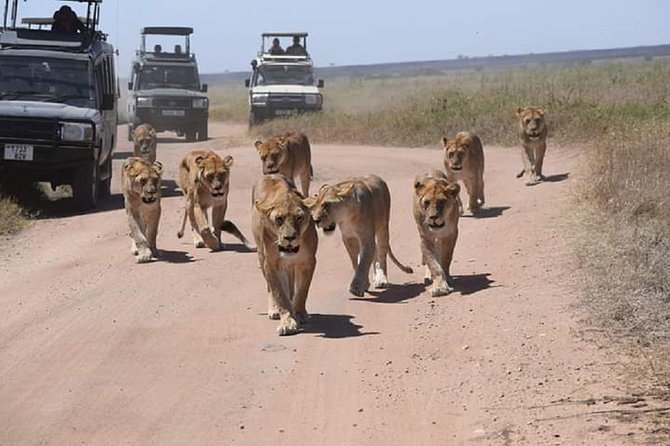
The first day takes you from Arusha to Tarangire National Park for a full-day game drive. The park is known here for large elephant groups, and the itinerary also targets lions, cheetahs, and leopards. You may also see wildebeest, buffaloes, zebras, impalas, gazelles, warthogs, monkeys, and other herbivores.
Tarangire is a smart opening act because it gives you plenty to watch while you settle into the rhythm of safari. Elephants are often the easy headline, but the smaller sightings matter too. A guide who can identify tracks, birds, and herd behavior adds much more to the day than someone who only points at the largest animal nearby.
The itinerary allows about nine hours in the park, including the drive and game viewing. That is a full day, so bring patience. The longer hours increase your chance of finding predators, but they can also feel tiring, especially if this is your first safari.
I would keep your expectations sensible with the big cats. Lions are a stated target, but cheetahs and leopards are never guaranteed. The animals move freely, and sightings depend on weather, vegetation, recent movements, and the guide’s ability to work with current information.
A useful feature is the included pair of binoculars. They can help with distant animals and birds, though it is wise to confirm that they are in the vehicle before leaving. One past trip had a mix-up during peak season when binoculars were not placed in the jeep, so checking this small detail at the start is sensible.
Day two: the Ngorongoro viewpoint and crater floor
Day two starts after an early breakfast and heads toward the Ngorongoro viewpoint. You get about 30 minutes at the overlook before descending into the crater. That stop is brief, but it is important. From above, the crater’s enormous scale becomes clear in a way that is hard to grasp from the floor.
The view is one of the emotional high points of the route. It gives you a wide look at the enclosed grasslands, water, and wildlife habitat below. Bring a jacket or extra layer if you have one, since the viewpoint can feel cooler than Arusha or the lower parks.
Then comes the crater descent and an approximately eight-hour day of viewing. Ngorongoro is a volcanic caldera, and its enclosed floor makes animals easier to find than in a large open park. You have a reasonable chance of seeing buffaloes, zebras, wildebeest, gazelles, and other animals in a concentrated setting.
The main prize here is the black rhino. The itinerary specifically calls rhinos the hardest animal to spot in the crater. That is useful advice: do not measure the day only by whether you see one. Even without a rhino, the crater offers striking scenery and a high density of wildlife.
After lunch, the game drive continues before you ascend to camp. The combination of an early start, a viewpoint stop, a crater descent, lunch, more wildlife viewing, and the climb out makes this the most structured day. It is also the day when a good guide matters most. A guide such as Elias, Simon, or Patrick has been associated with this operation, and the strongest feedback emphasizes safe driving, clear wildlife identification, and attention to everyone in the vehicle.
Do not expect the crater to feel empty. Its fame means other safari vehicles may be present, especially around a notable animal. The benefit is that the open crater floor makes wildlife easier to spot. The cost is a less solitary experience than a remote game drive.
Day three: Lake Manyara’s birds, hippos, and hot springs
The last day heads to Lake Manyara National Park after another early breakfast. The focus changes from crater wildlife and Tarangire elephants to birds, water, and forest-edge animals.
Flamingos are part of the park’s appeal, although their presence and exact location can change. You may also see vultures, eagles, monkeys, buffaloes, wildebeest, and warthogs. Birdwatchers should pay close attention here, since the day is not only about large mammals.
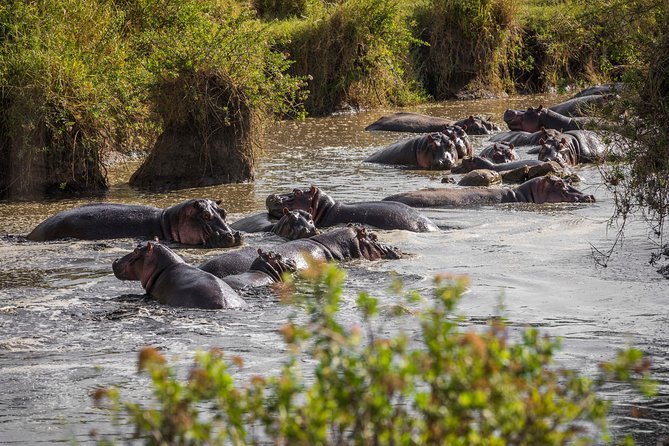
The hippo pool provides a closer look at hippos from a designated viewing area. Hippos are impressive but should never be treated as harmless. Listen carefully to your guide and follow the park’s rules at the pool.
The itinerary also includes a visit to a hot spring while continuing the game drive. It is a welcome change of pace after two intensive wildlife days. You can take in a different side of the park rather than spending the entire final day looking for predators.
Lake Manyara is also linked with tree-climbing lions. Seeing one would be a memorable finish, but it is a possibility, not a promise. The same applies to any single species on safari. You are buying access to a strong habitat and experienced guiding, not a guaranteed animal checklist.
The eight-hour schedule makes this more than a quick stop on the way back to Arusha. Still, if you are tired by day three, the park’s mix of birds, hippos, trees, and hot springs gives the day a gentler feel than another predator-focused drive.
More three day trips in Arusha:
- 3-Day Classic Serengeti Safari
★ 5.0 · 263 reviews - 3 Day Serengeti National Park & Ngorongoro Crater Camping Safari
★ 5.0 · 142 reviews - 3 Days Tarangire, Ngorongoro & Lake Manyara Group Camping Safari
★ 5.0 · 102 reviews - 3 Days Private Safari – manyara, Ngorongoro & Tarangire
★ 5.0 · 94 reviews
Camping, food, and what the price covers
Camping equipment is included, as are breakfast on two mornings, lunch on all three days, and dinner on two nights. That matters because food and camping logistics can add both cost and hassle to an independent safari.
Food receives unusually strong praise in the available feedback. A cook named Denis is specifically remembered for generous, tasty meals and even preparing a surprise cake. Another account describes a cook serving more than enough food, so you should not expect to go hungry.
Camping is also part of the appeal for people who want a closer connection to the outdoors. You trade lodge comforts for a simpler night under canvas. The supplied information does not specify the exact camps, tent style, bedding, showers, or swimming-pool access, so ask for those details before paying if comfort matters to you.
There is no restroom on board. That is not unusual for a safari vehicle, but it is worth planning around. Use facilities whenever you stop, and tell the guide early if you need a break. You will spend long periods away from town.
The price includes all fees and taxes, which makes comparison easier. A cheaper-looking safari may leave out park entry, meals, equipment, or guide services. Before comparing, check that other quotes cover the same items.
The guiding and organization
The organizer, Bryson, is repeatedly described as responsive during trip planning and good at adjusting arrangements to fit a budget. That kind of communication is valuable in Tanzania, where park schedules, camping availability, and seasonal demand can affect the final plan.
The guide is central to the experience. Named guides connected with the operation include Elias, Simon, and Patrick. The most important qualities to look for are safe driving, patient wildlife watching, clear explanations, and equal attention to everyone in the vehicle.
One account specifically praises a guide for making sure a group of seven received attention, although the current tour information sets the maximum at six. I would confirm your exact group size before departure, especially if you are booking with friends or family.
Language can also be discussed in advance. A French-speaking guide made a major difference for one visitor, but no standard language list is provided here. If you need guiding in French or another language, request confirmation before booking.
Peak season can create small service problems. One past issue involved a missing pair of binoculars and a pool that was not available because accommodation sold out. These are not reasons to reject the safari, but they are reminders to confirm included extras and accommodation details in writing.
Who should book this safari
I would recommend this route to you if you want a compact introduction to northern Tanzania, care more about wildlife than luxury, and like the idea of camping. It suits couples, small groups, honeymooners on a budget, and first-time safari visitors who want three famous parks without committing to a week on the road.
It is also a good fit for people who want varied scenery. Tarangire focuses on elephants and savanna wildlife, Ngorongoro offers concentrated viewing inside a dramatic crater, and Manyara adds birds, hippos, hot springs, and the chance of tree-climbing lions.
I would hesitate if you need private bathrooms, a slow pace, or guaranteed sightings of a particular animal. The schedule is busy, the vehicle days are long, and camping details are not fully spelled out. You should also ask whether the $1,300 price changes for solo occupancy or a smaller booking.
Booking advice and cancellation terms
Pickup is offered, the start time is 7:30 a.m., and confirmation is sent at booking. The experience requires a minimum number of participants and suitable weather. If the operator cancels for either reason, you can choose another date or experience, or receive a full refund.
You can cancel for a full refund up to 24 hours before the local start time. Cancellations or changes inside that 24-hour window are not accepted for a refund.
Before booking, I would confirm four things: your pickup point in Arusha, the exact camping accommodation, the guide language, and that binoculars are in the vehicle. Those questions take little time and remove the most likely surprises.
Should you book the Tarangire, Ngorongoro, and Manyara safari?
Book it if you want a well-packed three-day safari with meals, park fees, camping gear, and a small group format already arranged. The strongest reasons are the excellent park mix, the chance to see elephants and crater wildlife, and the personal attention that a group of six can allow.
Skip it if you want a lodge holiday or a relaxed schedule. This is an active safari with early breakfasts, long drives, and basic camping. For the right person, $1,300 buys a practical and adventurous introduction to Tanzania, with enough variety to make each day feel distinct.
FAQ
Where does the safari start?
The tour is based in Arusha, Tanzania, and pickup is offered. The listed start time is 7:30 a.m.
How long does the safari last?
The experience lasts approximately three days.
How many people can join the tour?
The maximum group size is six participants.
Which national parks are included?
The route visits Tarangire National Park, Ngorongoro Crater, and Lake Manyara National Park.
Are meals included?
Yes. The package includes three lunches, two dinners, and two breakfasts.
Is camping equipment included?
Yes. Camping equipment is included in the tour price.
Are binoculars provided?
Yes, binoculars are listed as included. It is sensible to confirm they are in the vehicle before departure.
What is the cancellation policy?
You can cancel up to 24 hours before the experience for a full refund. Cancellations and changes made less than 24 hours before the start time are not accepted for a refund.
Newly listed around Arusha
- 5-Day Private Safari Tour in Tanzania’s Wildlife★ 5.0 · 3 reviews
- 3 Days private safari Tarangire ,Ngorongroro crater &Manyara★ 5.0 · 3 reviews
- 3 Day Sharing Safari – Manyara, Ngorongoro Crater and Tarangire National Parks★ 5.0 · 3 reviews
- Tarangire National Park Day Trip★ 5.0 · 3 reviews
- 2 Days Tarangire and Ngorongoro Crater Tour★ 5.0 · 3 reviews
- 6 -Day Tarangire, Manyara, Serengeti & Ngorongoro★ 5.0 · 3 reviews
- 5 Days Group Camping Safari★ 4.7 · 3 reviews
- 7-Day Mt. Kilimanjaro Hiking: Machame Route★ 5.0 · 3 reviews
Serengeti & Ngorongoro Safaris, compared.


Balloon Safari & Bush Breakfast in Serengeti – Miracle Experience
Read our review →




Private 6-Day Tarangire Manyara Crater and Serengeti with Mid-Range Lodges
Read our review →
5 Days Camping Tarangire, Serengeti & Ngorongoro crater & Visiting Maasai
Read our review →Browse the lists this tour appears in