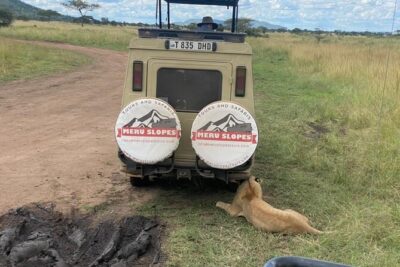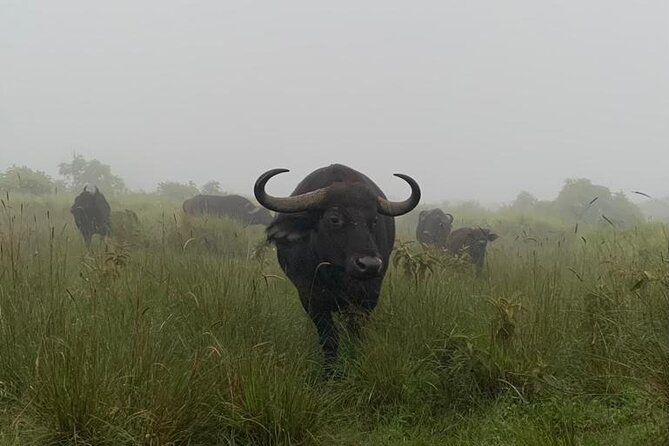
Reviewed · SERENGETI & NGORONGORO SAFARIS
03 days Serengeti and Ngorongoro Crater group (camping)
The most thrilling part of this three-day Tanzania safari is the sharp contrast between two famous parks. Serengeti gives you miles of open grassland, kopjes, and big-cat country, while Ngorongoro Crater packs an astonishing range of wildlife into one vast volcanic bowl. You may see lions, cheetahs, elephants, buffalo, and, with luck, a rhino.
I like the open-roof 4WD vehicle, which gives you a clear view above the tall grass, and I like the practical route: a full Serengeti day, a night beside the crater, then an early crater drive before returning to Arusha. The main catch is the pace. Seven-hour driving days and a camping night require stamina, and the final flight connection needs careful planning.
Key points
- Seronera big-cat country: The central Serengeti valley offers strong chances for lions, leopards, cheetahs, wildebeest, and zebras.
- Simba campsite at the crater edge: You camp high above Ngorongoro, with sunset views across the caldera.
- Open-roof 4WD transport: The viewing roof helps you watch wildlife without glass between you and the plains.
- A compact Big Five route: You get Serengeti and Ngorongoro in three days, rather than spreading the trip over a longer circuit.
- Experienced named guides: Charles, John, and Innocent have received especially warm praise for driving, wildlife spotting, and explanations.
- Good pre-trip support: Crater Explorer handles pickup and transport, and the company has been praised for quick communication.
Why this three-day route works
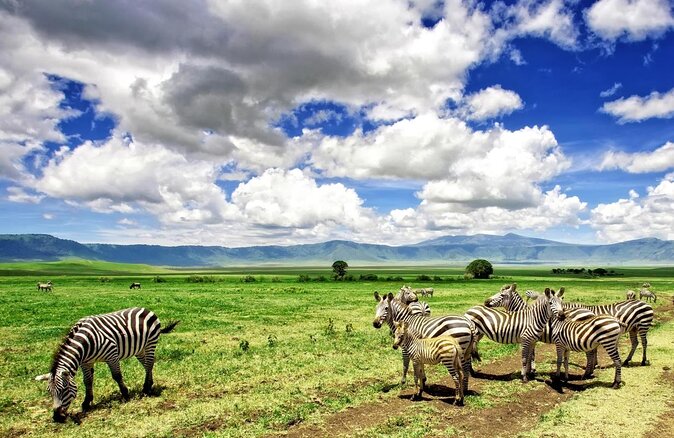
This safari is built around Tanzania’s two biggest wildlife names. Serengeti is a huge, open ecosystem where the drama comes from distance, movement, and the chance of finding predators at work. Ngorongoro is more concentrated: its crater floor holds grassland, acacia woodland, and a dense mix of animals in a setting you can take in almost at once.
That pairing makes sense if you have limited time. You are not trying to squeeze in Tarangire or Lake Manyara as well. Instead, you spend the first two days reaching and exploring Serengeti, then use the last morning for Ngorongoro Crater before returning to Arusha.
The trade-off is road time. Day 1 takes about seven hours, Day 2 about seven hours, and Day 3 about six hours. Those numbers include long drives between wildlife areas, not just time parked beside animals. I would choose this trip for its concentration of famous sights, but I would not choose it if you want slow mornings or long stays at one camp.
Starting from Kilimanjaro Airport at 6:30 am
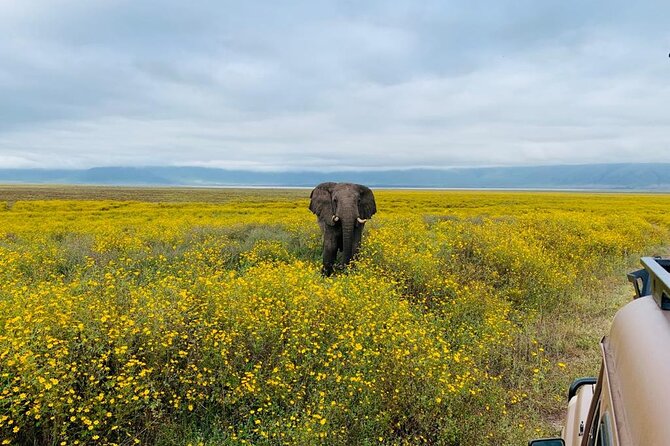
The stated meeting point is Kilimanjaro Airport, with a 6:30 am start. Pickup is offered, so you should confirm the exact pickup arrangement before travel, especially if you are staying in Arusha rather than arriving at the airport.
An early start matters here. Serengeti is far from Arusha, and the first day includes the journey into the park. You will spend much of the day on the road before reaching the destination camp, but the reward is that you begin seeing Tanzania’s open country almost immediately.
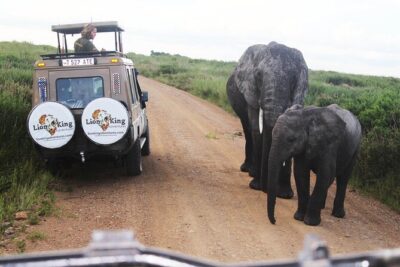
The operator provides a qualified driver-guide and a four-wheel-drive vehicle with a viewing roof. That roof is not a minor detail. It lets you stand or sit with a broad view of the plains, rock formations, and animals, rather than watching through a side window. It also gives the guide a better chance to point out distant wildlife.
This is described as a private activity, meaning only your own group participates. That can make a difference when you want to pause for photographs, ask questions, or adjust the pace within the limits of the park and the day’s schedule.
More Serengeti and Ngorongoro itineraries:
- Balloon Safari & Bush Breakfast in Serengeti – Miracle Experience
★ 5.0 · 1,646 reviews - 3 Days Serengeti & Ngorongoro Group Camping Safari
★ 5.0 · 574 reviews - 5-Day Highlights mid-Range Crater, Serengeti, Tarangire
★ 5.0 · 296 reviews
Day 1: Entering Serengeti’s endless plains
The name Serengeti comes from the Maasai word Siringitu, meaning endless plains. Once you enter the park, the name becomes easy to understand. The southern grassland stretches toward the horizon, broken mainly by kopjes, those rounded granite outcrops shaped by weather and time.
Kopjes are more than pretty scenery. They give animals high ground and shelter, and they add texture to a part of Africa that can otherwise look almost flat. The open plains also make good hunting country for big cats, especially when prey animals are spread across the grass.
The first day is listed at about seven hours. Expect a mix of driving and wildlife viewing rather than a quick transfer followed by a full afternoon at camp. Your guide will look for animals from the vehicle, and the open roof gives you a good angle as the terrain changes.
The central Serengeti is particularly important because the Seronera Valley is known for lions, leopards, and cheetahs. You might see a predator resting under cover, moving through the grass, or watching herds from a rocky rise. Sightings are never guaranteed, even in a park this famous, but this route puts you in a strong part of the ecosystem.
The first night is part of the camping appeal. You are not simply passing through a park and retreating to town. You spend the night within the safari circuit, ready for another game drive after breakfast.
Day 2: More wildlife, then the crater rim
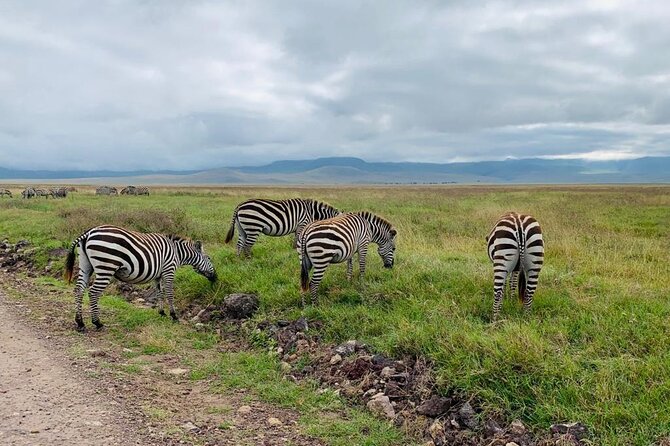
Day 2 begins with breakfast and another game drive through Serengeti. This is a useful design choice. Instead of treating Serengeti as a single drive-through stop, you get a second chance to search the Seronera area for wildlife.
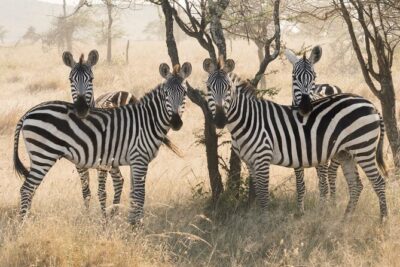
You can expect to look for herds of wildebeest and zebras, along with lions and other big cats. The exact mix changes with animal movement and season, so the value of this morning is time in the field. A guide such as Charles, John, or Innocent can make the search more rewarding by explaining animal behavior and helping you understand why the vehicle stops in one place rather than another.
Lunch is taken at a picnic site before the drive toward Ngorongoro. This is another long day, listed at about seven hours, so keep your expectations realistic. You will have wildlife viewing, but you will also have a substantial transfer across northern Tanzania.
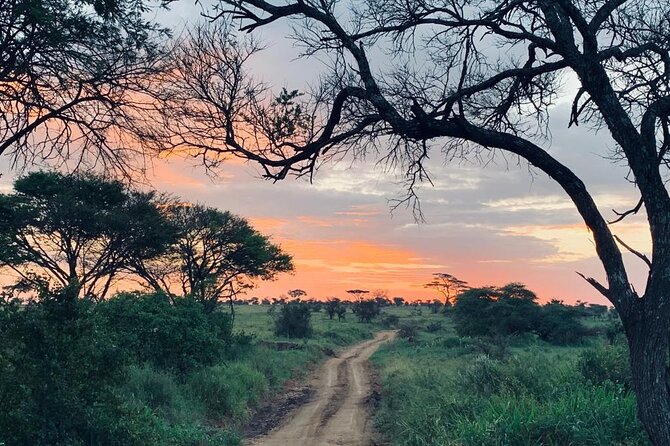
Then comes the visual surprise of the route. As you reach the crater edge, the caldera opens below you. The view is broad and dramatic, with the crater floor spread beneath the rim. You camp at Simba campsite, where the elevated position gives you a memorable place to watch the sun go down.
Camping at the crater edge is one of the experience’s strongest features, but it is also where you should be honest with yourself about comfort. This is a camping safari, not a luxury lodge circuit. The supplied information confirms camping fees and meals, but it does not specify tent equipment, washroom arrangements, or the exact level of bedding. Ask the operator what is supplied before you pack.
That small bit of planning can prevent surprises. The safari’s appeal comes from being close to the parks and keeping costs below a lodge-heavy trip. If you need polished rooms every night, choose a lodge option instead. If you like the idea of sleeping near a major wildlife area, Simba campsite adds something a hotel cannot.
Day 3: Early wildlife viewing inside Ngorongoro
The third day starts early with breakfast at daybreak. That timing is sensible. You want to reach the crater floor while the morning is fresh, and an early descent gives you the best use of a short visit.
Ngorongoro Crater is the world’s largest unbroken caldera, and its enclosed setting helps explain the concentration of wildlife. On the crater floor, you may pass through open grassland and acacia woodland, with many East African savannah species in a relatively compact area.
The route specifically notes that topis, giraffes, and impalas are exceptions to the usual mix found there. That is useful context because the crater can feel like a complete wildlife world, but it is not a catalogue of every species in the region.
The Big Five are lion, elephant, buffalo, rhino, and leopard. The crater offers a real chance to see all five within a few hours, although no guide can promise a complete set. Several accounts of this safari describe seeing four or even all five, while one especially enthusiastic family account singled out the quality of the guide’s wildlife explanations and vehicle service.
Rhino sightings are the one area where you should keep your hopes in check. One account saw the Big Five except rhino, a reminder that even a very successful safari depends on animal movement and plain luck. You may see a rhino across open ground, or you may leave with an excellent list that does not include one.
After the crater drive, you return to Arusha. The listed plan allows for a hotel in Arusha, then a flight home the same night or the following day. I would be cautious about booking a tight international connection on the same evening. The day includes an early start, wildlife viewing, and a long drive, so a second night gives you a much calmer finish.
A few more Arusha days to compare
- Tanzania Classic – 7 Days
★ 5.0 · 1,151 reviews - 4 Days Group Camping Safari
★ 5.0 · 1,101 reviews - 5 Days Group Camping Safari
★ 5.0 · 730 reviews - Materuni Waterfalls, coffee tour & Kikuletwa Hot Springs
★ 5.0 · 643 reviews
What the open-roof vehicle adds
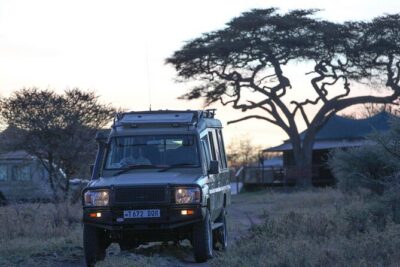
The 4WD vehicle is your main base for three days. The viewing roof lets you look over the grass and follow action at a distance. It also helps when several people want a clear view at the same time.
Good guiding matters just as much as the vehicle. You need a driver who can read the terrain, listen for reports of animals, position the vehicle sensibly, and explain what you are seeing without turning every stop into a rushed photo session.
The named guides connected with this operator include Charles, John, and Innocent. Charles has been praised for wildlife explanations and patient driving, while Innocent has been singled out for professionalism and a pleasant manner. John has also been described as an experienced guide. Since guides can vary by departure, ask who is assigned to your group if that matters to you.
You should also expect rough sections of road. One account describes a flat tire that was handled quickly. That is a useful reminder that a safari vehicle works hard on long park roads. A mechanical problem can happen, but a capable operator should respond without losing the whole day.
Food, camping, and comfort
All meals are included, and the food has been praised as tasty and satisfying. That matters on a schedule with long drives. You do not have to spend your wildlife-viewing time searching for meals or planning each stop.
The exact menu is not provided, so do not assume a particular diet can be handled without advance notice. If you have food restrictions, tell Crater Explorer when booking and confirm what the camping meals cover.
Comfort is helped by the vehicle and by the organization around the trip. Several accounts describe smooth arrangements, good communication, and hotel stays before or after the safari. Those hotel stays appear in some broader trip arrangements, but the core three-day camping plan specifically centers on camping and a return to Arusha.
That distinction is important when comparing prices. A lodge option may cost more because it changes the sleeping experience, not because the parks are different. One person even arranged a mixed camping and lodge trip to compare both styles. You can ask about similar changes, but do not assume they are part of the $815 camping package.
Is $815 good value?
At $815 per person, this is not a cheap day trip. It is a serious safari price, but the value looks reasonable if the package delivers the stated transport, guide, camping fees, meals, park access arrangements, and airport pickup.
You are paying for more than a seat in a vehicle. The price covers three days of driving across two major wildlife areas, a 4WD vehicle with viewing roof, a driver-guide, camping, and meals. You also save the time and stress of arranging separate transfers between Arusha, Serengeti, Ngorongoro, and your final hotel.
The strongest value comes from the route itself. Serengeti and Ngorongoro are among Tanzania’s headline parks, and this plan gives you a realistic chance at major wildlife sightings without requiring a week-long safari.
Still, compare the details before paying. Ask whether the quoted price includes all park and conservation fees, what camping equipment is supplied, whether the return hotel night is included, and how many people share the vehicle if the operator offers different booking formats. The supplied details confirm a private activity, but the title refers to group camping, so clarify how that applies to your booking.
The fact that this experience is often booked about 69 days ahead suggests that planning early is sensible. It is not a guarantee of availability or quality, but it does tell you not to treat this as a last-minute airport purchase.
Who should book this safari?
I would recommend it to a first-time safari visitor who wants the famous parks in a short window. It also suits couples, families, and small private groups that value a guide and organized transport more than a fixed luxury room.
It is a good fit if you want:
- Two major wildlife destinations in three days
- A strong chance of seeing lions, elephants, buffalo, leopards, and possibly rhinos
- Camping at the crater rim
- Meals and transport arranged in advance
- A private group rather than a vehicle shared with unrelated people
- Help with airport pickup and the return to Arusha
I would hesitate if you dislike long road days, camping, early starts, or uncertain arrival times. I would also avoid pairing the final day with a flight that cannot tolerate delays. The safari is compact because it keeps moving.
Booking and cancellation details
Confirmation is received at booking, and most people can take part. Pickup is offered, with the stated start at Kilimanjaro Airport at 6:30 am.
You can cancel for a full refund up to 24 hours before the local start time. Cancellations or changes made inside that 24-hour window are not accepted for a refund, so check the timing carefully.
Should you book the Serengeti and Ngorongoro camping trip?
Book it if your priority is wildlife, not luxury. The combination of Serengeti’s wide predator country, a night at Simba campsite, and an early Ngorongoro drive gives you a lot in three days.
I especially like the practical structure and the strong guiding reputation associated with Charles, John, and Innocent. Just confirm the camping setup, included park charges, group arrangement, and return-flight timing before you commit. If you can handle long drives and a basic night under canvas, $815 buys an efficient and memorable introduction to northern Tanzania.
FAQ
Where does the safari start?
The stated meeting point is Kilimanjaro Airport in Tanzania, with a 6:30 am start. Pickup is offered.
How long does the safari last?
The safari lasts approximately three days. The driving and game-viewing days are listed at about seven hours on Days 1 and 2, and six hours on Day 3.
Which parks are included?
The route includes Serengeti National Park and Ngorongoro Crater.
Where do you camp?
You camp at Simba campsite on the edge of Ngorongoro Crater after driving from Serengeti on Day 2.
Are meals included?
Yes. All meals are listed as included in the package.
Does the safari use a vehicle with a viewing roof?
Yes. Transport is provided in a 4WD vehicle with a viewing roof.
Can I cancel for a full refund?
Yes, if you cancel at least 24 hours before the experience start time. Cancellations made less than 24 hours before the start are not refunded.
Newly listed around Arusha
- 5-Day Private Safari Tour in Tanzania’s Wildlife★ 5.0 · 3 reviews
- 3 Days private safari Tarangire ,Ngorongroro crater &Manyara★ 5.0 · 3 reviews
- 3 Day Sharing Safari – Manyara, Ngorongoro Crater and Tarangire National Parks★ 5.0 · 3 reviews
- Tarangire National Park Day Trip★ 5.0 · 3 reviews
- 2 Days Tarangire and Ngorongoro Crater Tour★ 5.0 · 3 reviews
- 6 -Day Tarangire, Manyara, Serengeti & Ngorongoro★ 5.0 · 3 reviews
- 5 Days Group Camping Safari★ 4.7 · 3 reviews
- 4 Days Tanzania Safari★ 4.5 · 3 reviews
Serengeti & Ngorongoro Safaris, compared.
Balloon Safari & Bush Breakfast in Serengeti – Miracle Experience
Read our review →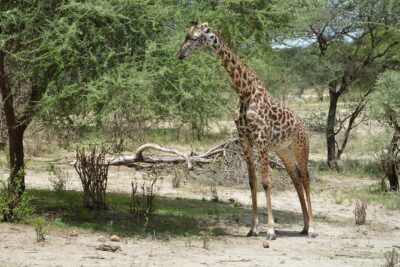
Private 6-Day Tarangire Manyara Crater and Serengeti with Mid-Range Lodges
Read our review →