
Reviewed · SERENGETI & NGORONGORO SAFARIS
8 Day private wildebeest migration safari Serengeti Ngorongoro
The heart of this safari is its seasonal Serengeti route. Instead of sending you to one fixed camp and hoping the herds happen to pass, the plan shifts between southern, central, western, and northern Serengeti. From July through October, that can mean a long push toward the Mara River and its famous crossings.
I like the two full migration-tracking days, and I like the private format, which lets your guide adjust the pace and spend more time on a promising sighting. Guides named David, Jackson, and Ally, also called Lunge, have led this style of trip. The main consideration is the price: at $3,200 per person, you should confirm exactly which hotels, meals, park fees, flights, and transfers are included.
Key points to know before booking
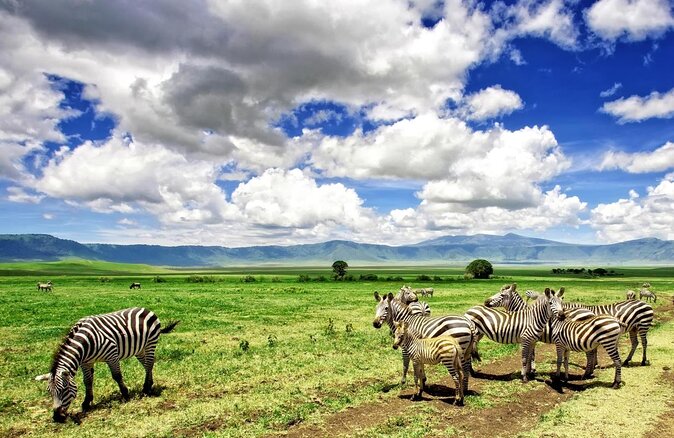
- The migration route changes by month: Ndutu is planned for December through March, central Serengeti and the Grumeti area for April through June, and the Mara River region for July through October.
- You get two full days for migration tracking: These are long, roughly 11-hour game-drive days, not quick morning outings.
- Big-cat country is a major focus: Central Serengeti is used for its high concentration of lions and other predators.
- The safari is private: Only your own group participates, with pickup offered and group discounts available.
- Ngorongoro adds a different wildlife setting: A crater descent of more than 600 meters brings you to a compact area with year-round water and animals.
- The final day is unusually active: Materuni Waterfalls, a coffee visit, Chemka Hot Spring, and a drive to Kilimanjaro Airport make for a full nine-hour finish.
Why this safari is built around timing, not luck
The wildebeest migration is always moving. That simple fact makes this eight-day plan more thoughtful than a route that treats Serengeti as one single stop. You are assigned a likely region based on the season, then spend time looking for the herds, zebra, predators, and river activity that go with them.
The timing is not a guarantee. A migration route can shift, weather can affect roads, and animal sightings are never scripted. Still, the tour gives you a better chance by placing two full days in the target area. That matters far more than squeezing through several parks for a few hours each.
The private setup also helps. You are not sharing the vehicle with unrelated passengers, so your group can discuss an early start, linger near a sighting, or adjust the day with your guide. The supplied details do not specify vehicle type, accommodation category, meal plan, or exact camp locations, so ask for those before paying.
More Safaris in Arusha
- Balloon Safari & Bush Breakfast in Serengeti – Miracle Experience
★ 5.0 · 1,646 reviews - 4 Days Group Camping Safari
★ 5.0 · 1,101 reviews - 5 Days Group Camping Safari
★ 5.0 · 730 reviews
Day 1: A gentle arrival in Arusha
Depending on your flight time, a driver meets you at the airport and takes you to Arusha, a journey of about 45 minutes from Kilimanjaro International Airport. You spend the night at a reserved hotel, and the driver gives you a briefing for the next day.
This overnight is useful. You are not forced to begin a long safari immediately after an international flight. It also gives you a chance to confirm the pickup time, ask about luggage, and discuss any preferred changes to the next morning’s schedule.
The airport transfer is offered, but the information does not state if it is included in the $3,200 price. Confirm that point, along with the name and location of the Arusha hotel.
Day 2: Lake Manyara’s forest and tree-climbing lions
After breakfast, you drive for about two hours to Lake Manyara National Park. The park offers a fine change of pace from the open grassland to come. Its green scenery includes tropical forest, where you might see baboons, monkeys, waterbuck, elephants, and a wide range of birds.
Lake Manyara is also associated with tree-climbing lions. Seeing one is never guaranteed, but the possibility gives the day a clear focus beyond simply counting large mammals. The forest roads and bird life add variety, especially if your main goal is the open plains of Serengeti.
You spend the night at a lodge in Karatu. That location is practical for the next stages of the trip, though the itinerary does not name the lodge or explain its room standard. If comfort matters to you, request the property name and check what is covered.
Day 3: Entering Serengeti by game drive
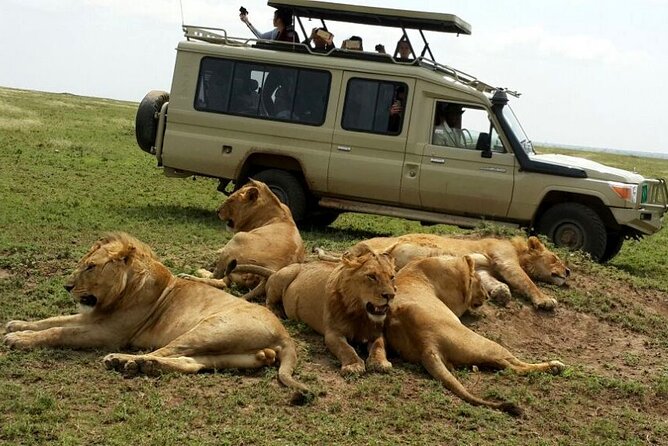
You leave after an early breakfast at about 7 a.m. The drive to Serengeti is also a game drive, so the road is part of the safari rather than dead travel time. The day is listed at roughly eight hours, and you sleep in the heart of the park.
Serengeti is the main event here. The open plains support wildebeest, zebra, antelopes, and gazelles, while the predator list includes lions, hyenas, cheetahs, and leopards. You might also encounter giraffes, hippos, elephants, and crocodiles in the Grumeti River area.
This is a long day. You should be ready for hours on uneven roads, changing weather, and a late arrival at camp. The reward is that you begin seeing the park before reaching your overnight location, rather than arriving after a separate transfer with no wildlife time.
More Serengeti and Ngorongoro itineraries:
- 3 Days Serengeti & Ngorongoro Group Camping Safari
★ 5.0 · 574 reviews - 5-Day Highlights mid-Range Crater, Serengeti, Tarangire
★ 5.0 · 296 reviews - 3-Day Classic Serengeti Safari
★ 5.0 · 263 reviews - Private 6-Day Tarangire Manyara Crater and Serengeti with Mid-Range Lodges
★ 5.0 · 238 reviews
Days 4 and 5: Two long days tracking the migration
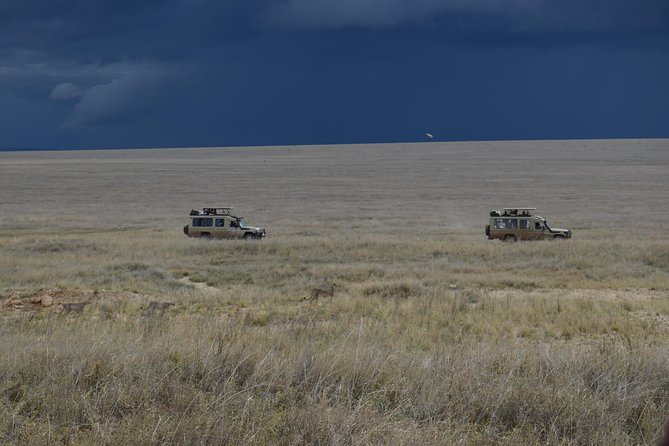
These are the most important days for the safari. Each is planned as an approximately 11-hour migration-tracking day, with the exact region based on the time of year.
From December through March, the route goes toward the southern Serengeti and Ndutu. This period is presented as the southern migration season. From April through June, the plan focuses on the central Serengeti and Grumeti River area. From July through October, it heads north toward the Mara River, where crossings may occur.
The phrase may occur matters. River crossings are among the most dramatic sights in East Africa, but no guide can order wildebeest into the water. You could spend time waiting, then see a crossing, or watch the herds gather and move away. A private trip gives you more control over how to handle that uncertainty, but it cannot remove it.
The days are long because migration viewing rewards patience. You might be looking at herds one moment and then scanning for crocodiles, lions, cheetahs, or hyenas the next. One particularly useful detail in the route is its effort to use areas away from crowds of other safari vehicles. That can make a close sighting calmer, although the plan does not guarantee complete solitude.
If you are hoping for the Mara River, choose your dates carefully. July through October is the stated window, but weather and herd movement still control the actual experience. If you prefer newborn animals and the southern plains, December through March is the better match according to the planned routing.
Day 6: A sunrise game drive out of central Serengeti
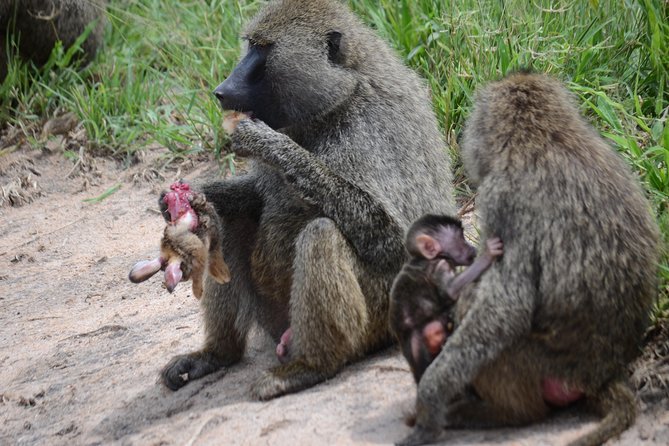
Day 6 begins with tea or coffee and a packed breakfast. You then leave early for a sunrise game drive, moving from central Serengeti toward the eastern side while looking for cheetahs, lions on rocky outcrops, and other animals.
Early morning is a sensible time for this search. Predators are often active after the night, and the sunrise gives the plains a different mood from the heat of midday. The day is listed at about six hours, making it shorter than the two main migration days.
The schedule description is incomplete about the rest of the day, so you should ask where you sleep on night six and how the transfer to Ngorongoro is arranged. This is one of the practical points to settle before booking, especially if the remote Serengeti finish and a flight are important to your plans.
Day 7: A full wildlife circuit inside Ngorongoro Crater
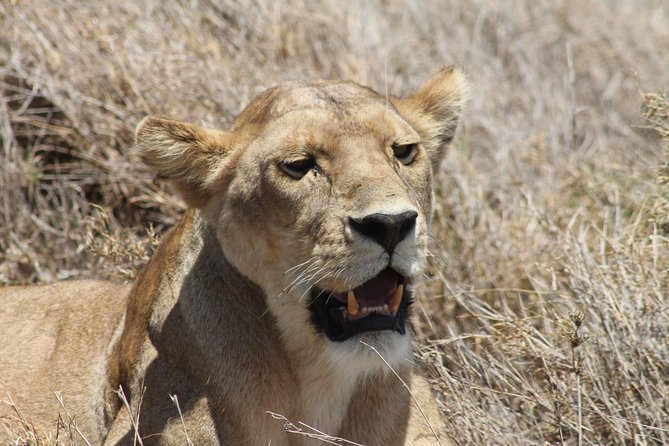
After breakfast, you drive to Ngorongoro Crater and descend more than 600 meters for a game drive. The crater is a compact wildlife area with permanent water and grazing, so it can offer strong animal viewing even when migration conditions elsewhere are less predictable.
Expect herds of wildebeest, zebra, buffalo, elk, warthogs, hippos, and large African elephants. Predators include lions, hyenas, jackals, cheetahs, and sometimes leopard. The leopard is especially elusive, so your guide’s ability to read the surroundings will matter.
Lake Magadi is one of the planned stops. It is a broad, shallow alkaline lake in the crater’s southwest corner and can attract wildlife and birds. The crater floor is visually striking, but the day can feel busy because many vehicles concentrate in a relatively small area. That is the tradeoff for such a high chance of seeing varied wildlife in one setting.
This is not simply a second Serengeti day. Serengeti gives you open distance and migration movement. Ngorongoro gives you a contained wildlife area, a dramatic descent, and a strong chance to see several species without covering enormous distances.
Day 8: Materuni Waterfalls and Chemka Hot Spring
The final day shifts away from game drives and toward the foothills of Mount Kilimanjaro. The plan begins with a drive from Arusha or Moshi to Materuni Waterfalls, at an elevation of about 2,500 meters.
Along the way, you explore the mountain slopes with a local guide. The listed sights include birds, chameleons, coffee plants, and banana trees. At the waterfall, you may swim in the pools, so bring swimwear and a small change of clothes.
You then return to the village for a coffee visit before continuing to Chemka Hot Spring. There, you can swim in a natural pool with small fish and enjoy drinks in the water. The full day lasts about nine hours and ends with a drive to Kilimanjaro Airport.
This is a generous final day, not a quiet airport transfer. If your flight leaves late, it adds a memorable local experience to the end of the safari. If your flight is early or you dislike rushing before departure, confirm the exact airport arrival time and build in plenty of margin.
The guides and the private-safari experience
The company’s guides associated with this trip include David, Jackson, and Ally, also referred to as Lunge. The available feedback gives particular credit to their friendly manner, fast replies during planning, animal knowledge, and attention to families with children.
That is important on a private safari. The guide is not just a driver. You rely on this person to read animal behavior, explain what you are seeing, manage long days, and make sensible choices when sightings compete with one another.
Still, a guide’s name may not be guaranteed at booking. Ask who is assigned to your departure and how much say you have in daily timing. The tour says most people can participate, but it does not provide an accessibility statement or detailed advice for mobility limitations.
Is $3,200 per person good value?
The price is $3,200 per person. For eight approximate days with a private vehicle, multiple national parks, two dedicated migration days, Ngorongoro, airport pickup, and the Materuni and Chemka excursions, that can be a reasonable package. The value depends heavily on what the price includes.
Before booking, ask for a written breakdown covering:
- Park and conservation fees
- Lodges, camps, and hotel nights
- Meals and drinks
- Vehicle and fuel
- Airport transfers
- Domestic flights, if any
- The final airport transfer
- Guide and staff costs
The overview says the safari is designed to finish in the most remote part of Serengeti and then fly you onward. Yet the listed Day 8 route ends at Kilimanjaro Airport after road-based activities. Clarify that apparent difference. You do not want to discover that an extra flight, transfer, or night is needed after arrival.
Group discounts are available, which can improve the per-person value for families or friends booking together. The private format is also worth paying for if the migration is your central goal and you want flexibility rather than a fixed shared schedule.
What to pack and how to pace yourself
Pack light, but bring layers. Early starts in Serengeti and the Ngorongoro rim can feel cool, while midday game drives can be warm. Comfortable clothing, a hat, sunscreen, and a camera are sensible choices.
Bring swimwear for both Materuni Waterfalls and Chemka Hot Spring. A small day bag is useful for the packed breakfast on Day 6, water, and personal items during long drives.
The two 11-hour Serengeti days are the physical and mental center of the trip. You should be comfortable sitting in a safari vehicle for long periods and waiting patiently for wildlife. Families can participate, and the guide team has experience with children, but parents should discuss the long driving days before booking.
Cancellation and booking details
You can cancel for a full refund up to 24 hours before the experience starts. Cancellations or changes made within 24 hours are not refunded or accepted.
The experience requires good weather. If poor weather causes cancellation, you are offered another date or a full refund. Confirmation is provided when you book, and the tour offers pickup and mobile tickets.
Should you book this Serengeti migration safari?
Book it if your priority is the wildebeest migration, especially if you can travel during the stated seasonal windows and want two full days in the likely herd area. The private format, named guide team, big-cat focus, and added Ngorongoro day make this more than a quick park sampler.
Think twice if you want a slow, luxurious schedule or a clearly defined lodge and flight package from the start. The itinerary contains a few details that need clarification, particularly Day 6 accommodation and the final remote-Serengeti flight arrangement.
For the best decision, ask for the exact month-by-month route, named accommodations, full inclusions, assigned guide, and airport plan. If those answers are clear, this is a strong choice for someone who wants Tanzania’s major wildlife areas with the migration at the center.
FAQ
How long is the safari?
The experience lasts approximately eight days.
Where does the safari begin?
It begins in Arusha, Tanzania, with airport pickup offered. The first overnight is in Arusha after a drive of about 45 minutes from Kilimanjaro International Airport.
Is this a private tour?
Yes. Only your own group participates in the activity.
Where does the tour go during migration season?
The route goes to southern Serengeti and Ndutu from December through March, central Serengeti and the Grumeti River area from April through June, and the Mara River region from July through October.
How long are the main migration-tracking days?
Days 4 and 5 are planned as full game-drive days of about 11 hours each.
Does the tour visit Ngorongoro Crater?
Yes. On Day 7, you descend more than 600 meters into Ngorongoro Crater for a game drive and visit Lake Magadi.
What happens on the final day?
You visit Materuni Waterfalls, take part in a coffee visit, continue to Chemka Hot Spring for swimming, and then drive to Kilimanjaro Airport. The day lasts about nine hours.
Newly listed around Arusha
- 5-Day Private Safari Tour in Tanzania’s Wildlife★ 5.0 · 3 reviews
- 3 Days private safari Tarangire ,Ngorongroro crater &Manyara★ 5.0 · 3 reviews
- 3 Day Sharing Safari – Manyara, Ngorongoro Crater and Tarangire National Parks★ 5.0 · 3 reviews
- Tarangire National Park Day Trip★ 5.0 · 3 reviews
- 2 Days Tarangire and Ngorongoro Crater Tour★ 5.0 · 3 reviews
- 6 -Day Tarangire, Manyara, Serengeti & Ngorongoro★ 5.0 · 3 reviews
- 5 Days Group Camping Safari★ 4.7 · 3 reviews
- Private 4×4 Vitara Safari in Arusha National Park★ 5.0 · 3 reviews
Serengeti & Ngorongoro Safaris, compared.


Balloon Safari & Bush Breakfast in Serengeti – Miracle Experience
Read our review →




Private 6-Day Tarangire Manyara Crater and Serengeti with Mid-Range Lodges
Read our review →