
Reviewed · SERENGETI & NGORONGORO SAFARIS
5 Days Lodge Safari – Tarangire, Serengeti, Ngorongoro & Manyara
Four famous parks in five days is the main draw here. You move from Tarangire’s baobab-dotted plains to the Serengeti, sleep near the rim of Ngorongoro Crater, then finish among the forests and lake shores of Manyara. It is a fast, wildlife-heavy route with a good chance of seeing elephants, lions, zebras, giraffes, buffalo, hippos, flamingos, and perhaps a rhino.
I like the wide range of habitats packed into one trip, and I like that every meal is included, including picnic lunches during long game-drive days. The dome tents have built-in mosquito nets and foam mattresses, while guides such as Mirage, Joseph, Nora, and Emanuel have been praised for their animal-spotting skills and good company on the road.
The trade-off is time. Long drives and early starts are part of the deal, especially between Tarangire, Serengeti, and Ngorongoro. Campsite bathrooms are shared, the schedule is full, and group arrangements can change when people join for shorter safaris.
Key points to know before you book
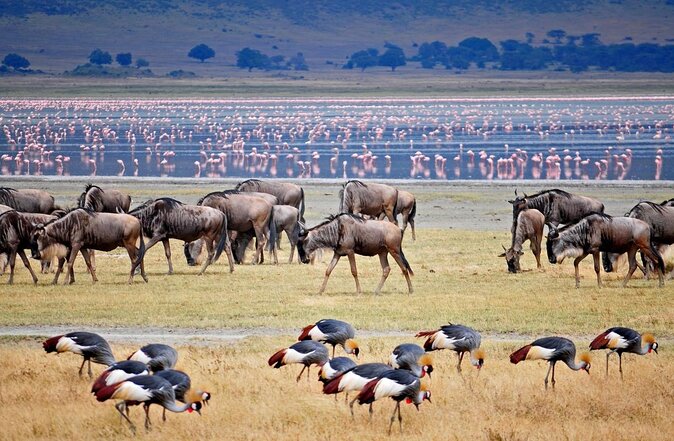
- Four parks in five days: Tarangire, Serengeti, Ngorongoro Crater, and Lake Manyara each offer a different setting and wildlife mix.
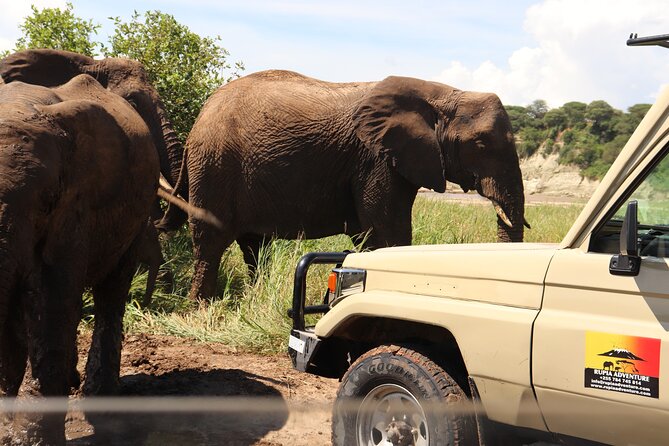
- Elephant country on day one: Tarangire is known for large elephant herds, baobab trees, and the Tarangire River.
- Serengeti gets the most time: You have an afternoon game drive on day two and a morning drive on day three.
- Crater wildlife is concentrated: Ngorongoro’s enclosed setting gives you a strong chance of seeing many species in one game drive.
- Simple lodge-style camping: Dome tents include mosquito nets and foam mattresses, but bathrooms and toilets are shared at campsites.
- Small-group format: The maximum group size is 15, with pickup offered from Arusha and all meals included.
Why this route works so well in five days
Northern Tanzania is not one single safari setting. Tarangire is dry and open, with huge trees and elephants. The Serengeti stretches out in long grasslands where large herds and predators move across great distances. Ngorongoro brings animals into a compact crater, while Manyara adds woodland, monkeys, birds, and a chance at tree-climbing lions.
I like this route because it gives you contrast rather than repeating the same kind of game drive four days in a row. You also get two different types of safari viewing: the open search across broad plains and the concentrated sightings around waterholes and crater habitats.
The pace is brisk. You leave Arusha at about 8:30 in the morning on day one, and most days involve a mixture of driving, picnic meals, and several hours in the vehicle. That makes this a good first safari for someone who wants the classic northern circuit but has only five days.
It is less suitable if you want slow mornings, long stays in one camp, or time for walking and cultural visits. The route is built around covering ground and reaching several major parks.
More Safaris in Arusha
- Balloon Safari & Bush Breakfast in Serengeti – Miracle Experience
★ 5.0 · 1,646 reviews - 4 Days Group Camping Safari
★ 5.0 · 1,101 reviews - 5 Days Group Camping Safari
★ 5.0 · 730 reviews
Day one: Tarangire’s elephants and baobabs
Pickup from your Arusha hotel is scheduled for about 8:30 AM. You then head toward Tarangire National Park with a picnic lunch, spending the day on a game drive before returning to camp or lodge for dinner.
Tarangire is a strong opening act. The Tarangire River gives animals a reason to gather, and the park is especially well known for large elephant herds. The baobab trees are another part of the appeal. Their thick trunks and unusual shapes make the park feel different from the grasslands you see later in the trip.
You might also see lions, leopards, cheetahs, buffalo, giraffes, zebras, eland, oryx, and lesser kudu. No safari can promise a particular animal, but Tarangire gives you a broad list of possible sightings without needing to wait several days before the wildlife begins.
The full-day drive is useful because it gives your guide time to search different parts of the park. It is also your first lesson in safari rhythm: wildlife may appear in a busy cluster, or you may spend time watching a single elephant family move through the trees.
At the end of the day, dinner is prepared at your accommodation. Since meals are included, you do not need to plan restaurant stops or carry food for the entire route. That saves time, though you should still confirm what type of accommodation is assigned to your departure, since the package description covers both camps and lodges.
Day two: The long road to the Serengeti
After breakfast, you travel toward Serengeti National Park. The route takes you into the broad grasslands that make the Serengeti famous, with a picnic lunch during the day and an afternoon game drive after arrival.
This is one of the biggest travel days. The reward is the change in scale. Tarangire feels shaped by trees and a river, while the Serengeti opens into huge plains where wildebeest, zebras, and gazelles can spread out in large herds.
The Serengeti is also the place to watch predator behavior. You may find lions resting in shade or scanning the grass for prey. Leopards and cheetahs are possible, as are other animals linked to the moving herds. The exact sightings depend on season, recent animal movement, and your guide’s ability to read the area.
I would treat the journey itself as part of the safari rather than an inconvenience to be endured. You are crossing a large area, and the changing views help explain why this park has such a powerful reputation. Still, keep expectations realistic: a five-day trip cannot give you every corner of the Serengeti.
The afternoon drive is a sensible use of arrival day. Instead of checking into camp and losing the remaining daylight, you begin looking for animals right away. Dinner and overnight accommodation follow the drive.
Day three: A final Serengeti morning before Ngorongoro
Day three begins with breakfast and a morning game drive in the Serengeti. Later, you leave for the Ngorongoro Crater Rim with a picnic lunch.
The morning matters because animals can be easier to find before the heat of the day. You have another chance to look for lions, elephants, wildebeest, zebras, gazelles, and other species before leaving the plains.
This day also helps break up the long transfer to Ngorongoro. The drive is not simply a trip from one hotel to another. You are moving from an open wildlife area into one of the most unusual natural settings in Tanzania, with the crater rim providing a completely different sense of place.
The Ngorongoro Crater is a collapsed volcanic crater surrounded by a ring of extinct volcanoes. Its floor covers about 14 kilometers and contains water sources that support a large number of animals. The enclosed setting does not mean sightings are automatic, but it often makes the search feel more concentrated than in the Serengeti.
You spend the night near the crater rim or in the Ngorongoro area, depending on the accommodation arrangement. Temperatures can be cool here, especially early in the morning, so pack a warm layer. One direct piece of advice is easy to remember: do not assume northern Tanzania is hot at every hour of the day.
More Serengeti and Ngorongoro itineraries:
- 3 Days Serengeti & Ngorongoro Group Camping Safari
★ 5.0 · 574 reviews - 5-Day Highlights mid-Range Crater, Serengeti, Tarangire
★ 5.0 · 296 reviews - 3-Day Classic Serengeti Safari
★ 5.0 · 263 reviews - Private 6-Day Tarangire Manyara Crater and Serengeti with Mid-Range Lodges
★ 5.0 · 238 reviews
Day four: Five hours on the crater floor
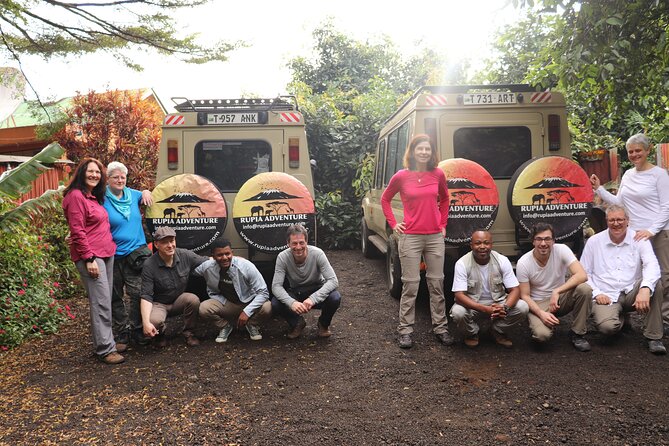
After an early breakfast, you descend into Ngorongoro Crater for about five hours of game viewing. The crater floor has grassland, watering holes, and other habitats that can bring many animals into the same broad area.
Possible sightings include lions, elephants, zebras, hippos, flamingos, jackals, antelopes, birds, and rhinos. The crater is also a strong place for birdwatching. Depending on conditions, you might see eagles, vultures, flamingos at the crater lake, storks, giant vultures, sacred ibises, kori bustards, blacksmith plovers, long-necked herons, and cattle egrets.
The picnic lunch is taken near the Hippo Pool. This is a practical stop, not a restaurant-style break, so expect a simple meal in a wildlife setting. Keep food secured and follow your guide’s instructions around animals.
After lunch, the vehicle climbs the steep road out of the crater. You then have about two hours of driving to accommodation in Karatu, where dinner is provided.
Day four is probably the most tightly packed day of the trip. The early start, crater drive, climb out, and onward transfer can leave you tired. That is not a flaw in the route so much as the cost of fitting a full crater visit into a five-day schedule. If you prefer more time at each location, a longer itinerary would be easier on your body.
Day five: Forest, lake, and the road back to Arusha
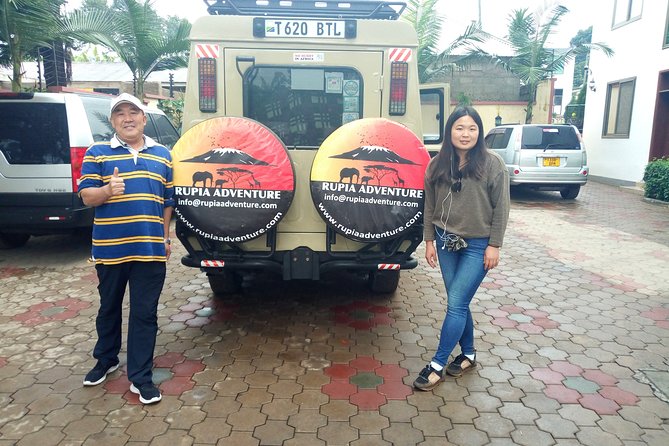
The final day begins around 8:00 AM after breakfast. You travel toward Arusha through Lake Manyara National Park, with a half-day game drive from about 9 AM until mid-afternoon and a picnic lunch during the outing.
Manyara changes the mood again. Acacia and mahogany forests replace the open plains, and the park can offer sightings of buffalo, giraffes, impalas, baboons, and blue monkeys. The forest setting makes the drive feel more enclosed and shaded than the Serengeti or Tarangire.
Tree-climbing lions are one of Manyara’s famous possibilities, but the itinerary correctly treats them as a matter of luck. You may see lions resting in trees, but you should not book this park on the assumption that they will appear on cue.
In the right season, millions of flamingos can tint the lake shore pink. The wording matters here: this is seasonal, and bird numbers change. Even without a large flamingo gathering, Manyara gives you a different mix of forest species and water-edge birds.
After the half-day drive, you return to Arusha. Since this is both a park day and a transfer day, the schedule is efficient but not leisurely. It works well if you are finishing a northern Tanzania trip and need to return to Arusha after seeing the main parks.
Camping, meals, and daily comfort
The accommodation is best understood as practical safari camping rather than luxury lodge travel. Dome tents have mosquito nets built into the windows and entrances, plus foam mattresses. Those details matter after a full day on rough park roads, when a clean sleeping space and some padding make a real difference.
Bathrooms and toilets are shared and public at the campsites. If you need private facilities, ask for the exact accommodation plan before paying. The package uses the terms camp and lodge, so the comfort level may differ from one night to another.
All meals are included. Breakfasts and dinners are served at the accommodation, while picnic lunches cover the long game-drive and transfer days. A cook named David received specific praise for his work, and the food is described as healthy and filling. Since the route includes long hours outside, regular meals are more than a convenience. They keep the day moving without extra stops.
You should bring clothing for both warm afternoons and cool mornings. The Ngorongoro area in particular can feel cold, and the day begins early when you descend into the crater.
The guide can shape the whole safari
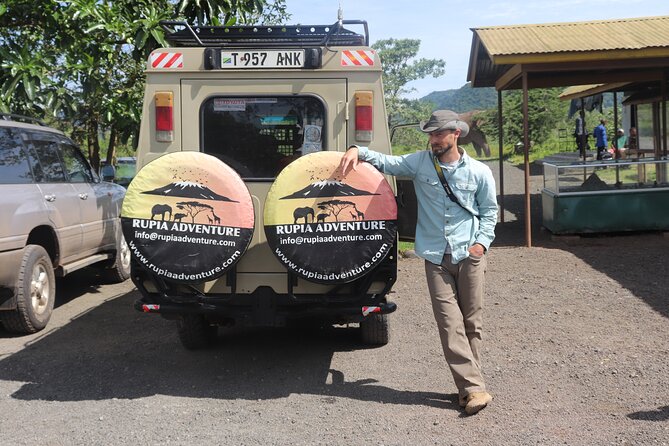
You spend many hours with the driver-guide, so this is one of the most important parts of the experience. Past departures have included guides named Mirage, Joseph, Nora, Emanuel, Miraji, and Balthazar. Mirage was described as having about 20 years of experience, while Balthazar was praised for spotting animals quickly and Nora for clear explanations and professional handling of the trip.
Those details point to what you should value: safe driving, patience at sightings, good knowledge of animal behavior, and the ability to explain what you are seeing. A guide who spots a distant lion is useful, but a guide who also explains why it is there makes the moment more meaningful.
The group limit is 15 people. That is small enough to feel more personal than a large coach, but a full vehicle may still feel crowded around windows and viewing positions. Some departures combine people doing different trip lengths, so you may find that fellow passengers join or leave at different points.
There has also been at least one arrangement in which a booking was transferred to another local safari operator. That does not automatically change the quality of the trip, but I would confirm the operating company, vehicle, guide, accommodation, and group size before departure.
Is $2,600 a fair price?
At $2,600 per person, this is not a budget day trip. It covers five days, four major parks, transport from Arusha, game drives, accommodation, meals, picnic lunches, a driver-guide, and campsite services.
The value comes from the amount of ground covered and the park fees and logistics that are bundled into a single plan. Organizing Tarangire, Serengeti, Ngorongoro, and Manyara independently would require you to coordinate transfers, accommodation, meals, park access, and a safari vehicle. Here, the route is already arranged.
The price makes more sense if you want the classic northern circuit and prefer not to manage those details yourself. It makes less sense if you mainly want a relaxed lodge holiday or if you would rather spend several days in one park.
Group size also affects value. A maximum of 15 keeps the price below a fully private safari in many cases, while still offering a shared experience. If you want complete control of departure times and animal sightings, ask about a private option before booking.
Practical details that affect your decision
Pickup is offered, and confirmation is provided at booking. Most people can participate, but the supplied information does not give detailed accessibility specifications, so ask directly if you have mobility or medical concerns.
The tour requires good weather and a minimum number of participants. If poor weather or low enrollment causes cancellation, you are offered another date or experience, or a full refund.
You can cancel for a full refund up to three full days before the local start time. Cancellations inside that three-day period are not refunded, and late changes are not accepted. This is worth checking against your flight schedule before you commit.
The mobile ticket is convenient for a phone-based booking, but the more important practical questions are about accommodation type, the assigned guide, the number of people in your vehicle, and how the group will be organized across the four parks.
Who should book this safari?
I would choose this trip if you have five days, want the major Northern Tanzania parks, and value a ready-made plan with meals included. It suits first-time safari visitors who want elephants, big cats, crater wildlife, and forest species in one compact trip.
It also suits people who enjoy meeting others. The shared format can make the long drives more sociable, and previous departures have included mixed groups from several countries.
I would hesitate if you dislike early starts, rough-road driving, shared bathrooms, or changes in group composition. I would also consider a longer safari if the Serengeti is your main reason for coming to Tanzania. Two Serengeti drives give you a good taste, but additional days would allow a calmer search across its huge plains.
Should you book it?
Book this safari if variety matters more to you than a slow pace. The route gives you four distinct parks, a strong list of possible wildlife, included meals, practical tents, and a guide-led format that keeps the logistics simple.
Before paying, confirm the exact camps or lodges, who will operate your departure, the guide assignment, and the expected group size. If you are comfortable with shared facilities and long driving days, $2,600 can be a sensible price for a concentrated northern Tanzania safari. If comfort and extra time matter most, spend more days and reduce the number of transfers.
FAQ
Where does the safari start?
The safari starts in Arusha, Tanzania, with pickup from your hotel offered at about 8:30 AM on the first day.
How long is the safari?
The experience lasts approximately five days.
Which national parks are included?
The route includes Tarangire National Park, Serengeti National Park, Ngorongoro Crater, and Lake Manyara National Park.
Is the tour suitable for most people?
The provided information says most people can participate. If you have specific accessibility or medical needs, you should confirm the arrangements before booking.
What is the maximum group size?
The maximum group size is 15 people.
Are meals included?
Yes. Meals are included throughout the trip, with picnic lunches provided during long game-drive and transfer days.
What type of sleeping arrangements are provided?
The accommodation uses lodge or campsite arrangements. Dome tents include built-in mosquito nets at the windows and entrances, as well as foam mattresses.
Are bathrooms private?
No. Shared public bathrooms and toilets are available at the campsites.
Can I see the Big Five?
The Serengeti and Ngorongoro Crater offer chances to see the Big Five. Wildlife sightings are not guaranteed, and the exact animals depend on conditions and location.
What is the cancellation policy?
You can receive a full refund if you cancel at least three full days before the experience start time. Cancellations within three full days are not refunded, and late changes are not accepted.
More five day trips in Arusha
- 5 Days Camping Tarangire, Serengeti & Ngorongoro crater & Visiting Maasai
★ 5.0 · 229 reviews - Tanzania Simba Safari – 5 Days
★ 5.0 · 217 reviews - 5 Days Budget Private Safari, Tanzania
★ 5.0 · 191 reviews - 5-Day Private Northern Tanzania Safari from Arusha
★ 5.0 · 182 reviews
More lodge safaris in Arusha
- 4 Days Tanzania Lodge Safari With Two Nights at Serengeti
★ 5.0 · 62 reviews - 4 Days lodge safari Tarangire , Ngorongoro crater & Walking
★ 5.0 · 39 reviews - 5 Days Safari in Tanzania | Camping and Lodge Safaris
★ 5.0 · 31 reviews - 4 Days 3 Nights Tarangire Serengeti & Ngorongoro Lodge Safari
★ 5.0 · 24 reviews
Newly listed around Arusha
- 5-Day Private Safari Tour in Tanzania’s Wildlife★ 5.0 · 3 reviews
- 3 Days private safari Tarangire ,Ngorongroro crater &Manyara★ 5.0 · 3 reviews
- 3 Day Sharing Safari – Manyara, Ngorongoro Crater and Tarangire National Parks★ 5.0 · 3 reviews
- Tarangire National Park Day Trip★ 5.0 · 3 reviews
- 2 Days Tarangire and Ngorongoro Crater Tour★ 5.0 · 3 reviews
- 6 -Day Tarangire, Manyara, Serengeti & Ngorongoro★ 5.0 · 3 reviews
- 5 Days Group Camping Safari★ 4.7 · 3 reviews
- Private 4×4 Vitara Safari in Arusha National Park★ 5.0 · 3 reviews
Serengeti & Ngorongoro Safaris, compared.


Balloon Safari & Bush Breakfast in Serengeti – Miracle Experience
Read our review →




Private 6-Day Tarangire Manyara Crater and Serengeti with Mid-Range Lodges
Read our review →
5 Days Camping Tarangire, Serengeti & Ngorongoro crater & Visiting Maasai
Read our review →Browse the lists this tour appears in