
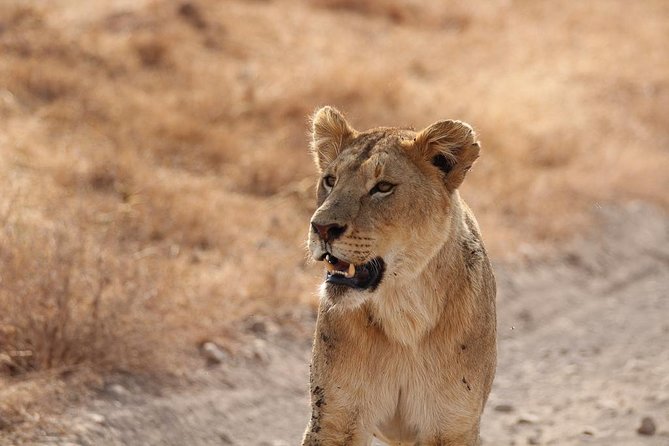
Reviewed · SERENGETI & NGORONGORO SAFARIS
5 Day Serengeti, Tarangire, & Ngorongoro & Manyara Grass Root Safari.
Tarangire’s elephants, the Serengeti’s open plains, Ngorongoro Crater, and Lake Manyara make this four-park safari a strong introduction to northern Tanzania. You get a quick but varied look at some of East Africa’s best wildlife areas, with pickup from Arusha, the airport, or a hotel.
I like the route’s variety and the chance to see the Big Five, including lion, leopard, elephant, buffalo, and possibly black rhino. I also like the practical budget approach, with camping or lodge choices, a maximum group size of seven, and a cook who prepares breakfast and dinner on camping trips. The main drawback is the pace: long drives, early starts, rough crater tracks, and several changes of camp make this a full five days.
Key points to know before booking
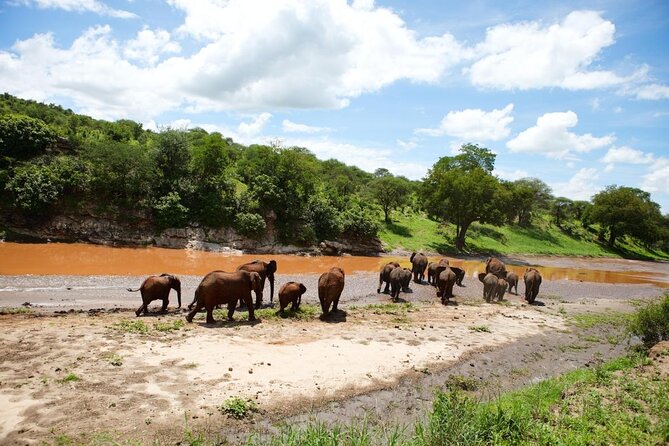
- Four major parks in five days: Tarangire, Serengeti, Ngorongoro, and Lake Manyara each offer a different setting and wildlife mix.
- Elephants are a Tarangire specialty: The Tarangire River draws animals to water, especially in the dry season.
- Two Serengeti nights are planned: That gives you more than a quick pass through the park and allows time for broad game drives.
- Ngorongoro begins early: You rise at 6:00 a.m. for the descent into the crater, where black rhino may be seen.
- A small group keeps things manageable: The vehicle holds no more than seven tour participants.
- The price is strong for a budget safari: At $1,100 per person, the value depends on your camping or lodge choice and what is included in the final booking.
Why this five-day route works
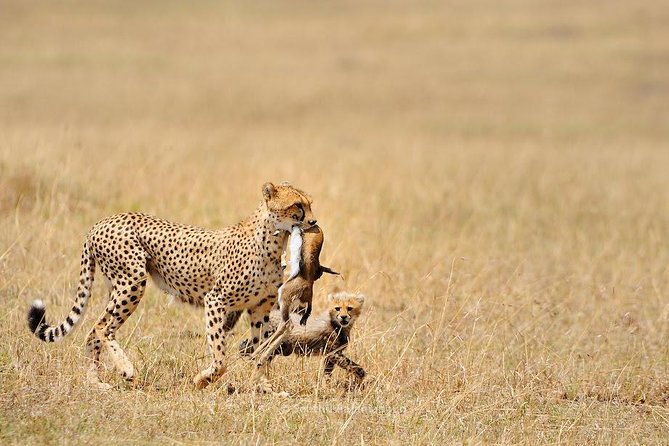
Northern Tanzania’s parks are close enough to link, but each has its own character. Tarangire is known for elephants and the river that brings wildlife together. Serengeti is the big stage, with open grassland and the famous movement of wildebeest, zebra, and antelope. Ngorongoro offers concentrated game viewing inside an ancient volcanic caldera. Lake Manyara adds forest, water, monkeys, hippos, and birds.
That variety is the best reason to choose this trip. You are not spending five days seeing the same kind of scenery from the same kind of road. One morning may bring elephants beneath baobabs, while another puts you among crater grassland or flamingos beside a lake.
You should also understand the tradeoff. This is a budget safari, not a slow private retreat. The itinerary covers long distances, including the road from Arusha to Tarangire and the drive toward Serengeti through the Ngorongoro Conservation Area. You will spend a good deal of time in the safari vehicle, often on rough tracks.
The group limit of seven is helpful. A crowded vehicle can make wildlife viewing awkward, especially when everyone wants the same side of the vehicle for a lion sighting. With seven or fewer, the experience should feel more personal, although your exact seating and vehicle setup should be confirmed before you pay.
More Safaris in Arusha
- Balloon Safari & Bush Breakfast in Serengeti – Miracle Experience
★ 5.0 · 1,646 reviews - 4 Days Group Camping Safari
★ 5.0 · 1,101 reviews - 5 Days Group Camping Safari
★ 5.0 · 730 reviews
Day 1: Elephants and the Tarangire River
Pickup begins at about 8:30 a.m. from an airport or hotel. The road to Tarangire is around 120 kilometers and is described as good tarmac for much of the approach, so the first morning is less punishing than the later park roads.
Tarangire is a smart first stop. The park takes its name from the Tarangire River, a vital water source that draws elephants, zebra, wildebeest, buffalo, giraffe, and other animals. The park is especially associated with elephants, and the itinerary describes large family groups numbering in the thousands across the area.
You may also see lion and leopard, though no safari can promise a particular animal. Guides often need patience and sharp eyes for leopard, while elephants are generally easier to spot when they gather near water or cross the road.
The first game drive helps you settle into safari rhythm. You will learn how to scan the trees and grass, how the guide communicates with other vehicles, and how quickly a quiet stretch of road can turn into a wildlife encounter.
Ask for a clear plan for the first night. The supplied schedule does not specify the exact Day 1 accommodation, and that matters when comparing camping with a lodge option. Confirm the camp name, meal arrangements, bedding, and whether the first night is inside or outside the park.
Day 2: From the highlands to the Serengeti
After breakfast, the route climbs into fertile highland country where wheat, coffee, and corn are grown by the Iraqw people. This part of the drive gives you a useful view of Tanzania beyond the parks, with farms and villages replacing the first day’s wildlife scenery.
The road passes through the Ngorongoro Conservation Area, where you get a view of Ngorongoro Crater before continuing toward Serengeti National Park. That glimpse is a good preview, but the crater visit itself comes later.
The Serengeti covers about 15,000 square kilometers and includes grassland, swamps, lakes, savannah, and mountains. Its name means endless plain in Maa, the language of the Maasai, and the open setting explains much of its fame. Wildebeest, zebra, and antelope move across this region during the great annual migration, but the park is rewarding even when the herds are elsewhere.
The schedule aims to reach the Serengeti around midday. That gives you time for an afternoon game drive, depending on road conditions, park formalities, and the exact camp location. Do not judge the day only by the arrival time. The drive through the highlands and conservation area is part of the experience, but it is still a long transfer.
If you want the best chance of seeing migration herds, ask which part of the Serengeti the route is targeting during your travel dates. The migration follows food and rain, so no fixed itinerary can guarantee that the animals will be in one particular sector.
Day 3: A full day on the Endless Plain
Day 3 is the heart of the safari. After breakfast, you spend the day on game drives across the Serengeti, looking for lion, cheetah, leopard, buffalo, elephant, wildebeest, hartebeest, topi, eland, crocodile, and both Thomson’s and Grant’s gazelles.
This is where the extra Serengeti night pays off. A rushed visit can leave you seeing only the roadside scenery between parks. A full day gives the guide more room to search, follow animal activity, and work around changing conditions.
The Serengeti also offers excellent birdwatching. More than 500 bird species have been recorded, including ostrich, secretary bird, marabou stork, and kori bustard, the world’s largest flying bird. You do not need to be a serious bird watcher to enjoy this. Large birds are often easier to notice than well-camouflaged cats, and they add variety during quieter stretches.
Your guide makes a major difference here. Named guides and drivers connected with past bookings include Apollo, David, Sulley, Marco, Adam, Opolo, and others, but you should not assume one of these people will lead your departure. Ask for the assigned guide’s name and language ability. An Italian-speaking guide has been especially useful for some groups, even when Italian was not requested.
One fair point to keep in mind is that animal explanations may vary in depth. The guide will identify wildlife and help locate it, but if you want detailed information about behavior, ecology, and conservation, say so early. A simple request can turn a sighting into a better lesson.
Late in the day, you drive toward the crater rim for dinner and an overnight stay at Simba public campsite. This is a practical location for the next morning, but public camping is not the same as a private lodge. Expect a more basic setting and ask what tent, mattress, shower, toilet, and meal arrangements are included.
More Serengeti and Ngorongoro itineraries:
- 3 Days Serengeti & Ngorongoro Group Camping Safari
★ 5.0 · 574 reviews - 5-Day Highlights mid-Range Crater, Serengeti, Tarangire
★ 5.0 · 296 reviews - 3-Day Classic Serengeti Safari
★ 5.0 · 263 reviews - Private 6-Day Tarangire Manyara Crater and Serengeti with Mid-Range Lodges
★ 5.0 · 238 reviews
Day 4: The Ngorongoro Crater before the crowds build
The early start is real. Breakfast is scheduled for 6:00 a.m., followed by a descent down the steep, winding, and bumpy track into the crater.
The ride is uncomfortable in places, but the payoff is one of Tanzania’s strongest wildlife settings. Inside the caldera, grassland and water support wildebeest, zebra, gazelle, elephant, and many birds. The enclosed geography helps concentrate animals, making Ngorongoro one of the best places on this route for a productive game drive.
Black rhino is the special possibility. It is endangered and difficult to spot, so treat a sighting as luck rather than a promise. Your guide may spend time scanning the grassland or using information from other drivers to locate one at a respectful distance.
Lunch is planned at the hippo pools. This gives you a scenic break inside the crater, but remember that a picnic stop is still part of a long, active day. Keep your camera ready, follow the guide’s instructions, and do not expect a restaurant-style meal.
After the afternoon in the caldera, the route climbs back to the highlands and continues toward Manyara. This is another long transfer, and the day can feel tiring after the early wake-up. It is also one reason to pack light, keep water close, and avoid scheduling a demanding activity immediately after the safari ends.
The crater is a UNESCO World Heritage site and one of Africa’s major natural sights. Yet its popularity means you may share the roads with many other safari vehicles. The benefit is a high chance of finding wildlife. The cost is a less solitary experience than remote parts of the Serengeti.
Day 5: Flamingos, monkeys, and Lake Manyara
The final day takes you to Lake Manyara National Park after breakfast. The drive is around 130 kilometers on good tarmac, with a picnic lunch carried along.
The road passes Maasai people in colorful clothing tending cattle, with the Great Rift Valley visible along the way. This is a valuable part of the route because it shows how people, livestock, farms, and protected areas sit close together in northern Tanzania.
Lake Manyara is smaller than Serengeti and Ngorongoro, but it gives you a different kind of safari. The park is known for large numbers of flamingos and more than 400 bird species. Water, woodland, and open areas support hippo, elephant, zebra, buffalo, giraffe, baboon, blue monkey, vervet monkey, and warthog.
You might also see lion, though the famous tree-climbing behavior sometimes associated with Manyara is never guaranteed. The park’s monkeys and baboons can provide some of the most active sightings of the day, while hippos offer a slower, watchful counterpoint.
Manyara works well as the final park because it is closer to Arusha than Serengeti. Still, confirm your final drop-off plan. Pickup is offered, but the available information does not specify the exact end point or time. If you have a flight, train, or onward transfer, leave plenty of room for delays.
Guides, food, and the human side of the trip
The strongest part of this safari is likely to be the people who run it. Past bookings have included drivers and guides such as Apollo, David, Sulley, Marco, Adam, and Opolo, while Innocent has handled airport pickups, hotel transfers, and trip coordination in some cases.
That personal attention matters in Tanzania. A guide is not only a driver. The guide helps locate animals, explains what you are seeing, manages the day’s timing, and deals with the rough conditions of park roads. The best approach is to tell the guide what interests you: big cats, birds, elephants, photography, or local life.
Food is another plus for the camping version. A safari cook has prepared impressive breakfasts and dinners, and several bookings specifically praised the meals. Confirm whether a cook is included in your package, since the exact arrangements may vary with camping and lodge choices.
There is also evidence of attention to practical details, including airport pickup, hotel drop-off, vehicle condition, staff treatment, and quick answers to questions. Those details do not replace wildlife, but they make a five-day trip easier to manage.
Is $1,100 a good value?
At $1,100 per person, this is an appealing price for five days across four major parks. The value is strongest if the price includes park fees, transport, guide, camping equipment, meals, and the advertised accommodation. Ask for a written list of inclusions before booking.
The cost also reflects the budget format. Public camping near the crater and long shared drives help keep the price down. If you prefer private rooms, shorter transfers, or a quieter camp, the lodge upgrade may cost more.
For a first safari, the route gives you a lot for the money. You see several habitats, have two Serengeti nights, and get a full crater visit instead of only a viewpoint. The compromise is comfort and pace.
The free cancellation policy allows a full refund if you cancel at least 24 hours before the start time. Changes or cancellations inside 24 hours are not refunded, and poor weather may lead to a new date or a full refund. The activity accepts service animals, is near public transportation, and most people can participate, but the rough roads and early starts should still be taken seriously.
Who should book this safari?
I would recommend it to someone who wants a first look at Tanzania’s Northern Circuit without paying for a luxury itinerary. It suits people who care more about animal sightings and route variety than private rooms and leisurely mornings.
It is also a good fit for photographers and bird watchers because the parks offer very different subjects. Serious birders should tell the guide in advance so bird sightings receive proper attention.
I would think twice if you dislike long vehicle journeys, basic camping, early breakfasts, or uncertain wildlife sightings. Five days is enough to see a lot, but not enough to move slowly. If you have more time, adding a rest day or extra Serengeti nights would make the trip less tiring.
Final verdict: a strong budget safari with a busy schedule
This five-day Signature Safari route offers an impressive run through Tarangire, Serengeti, Ngorongoro Crater, and Lake Manyara. The best features are the park variety, the full Serengeti day, the chance to see the Big Five, helpful coordination, good camp cooking, and a small group capped at seven.
Book it if you want strong wildlife value at $1,100 per person and are comfortable with rough roads and basic camping. Before paying, confirm the exact accommodation, guide, vehicle, meals, park fees, final drop-off, and any lodge supplement. Those details will tell you whether this is merely an inexpensive safari or a genuinely good deal.
FAQ
Where does the safari start?
The experience is based in Arusha and offers pickup from an airport or hotel. The listed start time is 8:30 a.m.
How many people can join the safari?
The maximum group size is seven tour participants.
Which parks does the itinerary visit?
The route visits Tarangire National Park, Serengeti National Park, the Ngorongoro Crater within the Ngorongoro Conservation Area, and Lake Manyara National Park.
Is accommodation included?
The schedule includes an overnight at Simba public campsite near the crater and refers to comfort adventure camping. Camping and lodge options are available, but you should confirm the exact accommodation and any price difference before booking.
Will I see the Big Five?
You may see lion, leopard, elephant, buffalo, and black rhino, but wildlife sightings cannot be guaranteed. The itinerary specifically highlights the possibility of seeing the Big Five.
Is Lake Manyara included on the last day?
Yes. Day 5 includes a drive to Lake Manyara National Park, with opportunities to see flamingos, hippos, elephants, zebra, buffalo, giraffe, monkeys, baboons, and many bird species.
What is the cancellation policy?
You receive a full refund if you cancel at least 24 hours before the experience starts. Cancellations or changes made less than 24 hours before the start time are not refunded. If poor weather cancels the experience, you are offered another date or a full refund.
More five day trips in Arusha
- 5 Days Camping Tarangire, Serengeti & Ngorongoro crater & Visiting Maasai
★ 5.0 · 229 reviews - Tanzania Simba Safari – 5 Days
★ 5.0 · 217 reviews - 5 Days Budget Private Safari, Tanzania
★ 5.0 · 191 reviews - 5-Day Private Northern Tanzania Safari from Arusha
★ 5.0 · 182 reviews
Newly listed around Arusha
- 5-Day Private Safari Tour in Tanzania’s Wildlife★ 5.0 · 3 reviews
- 3 Days private safari Tarangire ,Ngorongroro crater &Manyara★ 5.0 · 3 reviews
- 3 Day Sharing Safari – Manyara, Ngorongoro Crater and Tarangire National Parks★ 5.0 · 3 reviews
- Tarangire National Park Day Trip★ 5.0 · 3 reviews
- 2 Days Tarangire and Ngorongoro Crater Tour★ 5.0 · 3 reviews
- 6 -Day Tarangire, Manyara, Serengeti & Ngorongoro★ 5.0 · 3 reviews
- 5 Days Group Camping Safari★ 4.7 · 3 reviews
- 4 Days Tanzania Safari★ 4.5 · 3 reviews
Serengeti & Ngorongoro Safaris, compared.


Balloon Safari & Bush Breakfast in Serengeti – Miracle Experience
Read our review →




Private 6-Day Tarangire Manyara Crater and Serengeti with Mid-Range Lodges
Read our review →
5 Days Camping Tarangire, Serengeti & Ngorongoro crater & Visiting Maasai
Read our review →Browse the lists this tour appears in