
Reviewed · SERENGETI & NGORONGORO SAFARIS
3 Days Serengeti & Ngorongoro Crater group safari
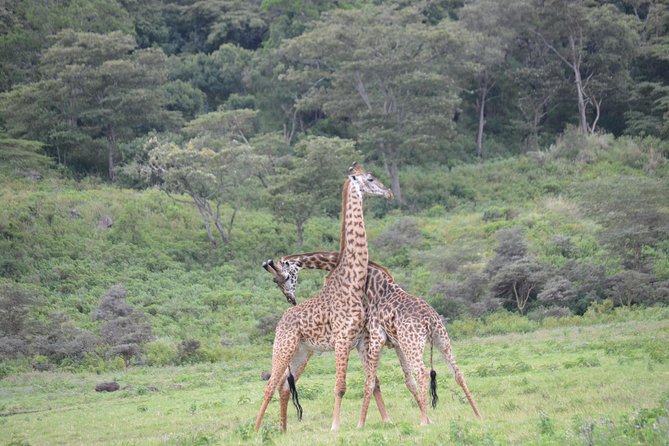
The great appeal here is simple: in only three days, you reach Serengeti National Park and Ngorongoro Crater, two of Tanzania’s biggest wildlife names. You travel in a custom jeep with a pop-up roof, sharing it with no more than six clients, while a guide-driver and chef handle the practical work.
I like the small group size, which matters when you want a clear view from the roof and room to move your camera. I also like the chance to see Serengeti cats, large herds, and the crater’s dense animal life without paying for a private safari. The main drawback is the long road time, especially the roughly eight-hour drive from Arusha on the first day.
Key points to know before booking
- Maximum six clients: A small shared group should feel less crowded than a large safari vehicle.
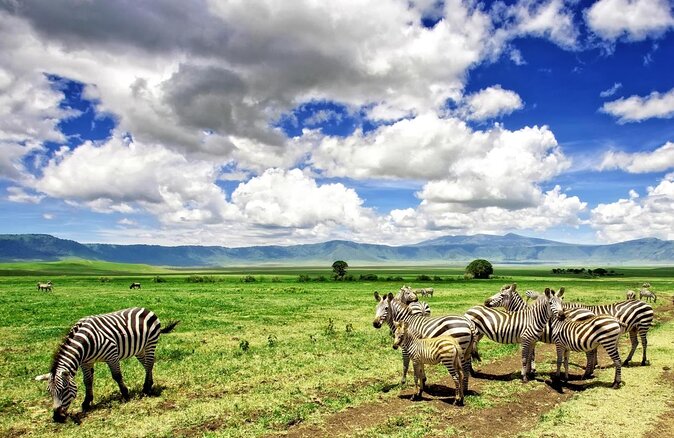
- Two famous wildlife areas: You visit Serengeti first, then spend about six hours inside Ngorongoro Crater.
- Early starts: Game viewing begins at about 6:00 a.m. in Serengeti and 6:15 a.m. at Ngorongoro.
- Pop-up-roof jeep: The vehicle is set up for wildlife viewing and photography.
- Meals and drinks included: Breakfast, lunch, dinner, drinking water, beer, and wine are included as stated.
- Guides named by the operator: David, Emanuel, also called Tosh, and Simon are among the guides connected with this safari company.
What $800 buys you on this three-day safari
At $800 per person, this is aimed at people who want the headline attractions of northern Tanzania without the cost of a longer private trip. You get transport from Arusha, a custom safari jeep, a guide-driver, a chef, meals, and access to two major wildlife areas during a short visit.
That price is useful because the most expensive part of a safari is not only the vehicle. It is also the fuel, staff, food, park access, and long distances between Arusha and the parks. A six-person group helps spread those costs.
Still, you should check the final booking details carefully. The supplied information does not spell out every possible park fee, camping charge, or accommodation arrangement beyond the Simba campsite reference. It also says the tour includes three breakfasts, three lunches, and two dinners, so ask how the first and final meals are handled. The listed drinks include water, beer, and wine, which is a pleasant extra, but you should not assume that every drink or personal expense is covered.
This is a value-focused safari, not a slow, polished lodge holiday. You will spend long hours in a vehicle and make an ambitious circuit in three days. If your priority is seeing major wildlife areas on a limited budget, the plan makes sense. If you want long afternoons at camp, a soft bed every night, or a relaxed pace, you may want a longer package.
More Safaris in Arusha
- Balloon Safari & Bush Breakfast in Serengeti – Miracle Experience
★ 5.0 · 1,646 reviews - 4 Days Group Camping Safari
★ 5.0 · 1,101 reviews - 5 Days Group Camping Safari
★ 5.0 · 730 reviews
The early road from Arusha to Serengeti
The first day begins with breakfast and a departure from Arusha at about 7:15 a.m. The drive to Serengeti takes roughly eight hours, including stops. That is a serious road day, so go in with the right expectations: the safari begins with transport rather than an immediate game drive.
The route passes through the Ngorongoro Conservation Area. You make a short stop at the crater gate and viewpoint, with about 20 minutes to look over the crater. This is a useful first glimpse of one of Tanzania’s most remarkable natural settings, but it is only a preview. Your main crater visit comes on the third day.
The road time is the clearest weakness of this trip. Eight hours in a safari vehicle can feel tiring, especially after an early start. On the other hand, this transfer is what makes a low-cost three-day route possible. A private itinerary could spread the journey over more days, but that would raise the price.
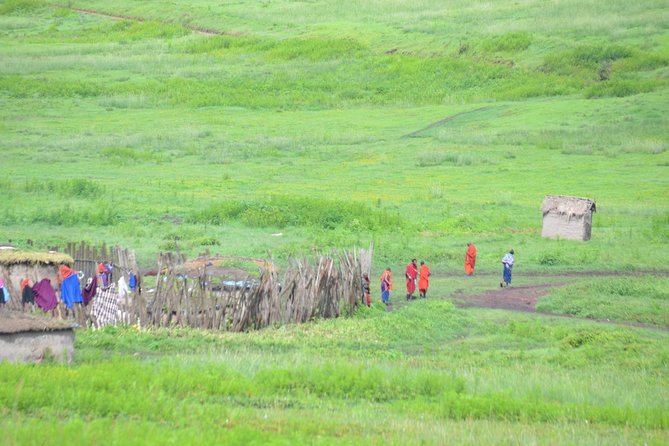
An optional Maasai village visit is also included in the first day’s plan. The listed stop is very short, about eight minutes, and admission is shown as free. Treat it as a brief cultural stop rather than a full village visit. If you are interested in learning about Maasai life, ask the guide what the stop involves before deciding to include it.
The Maasai have long been associated with cattle keeping, warrior traditions, and a strong cultural identity. Some dramatic stories about hunting lions and drinking animal blood belong to older or highly simplified descriptions of Maasai traditions. The practical point for you is to approach the visit with respect and curiosity, not as a staged collection of movie scenes.
Serengeti game viewing from the pop-up roof
Serengeti is the heart of the trip. The park is known for open grasslands, large animal populations, and the chance to see big cats. The connection with The Lion King has also made it familiar to people who have never visited Tanzania, though the real park is less tidy and theatrical than a film.
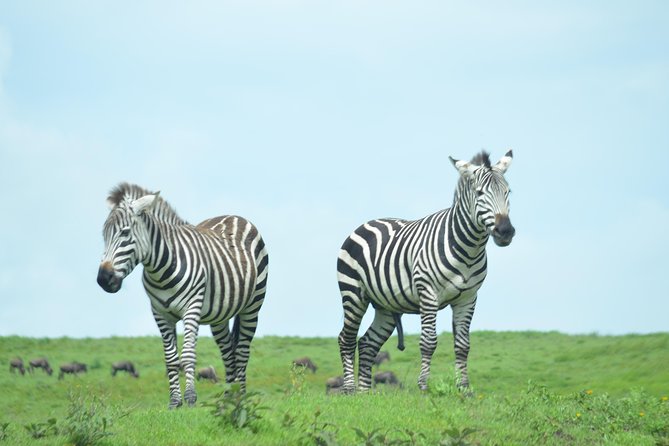
The strongest wildlife possibilities named for this tour are lions and other wild cats, wildebeest, birds, elephants, buffaloes, hippos, and many additional animals. If your dates coincide with the right part of the wildebeest migration, you may see very large herds moving through the region. Migration sightings depend on season and location, so they should be treated as a possibility, not a promise.
The pop-up roof is important. It lets you stand or sit higher than the side windows and look across the grasslands. It also gives you a better angle for photographs. A maximum of six clients should make this more comfortable than a packed vehicle, though the actual amount of personal space will depend on the group and the vehicle layout.
Your guide-driver has a major effect on the day. Guides connected with this operator include Emanuel, also known as Tosh, David, and Simon. Specific praise has centered on sharp animal spotting, strong guiding, and professional handling of the safari. That matters in Serengeti, where an experienced eye can notice movement or a distant shape before you do.
Do not expect every animal to appear on schedule. One guide associated with the company was praised for finding most of the major animals, but rhino was not seen. That is a useful reminder: even in excellent wildlife country, sightings remain unpredictable.
Day two: an early Serengeti start and the road to Simba campsite
Day two begins with breakfast at about 6:00 a.m., followed by an early game drive. This is one of the best parts of the plan because early hours can be productive for wildlife viewing, and the cooler start is easier on both people and animals.
The drive continues until the afternoon. You then return to camp for lunch and packing before continuing with game viewing as you leave Serengeti. The route to Simba campsite takes about two and a half hours, placing you near the rim of Ngorongoro Crater.
This day asks you to balance wildlife time with a transfer. You do not get a full, leisurely day in one area. Instead, you get a morning of viewing, a camp break, and more wildlife as you exit. That is a fair trade for reaching the crater area in time for the final day.
Packing during the afternoon also means you should keep your luggage organized. A soft bag with essentials easily accessible is more practical than unpacking a large suitcase at each stop. The supplied information confirms a chef and included meals, but it does not describe the exact camping setup, so ask what bedding and facilities are provided before departure.
Simba campsite is near the crater rim, which is useful for the next morning’s early descent. The location saves time compared with returning from Serengeti on the same morning. It also means the final day begins close to the crater rather than with another long road transfer.
More Serengeti and Ngorongoro itineraries:
- 3 Days Serengeti & Ngorongoro Group Camping Safari
★ 5.0 · 574 reviews - 5-Day Highlights mid-Range Crater, Serengeti, Tarangire
★ 5.0 · 296 reviews - 3-Day Classic Serengeti Safari
★ 5.0 · 263 reviews - Private 6-Day Tarangire Manyara Crater and Serengeti with Mid-Range Lodges
★ 5.0 · 238 reviews
Six hours inside Ngorongoro Crater
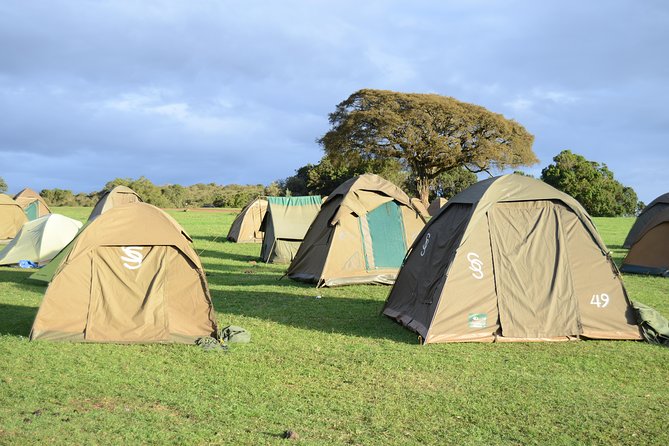
On day three, breakfast is followed by a crater descent at about 6:15 a.m. The goal is to look for black rhino, described here as one of the hardest animals to spot in the crater. The early start gives you the best practical chance of finding wildlife before the day progresses.
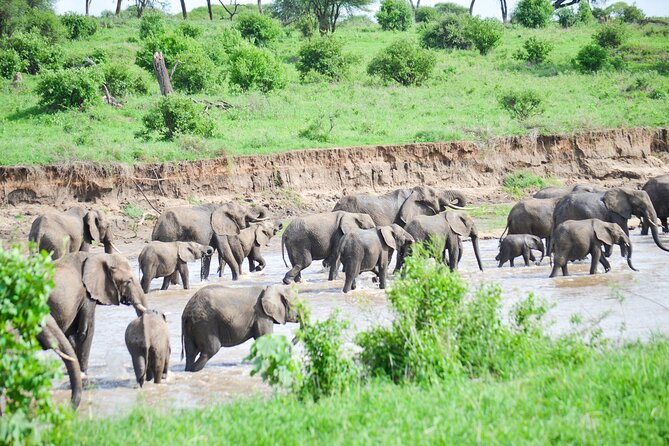
Ngorongoro Crater is a compact setting with a high concentration of animals. During the planned six-hour visit, you may see hippos, buffaloes, wildebeest, elephants, aquatic birds, and other wildlife. The crater floor makes animal viewing easier in some ways because the area is enclosed by steep sides and many animals remain within a relatively defined zone.
That does not mean sightings are automatic. Rhinos are particularly uncertain, and no ethical guide can guarantee one. Keep your expectations broad. A crater visit can be excellent even if the most difficult animal stays out of sight.
The crater is often described as an Eden for wildlife, and the phrase makes sense once you understand the setting. You have a broad floor, water, grazing areas, and a natural boundary formed by the crater walls. For you, the reward is variety in a relatively short period. The drawback is that several vehicles can be present around popular sightings, especially when a rare animal is reported.
Six hours is a good amount of time for a first visit. It gives you room for several stops without turning the day into an exhausting full-day drive. Bring patience, keep your voice low around animals, and leave time for the return to camp.
After the crater, you return to the campsite for lunch and to collect your belongings. Then you drive out of the conservation area and continue to Arusha. The final road journey can be tiring, but the route is direct in purpose: wildlife first, return travel afterward.
Food, drinks, and the working team
The safari includes breakfast, lunch, and dinner according to the stated plan, with three breakfasts, three lunches, and two dinners listed. Drinking water, beer, and wine are also included. For a short group safari, having a chef is a useful feature because meals are handled on the road rather than left entirely to you.
The guide-driver and chef form the core team. The driver must manage rough park roads, watch for animals, and explain what you are seeing. The chef keeps the group fed during a schedule that starts early and includes long drives.
The company’s guides have been praised for animal spotting and for making clients feel welcome. Names associated with the operation include Emanuel, called Tosh by the company, as well as David and Simon. You may not be assigned a particular person, so do not book solely because of one guide’s name. Instead, ask who will lead your departure and how the group will be organized.
Tips for the driver and chef are not included. Carry enough local currency or confirm the preferred method before leaving. A tip is not a compulsory ticket charge, but it is a normal way to recognize good work at the end of a safari.
Who will like this trip most
I would recommend this safari to you if you have limited time in Tanzania and want the two major highlights in one compact route. It also suits solo visitors, couples, and friends who prefer a shared vehicle and want to keep the cost below a private safari.
The maximum group size of six is a real advantage for a budget trip. You still share decisions and viewing space, but the group should be small enough for a more personal feel. Ask about the vehicle arrangement if photography is important to you, since roof access and seating can affect your best angle.
This is less suitable if you dislike early mornings, long drives, or basic camping arrangements. The first day is especially demanding, and the final return to Arusha follows a full morning in the crater. Families should also confirm whether every member is comfortable with the pace, because the plan is tightly packed.
The optional Maasai village visit may appeal to you if cultural encounters matter as much as wildlife. Since the listed stop is very brief, it should not be the main reason you choose this package. The wildlife program is the central attraction.
Booking details worth checking
Pickup is offered, and you receive a mobile ticket. Confirmation is provided when you book. The activity is listed as suitable for most people and limited to six clients.
Free cancellation is available when you cancel at least 24 hours before the start time. Changes made inside that 24-hour period are not accepted, and the amount paid is not refunded for a late cancellation. The cut-off uses local time. The safari also requires good weather, with a different date or full refund offered if poor weather causes cancellation.
Before paying, ask for the exact pickup point in Arusha, the vehicle arrangement, the campsite facilities, and what park or camping fees are included in the $800. These questions do not change the appeal of the route, but they help you compare it fairly with other safari packages.
Should you book this Serengeti and Ngorongoro safari?
Book it if you want maximum wildlife value in three days and can accept long drives, early starts, and a shared camping-style trip. Serengeti gives you the best chance of big cats and large herds, while Ngorongoro offers a concentrated six-hour wildlife visit with possible rhino sightings.
Skip it if you want a relaxed lodge holiday or a private vehicle. The plan is ambitious, but that is also its strength. For $800 per person, a group of no more than six, a chef, included meals, and two of Tanzania’s most famous wildlife areas make this a sensible short safari for an active budget-minded visitor.
FAQ
Where does the safari start?
The safari starts in Arusha, Tanzania, with pickup offered.
How long does the safari last?
The experience lasts approximately three days.
How many clients can join the group?
The tour has a maximum of six clients.
What type of vehicle is used?
The safari uses a custom safari jeep with a pop-up roof.
Which parks and protected areas are visited?
The route includes Serengeti National Park, Ngorongoro Conservation Area, and Ngorongoro Crater.
How long is the drive from Arusha to Serengeti?
The drive takes about eight hours, including stops.
Is a Maasai village visit included?
A Maasai village visit is optional. The listed stop lasts about eight minutes and has free admission.
How early do the game drives begin?
The Serengeti game drive begins after breakfast at about 6:00 a.m. The Ngorongoro Crater descent begins at about 6:15 a.m.
What meals and drinks are included?
The stated inclusions are three breakfasts, three lunches, two dinners, drinking water, beer, and wine.
What is the cancellation policy?
You can cancel at least 24 hours before the start time for a full refund. Cancellations or changes made less than 24 hours before the start time are not accepted for a refund.
More three day trips in Arusha
- 3 Day Serengeti National Park & Ngorongoro Crater Camping Safari
★ 5.0 · 142 reviews - 3 Days Tarangire, Ngorongoro & Lake Manyara Group Camping Safari
★ 5.0 · 102 reviews - 3 Days Private Safari – manyara, Ngorongoro & Tarangire
★ 5.0 · 94 reviews - 3 Days Small Group Safari to Serengeti NP and Ngorongoro Crater Tour in Tanzania
★ 5.0 · 77 reviews
Newly listed around Arusha
- 5-Day Private Safari Tour in Tanzania’s Wildlife★ 5.0 · 3 reviews
- 3 Days private safari Tarangire ,Ngorongroro crater &Manyara★ 5.0 · 3 reviews
- 3 Day Sharing Safari – Manyara, Ngorongoro Crater and Tarangire National Parks★ 5.0 · 3 reviews
- Tarangire National Park Day Trip★ 5.0 · 3 reviews
- 2 Days Tarangire and Ngorongoro Crater Tour★ 5.0 · 3 reviews
- 6 -Day Tarangire, Manyara, Serengeti & Ngorongoro★ 5.0 · 3 reviews
- 5 Days Group Camping Safari★ 4.7 · 3 reviews
- Private 4×4 Vitara Safari in Arusha National Park★ 5.0 · 3 reviews
Serengeti & Ngorongoro Safaris, compared.


Balloon Safari & Bush Breakfast in Serengeti – Miracle Experience
Read our review →




Private 6-Day Tarangire Manyara Crater and Serengeti with Mid-Range Lodges
Read our review →
5 Days Camping Tarangire, Serengeti & Ngorongoro crater & Visiting Maasai
Read our review →Browse the lists this tour appears in