
Reviewed · ARUSHA TOURS
3 Days Mount Meru trekking
Mount Meru gives you a rare two-part mountain day: a walking safari among giraffes, zebras, buffalo, and antelope, followed by a serious climb to a 4,565-meter summit. The final push begins at 1:30 a.m., so you reach the top around sunrise, when the Ash Tray and Mount Kilimanjaro can appear across the early light.
I like the way the trek combines wildlife and high-altitude hiking, and I like that porters handle the packing while a guide, cook, and park ranger support the climb. The main concern is the pace: three days is short, and the midnight summit attempt demands strong fitness, good weather, and a willingness to sleep early after a hard day.
Key points at a glance
- Wildlife comes before the mountain work: The first day through Arusha National Park can feel like a walking safari, with possible sightings of giraffes, zebras, antelope, buffalo, and elephants.
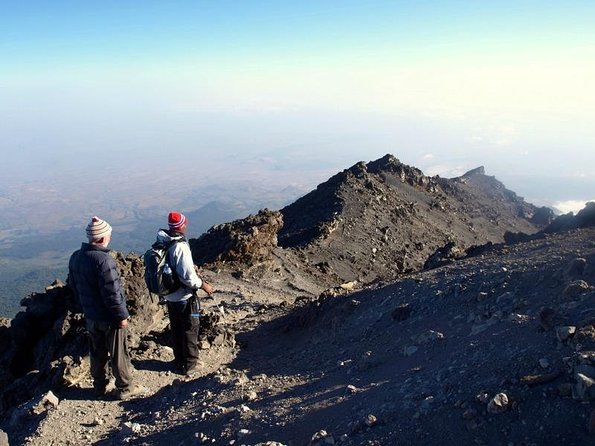
- The summit begins at 1:30 a.m.: You climb in darkness toward Rhino Point, Cobra Point, and the rocky ridge above the crater.
- A private setup gives you more personal support: The guide leads your pace, while porters organize equipment and carry the packed load.
- Hut accommodation keeps the trip simple: Meals and mountain huts are included, so you do not need to camp in a tent.
- An armed ranger is required: Wildlife near the trail means a national park ranger accompanies the hiking team.
- The $800 price covers a full mountain service: The value rests in the guide, porters, cook, ranger, meals, huts, park access, and pickup, though you should confirm the exact inclusions before paying.
Why Mount Meru makes a strong three-day trek
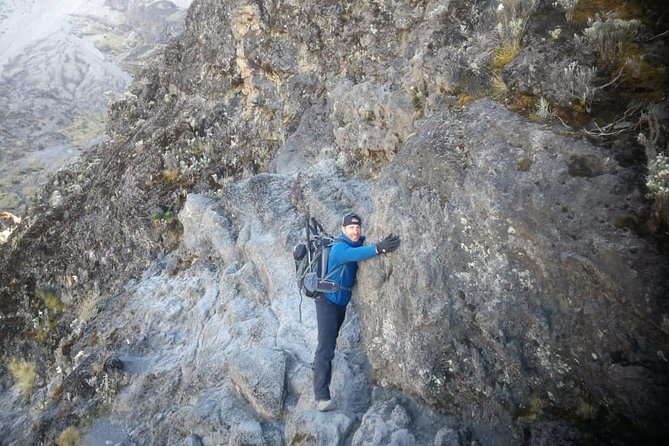
Mount Meru is Tanzania’s fifth-highest mountain, rising to 4,565 meters. It does not have the same fame as Kilimanjaro, but that is part of its appeal. The route gives you a close look at Arusha National Park, then brings you onto a steep ridge with crater views and a dramatic summit finish.
I see this as a good choice if you want a demanding mountain trip without committing to a longer Kilimanjaro route. It is also useful as an introduction to altitude hiking. The optional walk to Little Mount Meru, at 3,820 meters, gives you extra time high up before the main summit attempt.
Do not mistake the short length for an easy outing. Day one lasts about six hours. Day two is shorter at about four hours, but it includes steep climbing and ends with an early dinner and a 7 p.m. bedtime. Day three is the test. You wake at 12:30 a.m., start at 1:30 a.m., reach the summit near sunrise, then descend to Momella Gate and return to Arusha.
More Hiking Tours in Arusha
- 8-Day Small-group Lemosho Kilimanjaro Summit Trekking
★ 5.0 · 186 reviews - Mountain Kilimanjaro Day Hike
★ 5.0 · 102 reviews - Private Full Day Hiking Experience to Marangu Route
★ 5.0 · 61 reviews
Day one: from Arusha to a wildlife-filled trail
Your morning begins with breakfast in Arusha, about 1,400 meters above sea level. Pickup is offered, and the stated start time is 9 a.m., though the actual mountain schedule begins with the transfer to Momella Gate in Arusha National Park.
At the gate, your porters organize and pack the belongings needed for the climb. You and your guide handle registration with Tanzania National Parks, known as TANAPA. This is a practical start, but it may take time, so do not expect to be walking the instant you leave your hotel.
The opening hike is the most unusual part of the trek. Instead of moving straight into a bare mountain zone, you walk through a park where giraffes, zebras, antelope, and buffalo may appear near the trail. Elephants are also possible. That mix makes the first day feel less like a standard summit route and more like a walking safari with a mountain waiting ahead.
Because wildlife can be close to the trail, an armed ranger hired through the national park must accompany the group for the hike. This is not a decorative extra. It is part of how the park manages safety around large animals, and it means your group has an official wildlife escort as well as your mountain guide.
The six-hour day should be treated as a real outing, not a gentle stroll. You will be carrying a daypack, while porters handle the main load. Keep your camera ready, but do not let the animal sightings distract you from the steady pace needed for the next two days.
Day two: the saddle ridge and Little Mount Meru
After breakfast, you begin climbing along the steep trail toward the ridge of the saddle. The route offers views into the Mount Meru Crater and toward the Ash Tray, a striking volcanic feature that helps explain the mountain’s shape.
This is where the trip begins to feel like a proper high mountain climb. The wildlife may still be around, but your attention shifts to footing, breathing, and maintaining a pace you can hold. The four-hour estimate is shorter than day one, yet the steep grade can make it feel demanding.
At camp, you can choose to hike Little Mount Meru with your guide. At 3,820 meters, it provides extra altitude practice and a useful acclimatization walk. I like having this choice because it lets you judge your energy honestly. If you feel strong, Little Mount Meru adds a worthwhile viewpoint and preparation for the summit. If you are tired, resting may be the smarter decision.
Dinner is served early, followed by the unusual instruction to sleep by 7 p.m. That early night is not a luxury. You need to rest before the midnight wake-up, and your body will have little time to recover once the summit push begins.
Hut accommodation is included, which makes this route easier than a tent-based climb. Still, a hut is not a hotel. The information provided does not specify the hut layout, bedding, or private room arrangements, so ask the operator what to expect before departure.
Day three: a dark climb to a 4,565-meter summit
At 12:30 a.m., your guide wakes you for tea and biscuits. You start walking at 1:30 a.m., climbing toward Rhino Point at 3,800 meters and then Cobra Point at 4,350 meters.
This schedule is designed to place you at the summit around sunrise. The timing matters for two reasons. First, the cooler night hours can make the steep ascent more manageable. Second, dawn provides the best chance for views of Mount Meru’s Ash Tray and Mount Kilimanjaro.
The final hour is the most technical section described on the route. You scramble along a rocky ridge between the crater and Meru’s inner cliffs. This is not presented as technical climbing with ropes, but it is more than a smooth walking path. You need firm footing, confidence on uneven rock, and enough energy to stay focused when tired.
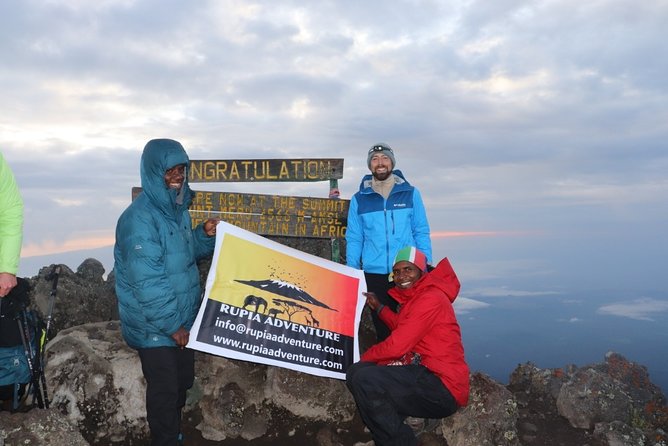
At 4,565 meters, the summit gives you a clear sense of the mountain’s volcanic form. The view toward the Ash Tray is the special reward here. On a clear morning, Kilimanjaro adds another famous Tanzanian peak to the scene, though the weather will decide how much you actually see.
After enjoying the summit, you descend to Momella Gate and return to Arusha. This makes for a very long final day. The listed schedule contains a clearly inconsistent duration, but the practical point is plain: you summit before breakfast, descend the mountain, exit the park, and return to town on the same day.
A change of scene while you are in Arusha:
- Balloon Safari & Bush Breakfast in Serengeti – Miracle Experience
★ 5.0 · 1,646 reviews - Tanzania Classic – 7 Days
★ 5.0 · 1,151 reviews - 4 Days Group Camping Safari
★ 5.0 · 1,101 reviews - 5 Days Group Camping Safari
★ 5.0 · 730 reviews
What the private guide and support team change
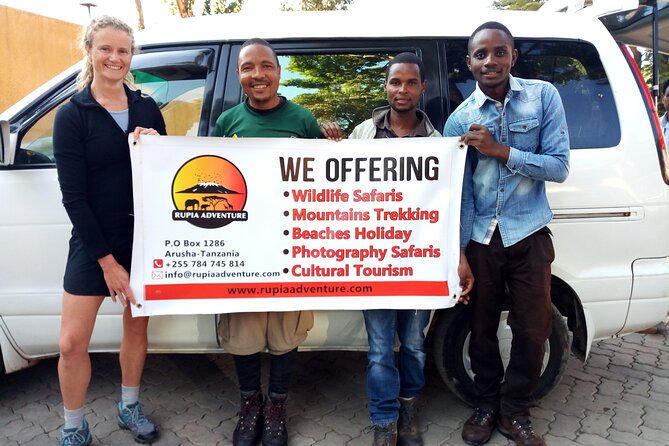
A private tour matters most on a route with changing demands. Your guide can help set a pace for the wildlife section, judge whether Little Mount Meru is sensible, and respond to how you feel during the summit climb.
The support team includes porters who organize and pack your belongings, plus a cook who prepares the meals. Past feedback about this operator repeatedly highlights the friendly support team, good food, and strong encouragement from guides, porters, and cooks. One account specifically praised a guide named Frank for explaining the flora, animals, and mountain life throughout the route, though guide assignments can vary.
The ranger is a separate part of the arrangement. Since the park requires an armed ranger because of possible wildlife encounters, you are not simply walking with a private guide alone. The group can include you, your guide, porters, cook, and the ranger.
The tour allows a maximum of 15 people, but it is described as private. Confirm how that limit applies to your booking. If you are booking as a small party, ask whether the guide and support team are reserved only for your group.
Is $800 a fair price for Mount Meru?
At $800 per person, this is not a budget day hike. But it includes the costly parts of a supported mountain trip: pickup, park admission, guide service, porter support, meals, hut accommodation, and the required ranger arrangement.
The value is strongest if you want a handled experience. You are not expected to organize food, carry the main load, arrange the park registration alone, or work out the wildlife escort yourself. The price also buys three days of logistics around a route that begins and ends in Arusha.
Before booking, ask for a written list of what the $800 covers. The supplied details confirm meals and huts, but do not state the number of meals, porter weight limits, transfers after the gate, tips, or personal equipment. Those details can affect the real cost.
There is also a practical financial warning. The booking terms say the experience is non-refundable and cannot be changed for any reason. If bad weather forces cancellation, you are offered another date or a full refund. The same applies if the minimum number of participants is not met. Outside those cases, cancellation means losing the amount paid.
One serious complaint described payment problems, an incorrect bank account, poor vehicles, weak equipment, and difficulty reaching the company. That is not consistent with the otherwise positive accounts, but it is enough reason to verify payment instructions directly, request confirmation of every transfer, and inspect your equipment before leaving Arusha.
Who should book this climb?
I would point this trek toward an active person who wants a compact mountain challenge and is comfortable with a demanding final day. You should have a strong level of physical fitness, as the booking information requires.
This is a good fit if you want:
- Wildlife sightings built into a mountain route
- A private guide and organized porter support
- Meals and hut accommodation included
- A sunrise summit rather than a relaxed daytime finish
- A chance to see Mount Kilimanjaro from Mount Meru
- A three-day schedule based in Arusha
I would think twice if you dislike steep trails, rocky scrambling, early wake-ups, or fixed schedules. The midnight start is the biggest hurdle. You may be physically ready but still find the sleep pattern rough.
The route can also suit someone using Mount Meru as altitude preparation, but the three-day format does not leave much spare time. If you feel unwell, the guide should know immediately. The included Little Mount Meru option offers some flexibility, but the summit schedule remains tight.
Small details that can make the trek smoother
Arrive ready to discuss equipment during the porter packing process. Since the team organizes and packs your belongings at Momella Gate, this is the moment to clarify what goes into the carried load and what remains with the vehicle.
Keep warm layers and essentials in your daypack. The route moves from a wildlife park at lower elevation to a cold, dark summit ridge, and the change in conditions is central to the experience.
Pace yourself on day one and day two. The goal is not to win the first afternoon. Saving energy for the steep ridge, Cobra Point, and the final rocky section matters more than moving quickly early on.
Use the optional Little Mount Meru walk as a choice, not a requirement. It can help with altitude adjustment, but resting may give you a better chance of reaching the main summit if your legs are already tired.
The food receives especially strong praise in the available feedback, with generous portions and a cook who helped make the route easier. That is useful on a short climb where every meal supports the next effort, but confirm the menu and dietary arrangements before payment if you have special needs.
Should you book the three-day Mount Meru trek?
Book it if you want a wildlife-to-summit route with organized support and can handle a hard midnight finish. The combination of animals on day one, crater views on day two, and a sunrise ridge walk on day three gives Mount Meru its own identity rather than making it a lesser copy of Kilimanjaro.
The strongest reasons to go are the private guide setup, porter and cook support, hut accommodation, and unusual chance to see giraffes and buffalo before climbing to 4,565 meters. The main reasons to pause are the non-refundable terms, the short schedule, the required strong fitness, and one serious complaint about payment and equipment.
I would book only after confirming the bank details, vehicle arrangements, equipment condition, exact inclusions, and guide assignment. If those points are clear and you are ready for a steep, sleep-shortened summit day, $800 can be a reasonable price for a fully supported Mount Meru climb from Arusha.
FAQ
How long is the Mount Meru trek?
The experience is advertised as a three-day trek, beginning and ending in Arusha.
What time does the tour start?
The stated start time is 9 a.m. Pickup is offered from your hotel in Arusha before the transfer to Momella Gate.
What animals might I see?
On the first day, you may see giraffes, zebras, antelope, buffalo, and possibly elephants near the trail.
Why does an armed ranger join the hike?
An armed ranger hired through Tanzania National Parks is required because wildlife may be present near the hiking route.
Where do I sleep during the trek?
Hut accommodation is included. The provided information does not specify the hut layout or bedding arrangements.
What happens on the summit morning?
Your guide wakes you at 12:30 a.m. for tea and biscuits. You start hiking at 1:30 a.m., pass Rhino Point and Cobra Point, scramble along a rocky ridge, and aim to reach the 4,565-meter summit at sunrise.
Can the trek be canceled or changed?
The experience is non-refundable and cannot be changed for personal reasons. If poor weather forces cancellation, or if the minimum number of participants is not reached, you are offered another date or a full refund.
More three day trips in Arusha
- 3 Days Serengeti & Ngorongoro Group Camping Safari
★ 5.0 · 574 reviews - 3-Day Classic Serengeti Safari
★ 5.0 · 263 reviews - 3 Day Serengeti National Park & Ngorongoro Crater Camping Safari
★ 5.0 · 142 reviews - 3 Days Tarangire, Ngorongoro & Lake Manyara Group Camping Safari
★ 5.0 · 102 reviews
Newly listed around Arusha
- 5-Day Private Safari Tour in Tanzania’s Wildlife★ 5.0 · 3 reviews
- 3 Days private safari Tarangire ,Ngorongroro crater &Manyara★ 5.0 · 3 reviews
- 3 Day Sharing Safari – Manyara, Ngorongoro Crater and Tarangire National Parks★ 5.0 · 3 reviews
- Tarangire National Park Day Trip★ 5.0 · 3 reviews
- 2 Days Tarangire and Ngorongoro Crater Tour★ 5.0 · 3 reviews
- 6 -Day Tarangire, Manyara, Serengeti & Ngorongoro★ 5.0 · 3 reviews
- 5 Days Group Camping Safari★ 4.7 · 3 reviews
- 4 Days Tanzania Safari★ 4.5 · 3 reviews
Arusha Tours, compared.

Balloon Safari & Bush Breakfast in Serengeti – Miracle Experience
Read our review →






Browse the lists this tour appears in