
Reviewed · MAASAI VILLAGE VISITS
1 Day Olpopongi Real Maasai Cultural adventurous Trip | BURIGI CHATO SAFARIS LTD
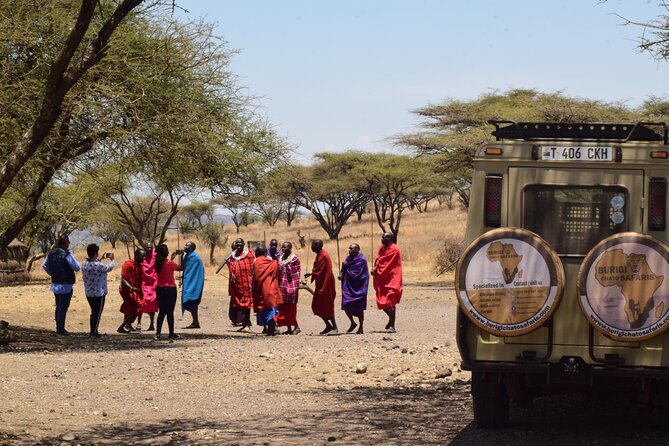
Olpopongi offers something many Tanzania safaris do not: a day centered on people, customs, and daily life rather than wildlife sightings. You may be welcomed with song and dance, walk through a Maasai village, visit a small museum, and learn how homes, tools, family life, and traditions fit together.
I like the personal welcome and the chance to spend time inside a real Maasai setting instead of simply photographing a staged performance. I also like the drive through West Kilimanjaro, where clear weather can bring views of both Mount Kilimanjaro and Mount Meru, and the season may add zebras or elephants.
The main caution is that the published details are not fully consistent. The trip is described as a nine-hour day tour, yet the itinerary mentions checking into a hut for the night. The meeting point is in Arusha, while the drive description begins from Moshi, so confirm the exact route and whether an overnight stay is included before paying.
Key points to know before you book
- Olpopongi is the heart of the day: You visit a Maasai village in West Kilimanjaro and spend time learning about customs, homes, tools, and community life.
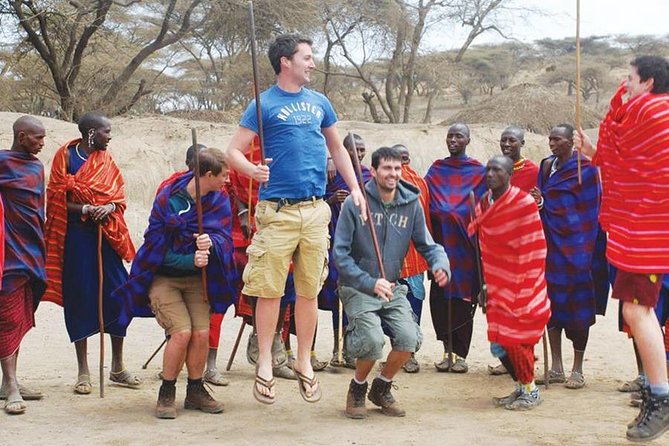
- The welcome is active, not passive: Traditional song, dancing, and the well-known Maasai jumping tradition form part of the experience.
- The museum adds useful context: The small museum covers Maasai history, social organization, and traditional tools.
- The scenery depends on weather and season: Clear skies may reveal Mount Kilimanjaro and Mount Meru, while zebras and elephants may appear along the route at certain times of year.
- The $380 price covers the basics: Lunch, taxes, a private car, guide, cook, wages, and tour fees are included, but tips, insurance, visas, flights, and personal purchases are not.
- Clarify the schedule: The stated start is 8:30 am from Arusha Tourist Inn, but parts of the route information refer to Moshi and a possible night in a village hut.
Why Olpopongi feels different from a standard safari
Tanzania is often sold through its animals, but its people and cultures are just as important to understanding the country. The Maasai are among East Africa’s best-known communities, with related populations in Tanzania and Kenya and a language called Maa.
The Maasai are a Nilotic people with origins linked to the Nile region of North Africa. The Samburu of Kenya are their closest cultural and linguistic relatives. Those details matter because a visit to Olpopongi is not simply a colorful stop added between game drives. It gives you a chance to place Maasai customs within a wider East African story.
The experience focuses on visible traditions, but it also promises a look at social organization, tools, homes, and family life. That broader approach is important. A dance alone can be entertaining, but a dance followed by explanations of how a community is organized gives you more to think about once the music stops.
You should still approach the visit with respect. The traditional clothing, beadwork, jumping, and huts are striking, but the people you meet are not scenery. Ask before taking close-up photographs, listen to the explanations, and treat any purchase of souvenirs as a direct part of the local economy rather than a compulsory part of the visit.
More Maasai village visits:
- 5 Days Camping Tarangire, Serengeti & Ngorongoro crater & Visiting Maasai
★ 5.0 · 229 reviews - Maasai village visit, Materuni waterfalls & coffee experience
★ 4.5 · 95 reviews - 7-Day Private Tanzania Safari with Sunset Walking on the Crater Rim and Maasai
★ 5.0 · 40 reviews
The drive through West Kilimanjaro
The route is described as a roughly two-hour drive from Moshi to Olpopongi, with the village about 74 kilometers from Moshi. The stated meeting point, however, is Arusha Tourist Inn on Sokoine Road in Arusha, with pickup at 8:30 am.
That difference is worth sorting out early. Arusha and Moshi are separate starting points, and the actual pickup route affects how much time you spend in the vehicle. Ask the operator to confirm your pickup address, estimated arrival time, and return time in writing.
The road to Olpopongi takes you through the outback of West Kilimanjaro. This is part of the appeal. You are not simply being driven from a city to a cultural site, then rushed back. The change from town to open country helps set up the visit, especially if you enjoy seeing how rural Tanzania looks beyond the famous parks.
The scenery is weather dependent. On a clear day, you may see Mount Kilimanjaro and Mount Meru, two of Tanzania’s most recognizable peaks. Seasonal conditions can also bring views of zebras or elephants along the drive, though this should not be treated as a guaranteed wildlife outing.
Pack water, sun protection, and comfortable shoes. The activity involves walking around the village, and the combination of sun, road travel, dancing, and outdoor time can make the day feel more demanding than the nine-hour duration suggests.
Arriving to song, dance, and a village walk
The welcome at Olpopongi begins with a traditional Maasai song and dance. This gives the arrival a clear sense of place and immediately puts you in contact with local performers and guides.
The Maasai jumping tradition is a memorable part of the visit. You may be invited to join the movement, and several accounts of the experience describe the jumping and dancing as highlights. It is lively, physical, and likely to be one of the most photographed parts of the day.
I like that the dance is tied to a wider village visit. After the welcome, you walk around Olpopongi rather than leaving after a short performance. That gives you time to notice the layout of the settlement, the materials used in its buildings, and the way the village presents its culture to visitors.
The setting is described as a 100 percent authentic Maasai village. Treat that phrase carefully. Olpopongi is clearly designed to receive cultural visitors, so the experience is organized and presented for you. That does not automatically make it false, but it does mean you should see it as a working cultural visit rather than an untouched village encounter.
The best approach is to remain curious without expecting the Maasai people to perform every part of life for you. Enjoy the welcome, ask sensible questions, and pay attention to the explanations between activities.
Inside a Maasai boma and village hut
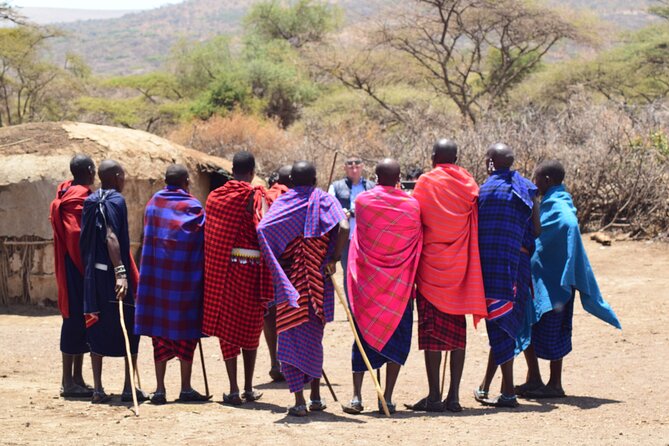
One unusual feature is the chance to see, and according to the itinerary possibly stay in, a Maasai hut known as a boma. The supplied schedule says you check into your hut for the night, although the overall product is described as a one-day, nine-hour trip that ends back at the meeting point.
That is not a minor wording issue. An overnight stay changes what you pack, how much time you need, and what you pay for. It also changes the experience itself, since sleeping in a village hut offers a different connection to the setting than a daytime visit.
Before booking, ask these direct questions:
- Is this strictly a day trip, or does it include one night in a hut?
- If there is an overnight stay, is bedding supplied?
- What time do you return to Arusha?
- Is the hut private or shared?
- Is dinner included, or only lunch?
Do not assume the answer from the title alone. The clearest confirmed meal is lunch, which is included with the tour. The itinerary also refers to a cook, but it does not clearly list breakfast or dinner.
Even without an overnight stay, seeing a boma helps you understand how architecture responds to local needs. The hut is not just a photo backdrop. It is a chance to discuss domestic life and how families use their living space. One especially appealing part of the experience is the opportunity to see how children are treated within the community, a detail that made a strong impression on people who took part.
More day trips in Arusha:
- Materuni Waterfalls & Chemka Hotsprings Day Trip
★ 5.0 · 214 reviews - Materuni waterfalls coffee tour & Chemka hot springs Day trip
★ 5.0 · 131 reviews - Ngorongoro Crater Day Trip
★ 5.0 · 72 reviews - From Arusha/Moshi: Kilimanjaro Hike Marangu Route Day Trip
★ 4.5 · 54 reviews
The small museum gives the visit structure
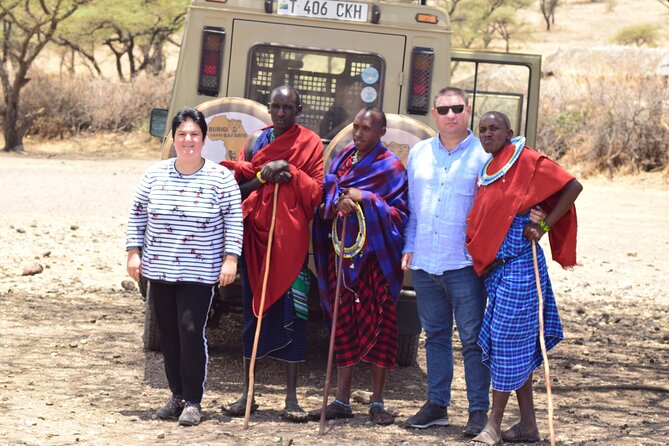
The museum is described as a precious little collection focused on Maasai history, social organization, and tools. Its size is probably a virtue. You are not being asked to spend hours reading displays. Instead, the museum can provide a compact introduction before or alongside the village walk.
This is where the day moves beyond colorful clothing and ceremony. You can connect what you see outside with the objects and explanations inside. Traditional tools become practical items, not curiosities. Social organization becomes something you can use to understand the village rather than a phrase in a brochure.
A guide’s ability to explain these subjects will shape the visit. One positive detail in the supplied feedback concerns a Maasai guide who explained the history of the people clearly. No guide’s name is provided, so I cannot promise a particular person, but it is worth asking whether a local Maasai guide will lead the village portion and whether an English-speaking guide accompanies the drive.
Communication is described as easy, but you should still expect differences in language and interpretation. Maa is the Maasai language, and English may be used through the tour team. The quality of translation and the time allowed for questions can make a major difference, especially if you want more than a quick photo stop.
Fire making, clothing, beads, and daily customs
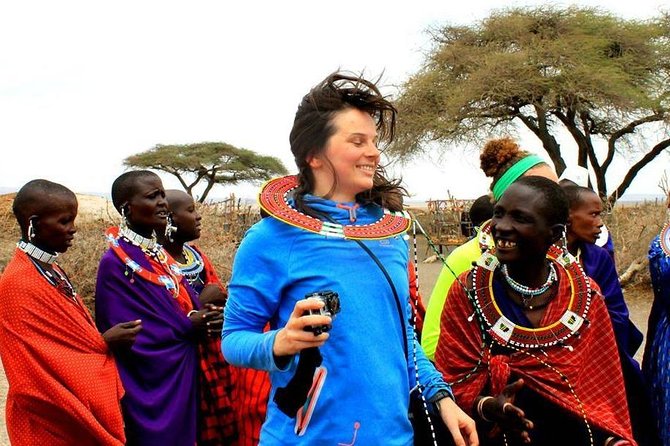
The activities described across the experience include learning how to make fire locally, seeing traditional clothing, handling or trying on garments, and looking at beadwork. These details give you a more practical understanding of Maasai life.
Fire making is particularly useful because it turns a familiar subject into a hands-on lesson. You are not only told that traditional methods exist. You may see how the process works and understand the skill involved. The activity is also a good reminder that modern life and older customs do not need to be treated as opposites.
Clothing and beads are likely to be a major part of the visual experience. You may have the chance to try on some clothing and take photographs with beadwork. Ask before handling anything, and expect opportunities to buy souvenirs or locally made items, although personal purchases are not included in the price.
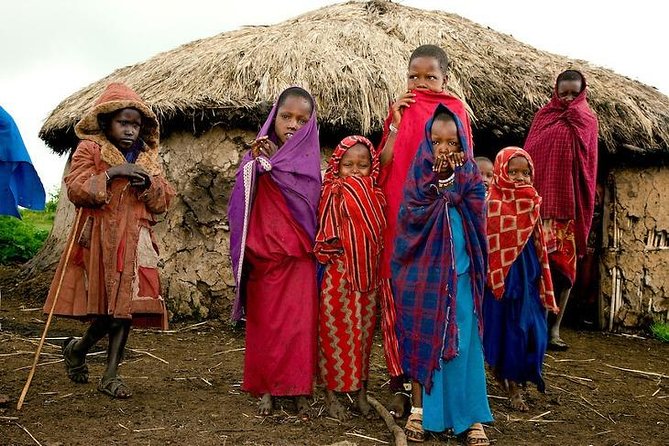
The social side of the day is just as important. You may meet local people, spend time near families, and see children around the village. That contact can be rewarding, but it calls for good manners. Do not assume that every child wants to be photographed or touched, and follow the guide’s advice.
Lunch and what the $380 price covers
The price is $380 per person. That is a serious amount for a one-day cultural outing, so the value depends on the details of your pickup, group size, vehicle, and guide service.
The fee includes lunch, all fees and taxes, a private car, wages, a guide, and a cook. That makes the price easier to understand if you value private transport and a staffed experience. You are not paying only for entry to a village. You are paying for the drive, planning, food, vehicle, and people who operate the day.
Still, the group information needs clarification. The activity says the maximum is 198 people, while the inclusions describe a private car. Those details do not naturally fit together. A group of that size would feel very different from a private cultural visit, particularly during the museum stop, village walk, and dance.
Ask whether your booking is private, shared, or part of a larger departure. Also ask what kind of vehicle is used and whether your own party has a dedicated guide. These questions matter more than a small price difference because they determine how much time you get to ask questions and how comfortable the road journey will be.
Lunch is included, but personal items are not. Budget separately for tips, souvenirs, travel insurance, medical repatriation, visa fees, and international or domestic flights.
Who will enjoy this day most
This experience suits you if you want a cultural counterpoint to safari drives around Tarangire, the Ngorongoro Crater, or the Serengeti. It also works well for a first visit to Tanzania when you want one day focused on local life rather than animals.
Families may appreciate the welcoming atmosphere and the chance to see how children live in a Maasai community, although the tour involves road time, walking, outdoor heat, and active dancing. People interested in photography will find plenty of color and movement, but should make consent a priority.
It may be less suitable if you want a quiet museum tour, a luxury day with little physical activity, or a tightly timed schedule with no uncertainty. The itinerary contains enough contradictions that planners who need exact timings should confirm every practical detail before booking.
The experience is also a good fit for people who enjoy joining in. You may be asked to dance or jump with a group, and that is more fun if you are willing to participate rather than watch from the edge.
Booking details and the sensible questions to ask
Pickup is offered, and the listed meeting point is Arusha Tourist Inn, JMGJ+9QV, Sokoine Road, Arusha. The stated start time is 8:30 am, and the activity is supposed to end back at the meeting point.
Confirmation is provided at booking. A mobile ticket is available, and public transportation is nearby. Most people can participate, but the day still requires enough mobility for a village walk and an active welcome.
The stated operator is Tanzania Serengeti Safaris, while the experience title identifies Burigi Chato Safaris Ltd. Confirm the company name and the phone number you should use on the morning of pickup. That is especially useful because the supplied material uses both names.
The cancellation terms are straightforward: cancel at least 24 hours before the local start time for a full refund. Inside 24 hours, you receive no refund and changes are not accepted. The experience also depends on good weather. If poor weather causes cancellation, you should be offered another date or a full refund.
Should you book the Olpopongi day trip?
I would book this if you want a direct cultural experience with dancing, village life, a museum visit, traditional fire making, and a chance to see a Maasai boma. The welcome, local contact, and setting near Kilimanjaro give the day a clear identity, and lunch and transport are already covered.
I would not book it without first resolving the Arusha and Moshi routing, the possible overnight stay, and the private-car versus 198-person group description. Those points could be simple wording problems, but they affect the value of a $380 purchase.
Ask for a written hour-by-hour plan. If the answer confirms a private or small-group vehicle, a local Maasai guide, the exact meal plan, and a true nine-hour return to Arusha, this can be a worthwhile cultural addition to a Tanzania safari. If the operator cannot explain those basics, choose a tour with clearer scheduling.
FAQ
Where does the tour start?
The listed meeting point is Arusha Tourist Inn on Sokoine Road in Arusha, Tanzania.
What time does the tour start?
The stated start time is 8:30 am.
Where does the tour end?
The activity is scheduled to end back at the meeting point in Arusha.
How long does the experience last?
The tour is advertised as lasting approximately nine hours.
How far is Olpopongi from Moshi?
Olpopongi is described as 74 kilometers from Moshi, with an estimated drive of about two hours.
Is pickup available?
Yes. Pickup is offered, although you should confirm the exact pickup arrangement and address with the operator.
What is included in the price?
Lunch, all fees and taxes, a private car, wages, a guide, and a cook are included.
What is not included?
International and domestic flights, tips for the guide and cook, souvenirs, travel insurance, visa fees, medical repatriation, and personal items are not included.
Will I see Mount Kilimanjaro?
You may see Mount Kilimanjaro and Mount Meru on clear days. The views depend on weather conditions.
Is an overnight stay included?
The information is unclear. The itinerary mentions checking into a hut for the night, while the overall experience is described as a nine-hour day trip. Confirm this directly before booking.
Newly listed around Arusha
- 5-Day Private Safari Tour in Tanzania’s Wildlife★ 5.0 · 3 reviews
- 3 Days private safari Tarangire ,Ngorongroro crater &Manyara★ 5.0 · 3 reviews
- 3 Day Sharing Safari – Manyara, Ngorongoro Crater and Tarangire National Parks★ 5.0 · 3 reviews
- Tarangire National Park Day Trip★ 5.0 · 3 reviews
- 2 Days Tarangire and Ngorongoro Crater Tour★ 5.0 · 3 reviews
- 6 -Day Tarangire, Manyara, Serengeti & Ngorongoro★ 5.0 · 3 reviews
- 5 Days Group Camping Safari★ 4.7 · 3 reviews
- 4 Days Tanzania Safari★ 4.5 · 3 reviews
Maasai Village Visits, compared.

5 Days Camping Tarangire, Serengeti & Ngorongoro crater & Visiting Maasai
Read our review →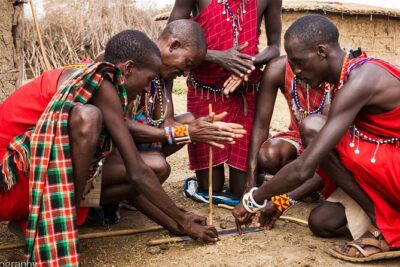
Maasai village visit, Materuni waterfalls & coffee experience
Read our review →5 Days Camping Tarangire, Serengeti & Ngorongoro crater & Visiting Maasai
Read our review →
7-Day Private Tanzania Safari with Sunset Walking on the Crater Rim and Maasai
Read our review →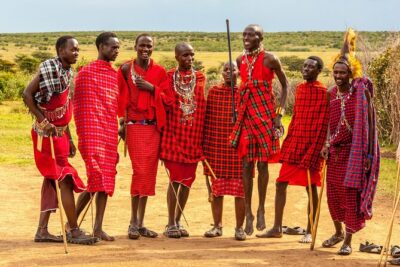
Maasai village visit and Chemka hot-springs with hot lunch.
Read our review →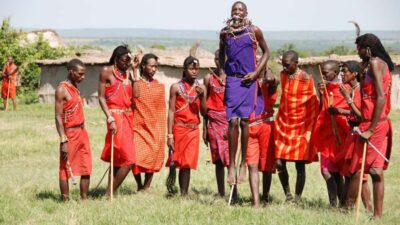
Kilimanjaro: Maasai Village Visit, Waterfalls, & Coffee Tour
Read our review →Browse the lists this tour appears in