Reviewed · ZANZIBAR TOURS
Welcome Zanzibar : A Journey through time for the Old Town
Stone Town reveals itself best on foot, one narrow lane at a time. With local guide Ally, you trace Zanzibar’s past through carved doors, old mansions, the Old Fort, Darajani Bazaar, churches, and the former slave market. The setting is compact, but the stories reach across African, Arab, Indian, Portuguese, Omani, and European influence.
I like two things here: Ally’s flexible pace and the chance to see more than the headline sights. He is praised for stopping when needed, answering questions patiently, helping with directions and restaurant ideas, and even adjusting plans in rain. The private format also means your group can focus on architecture, language, markets, or painful chapters of the past.
The main consideration is that this is a walking tour through tight lanes, with a moderate fitness requirement and no food, drinks, or entrance fees included. The $20 price is attractive, but you should budget extra for the Old Slave Market and the Swahili House rooftop view if you choose to enter.
Key points at a glance
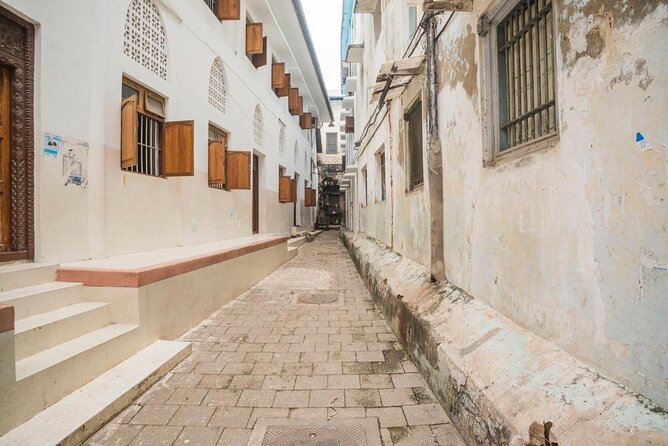
- Carved doors and narrow lanes: Look up often to see one of Stone Town’s most distinctive details.
- A private tour for $20: Your group walks with Ally rather than joining a large shared outing.
- History beyond the postcard sights: The route covers the Old Fort, Sultan’s Palace area, former slave market, churches, mansions, and market streets.
- A guide who adapts: Ally can adjust the pace, answer questions, and shape the walk around your interests.
- A useful first-day introduction: The tour helps you get your bearings before exploring Stone Town alone.
- Extra costs are limited but real: Food, drinks, tips, personal purchases, and selected entrance fees are not included.
Why Stone Town works best as a walking tour

Stone Town is not a place you understand from a vehicle window. Its narrow streets twist around old buildings, small shops, courtyards, and doorways. A walking tour gives you time to stop, look up, ask questions, and notice how the town changes from one lane to the next.
The area is a UNESCO World Heritage Site, but that label only hints at the experience. The real pleasure is in the details: carved wooden doors, weathered façades, shaded passages, and the way several cultural traditions meet in one small district. You may see African forms beside Arab and Indian design, with Portuguese and European traces folded into the town’s story.
I would use this as an early Stone Town activity. It gives you a mental map of the old center, so later walks feel less confusing. It can also help you decide where to return for shopping, a meal, sunset, or a closer look at a building you passed too quickly.
This is not a bus tour with a long list of stops. It is a private walking experience lasting about two to three hours. That shorter length suits most people who want a clear introduction without giving up half a day at the start of a Zanzibar stay.
A few more Zanzibar days to compare
- From Zanzibar: Mikumi Safari Day Trip with Flights and Meal
★ 4.7 · 1,470 reviews - Zanzibar: Quad Bike Adventure departing from Kendwa or Nungwi
★ 4.9 · 1,233 reviews - Zanzibar: Stone Town, Spice Tour, Prison Island with Lunch
★ 4.4 · 1,219 reviews
Meeting Ally near Forodhani
The stated meeting point is Forodhani in Stone Town, and the walk ends back there. Pickup is offered, but collection outside Stone Town may require an earlier message and may not be included. Confirm the exact meeting plan before you set out, especially if you are staying elsewhere on the island.
Ally is the guide named for this experience. The available feedback repeatedly highlights his warm manner, calm pace, clear explanations, and quick communication through WhatsApp. One solo guest booked at short notice and received a fast response, which is useful if your plans are still shifting.
He also appears comfortable with different types of visitors. People have used the walk as a solo outing, a couple’s activity, and a private tour for friends. English is used during the tour, and one pair who did not speak it as a first language still found the explanations easy to follow. Ally has also helped visitors practice Swahili, adding a small local touch without turning the walk into a language class.
The pace matters. Stone Town’s lanes are easy to explore slowly, but the heat, uneven walking surfaces, and frequent stops can make a rushed itinerary unpleasant. Ally has been praised for walking at a comfortable speed and stopping when needed. If you have a mobility concern, discuss it before booking, since the activity calls for a moderate level of fitness.
Carved doors, mansions, and the first look at Stone Town

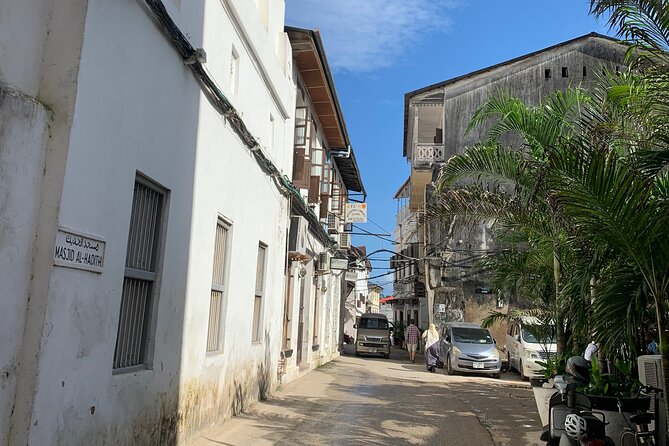
The walk begins with Stone Town itself rather than a single monument. You move through winding streets and alleyways lined with colorful houses and shops, learning how the town grew and changed over time.
The doors deserve your attention. Their carved panels and heavy construction are among the city’s most recognizable features. Some are grand and carefully decorated, while others are worn by age and daily use. They are not just pretty backdrops for photographs. They point to the wealth, trade, status, and cultural influences of the families who lived behind them.
This is where a guide adds real value. Without context, you might photograph a doorway and keep walking. With Ally, you can ask what makes a design distinctive, how the surrounding architecture fits together, or which buildings once belonged to important families. The available comments also describe stops at mansions, churches, the House of Wonders, and other major buildings.
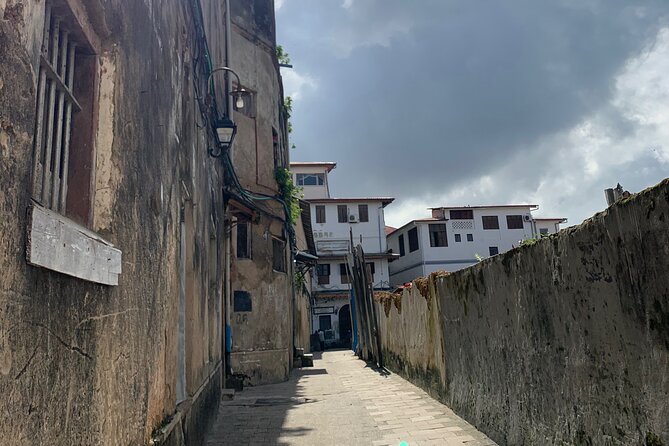
The route can include lesser-known lanes as well as the main sights. That balance is important. Stone Town is more than a checklist of monuments, and the smaller passages often give you a better sense of its everyday character. At the same time, you should understand that the exact order may change according to timing, interests, weather, or access.
The Old Fort and the layers of power
The Old Fort is one of the clearest physical reminders of Stone Town’s changing rulers. It was built by the Portuguese in the seventeenth century and later used by the Omani Arabs. The thick walls and imposing form make it an easy landmark, but the bigger value lies in understanding why it was built and how control of Zanzibar shifted.
This stop gives the tour a useful political frame. Stone Town was not shaped by one culture or one period. African communities, Arab rulers, Indian merchants, Portuguese forces, and later European interests all left marks on the island and its port.
You can expect the guide to explain the fort’s place in the wider story rather than simply point out its walls. That kind of background helps the rest of the walk make sense. The architecture, trade routes, religious buildings, and grand houses are connected to the same long contest over commerce and power.
The tour includes passing by major historical sites, but entrance charges are not included. The information supplied for this experience specifically lists an entrance fee for the Old Slave Market and an admission fee for the Swahili House rooftop view. The Old Fort may be seen as part of the walk, but you should ask Ally about any current charge if you want to enter a specific site.
A change of scene while you are in Zanzibar:
- From Kendwa: Mnemba Boat Trip and Dolphin Snorkel Adventure
★ 4.8 · 1,043 reviews - From Zanzibar: Day Selous Game Reserve Safari with Flights
★ 4.7 · 1,025 reviews - Zanzibar: Prison Island and Nakupenda Boat Trip with Lunch
★ 4.1 · 882 reviews - Skydive Zanzibar | Tandem Skydive
★ 5.0 · 877 reviews
Darajani Bazaar and the everyday side of Zanzibar

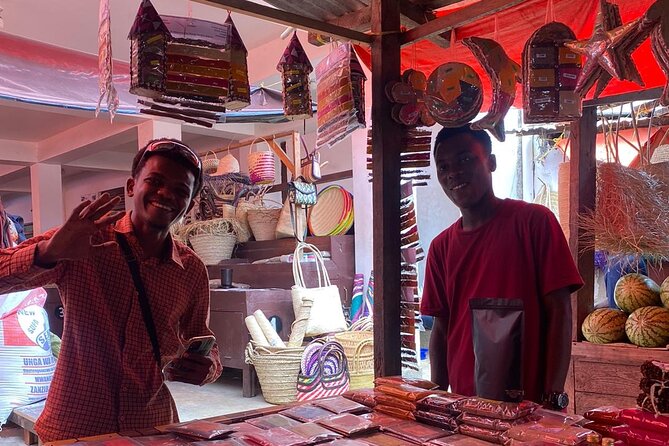
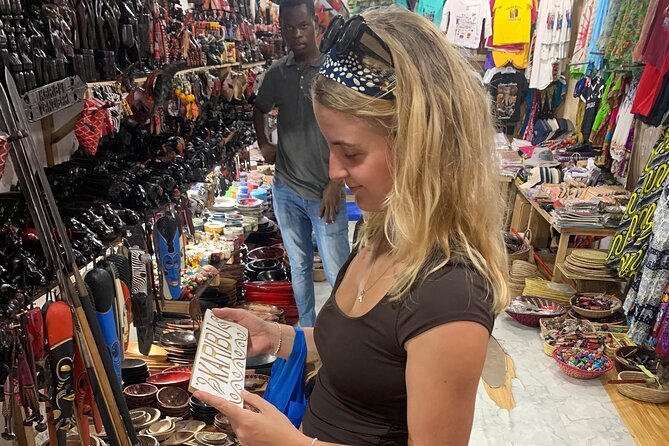
Darajani Bazaar brings a different mood from the monumental buildings. It is a working market where you can look for spices, souvenirs, and local products. This is a place for the senses, but it is also a good chance to see how Stone Town functions beyond its historic façades.
I like having a guide nearby in a market because the experience can otherwise feel scattered. Ally can help explain what you are seeing and point you toward products that interest you. You still need to make your own choices and handle purchases yourself, since personal shopping costs are not included.
Do not expect a polished shopping center. Market streets can be crowded, noisy, and visually busy. Keep your belongings secure, stay aware of other pedestrians, and avoid assuming that every spice or souvenir is a bargain. The value here is less about buying a large haul and more about seeing a part of local commerce while learning how it fits Stone Town’s story.
If you want time to shop, say so at the start. A two-hour walk can pass quickly, and lingering at the market may reduce time at other sites. The private format makes that conversation easier than it would be on a fixed group schedule.
The former slave market and a difficult chapter
The former slave market is among the most serious stops on the route. It connects Stone Town to Zanzibar’s role in the East African slave trade and gives the tour a moral and historical weight that a sightseeing walk should not avoid.
This section may be emotionally difficult. The best way to approach it is with patience and respect, not as a quick photo stop. Ask questions if you want more context, and allow time to absorb what you are seeing.
An entrance fee applies here and is not part of the $20 tour price. That separation keeps the base cost low, but it also means you need to carry some extra money if you want the full visit. Ask Ally about the current fee and opening arrangements when you meet.
The inclusion of this site is important because it prevents Stone Town from being reduced to attractive doors and ocean views. The town’s past includes trade, wealth, faith, architecture, and suffering. A useful guide helps you hold those parts together without glossing over the painful ones.
Sultan’s Palace, the House of Wonders, and grand buildings
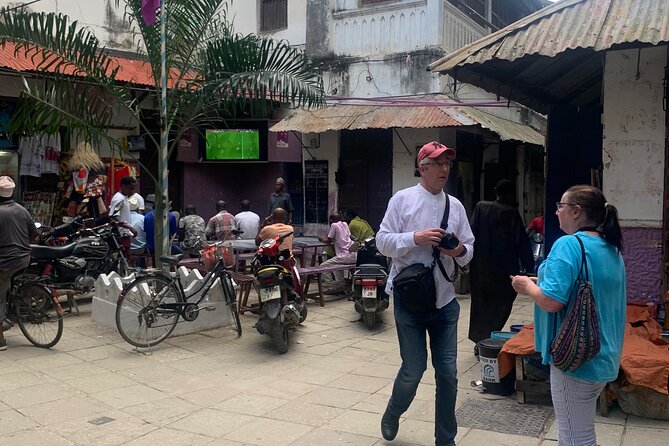
The route also takes in the Sultan’s Palace area and other major buildings associated with Zanzibar’s ruling families and public life. The House of Wonders is among the landmarks discussed on the walk, along with churches and old mansions.
These stops show how Stone Town once served as a center of government, trade, religion, and social life. You might find that the buildings are more compelling when you learn how their functions changed over time. A palace is not simply an impressive façade, and a church in this setting adds another piece to the town’s cultural story.
The condition of historic buildings can vary, and not every site will feel polished or fully restored. That is part of the experience, but it is also why the guide’s explanation matters. You are looking at a living town, not a museum arranged behind glass.
The route can be tailored to your interests. If architecture is your priority, ask for extra attention to doors, mansions, and public buildings. If you want social history, request more explanation about trade, religion, and the former slave market. If you are using the walk to plan the rest of your stay, ask for restaurant and excursion suggestions. Ally has helped people with ideas for later activities, including snorkeling and other Zanzibar outings, but those are separate arrangements.
The Swahili House rooftop view
A rooftop stop at a Swahili house is available for an additional admission fee. It offers a change of perspective after walking through the lanes, allowing you to look across the old town rather than only at the walls beside you.
The rooftop visit is optional, so it will suit some people more than others. I would consider it if you enjoy seeing how the streets fit together or want a pause during the walk. If you are keeping costs tight, you can skip it and still receive the main walking tour.
The activity description also allows for an afternoon walk with a sunset view, depending on the schedule. That sounds appealing, but sunset timing and the final viewpoint should be confirmed with Ally rather than assumed. The supplied details do not promise a specific rooftop or sunset time on every booking.
What the $20 price really buys
At $20 per person, this is an inexpensive way to get a private introduction to Stone Town. The price covers a local tour guide, explanations of Zanzibar’s past, and passage by the principal historical sites. For a small group, that is strong value, especially if you want to ask questions without holding up strangers.
The low price does not mean the whole outing is cost-free. You pay separately for food, drinks, tips, personal purchases, the Old Slave Market entrance, and the Swahili House rooftop admission. Pickup to locations outside Stone Town may also require advance planning and could involve an additional charge.
I would bring water, sun protection, comfortable shoes, and some local currency for entrances or market purchases. These are simple preparations, but they make a difference during a warm walk through narrow streets.
Tips are not included. If Ally gives you a useful orientation, adjusts the pace for your group, or spends time on questions, a gratuity is an appropriate way to recognize that service. It is not compulsory, but it should be part of your budget.
How the private format changes the experience
This is a private activity, so only your group participates. That gives you more control over the pace and subject matter. A solo visitor can keep moving without waiting for a large party, while a couple or family can pause for photographs or questions.
The tradeoff is that a private walking tour depends heavily on the guide and the communication before arrival. Here, Ally’s quick WhatsApp contact is useful. Send your pickup details, interests, and any physical limitations early rather than trying to sort everything out at Forodhani.
The guide has also shown flexibility in poor weather. One outing continued during rain with umbrellas arranged along the way, but you should not treat that as a guarantee of identical arrangements. Ask about the forecast and meeting plan if conditions look uncertain.
Free cancellation is available if you cancel at least 24 hours before the local start time. Cancellations within 24 hours are not refunded, and late changes are not accepted. That policy is reasonable for a private guide, but it makes early planning important if your ferry, flight, or hotel schedule is unsettled.
Who should book this Stone Town walk
I would recommend it to first-time visitors who want orientation, couples who prefer a private pace, solo visitors looking for a friendly local contact, and anyone who enjoys architecture and social history. It is also a good choice if you have only a few hours between arriving in Zanzibar and checking into your accommodation.
The tour suits you best if you are comfortable walking for two to three hours and handling narrow streets. It is less suitable if you need step-free access, want a vehicle-based sightseeing trip, or expect meals and entry tickets to be bundled into the price.
It also works well for people who want conversation rather than a memorized speech. Ally’s style, based on the available details, is relaxed and responsive. You can ask about carved doors, practice a little Swahili, discuss restaurants, or focus on the particular historical subjects that interest you.
Should you book Fun Beach Zanzibar Tours?
Book this walk if you want a low-cost, private introduction to Stone Town led by Ally, with the freedom to ask questions and adjust the pace. The strongest reasons are his patient manner, quick communication, local perspective, and coverage of both famous buildings and quieter lanes.
Before booking, be clear about the extras. Confirm pickup, ask about the entry fees you want to pay, and decide if the Swahili House rooftop is worth adding. If you prepare for a moderate walking effort and approach the former slave market respectfully, this tour offers a useful and human-scale first look at Zanzibar’s old town.
FAQ
Where does the tour start?
The tour starts at Forodhani in Stone Town, Zanzibar.
Where does the tour end?
The activity ends back at the meeting point in Forodhani.
How long does the Stone Town tour last?
The tour lasts approximately two to three hours.
Is pickup available?
Pickup is offered. Pickup to places outside Stone Town should be requested in advance by sending the provider a message.
Is this a private tour?
Yes. Only your group participates in this private activity.
What is included in the price?
The price includes a local tour guide, information about Zanzibar’s past, and visits or pass-bys at major historical sites.
Are entrance fees included?
No. The Old Slave Market entrance and the Swahili House rooftop admission are not included.
Are food and drinks included?
No. Food and drinks are not included.
Can I cancel for a full refund?
Yes, if you cancel at least 24 hours before the experience start time. Cancellations within 24 hours are not refunded, and late changes are not accepted.
Newly listed around Zanzibar
- Zanzibar: Nungwi/Kendwa Beach Sunset Dhow Cruise with Fruits★ 3.4 · 3 reviews
- Prison Island, Sea Turtles, Rock Restaurant & Relax in Beach★ 4.6 · 3 reviews
- Starfish Beach; The Rock; Kuza Cave; Paje Beach; Salaam Cave Tour★ 4.5 · 3 reviews
- Zanzibar: Half-Day Spice Farm Tour,the flavours of Zanzibar★ 4.7 · 3 reviews
- Joazani forest & Spice farm with lunch★ 5.0 · 3 reviews
- Nakupenda Island Snorkeling Sea trip & Lunch W/Transfer -Zanzibar★ 4.0 · 3 reviews
- Mnemba Island Snorkeling and Dolphin tour★ 5.0 · 3 reviews
- Zanzibar:Jozani forest, Spice farm with Swahili Cuisine clas★ 4.2 · 3 reviews
Zanzibar Tours, compared.