Reviewed · ZANZIBAR TOURS
Village Tour With Witch Doctor Visit
The most unusual part of this Zanzibar tour is the visit to a working traditional healer who uses plant-based remedies. Before that, you’ll see the practical side of village life in Jambiani, from seaweed farming and coconut-fiber rope making to a women’s handicraft group, school, and hospital.
I like the private format, which lets you ask questions and set a comfortable pace. I also like that lunch and bottled water are included, while air conditioning makes the long ride from Zanzibar City much easier. The main consideration is the drive: the village is about 90 minutes from the port, so roughly three hours of your six-hour outing may be spent on the road.
Key points at a glance

- Meet a working traditional healer: Learn how natural medicines are prepared and used in the village.
- See several sides of Jambiani life: The visit includes handicrafts, seaweed farming, a school, a hospital, and rope making.
- Travel privately: Your group has its own guide and vehicle, allowing time for questions and a more personal visit.
- Expect a long transfer: The trip from Zanzibar City to the village takes about 90 minutes each way.
- Lunch and water are included: You do not need to pay extra for the midday meal or bottled water.
- A real cultural exchange: Guide Abdul lives in the village, giving the tour a local connection rather than a quick sightseeing stop.
From Zanzibar City to Jambiani

This is a six-hour experience beginning at 8:00 in the morning. Pickup is offered, and the trip uses an air-conditioned vehicle. That matters in Zanzibar, where a comfortable car can make the difference between arriving ready to explore and arriving worn out.
The ride to Jambiani takes about 90 minutes from the port, according to the tour details. You should think of the transfer as part of the day, not a minor trip between attractions. The distance gives you a look at more of Zanzibar, but it also limits how much time you can spend at each village stop.
A private group is a strong advantage here. You are not being moved through the village in a large crowd, and you can ask Abdul to explain a detail that catches your attention. Previous bookings have also included drivers named Achmec and Zahran, both described as attentive during the journey and helpful with questions.
The exact meeting point is not specified beyond an 8:00 a.m. start and pickup availability. Confirm your pickup details at booking, especially if you are coming from the port rather than a hotel.
A few more Zanzibar days to compare
- From Zanzibar: Mikumi Safari Day Trip with Flights and Meal
★ 4.7 · 1,470 reviews - Zanzibar: Quad Bike Adventure departing from Kendwa or Nungwi
★ 4.9 · 1,233 reviews - Zanzibar: Stone Town, Spice Tour, Prison Island with Lunch
★ 4.4 · 1,219 reviews
Jambiani’s women’s handicraft group
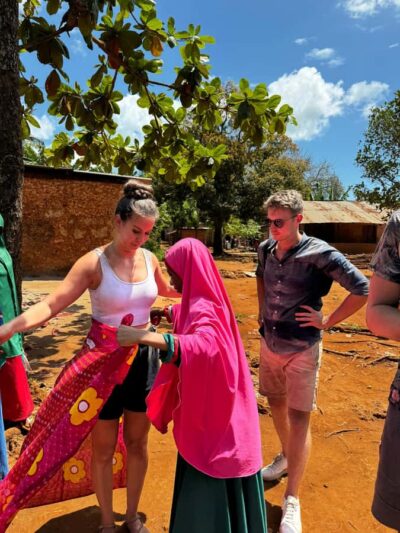
The first village visits focus on work done by local women. At the handicraft collective, you can see how small-scale craft production fits into daily life and the local economy.
This stop is more useful if you treat it as a chance to ask questions rather than simply browse products. Ask who makes the items, what materials are used, and how the group sells its work. The tour is designed to show how people live and work, not just to place you in front of a shop.
If you want to support local makers, this is likely one of the more direct ways to do so during the day. Still, the supplied details do not promise that shopping is required or that specific crafts will be available for purchase. Bring an open mind, and do not expect a polished market or a large selection.
The setting also helps put the later stops in context. Handicrafts, seaweed, coconut fiber, and natural medicine are all tied to practical skills passed through the community.
Seaweed farming by the coast
Seaweed farming is one of the clearest windows into the working life of coastal Zanzibar. You will learn about how seaweed is harvested and why this work matters to village families.
The visit is not described as a boat trip or a hands-on harvest session, so expect an explanation and a look at the activity rather than a water-based excursion. Conditions may affect what you see on the day. Seaweed farming depends on the shore and the work cycle, and the tour does not promise a particular harvest stage.
I like this part because it moves beyond postcard Zanzibar. Beaches are easy to admire, but seaweed farming shows how the coast supports households. Your guide can help connect the scenery with the labor behind it.
Wear clothing suitable for a village walk and warm weather. The tour includes bottled water, but you should still use it. The day begins early, yet Zanzibar’s heat can build quickly.
A school and hospital in everyday context
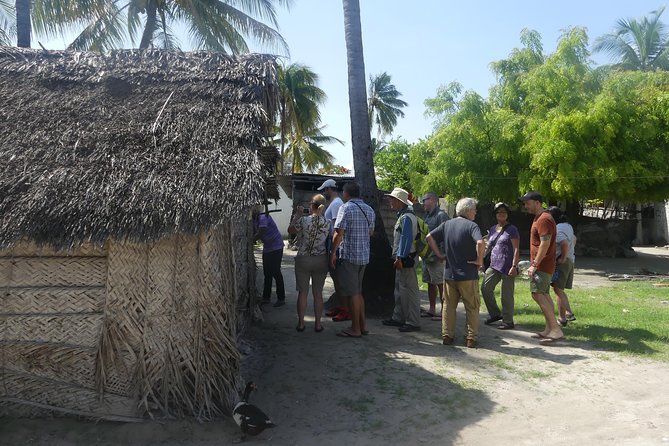
The itinerary includes a local school and a hospital. These stops offer a look at the services used by people in the village, but they should be approached with care and respect.
The available details do not promise a guided tour of classrooms, medical rooms, or staff areas. You may see the buildings and learn how they serve the community, but access can depend on local schedules and privacy needs. A school or hospital is not a standard sightseeing attraction, and the experience may feel quieter and less structured than the other stops.
That is also its value. These places show the ordinary systems behind village life. You can ask Abdul how the school and hospital fit into the area, but avoid treating patients, pupils, or staff as part of the entertainment.
This stop may be especially worthwhile if you want social context rather than a day built only around scenery. It also helps balance the more distinctive elements of the visit, such as rope making and the traditional healer.
A change of scene while you are in Zanzibar:
- From Kendwa: Mnemba Boat Trip and Dolphin Snorkel Adventure
★ 4.8 · 1,043 reviews - From Zanzibar: Day Selous Game Reserve Safari with Flights
★ 4.7 · 1,025 reviews - Zanzibar: Prison Island and Nakupenda Boat Trip with Lunch
★ 4.1 · 882 reviews - Skydive Zanzibar | Tandem Skydive
★ 5.0 · 877 reviews
Making rope from coconut husk fiber
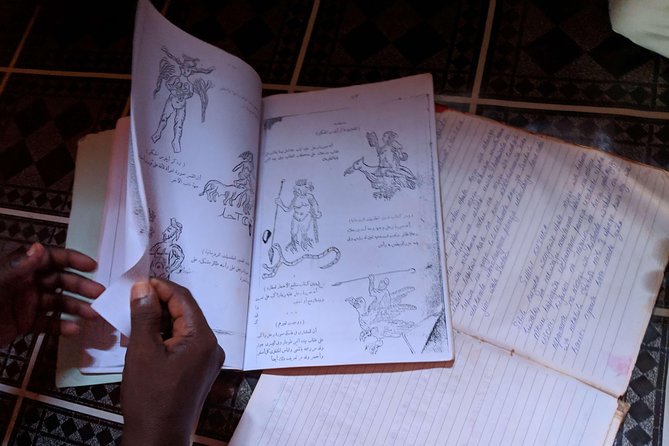
After the village walk, a local woman demonstrates how rope is made from coconut husk fibers. This is a small process, but it is one of the tour’s most memorable details because it turns a familiar tropical product into a useful household material.
You will see the fiber being worked into rope and learn how local skills make use of the coconut beyond its food and drink. The description does not guarantee that every participant will make a full piece of rope, but the demonstration explains the process directly.
I would pay close attention here and ask to handle the material if the guide and demonstrator invite you to do so. The best moments on this tour are likely to come from these simple exchanges, not from formal displays.
The stop also gives you a better sense of resourcefulness in village life. Coconut husks that might look like waste become something practical. That lesson connects neatly with the seaweed farming and handicraft visits.
Meeting the traditional healer
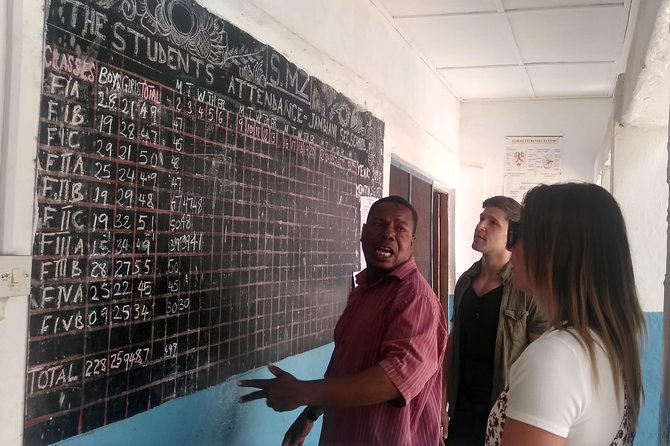
The visit to the traditional healer is the tour’s most distinctive feature. The healer is still working and helps local people with old forms of natural medicine.
The wording witch doctor appears in the tour name and description, but traditional healer is the more respectful term to use. You will learn about remedies based on plants and other natural materials. The details do not promise a medical consultation, diagnosis, or treatment for you, so approach this as a cultural meeting rather than a substitute for professional healthcare.
One booking included a herbal remedy that the participant felt helped a chronic headache. That is an individual experience, not proof that a remedy will work for you. If you have a medical condition, take prescribed medicine as directed and do not replace medical care with an unverified treatment.
Still, the encounter can be valuable. Traditional medicine is part of how some communities understand health, healing, and the natural world. Ask Abdul to explain what you are seeing, and listen respectfully to the healer’s methods. A calm, curious attitude will serve you better than expecting a staged performance.
This stop also gives the tour an edge that a standard village walk lacks. It brings you into contact with a living practice, not only a historical display. The important distinction is that the healer is described as actively working, so the visit relates to present-day village life.
Lunch, water, and the private-tour advantage

Lunch is included at no extra charge, and the tour description specifically notes a home-cooked meal. That is a welcome part of a six-hour outing, particularly after walking between village stops.
The exact menu is not provided, so you should not book expecting a named dish or a restaurant-style choice. The point is the setting and the chance to eat local food as part of the visit. If you have allergies or dietary restrictions, ask about them in advance because no special menu information is provided.
Bottled water is also included. Use it, especially during the village walk and the warmer parts of the day. The air-conditioned vehicle gives you a cool break between stops, but it does not remove the need to stay hydrated.
A private tour also changes the rhythm. You can spend longer at the rope demonstration, ask more questions about seaweed, or request clarification about natural medicine. The guide can respond to your interests in a way that is harder in a large group.
The tradeoff is price. At $96 per person, this is not the cheapest way to see a village. But the price covers a private experience, transportation, a guide, lunch, water, and several different community visits. For a couple or small group, that package can make fair sense. Group discounts may improve the value if you are booking with several people.
What the six hours really give you
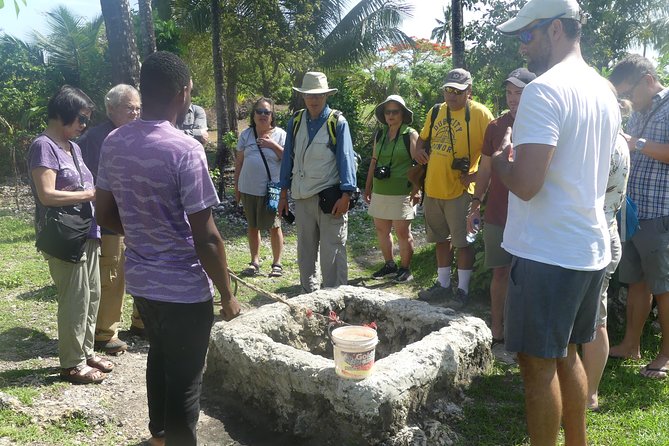
The schedule is broad rather than slow. In one day, you will cover handicrafts, farming, public services, rope making, traditional medicine, lunch, and transport. That variety is useful, but it means no single stop is likely to become a long workshop.
The private setup gives you some flexibility, yet the tour still has a fixed start time and a six-hour overall limit. If your priority is deep study of seaweed farming or traditional medicine, you may want to ask how much time is planned at that stop before booking.
The experience works best when you see it as an introduction to village life. It is not a resort activity, beach day, or formal museum visit. Some parts may feel informal, and the pace may depend on who is available in the village that morning.
That informality is part of the appeal, but it can also create uncertainty. A school or hospital may have limited access. The healer may have other work. The farming activity may look different from what you imagined. Good cultural tours leave room for real life, and real life does not always follow a neat schedule.
Who should book this Jambiani visit?
I would recommend this tour to you if you want to understand more than Zanzibar’s hotels and beaches. It suits people interested in local work, traditional practices, community services, and direct conversation with residents.
It is also a good choice if you prefer a private guide and vehicle. Families, couples, and small groups can ask questions without worrying about holding up a busload of people. The included lunch and water make the long day simpler.
You should think twice if you want a fast, polished sightseeing tour with guaranteed access at every stop. The village settings are working places, not attractions built around visitors. You may need patience and respect, especially at the school, hospital, and healer’s workplace.
The tour is listed as suitable for most people, and service animals are allowed. It is near public transportation, though pickup is offered. The information does not give detailed mobility guidance, so ask the provider about walking surfaces or specific access needs before reserving.
Practical value at $96 per person
The $96 price needs to be judged against what is included. You receive roughly six hours, private transportation in an air-conditioned vehicle, a private guide, bottled water, and lunch. You also visit several parts of Jambiani rather than making a single short stop.
For someone staying in Zanzibar City, the long drive is part of the cost calculation. You are paying not only for village activities but also for the vehicle and driver for the day. If you are already planning to visit Jambiani independently, the added value may be lower. If you want transport and a local guide arranged in advance, the package is easier to justify.
The average booking lead time is 46 days. That suggests you should reserve early if your Zanzibar dates are fixed, particularly if you want a private outing. Confirmation is provided at booking, and the ticket is mobile, so you can keep the booking details on your phone.
Free cancellation is available up to 24 hours before the 8:00 a.m. start time for a full refund. Cancellations or changes made less than 24 hours ahead are not accepted for a refund, with cut-off times based on Zanzibar’s local time.
My recommendation for this village experience
Book the Village Tour With Witch Doctor Visit if you want a personal look at working life in Zanzibar and you are comfortable with a long transfer from Zanzibar City. The best reasons to go are the private guide, the mix of village activities, the home-cooked lunch, and the chance to meet a traditional healer who still practices natural medicine.
I would not choose it for a beach-focused day or for guaranteed hands-on demonstrations at every stop. You are visiting a real community, so the experience may be informal and access may vary.
At $96, the tour offers solid value for a small group that wants transport, guidance, food, and cultural context in one package. Guide Abdul’s local connection is another reason to consider it. If you want to see how people work, make things, farm, heal, and use community services, this is one of the more purposeful half-day outings from Zanzibar City.
FAQ
How long does the village tour last?
The experience lasts approximately six hours.
What time does the tour start?
The stated start time is 8:00 a.m.
Where does the tour take place?
The village visit takes place in Jambiani, Zanzibar, with the tour based from Zanzibar City.
Is hotel or port pickup available?
Pickup is offered. One booking included a driver waiting at the port, but you should confirm your exact pickup point when booking.
Is this a private tour?
Yes. Only your group participates in the private activity.
Is lunch included?
Yes. Lunch is served at no extra charge, and the tour details describe it as home cooked.
Is bottled water provided?
Yes. Free bottled water is provided.
What will I see in Jambiani?
You will visit a women’s handicraft group, seaweed farming, a local school, a hospital, a coconut-fiber rope demonstration, and a traditional healer.
Will I travel in an air-conditioned vehicle?
Yes. Transportation is provided in an air-conditioned vehicle.
Can I cancel for a full refund?
Yes, if you cancel at least 24 hours before the experience start time. Cancellations or changes made less than 24 hours before the start are not accepted for a refund.
Newly listed around Zanzibar
- Prison Island, Sea Turtles, Rock Restaurant & Relax in Beach★ 4.6 · 3 reviews
- Zanzibar: Nungwi/Kendwa Beach Sunset Dhow Cruise with Fruits★ 3.4 · 3 reviews
- Starfish Beach; The Rock; Kuza Cave; Paje Beach; Salaam Cave Tour★ 4.5 · 3 reviews
- Zanzibar: Half-Day Spice Farm Tour,the flavours of Zanzibar★ 4.7 · 3 reviews
- Joazani forest & Spice farm with lunch★ 5.0 · 3 reviews
- Nakupenda Island Snorkeling Sea trip & Lunch W/Transfer -Zanzibar★ 4.0 · 3 reviews
- Zanzibar:Jozani forest, Spice farm with Swahili Cuisine clas★ 4.2 · 3 reviews
- Mnemba Island Snorkeling and Dolphin tour★ 5.0 · 3 reviews
Zanzibar Tours, compared.