
Reviewed · ARUSHA TOURS
PRIVATE Wildebeest Calving Safari, Tanzania, January to March
The heart of this safari is wildebeest calving in Ndutu, where January through March brings newborn calves, large zebra and wildebeest herds, and some of the year’s best predator action. You also get three very different parks: elephant country in Tarangire, the wildlife-packed Ngorongoro Crater, and the broad plains of the Serengeti.
I like the small private setup, with a maximum of six people, and the practical package that includes airport transfers, full-board lodging, park fees, bottled water, and a 4×4 with a viewing roof. The main drawback is the price, $2,400.40 per person, plus a fairly long chain of road transfers. The strict non-refundable policy also means you should have firm travel plans before booking.
Key points to know before booking
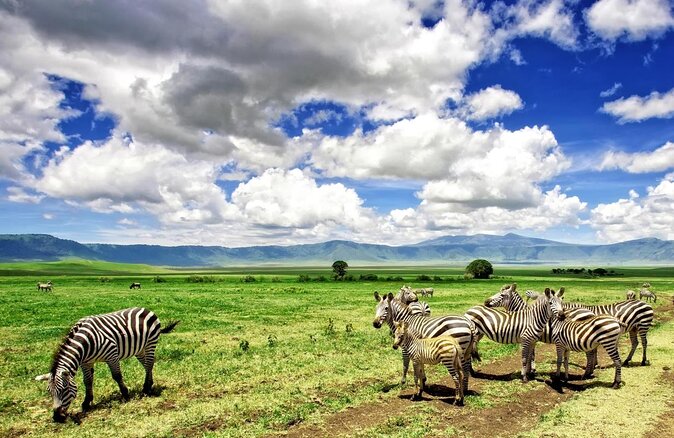
- January to March targets the calving season: Ndutu is the main stage for newborn wildebeest and zebra, with lions and cheetahs close by.
- Three major wildlife areas are included: Tarangire, the Serengeti, and Ngorongoro Crater each offer a different type of safari.
- The group is capped at six people: That gives you a more personal ride than a large coach tour.
- The safari uses a 4×4 with a viewing roof: This is important for game viewing and photography.
- Full board and airport transfers are included: You pay extra for visas, insurance, international flights, optional cultural visits, and some drinks or excursions.
- The schedule is active: Several days involve roughly eight hours of driving and game viewing, so this suits you if you enjoy long days outdoors.
Why the calving season is worth planning around
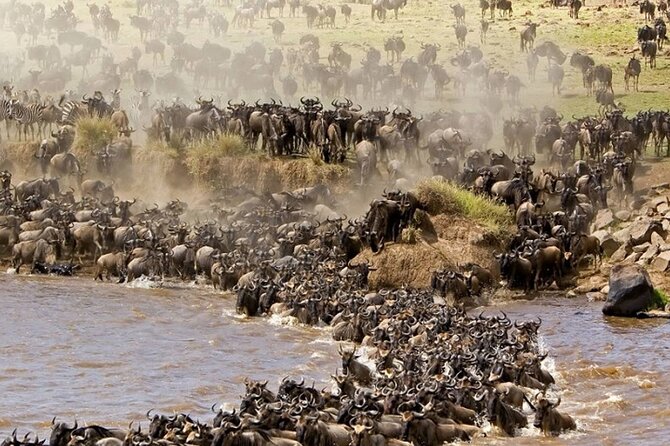
The Great Migration is often sold as a river-crossing event, but January to March offers a different and, for many people, more rewarding scene. Around Ndutu and the southern Serengeti ecosystem, wildebeest gather on short-grass plains to give birth. You may see calves only minutes old, as well as young animals finding their feet and running with the herd.
That concentration of young animals also draws predators. The itinerary specifically points to strong lion and cheetah activity during this period, and resident prides add to the chances of seeing big cats. You might also find hyenas, birds around the marshes and soda lakes, and elephants moving through the area.
Wildlife is never guaranteed, of course. The appeal here is that the timing gives you a sensible reason to visit in this part of the year. If your main goal is newborn wildebeest and predator behavior, this safari is better targeted than a general Tanzania circuit at an unspecified time.
More Safaris in Arusha
- Balloon Safari & Bush Breakfast in Serengeti – Miracle Experience
★ 5.0 · 1,646 reviews - 4 Days Group Camping Safari
★ 5.0 · 1,101 reviews - 5 Days Group Camping Safari
★ 5.0 · 730 reviews
Day 1: Kilimanjaro Airport and a night in Moshi
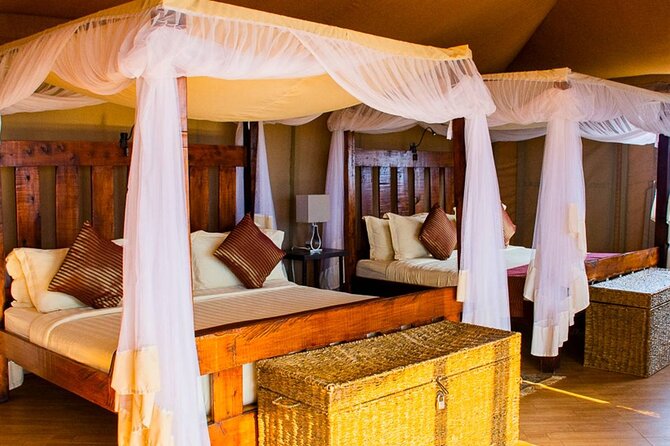
Your arrival day begins at Kilimanjaro Airport, with the pickup time arranged around your flight. You then drive to Moshi for dinner and an overnight stay at Springlands Hotel.
This is a useful first night rather than an immediate push into the parks. International flights can leave you tired, and Moshi gives you a chance to sleep, eat, and prepare for the early start ahead. Airport transfers are included, which removes one of the first practical hassles after landing.
The day is listed at about 12 hours because it covers arrival, transfer, and hotel arrangements. Your exact schedule depends on your flight, so do not treat that figure as a full sightseeing day.
Day 2: Lake Manyara’s forest, lake, and escarpment
After breakfast, you drive to Lake Manyara National Park. The park sits below the steep Rift Valley escarpment and packs several habitats into a relatively small area: groundwater forest, acacia woodland, open grassland, wetland, and the broad lake itself.
That variety helps explain the park’s appeal. You might see buffalo, impala, giraffe, bushbuck, waterbuck, hippos, and elephants, along with blue monkeys, velvet monkeys, and active olive baboons. Birdlife is another reason to pay attention, especially around the wet areas.
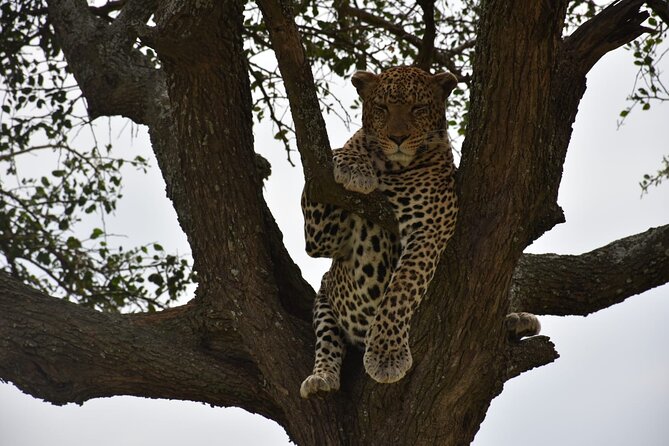
Lake Manyara is also associated with tree-climbing lions. Seeing one is never certain, but the possibility adds a special twist to the game drive. I like this stop because it does not rely only on wide-open plains. The forest and Rift Valley setting give you a change of scenery before the larger Serengeti section.
The tradeoff is time. This is another long day, listed at about eight hours, and it is followed by more road travel on Day 3. If you prefer a slow safari with long rests at one lodge, this program may feel busy.
Day 3: The long road toward the Serengeti
After breakfast, you set out for Serengeti National Park. The name comes from the Maasai language and means endless plain, a fitting description once the road opens into broad grassland.
The transfer is also a chance to add optional cultural and historical stops. A Maasai village visit can introduce local traditions and activities, while Olduvai Gorge offers a look at the archaeological story of human origins in East Africa. Neither stop is included in the base price, so you need to arrange and pay for them separately.
This day is listed at about eight hours. That is a serious road day, but it gets you into one of Africa’s best-known wildlife areas without adding a domestic flight. If you value a continuous overland journey, the road itself becomes part of the experience. If you dislike long drives, ask about a domestic flight option before you commit. Flights from the Serengeti airstrip to Kilimanjaro Airport or Zanzibar Airport can be arranged, but they are not included.
A change of scene while you are in Arusha:
- Tanzania Classic – 7 Days
★ 5.0 · 1,151 reviews - Materuni Waterfalls, coffee tour & Kikuletwa Hot Springs
★ 5.0 · 643 reviews - 3 Days Serengeti & Ngorongoro Group Camping Safari
★ 5.0 · 574 reviews - 7-Day Premium Luxury Tanzania Safari All-Inclusive
★ 5.0 · 426 reviews
Days 4 and 5: Time on the Serengeti plains
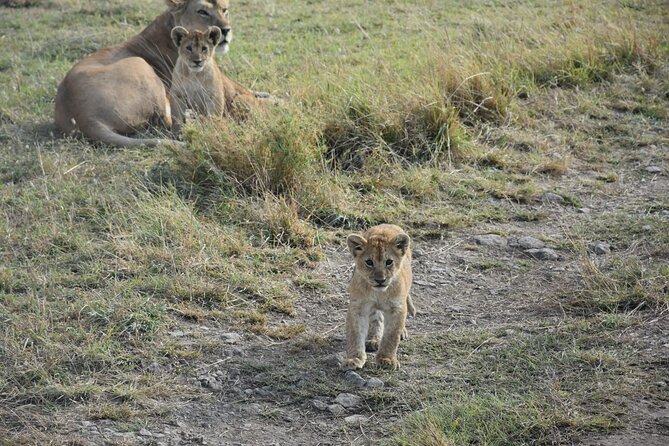
Day 4 gives you a full day in the Serengeti, which is important. A safari can feel rushed when every park gets only a few hours. Here, you have time to look across several types of terrain, including open southern grassland, central savanna with acacia trees, wooded and hilly areas farther north, and the black clay plains in the west.
The Serengeti is known for wildebeest, zebra, antelope, lions, and cheetahs. Rocky kopjes provide useful lookout points and shelter for animals, while the open plains make distant sightings easier. Your guide’s skill in spotting movement and choosing routes matters a great deal in a place this large.
A bush lunch is included in the Serengeti. That means you spend less time returning to a lodge at midday and more time in the park. Bottled water is supplied in the safari vehicle, another small detail that becomes important during long drives.
On Day 5, you take a morning game drive before transferring toward the Ngorongoro Conservation Area. The route connects two parts of the same southern ecosystem, and the timing is designed around the short-grass plains where much of the calving activity is usually found from December through April.
The afternoon includes a game drive after check-in. This can be a productive time because you are already positioned closer to Ndutu for the next day. Still, the day combines a morning drive, a transfer, and another outing, so expect a full schedule rather than a quiet lodge afternoon.
Day 6: Ndutu and the newborn wildebeest
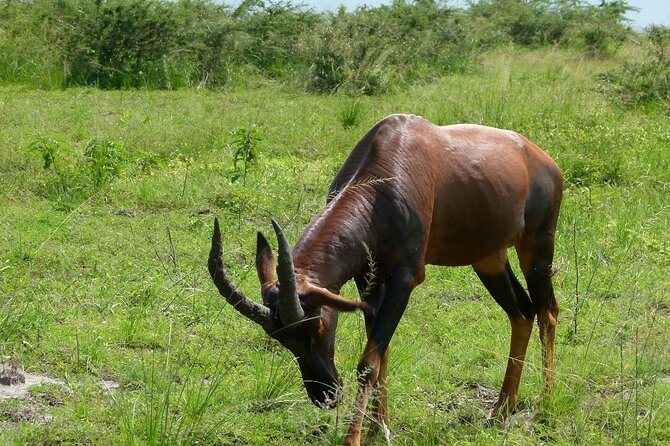
This is the key day for the stated purpose of the safari. You spend the full day exploring Ndutu, an area with swamps, woodland, soda lakes, and short-grass plains. That mix of habitats gives you more than a single view of the migration.
The main sight is the great movement of wildebeest and zebra across the plains. During calving season, newborns can be seen running soon after birth. You should keep your expectations realistic: nature does not follow a timetable, and no guide can promise a birth or a predator encounter. But the season places you in the right area at the right general time.
The predator opportunities are a major reason to spend a full day here. Lions occupy the area, cheetahs are often found on the plains, and wooded ridges deserve a careful look. Marshes and lakes add birdlife, giving you something to watch during quieter stretches.
This is where the private format helps. With no more than six people, you have a better chance of discussing sightings, photography, and route choices with your guide. Past praise for the operator has singled out guides named Martin, Marko, and Kileo, with particular attention to careful driving and strong animal-spotting skills. Your assigned guide may differ, but you can request a guide preference when discussing the booking.
Day 7: Descending into Ngorongoro Crater
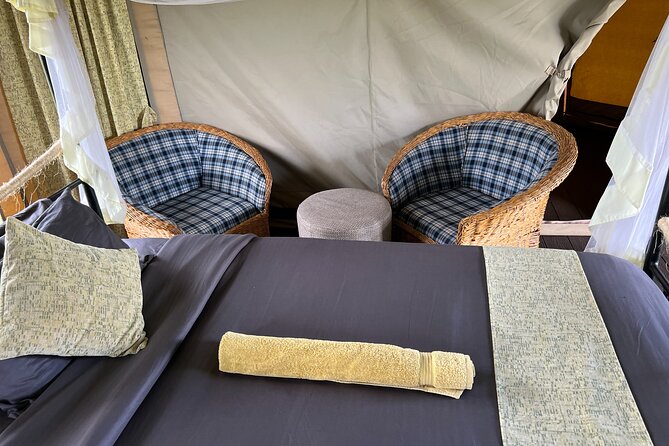
The Ngorongoro Crater provides a dramatic change from the open Serengeti. The caldera is about 600 meters deep, 16 kilometers across, and roughly 265 square kilometers in area. From the rim, you look down into a contained world of grassland, water, wildlife, and steep walls.
A morning descent gives you time for game driving on the crater floor. The area is known for large numbers of resident animals, including lions, cheetahs, eland, zebra, gazelle, buffalo, and elephants. Black rhinos may also be seen grazing on the open grassland, though sightings are never assured.
Makat Soda Lake can attract flamingos and other bird species. The setting is one of the strongest visual moments of the trip, but the crater can also feel busier than the more open Serengeti. You trade the wide sense of space for concentrated wildlife and striking scenery.
In the afternoon, you drive back to Moshi for another night at Springlands Hotel. This is a long return day after an early crater drive. It is practical if you need to reach Kilimanjaro Airport the next day, but it is not the gentlest finish to an eight-day safari.
Day 8: Moshi and the airport transfer
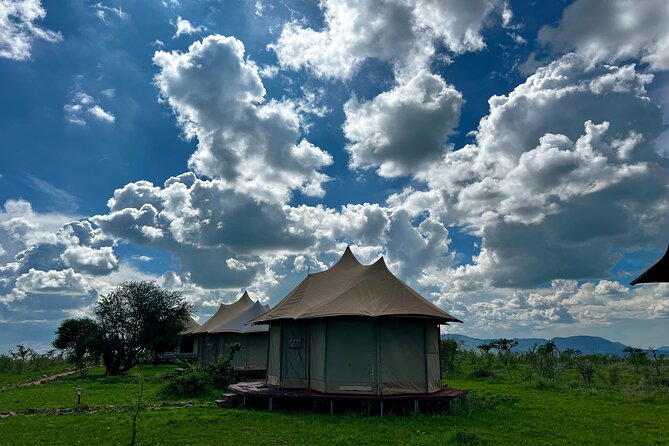
The final morning is free before your transfer to Kilimanjaro Airport. If your flight leaves in the evening, the operator can arrange an extra day trip, but that activity costs more and is not part of this package.
The airport transfer is included. Check your flight time carefully because the morning is described as leisure time, not as a scheduled sightseeing program.
What the $2,400.40 price really covers
At $2,400.40 per person, this is not a budget safari. Still, the price includes a substantial set of costs:
- Park fees and taxes
- A qualified driver-guide
- Transport in a 4×4 with a viewing roof
- Full-board accommodation during the safari
- Breakfast, lunch, and dinner as specified
- Airport transfers
- A Serengeti bush lunch
- Bottled water in the vehicle
- Office support from Moshi throughout the trip
The value depends on how you use the package. A private vehicle for a maximum of six, full board, and several major wildlife areas can make the price reasonable compared with arranging each transfer, lodge, park entry, and guide separately.
But you should budget beyond the headline figure. Tanzania’s entry visa, travel and health insurance, international flights, and optional domestic flights are extra. Maasai village and Olduvai Gorge visits also cost extra, as do meals, drinks, and excursions not named in the plan.
The non-refundable cancellation rule is important. If you cancel or request an amendment, the amount paid will not be returned. I would arrange suitable insurance before paying and make sure your international flights are settled first.
Transport, group size, and daily rhythm
The small group is one of the strongest practical features. Six people or fewer means less crowding around the viewing roof and more room for personal questions. It also makes a private family or couple trip feel more flexible than a large shared departure.
The viewing roof is a basic but important feature. It lets you stand or sit with a wider view during game drives, which helps when animals appear in several directions. Bottled water is supplied, and the full-board setup keeps meal planning simple.
The schedule is demanding. Days 2 through 7 are each listed at about eight hours, while the first day includes airport arrival and the final day includes the airport transfer. You will spend substantial time on park roads and connecting routes.
That rhythm suits you if you want to cover several famous areas in one trip. It is less suitable if you want late mornings, long lodge stays, or a single-park focus. Ask about the exact lodging names and driving times before booking, since those details are not specified here.
Who will get the most from this safari
I would recommend this trip most strongly if you:
- Want to plan around the January to March calving season
- Care more about wildlife than luxury hotel detail
- Like the idea of a private vehicle and a small group
- Are comfortable with long road days
- Want Tarangire, Lake Manyara, Serengeti, Ndutu, and Ngorongoro in one route
- Prefer full-board planning with airport transfers included
- Are traveling as a couple, family, or small private party
Families can find the variety appealing, especially with elephants, monkeys, big cats, birds, and open plains all in one itinerary. The long drives and early starts may test younger children, though the provided information does not set a minimum age.
The trip also suits photographers and first-time safari visitors who want a broad introduction to northern Tanzania. You get famous parks, a strong seasonal purpose, and enough time in the Serengeti and Ndutu to avoid making the whole safari a series of quick stops.
Should you book it?
Book this safari if newborn wildebeest, predator activity, and a full northern Tanzania route are your main goals. The combination of Ndutu during calving season, a private 4×4, a six-person maximum, full board, and airport transfers gives you a clear practical package.
Think twice if your budget is tight, you need flexible cancellation, or you strongly dislike long drives. Before paying, confirm your flight schedule, ask what accommodation is assigned, clarify the cost of optional Maasai and Olduvai visits, and decide if a domestic flight would improve the return journey.
For the right person, this is a focused wildlife trip rather than a relaxed resort holiday. Its best moments are likely to come from the seasonal timing, the patience of your guide, and the chance to watch young animals and predators share the same broad plains.
FAQ
When does this safari operate?
The safari is designed for January through March, the period associated with wildebeest calving in the Ndutu area.
How long is the experience?
The safari lasts approximately eight days.
Where does the safari begin?
The trip begins with arrival at Kilimanjaro Airport, followed by a transfer to Moshi.
What time does the safari start?
The listed start time is 7:00 am.
Which national parks and wildlife areas are included?
The route includes Lake Manyara National Park, Serengeti National Park, the Ngorongoro Conservation Area, Ndutu, and Ngorongoro Crater. The overview also identifies Tarangire National Park as part of the experience, although the day-by-day schedule does not assign it a separate day.
How many people can join the safari?
The maximum group size is six people.
What kind of vehicle is used?
Transport is provided in a 4×4 safari vehicle with a viewing roof.
Are meals included?
Full-board accommodation is included, with breakfast, lunch, and dinner provided as specified. A bush lunch in the Serengeti is also included.
Are airport transfers included?
Yes. Transfers to and from the airport are included.
Are the Maasai village and Olduvai Gorge visits included?
No. Those visits are optional and are not included in the base price.
Is the safari refundable if I cancel?
No. The experience is non-refundable and cannot be changed for any reason.
Newly listed around Arusha
- 5-Day Private Safari Tour in Tanzania’s Wildlife★ 5.0 · 3 reviews
- 3 Days private safari Tarangire ,Ngorongroro crater &Manyara★ 5.0 · 3 reviews
- 3 Day Sharing Safari – Manyara, Ngorongoro Crater and Tarangire National Parks★ 5.0 · 3 reviews
- Tarangire National Park Day Trip★ 5.0 · 3 reviews
- 2 Days Tarangire and Ngorongoro Crater Tour★ 5.0 · 3 reviews
- 6 -Day Tarangire, Manyara, Serengeti & Ngorongoro★ 5.0 · 3 reviews
- 5 Days Group Camping Safari★ 4.7 · 3 reviews
- Private 4×4 Vitara Safari in Arusha National Park★ 5.0 · 3 reviews
Arusha Tours, compared.

Balloon Safari & Bush Breakfast in Serengeti – Miracle Experience
Read our review →





