Reviewed · ZANZIBAR TOURS
Jambiani Village Women at work and play
Jambiani’s women turn beach-collected coconut husks, palm leaves, and simple sewing tools into useful household goods. This private village walk lets you see that work at close range, then visit the beach to learn how seaweed is cultivated and collected.
I like the local guide, who can explain Jambiani as someone connected to the village, and I like the hands-on touches, especially trying coconut-fiber weaving, learning to wear a kanga, and receiving henna painting. The main caution is timing: although the experience is advertised at two to three hours, one account found the village portion lasted about 1.5 hours, so confirm the schedule if time matters.
Key points at a glance
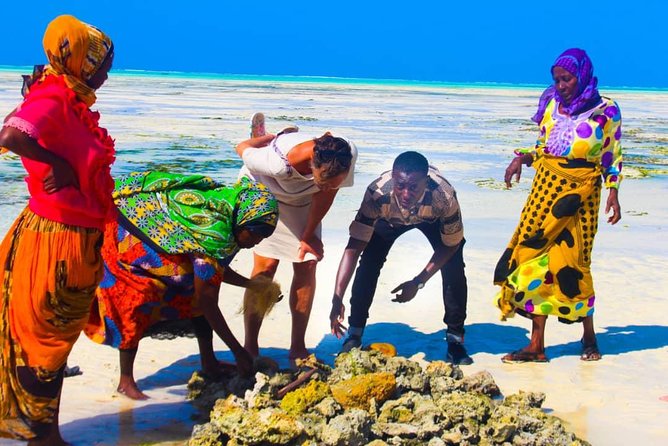
- Women’s homes and workshops: Meet several craftswomen rather than seeing only one staged demonstration.
- Coconut husk recycling: Watch beach-collected husks become rope and doormats.
- Beach and seaweed work: Learn about the women’s role in collecting and cultivating seaweed.
- Traditional dress and beauty: See how to wear a kanga and experience henna painting.
- Private format: Your group has the local guide’s attention, with more room for questions and a flexible pace.
- Optional home lunch: Arrange a meal in advance, including special dietary needs, for an extra fee.
Walking into everyday Jambiani

This experience is less about grand sights and more about meeting people in the place where they live and work. Your guide takes you through Jambiani to several women’s homes, where different craft skills are demonstrated.
That matters because the craft work is tied to ordinary household life. Coconut rope and mats are not simply decorative souvenirs. They show how local materials can be gathered, prepared, and put to use with little waste.
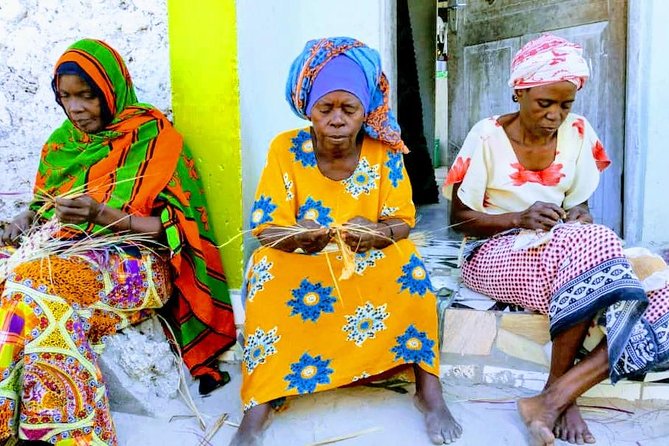
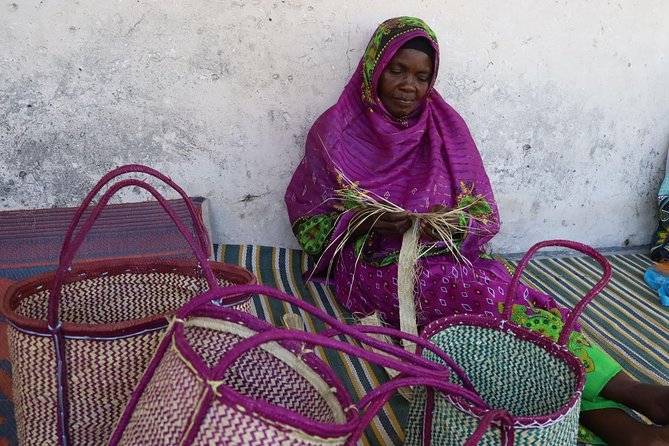
You are not confined to a single workshop. The route includes several women, and each may show a different task. One person may work with coconut fiber, while another demonstrates palm-leaf weaving, makuti work, or sewing.
The private setup should make the visit feel more personal than a large group stop. You can ask questions as you go, spend a little longer with a craftswoman whose work interests you, or move on when the demonstration is complete. The exact pace depends on your group and the guide.
A guide from Jambiani is central to the experience. One guide connected with this activity is named Ameir, though you should not assume he will lead every departure. The local connection helps put the homes, work, and village customs in context without turning the visit into a formal museum tour.
A few more Zanzibar days to compare
- From Zanzibar: Mikumi Safari Day Trip with Flights and Meal
★ 4.7 · 1,470 reviews - Zanzibar: Quad Bike Adventure departing from Kendwa or Nungwi
★ 4.9 · 1,233 reviews - Zanzibar: Stone Town, Spice Tour, Prison Island with Lunch
★ 4.4 · 1,219 reviews
From coconut husk to rope and doormats
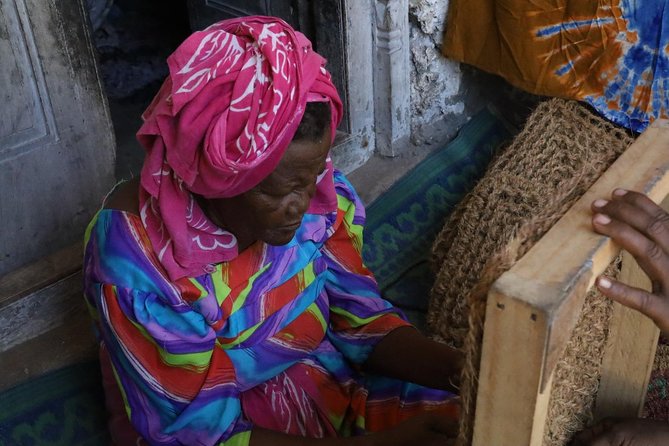
The most distinctive part of the visit is the coconut-fiber work. The husks are collected from the beach and prepared for use as rope and doormats. You get to watch the process and, according to the activity details, try weaving with the women yourself.
This is a good example of why a village visit can be more rewarding than a quick shopping stop. In a shop, you see the finished mat. Here, you see the material before it becomes useful, and you gain a better sense of the labor involved.
Trying the technique may be harder than it looks. The work requires hand control and patience, so do not expect to produce a perfect mat in a few minutes. That is part of the value. A short attempt gives you respect for the skill without pretending that a visitor can match years of practice.
The craft demonstrations also give you a chance to buy, if sales are offered directly by the makers. The supplied details do not promise that every item will be for sale or specify prices, so bring questions and ask before assuming. If you do purchase something, buying from the craftswoman you meet can give the exchange a more direct human link.
Palm-leaf and makuti weaving add another layer to the craft story. You will see how plant materials can be shaped into practical items, though the exact object shown may vary. The visit is strongest when you pay attention to the process rather than treating it as a quick souvenir presentation.
Meeting the women behind the handicrafts
The route includes visits to several women’s homes. This can be the most personal part of the outing, but it also calls for good manners. Follow the guide’s lead, ask before taking photographs, and remember that you are entering working homes, not a theme park display.
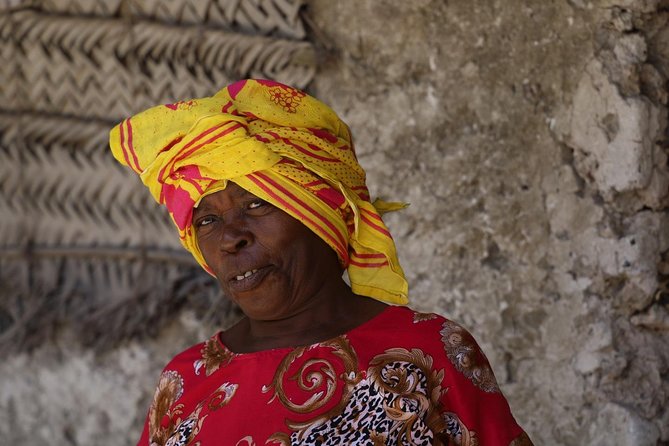
The focus is on women’s work and community life. You will see sewing, weaving, and other hand skills, while the guide explains how these activities fit into daily life in Jambiani.
There is also a social side to the visit. One account describes seeing children in the village and giving them candy. I would treat that as something that may occur rather than a promised part of every departure. If you bring sweets, ask your guide first, since gifts to children can be handled in different ways.
The women’s work gives the tour its strongest sense of purpose. You are not only looking at an attractive object. You are seeing who makes it, what materials they use, and how traditional skills remain part of village life.
If you are a woman, you may have more opportunity to try some of the activities directly with the craftswomen. That is not to say men cannot participate, but the social setting may feel especially comfortable for women who want to join the sewing, weaving, or dress demonstration.
Learning the kanga and trying henna
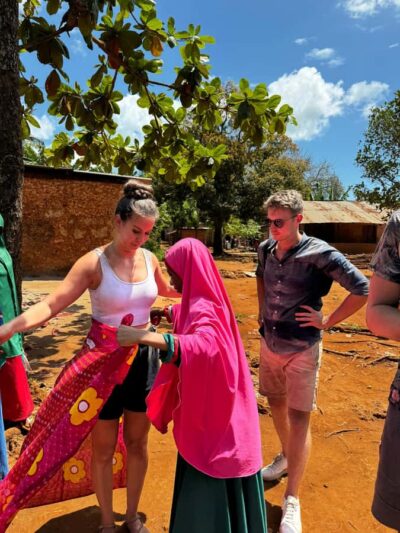
The kanga demonstration is a small but memorable cultural detail. Your guide or a local woman shows you how the traditional garment is worn. This is more useful than simply seeing a kanga folded on a market table because you learn how it functions as clothing.
You may be invited to try it yourself. Take the opportunity, but let the women guide the process. The point is not to stage a perfect photograph. It is to understand how a simple piece of fabric can be wrapped and worn in a particular way.
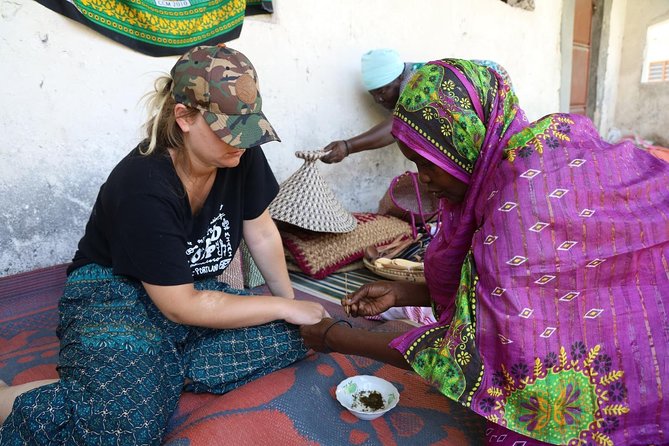
Henna painting is another hands-on feature. The information provided does not specify the design, placement, or how long the henna takes to develop, so ask before choosing a pattern. If you have a sensitivity to henna or cosmetics, mention it before the application.
These activities help break up the craft demonstrations. You move from watching work, to trying a technique, to learning about dress and personal decoration. For a short village tour, that mix keeps the outing from feeling like a single repeated stop.
A change of scene while you are in Zanzibar:
- From Kendwa: Mnemba Boat Trip and Dolphin Snorkel Adventure
★ 4.8 · 1,043 reviews - From Zanzibar: Day Selous Game Reserve Safari with Flights
★ 4.7 · 1,025 reviews - Zanzibar: Prison Island and Nakupenda Boat Trip with Lunch
★ 4.1 · 882 reviews - Skydive Zanzibar | Tandem Skydive
★ 5.0 · 877 reviews
Walking to the beach for seaweed cultivation
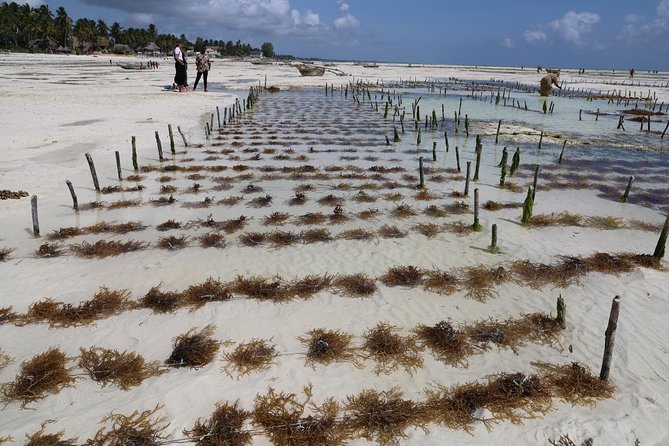
The route also heads to the beach, where you learn about women collecting seaweed and cultivating it. This changes the focus from household craft to coastal work and shows another way local women earn a living.
The beach visit is not described as a swimming stop or a scenic beach break. Plan to listen, walk, and observe the seaweed activity rather than expecting free time in the water.
Seaweed work can look simple from a distance, but the visit gives you a chance to ask how the plants are handled and why the work matters locally. The guide’s explanation is important here, since the activity description does not provide a detailed technical account of the cultivation process.
The beach section also helps explain the source of the coconut husks used in the crafts. Materials found along the shore appear in the women’s work, while seaweed represents another form of coastal labor. The two parts make the outing feel connected rather than like unrelated demonstrations.
Conditions at the shore may affect the pace. The experience requires walking, and it is not recommended if you cannot walk more than 2 kilometers. Wear practical shoes and be prepared for a village walk rather than a vehicle-based excursion.
An optional lunch inside a local home
You can arrange lunch in one of the women’s houses, but it costs extra and requires at least 48 hours’ notice. The advance notice matters because the meal must be prepared, so do not wait until the morning of the tour to request it.
You should also provide dietary requirements when booking the lunch. Special diets can be accommodated according to the supplied information, but you need to state your needs in advance rather than relying on an improvised meal.
A home lunch may be the most direct way to extend the cultural exchange beyond the craft demonstrations. It gives you more time around the local setting and can turn a short walk into a fuller half-day experience.
Still, treat it as an option, not part of the $32.65 tour price. Ask what is included in the meal and how the extra charge will be handled. The available details do not give a menu, so you should not book it expecting a particular dish.
If you are already planning a long day elsewhere in Zanzibar, the basic walk may be enough. If you want a slower visit and value a meal prepared in the community, request lunch when you reserve.
Is $32.65 good value?
At $32.65 per person, the tour is reasonably priced for a private local guide and several village-based activities. You are paying for access, interpretation, and direct contact with craftswomen, not for expensive transport, a major attraction ticket, or a full meal.
That price works best if you value personal contact over a tightly packed sightseeing schedule. The private format means only your group participates, which can make the fee worthwhile for couples, families, or small groups who want to ask questions without competing with a large crowd.
Group discounts are available, though the exact savings are not stated. Ask about the discount before booking if you are traveling with several people.
Transport is the main possible extra cost. Pickup from a Stone Town hotel is available from $45, but that fee is separate from the tour price. If you are staying near Jambiani, the economics are much better. If you are based in Stone Town, compare the pickup charge with arranging your own transport, while remembering that the activity itself does not include pickup.
The price becomes less attractive if your actual village visit runs close to 1.5 hours and you have paid for a three-hour expectation. That shorter timing may still feel worthwhile, but you should confirm how long the walking portion normally lasts and whether transport time is counted.
Timing, walking, and practical planning
The stated duration is about two to three hours, with the main itinerary described as three hours. One experience was reported as lasting only 1.5 hours, while the journey to and from Jambiani took longer than the activity itself.
I would leave room in your schedule rather than booking a tight connection afterward. The length can depend on the guide, the homes visited, the beach conditions, and how much time you spend trying the crafts.
You receive a mobile ticket, which is useful if you are moving around Zanzibar without a printed document. Confirmation is sent within 48 hours of booking, subject to availability, so reserve with enough lead time if your dates are fixed. The average booking window is 41 days, which suggests planning ahead is sensible during busy periods.
The experience requires walking. It is not recommended for anyone who cannot walk more than 2 kilometers, and the itinerary includes village paths plus a beach visit. Service animals are allowed, and most people can participate.
Wear clothing suitable for a warm outdoor walk and choose shoes you can comfortably use on uneven surfaces. The activity requires good weather. If poor weather cancels it, you are offered another date or a full refund.
Free cancellation is available up to 24 hours before the start time. Cancellations or changes made less than 24 hours ahead are not refunded or accepted, and the cutoff follows local Zanzibar time.
Who will enjoy this Jambiani visit?
I would choose this outing if you want to meet local people, see women’s work at home, and learn through conversation and simple demonstrations. It suits anyone who finds a market visit too quick and a formal cultural show too polished.
Families may like the hands-on format, provided children can manage the walk and behave respectfully in people’s homes. The crafts give young visitors something concrete to watch and try, though the tour is not presented as a child-focused program.
It is also a good fit for photographers and craft lovers, but ask before taking pictures. The strongest images may come from the working process, not from posed portraits.
You may prefer another activity if your main goal is swimming, wildlife, nightlife, or a long beach break. This is a village and craft experience. The beach is part of the learning route, not the whole purpose.
If you have limited time in Zanzibar, the Stone Town pickup fee and drive may affect the value. From Jambiani or nearby, the tour is easier to fit into a morning or afternoon. From Stone Town, plan for the transfer and confirm the true activity length before committing.
Should you book Jambiani Village Women at Work and Play?
Book it if you want a small-scale, people-focused experience with real craft demonstrations, a local guide, and a chance to try the work yourself. The combination of coconut rope, doormats, palm-leaf weaving, kanga dressing, henna, and seaweed cultivation gives you more variety than the modest price suggests.
I would contact Jambiani Tours before paying if the advertised three-hour length is important, especially if you are coming from Stone Town. Ask about pickup, the expected walking time, who will guide your group, and lunch if you want to eat in a woman’s home.
The tour earns its strongest marks for personal contact and its unusual focus on women’s skills. Just keep your expectations practical: this is a working village walk, not a polished attraction, and the timing may be shorter than the headline suggests. For a respectful look at everyday Jambiani, it is a worthwhile choice.
FAQ
Where does the Jambiani Village Women at Work and Play experience take place?
It takes place in Jambiani Village on Zanzibar, Tanzania. The route includes several women’s homes and a visit to the beach.
How long does the experience last?
The advertised duration is about two to three hours, with the main activity described as three hours. One account recorded about 1.5 hours for the village portion, so confirm the expected timing when booking.
What activities are included?
You can watch coconut rope and doormat making, palm-leaf and makuti weaving, traditional kofia sewing, kanga dressing, and henna painting. The visit also includes learning about seaweed collection and cultivation.
Is the experience private?
Yes. Only your group participates, and a private local guide leads the activity.
Is lunch included?
No. Lunch is optional and costs extra. It can be served in one of the women’s homes if you give at least 48 hours’ notice and provide any dietary requirements.
Is hotel pickup included?
No. Pickup from a Stone Town hotel can be arranged for an additional charge starting at $45.
Can I cancel for a full refund?
Yes, if you cancel at least 24 hours before the experience begins. Cancellations or changes made less than 24 hours before the start time are not refunded or accepted. If poor weather causes cancellation, you can choose another date or receive a full refund.
Newly listed around Zanzibar
- Zanzibar: Nungwi/Kendwa Beach Sunset Dhow Cruise with Fruits★ 3.4 · 3 reviews
- Prison Island, Sea Turtles, Rock Restaurant & Relax in Beach★ 4.6 · 3 reviews
- Starfish Beach; The Rock; Kuza Cave; Paje Beach; Salaam Cave Tour★ 4.5 · 3 reviews
- Zanzibar: Half-Day Spice Farm Tour,the flavours of Zanzibar★ 4.7 · 3 reviews
- Joazani forest & Spice farm with lunch★ 5.0 · 3 reviews
- Nakupenda Island Snorkeling Sea trip & Lunch W/Transfer -Zanzibar★ 4.0 · 3 reviews
- Mnemba Island Snorkeling and Dolphin tour★ 5.0 · 3 reviews
- Zanzibar:Jozani forest, Spice farm with Swahili Cuisine clas★ 4.2 · 3 reviews
Zanzibar Tours, compared.