
Reviewed · DAR ES SALAAM TOURS
Dar es salaam Reality Tour
Dar es Salaam’s everyday economy is the heart of this five-hour tour. Instead of spending your morning on a standard sightseeing loop, you move by bicycle or bajaj through local neighborhoods and meet people earning a living in practical, familiar ways.
I like the small-scale focus and the chance to see more than monuments. I also like the half-day length, which leaves room for lunch, the beach, or another activity. The main caution is reliability: one booking resulted in no guide showing up, so I would confirm the meeting details before the 8:00 am start.
Key points to know before booking
- Meet local workers: The stops include a coffee maker, Swahili breakfast cooks, a traditional medicine seller, and a khanga shop.
- Travel by bicycle or bajaj: Transport is provided, giving the tour a more local feel than a standard vehicle excursion.
- Plan on five hours: The half-day schedule fits neatly around other plans in Dar es Salaam.
- Start at the Village Museum: The meeting point is Kijiji cha Makumbusho in Mikocheni, and the tour returns there.
- Small enough to feel personal, but not private: The maximum group size is 30 people.
- Check the drinks detail: Drinks are included, but the published information conflicts on whether alcohol is included.
A morning built around ordinary Dar es Salaam
The best reason to book the Dar es Salaam Reality Tour is its subject. This is not mainly a tour of grand buildings or famous sights. It is a look at how people work, sell, prepare, and use everyday goods in the city.
That matters in Dar es Salaam, where a short encounter with a small business can tell you more about daily life than a quick photo stop. You will see people making a living through coffee, food, traditional remedies, and clothing. Each stop offers a different view of local commerce.
The tour begins at 8:00 am at Kijiji cha Makumbusho, also called the Village Museum, in Mikocheni. The stated meeting point is listed as 66FW+WG8, Dar es Salaam. You return to this same point at the end, which makes planning before and after the tour fairly simple.
I would arrive early. The experience depends on several local stops, and a prompt start gives the group the best chance of using its five hours well.
A few more Dar es Salaam days to compare
- Dar es Salaam: City Tour
★ 4.7 · 159 reviews - Dar es Salaam City Center: Walking Tour
★ 4.8 · 102 reviews - Dar es Salaam City Tour – Everyday
★ 5.0 · 64 reviews
Why the bicycle or bajaj matters
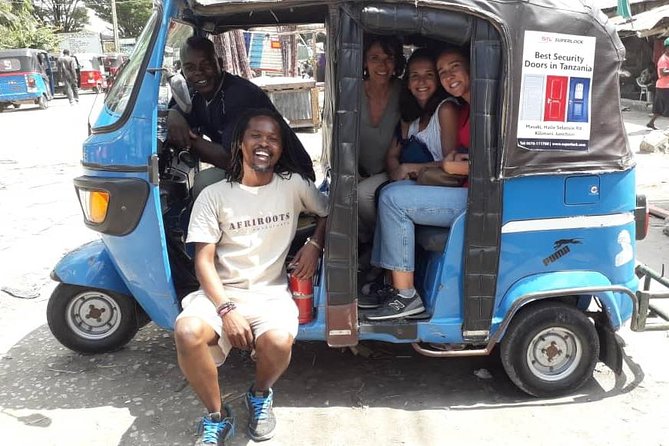
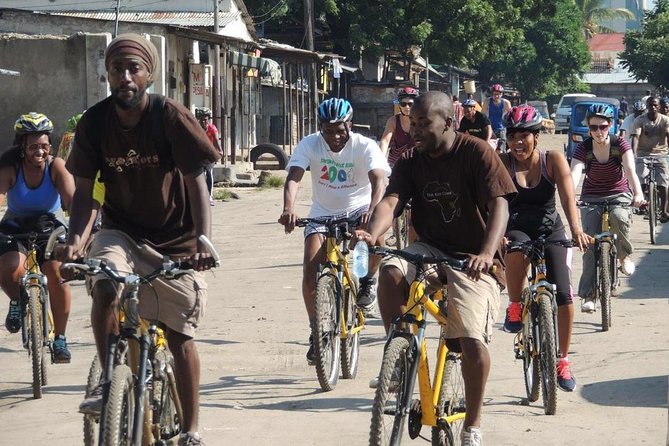
You will travel by bicycle or bajaj, with the choice of transport provided as part of the experience. That is a useful feature because transport shapes what you notice.
A bicycle gives you a slower pace and a closer view of the streets. You are not sealed behind a car window, and the short distance between stops becomes part of the tour. A bajaj, the familiar three-wheeled taxi used in many East African cities, offers a different kind of local transport experience and may suit you better if cycling is not appealing.
The supplied details do not explain how the choice is arranged, so ask when you meet the guide. If the group is large, with as many as 30 people, the transport plan may affect how personal the experience feels. A group of that size is not a private outing, though the local stops should still offer more contact with daily life than a typical city highlights tour.
The practical question is comfort. You should be ready for a morning of moving between stops rather than sitting in one place. Wear light clothing suitable for Dar es Salaam’s weather and shoes that work for either walking and cycling. The tour requires good weather, and bad weather can lead to a new date or a full refund.
Meeting a coffee maker who sells his own coffee
The first named stop is a coffee maker who also sells coffee as a source of income. This is a modest detail, but it gives the tour a clear human focus.
You are not simply looking at coffee as a finished drink. You are seeing the connection between preparation and livelihood. The person making the coffee is also using that skill to earn money, which lets you consider the work behind a familiar daily purchase.
The available information does not say whether you will take part in preparation, buy a cup, or hear a detailed explanation of the process. Expect a visit rather than a full coffee workshop. If coffee is a special interest for you, ask questions about how the drink is made, where the beans come from, and how the business works.
This stop should suit anyone who enjoys meeting individual business owners and seeing the human side of a city. It may feel too brief if you want a formal tasting or a technical lesson. The value is in the personal contact and the chance to see a small income-generating activity up close.
Seeing how a Swahili breakfast is made
The next visit takes you to a place where Swahili breakfast is prepared. Food is often one of the quickest ways to understand a place, but this tour appears to focus on preparation rather than providing a meal.
That distinction matters. Food is not included in the published inclusions, so you should not book this expecting breakfast to be part of the price. You might see local methods and ingredients, and you may be able to ask questions, but the tour does not promise a tasting or a full serving.
A breakfast stop can also reveal the working rhythm of the city. Morning is the right time for this part of the tour because breakfast businesses are connected to the start of the day. You get a look at food as work, not just food as a restaurant experience.
If you want to eat during the morning, arrange that separately or ask the operator before departure. The supplied details do not state whether food can be purchased at the stop. That is a sensible question to settle before you leave the meeting point.
A change of scene while you are in Dar es Salaam:
- MIKUMI NATIONAL PARK – 3 Days
★ 4.5 · 63 reviews - 2 nights 3 days safari to mikumi national park
★ 5.0 · 62 reviews - 2 Days 1 Night Mikumi National Park from Dar es salaam
★ 5.0 · 60 reviews - The Best/Top Rated Cultural City Tour in Dar es Salaam
★ 5.0 · 57 reviews
Traditional medicine in a local setting
The traditional medicine stop adds another layer to the morning. It takes you beyond food and drink and into local approaches to health.
The description identifies this as a traditional medicine place, but it does not specify the products, the person you will meet, or whether anything is for sale. You should treat it as an opportunity to learn, not as medical advice. Do not assume that any remedy discussed is safe for you or suitable for treating a health problem.
The value here is cultural context. Traditional medicine remains an important subject in many communities, and a local business can show how knowledge, products, and income meet in daily life. The stop may also prompt useful questions about what people seek help for and how traditional practices fit beside formal medical care.
Because the details are limited, your expectations should stay modest. This is not advertised as a medical consultation or a hands-on workshop. It is one stop in a wider picture of local work and community life.
A khanga shop and the meaning of local cloth
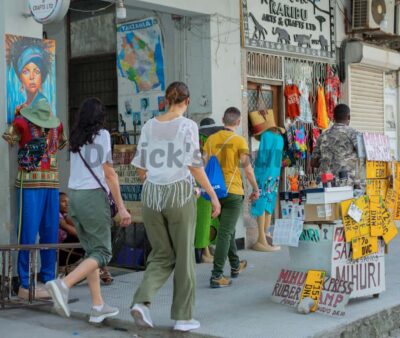
The final named stop is a khanga shop. Khanga, also spelled kanga, is a colorful East African cloth often worn as clothing, wrapped around the body, or used in the home. The tour description simply calls this a khanga shop, so you should expect a retail visit rather than assume a textile demonstration.
A shop gives you a practical way to see local commerce. You can look at patterns, colors, and the role of cloth in everyday life. If purchases are possible, remember that buying is separate from the tour price, since shopping is not listed as an inclusion.
This stop may be the easiest place to bring home a useful reminder of Dar es Salaam. Still, do not assume that the guide will negotiate prices or that a purchase is expected. Ask before taking photographs, especially inside small businesses and around people at work.
The four named visits work well together. Coffee shows one form of trade, breakfast shows food preparation, traditional medicine shows local health practices, and khanga shows clothing and retail. None is presented as a major attraction on its own. Together, they create a grounded morning.
What the $51.29 price really buys you
The cost is $51.29 per person. For a five-hour experience, that is not the cheapest way to get around Dar es Salaam, but the price includes a provided bicycle or bajaj and drinks. You are also paying for the guide’s planning and for access to several local businesses that you might not find easily on your own.
The value depends on what you want from a city tour. If you mainly need transport between famous sights, this is not the right comparison. If you want personal contact and a view of everyday income, the price is easier to justify.
The tour is booked an average of 23 days ahead, which suggests that you should not wait until the last morning if your schedule is fixed. At the same time, one serious reliability warning needs attention. A booking made 24 hours ahead reportedly ended with no one arriving and no immediate way to contact the operator. That does not prove every departure will fail, but it is enough reason to confirm the pickup details before the cancellation deadline.
The drink information also needs clarification. The highlights say drinks, including alcohol, are included. The inclusions list says drinks are included, while the exclusions say alcohol is not included. I would assume nonalcoholic drinks are covered and ask Afri Roots Adventures directly about alcohol before booking or arriving.
Food is not included. Any shopping, extra purchases, or other personal expenses should also be treated as your responsibility because they are not listed among the inclusions.
Timing, group size, and the shape of the morning
The tour lasts about five hours and begins at 8:00 am. It ends back at the Village Museum meeting point, so you can use the rest of the day for another plan without arranging a separate return journey.
A morning departure has two clear advantages. You are visiting a breakfast-making business at a natural time, and you have the afternoon free. The short format works well if you are in Dar es Salaam for only a few days or if you want to combine this experience with another half-day activity.
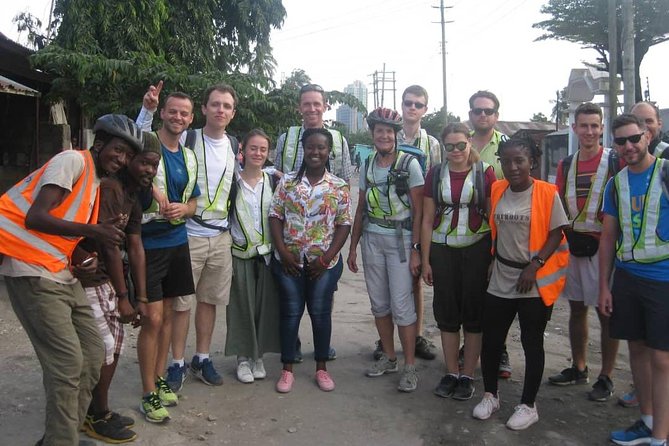
The maximum group size is 30 people. That is large enough to affect conversation and waiting time, especially at small shops or businesses. The tour may feel most personal when the group is smaller, but you should not expect a private guide unless you arrange that separately.
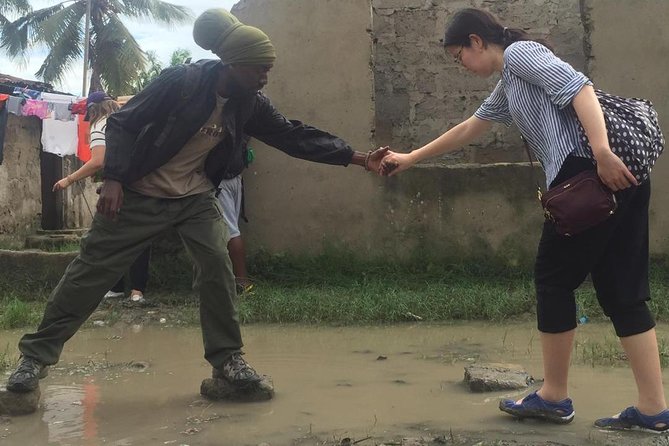
The experience is near public transportation, and most people can participate. Service animals are allowed. The information does not describe the cycling distance, road conditions, or how the bicycle and bajaj choice works, so ask those questions if mobility, fitness, or comfort is important to you.
Who will get the most from this tour
I would choose this tour if you want to understand Dar es Salaam through work and local trade rather than a long list of sights. It suits first-time visitors who want an introduction to daily life, as well as repeat visitors who have already seen the major attractions.
It is also a good fit if you prefer a quieter morning. One of the stated benefits is avoiding crowds, and the focus on small businesses should feel less staged than a large attraction with a fixed visitor route.
The tour may suit solo visitors and couples who enjoy asking questions. It can also work for families, though parents should decide if a five-hour visit to businesses and working spaces will hold their children’s attention. The information says most people can participate, but it does not give a minimum age or child-specific details.
I would hesitate if you want a polished cultural performance, a guaranteed meal, or a detailed history tour. The experience is about local encounters, and the quality will depend on the guide, timing, group size, and whether each stop is operating as planned.
Booking advice and the cancellation rule
You receive confirmation at the time of booking, and free cancellation is available if you cancel at least 24 hours before the 8:00 am start. Cancel inside that 24-hour window and you will not receive a refund, and changes made within that period are not accepted.
The weather rule is important because the tour requires good conditions. If poor weather causes cancellation, you should be offered another date or a full refund.
I would save the meeting point, start time, and operator details on your phone. Since the meeting point is the Village Museum in Mikocheni and the tour returns there, double-check that you have the correct location before departure. The single no-show account makes this more than a minor precaution.
Should you book the Dar es Salaam Reality Tour?
Book it if you want a half-day look at ordinary work in Dar es Salaam and you value human contact over major sights. The coffee maker, Swahili breakfast stop, traditional medicine place, and khanga shop give the morning a useful range.
At $51.29, the tour offers reasonable value when the transport, drinks, guide time, and access to local businesses all work as promised. Its weak points are the group limit of 30, the lack of included food, the unclear alcohol policy, and a reported no-show problem.
My advice is simple: book with enough notice, confirm the departure directly, clarify the drink details, and ask how bicycle or bajaj transport is assigned. If the operator confirms everything, this is a worthwhile choice for seeing Dar es Salaam through the people who make the city function.
FAQ
Where does the Dar es Salaam Reality Tour start?
It starts at Kijiji cha Makumbusho, also called the Village Museum, in Mikocheni, Dar es Salaam. The listed location code is 66FW+WG8.
What time does the tour begin?
The tour begins at 8:00 am.
How long does the experience last?
It lasts approximately five hours.
Where does the tour finish?
The activity ends back at the starting meeting point at the Village Museum.
How do I get around during the tour?
You travel by bicycle or bajaj, and this transport is provided as part of the experience.
What local places does the tour visit?
The tour visits a coffee maker who sells coffee, a place preparing Swahili breakfast, a traditional medicine place, and a khanga shop.
Is food included?
No. Food is listed as not included.
Are drinks included?
Drinks are listed as included, but the details conflict about alcohol. One part says alcohol is included, while another says alcohol is not included, so confirm this with Afri Roots Adventures.
Can I cancel for a full refund?
Yes, if you cancel at least 24 hours before the experience starts. Cancellations within 24 hours are not refunded, and changes within that period are not accepted.
Newly listed around Dar es Salaam
- Mikumi Np Mid Range Tour 3 Days★ 5.0 · 3 reviews
- Private Mikumi Adventure★ 4.5 · 3 reviews
- Ruaha National Park And Mikumi National Park Budget Safari 6 Days 5 Nights★ 5.0 · 3 reviews
- 3 Days 2 Nights Private Safari Tour in Mikumi★ 5.0 · 3 reviews
- Day Trip To Bagamoyo From Dar Es Salaam ..historical town★ 4.5 · 3 reviews
- Dar es Salaam City tour and Beach Leisure – 9 hours★ 5.0 · 3 reviews
- Mikumi National Park Day Trip by Train From Dar Es Salaam★ 5.0 · 4 reviews
- 3-Day at Dar es Salaam To Selous GR (Nyerere NP) Game, Boat & Walking Safari★ 5.0 · 4 reviews
Dar es Salaam Tours, compared.

Private Full-Day Trip to Mikumi National Park from Dar es Salaam
Read our review →Browse the lists this tour appears in