
Reviewed · SERENGETI & NGORONGORO SAFARIS
3 days Tarangire, Ngorongoro & Lake Manyara package
Tarangire’s giant elephants, Ngorongoro’s crater floor and Lake Manyara’s flamingoes make this a remarkably full three-day safari. The best moment may be the descent into Ngorongoro Crater, where short grass and open ground can make animals easier to spot.
I like the small group of six or fewer, which gives you a better chance of seeing from both sides of the vehicle and asking your guide questions. I also like the mix of wildlife and scenery: baobabs and elephants at Tarangire, a possible hippo-pool visit at Manyara, and the Maasai pastoral country around Ngorongoro. The drawback is the pace. Three parks in three days means early starts, road time and only one night in each location.
Key points to know before booking
- Tarangire opens the safari with elephants, baobabs and a permanent river.
- Lake Manyara adds flamingoes, birdwatching, hippos and a chance to seek tree-climbing lions.
- Ngorongoro Crater is the main wildlife payoff, with a high concentration of animals on the crater floor.
- Groups are limited to six people, a useful advantage on a shared safari.
- Pickup and return are in Arusha, with a 7:30 am start.
- Camping and lodge-style comforts are mixed, including a pool break after lunch on the first day.
This package is designed for you if you want a proper northern Tanzania safari but do not have a week to spare. At $779 per person, it brings together three very different protected areas rather than repeating the same type of game drive.
The route starts and ends in Arusha. Pickup is offered, the start time is 7:30 am, and the activity ends back at the meeting point after the crater visit. Your group can include no more than six people, which is important on safari. A crowded vehicle can turn every wildlife sighting into a scramble for a window seat. Six people is still a shared experience, but it is small enough to feel manageable.
Moorland Safari and Trekking handles the guiding, transport, meals and overnight arrangements. The named staff connected with this experience include Nasr and Lucas, although your specific guide should be confirmed before departure. The strongest practical praise attached to the company is for its organization, friendly service, good food, reliable water and drinks, and guides who explain the animals and surroundings clearly.
The order is Tarangire, Lake Manyara, then Ngorongoro. That is worth noting because many northern circuit routes place Ngorongoro before Manyara. Here, the crater is saved for the final day, giving the trip a strong finish.
Your first morning begins with a drive from Arusha to Tarangire National Park. The park is known for its large baobab trees and especially for elephants. The Tarangire River provides a permanent water source, so wildlife remains a major attraction even when conditions elsewhere are less favorable.
The park’s appeal is not limited to elephants. You might see monkeys, wildebeest, buffaloes, warthogs, zebras and impalas, along with wild cats if the conditions are right. The open countryside and distinctive baobabs give Tarangire a strong sense of place. It is not simply a checklist of animals. The trees, river and rolling ground help explain why the park supports such a large range of life.
Birdwatchers have another reason to pay attention. Tarangire is described as having an exceptionally high number of recorded bird species. You do not need to be a serious birder to enjoy this. Your guide can point out birds as you move between larger sightings, giving the quieter stretches of a game drive more purpose.
The day includes about six hours at the park, with the admission ticket included. After lunch at the camp or lodge, you have time to relax by the pool or settle into a tent before continuing with a game drive. That pause is useful. Safari days can be dusty and tiring, and a short rest can make the afternoon feel much better.
Dinner and the overnight stay are at a campsite. The exact camp is not specified, so you should ask before booking if the sleeping arrangement matters to you. The experience is best suited to someone who likes a close-to-nature safari and does not require a fixed hotel room every night.
After breakfast, you drive to Lake Manyara National Park. It is a smaller park than Tarangire and Ngorongoro, but its compact size does not mean a thin wildlife experience. The area is especially appealing for birdwatching, with flamingoes gathering around the lake when conditions are suitable.
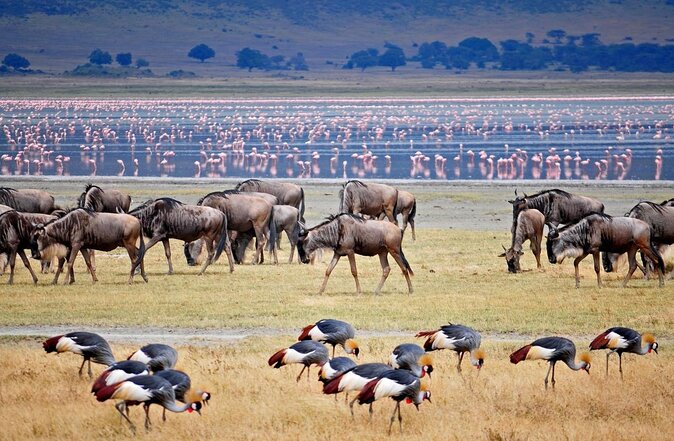
The flamingoes are one of the visual prizes of this day. A large group can turn the lakeshore pink, though wildlife sightings are never guaranteed and the number of birds can change. You should treat the flamingoes as a possibility rather than a fixed show.
Lake Manyara is also associated with tree-climbing lions. Finding one is a matter of luck and patience, not a scheduled stop. If your guide hears of a sighting or spots one in the branches, it can become the day’s main quest. Even without a lion in a tree, the park offers other animals and strong birdwatching.
The route also includes the chance to visit a hippo pool for a closer look at hippos. That can be one of the more memorable stops because hippos are impressive at close range, even when they spend much of their time in the water. You may also see the park’s hot springs, adding a geological feature to a day otherwise focused on wildlife.
A hot picnic lunch is planned in the park before more game viewing. You then spend the night at the chosen campsite, with dinner included in the stated plan. As with Tarangire, the campsite name and exact facilities are not given. Ask about bedding and bathroom arrangements if you are new to camping or prefer more comfort.
Manyara is the day that rewards flexible expectations. It may give you flamingoes, hippos, hot springs and an unusual lion sighting. It may instead offer a quieter but still worthwhile mix of birds, open water and smaller wildlife. The park should not be judged only by whether a tree-climbing lion appears.
After breakfast, you head toward the Ngorongoro Conservation Area. The road passes through Maasai pastoral country, where livestock grazing and wildlife protection exist side by side. That human presence gives the journey more meaning than a simple transfer between parks. You are seeing a working cultural area, not an empty wilderness.
The main event comes when you reach the crater rim and descend roughly 2,000 feet into the caldera of an extinct volcano. From above, the crater is already striking. From the floor, the high walls create a natural enclosure and help make the area feel separate from the world outside.
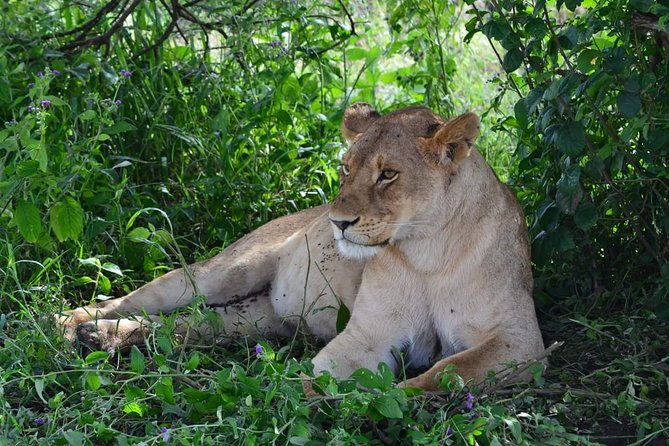
Ngorongoro is the strongest wildlife day in this package. Its short grass and open spaces can make animals easier to see, and the crater floor supports a large concentration of wildlife. You may encounter prides of lions, elephants and, with luck, black rhinos. The range of animals is what makes this stop so powerful, but the scale matters just as much. You are not simply looking at a single herd. You are watching an entire ecosystem operating inside a huge natural bowl.
The crater is often the part of the route that stays with you longest. Tarangire gives you elephants and baobabs. Manyara gives you birds, water and the possibility of tree-climbing lions. Ngorongoro brings these safari themes together in a concentrated setting.
The available plan lists about six hours for this stop and includes the admission ticket. The supplied day description ends partway through the final details, so you should confirm the precise lunch arrangement, return time and final driving schedule before departure. What is clear is that the activity ends back at the Arusha meeting point.
At $779 per person, this is not a budget day trip. It is a three-day safari with transport from Arusha, park visits, guiding, meals described in the daily plan and two overnight campsite stays. The admission ticket is included for each listed park, which is an important part of the cost.
The value is strongest if you want three major northern Tanzania stops without arranging several separate transfers. You also avoid the cost and effort of finding a vehicle, guide, park entries and campsites on your own. A maximum of six people helps protect the value further because you are not paying for a large bus-style group experience.
You should still check exactly what is included before paying. The information confirms admission tickets, pickup, meals listed in the daily schedule and overnight campsites, but it does not spell out every drink, sleeping upgrade, transfer detail or final-day meal. It also does not name the camps. A quick message to Moorland can clear up those points.
The company’s strongest practical features are the parts that matter after the wildlife excitement fades. Food, water, other drinks and sleeping places are described as consistently available, and staff are noted for helping with problems. That kind of organization can make a major difference when you are tired, dusty or dealing with a change of plan.
Three days in a safari vehicle requires some tolerance for road time. You will spend about six hours on each main park day, and the drives between Arusha, the parks and the crater are part of the experience. The scenery changes from open countryside and baobabs to lake country and the high crater rim.
The small group helps keep the trip personal. You can ask about animal behavior, local communities and the parks without competing with dozens of other people. It also makes shared meals and camp time more social, which can be a bonus if you are traveling alone.
Comfort is practical rather than luxurious. The plan includes a pool break after lunch on the first day, but the overnight arrangements are at campsites. If you want a polished lodge every night, this is probably not the right product. If you like sleeping close to the parks and accept simpler facilities, the arrangement should suit you better.
The guides are central to the quality of the trip. Lucas is specifically connected with a three-day experience, while Nasr is associated with the company’s warm organization and guest support. These names do not guarantee that either person will lead your departure, so confirm your guide if that is important to you. The most useful guide qualities here are patience, animal knowledge and the ability to explain what you are seeing, not simply point at it.
The clearest strength is the variety packed into the route. You get a river-fed elephant park, a lake park with strong birdwatching and a volcanic crater with dense wildlife. Each stop has a different character, so the days do not feel identical.
The second strength is the balance between activity and rest. The first day includes time by the pool or in comfortable tents after lunch, and the group size keeps the trip from feeling like a mass departure. That matters because a safari can become exhausting if every hour is tightly filled.
The third strength is the staff support. Moorland’s service is repeatedly associated with friendly guides, clear explanations, good meals and practical help when problems arise. That is especially useful for a first safari, when you may not know how park entries, camping or game-drive timing work.
The main tradeoff is limited time. You will not explore each park at a leisurely pace, and you will not have much room to recover from a delayed start or a long road transfer. The order also puts Ngorongoro last, so your final day may be the most demanding, but it also gives the trip its biggest finish.
Wildlife is never guaranteed. Elephants are a major Tarangire draw, flamingoes and hippos are associated with Manyara, and Ngorongoro offers strong chances for lions and other large animals. Still, no guide can promise a black rhino or a lion in a tree. Go for the full setting and the range of habitats, not one specific photograph.
I would point this package toward a first-time visitor to Tanzania who has three days available and wants the northern circuit’s major names. It also works for couples, friends and solo visitors who value a small group and do not mind campsite accommodation.
It is a good fit if you want the company to manage the route, food, park entries and overnight stops. The available feedback highlights staff such as Lucas and Nasr, friendly service and careful attention to meals and sleeping arrangements. That makes the package appealing if you prefer support rather than independent planning.
You may want something else if your priority is luxury lodging, long stays in one park or a very relaxed schedule. The tour covers a lot of ground. Families and older visitors should also consider their comfort with six-hour park days and campsite nights, although the activity information says most people can participate.
Pickup is offered, the start time is 7:30 am and confirmation is received at booking. Free cancellation is available up to 24 hours before the local start time. Changes or cancellations inside that window are not accepted, so keep the cutoff in mind when your plans are still shifting.
Book it if you want a compact, well-supported introduction to Tarangire, Lake Manyara and Ngorongoro, especially with a group capped at six. The strongest reasons are the elephant sightings and baobabs in Tarangire, the varied possibilities at Manyara and the concentrated wildlife of Ngorongoro Crater.
Before you commit, ask Moorland for the campsite names, the exact final-day schedule and which guide will lead your departure. If you are comfortable with simple camping and several long days, $779 offers a practical way to see three very different parts of northern Tanzania. If comfort and slow travel matter more than coverage, choose a longer or more lodge-focused safari.
FAQ
More Serengeti and Ngorongoro itineraries:
- Balloon Safari & Bush Breakfast in Serengeti – Miracle Experience
★ 5.0 · 1,646 reviews - 3 Days Serengeti & Ngorongoro Group Camping Safari
★ 5.0 · 574 reviews - 5-Day Highlights mid-Range Crater, Serengeti, Tarangire
★ 5.0 · 296 reviews
Where does the safari start and finish?
The safari starts in Arusha, Tanzania, with pickup offered. It ends back at the meeting point in Arusha.
What time does the safari start?
The stated start time is 7:30 am.
How many people can join the tour?
The group has a maximum of six travelers.
More three day trips in Arusha:
- 3-Day Classic Serengeti Safari
★ 5.0 · 263 reviews - 3 Day Serengeti National Park & Ngorongoro Crater Camping Safari
★ 5.0 · 142 reviews - 3 Days Tarangire, Ngorongoro & Lake Manyara Group Camping Safari
★ 5.0 · 102 reviews - 3 Days Private Safari – manyara, Ngorongoro & Tarangire
★ 5.0 · 94 reviews
Which parks are visited?
The route visits Tarangire National Park on day one, Lake Manyara National Park on day two and Ngorongoro Crater on day three.
Are park admission tickets included?
Yes. Admission tickets are listed as included for each of the three park visits.
Where do you stay overnight?
The plan states that you stay at a campsite after day one and at a chosen campsite after day two. The specific campsite names are not provided.
Are meals included?
Dinner is included on the first and second nights, and lunch is provided on the first and second days. Day one includes lunch at the camp or lodge, while day two includes a hot picnic lunch.
Can you cancel for a full refund?
Yes, you can cancel up to 24 hours before the experience starts for a full refund. Cancellations or changes made less than 24 hours before the local start time are not accepted.
Newly listed around Arusha
- 5-Day Private Safari Tour in Tanzania’s Wildlife★ 5.0 · 3 reviews
- 3 Days private safari Tarangire ,Ngorongroro crater &Manyara★ 5.0 · 3 reviews
- 3 Day Sharing Safari – Manyara, Ngorongoro Crater and Tarangire National Parks★ 5.0 · 3 reviews
- Tarangire National Park Day Trip★ 5.0 · 3 reviews
- 2 Days Tarangire and Ngorongoro Crater Tour★ 5.0 · 3 reviews
- 6 -Day Tarangire, Manyara, Serengeti & Ngorongoro★ 5.0 · 3 reviews
- 5 Days Group Camping Safari★ 4.7 · 3 reviews
- 4 Days Tanzania Safari★ 4.5 · 3 reviews
Serengeti & Ngorongoro Safaris, compared.


Balloon Safari & Bush Breakfast in Serengeti – Miracle Experience
Read our review →




Private 6-Day Tarangire Manyara Crater and Serengeti with Mid-Range Lodges
Read our review →
5 Days Camping Tarangire, Serengeti & Ngorongoro crater & Visiting Maasai
Read our review →Browse the lists this tour appears in