
Reviewed · SERENGETI & NGORONGORO SAFARIS
5 Days Camping Tarangire, Serengeti & Ngorongoro crater & Visiting Maasai
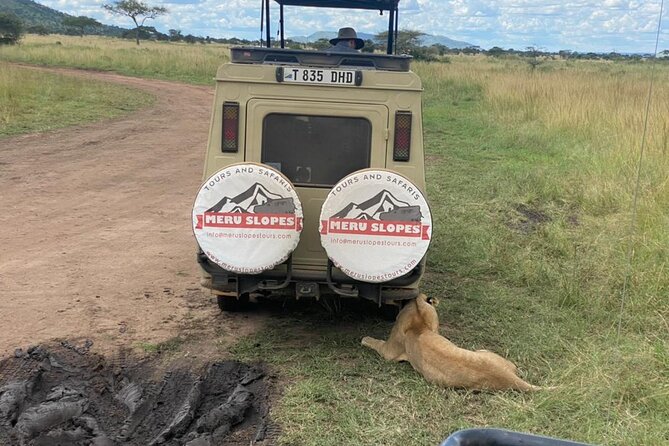
Tanzania packs three major wildlife areas into five days here: elephant country in Tarangire, the open plains of the Serengeti, and the wildlife-filled bowl of Ngorongoro Crater. I like the broad mix of scenery and the chance to spend two full days in the Serengeti, where timing can bring lions, cheetahs, leopards, and migrating wildebeest.
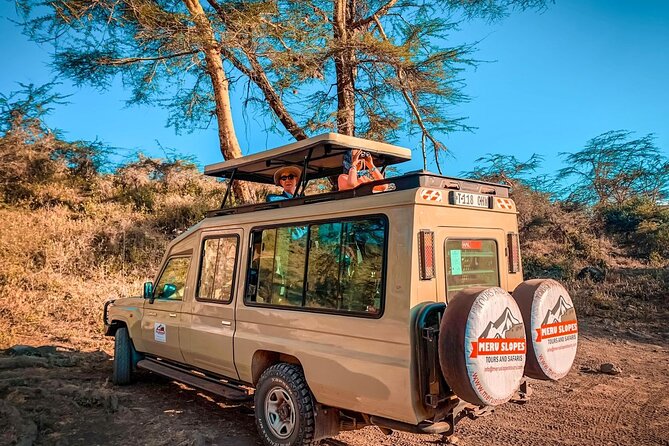
I also like the practical touches: private transport, meals, unlimited drinking water, Wi-Fi in the safari vehicle, and AMREF Flying Doctors emergency rescue cover. The trade-off is a busy schedule with long drives, early starts, basic camping, and some unclear details about the advertised Maasai visit, which appears in the plan as a Mto wa Mbu village visit instead.
Key points at a glance
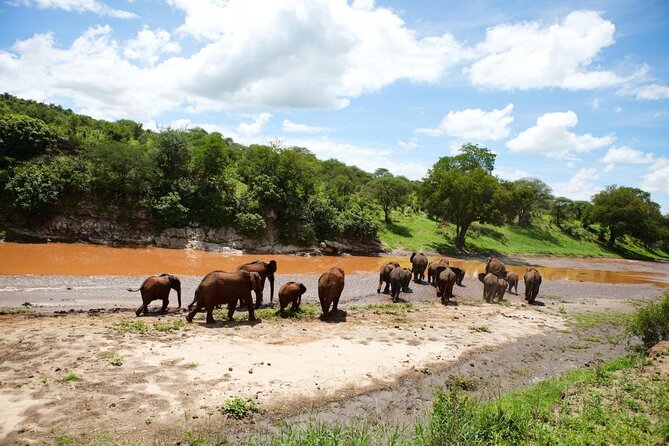
- Three famous wildlife areas in five days: Tarangire, Serengeti, and Ngorongoro each offer a different type of safari.
- Two nights focused on the Serengeti: Day 3 gives you a full game-drive day, with a stated effort to follow the wildebeest migration.
- Early starts bring the best light: You wake around 5:45 a.m. on Day 4 for sunrise in the Serengeti and another early morning in Ngorongoro.
- Camping keeps the price reasonable: The advertised rate is $1,280 per person, including transport, meals, water, and park-related costs.
- Small group format: The safari accepts a maximum of six people, although the supplied information also describes private transport.
- Mto wa Mbu adds a local visit: Expect banana plantations, community life, and a local guide, not just wildlife viewing.
Three parks, three very different safari moods
This is a classic northern Tanzania circuit. Tarangire is known for elephants, baobab trees, and the Tarangire River. The Serengeti gives you huge open plains and the best chance to spend time tracking big cats and herds. Ngorongoro offers compact game viewing inside an ancient volcanic crater.
That variety is the main reason to consider this trip. You are not spending five days in one park hoping the scenery changes. Each stop has its own character, and the route gives you a good first look at northern Tanzania.
The schedule is also built around wildlife hours. You get an afternoon drive in Tarangire, an afternoon and sunset drive in the Serengeti, an early morning there on Day 4, and a sunrise start at the crater. Those hours matter. Animals often move more at dawn and late afternoon, while the light is better for photographs.
The price is $1,280 per person. For five days, that is a substantial but competitive amount for a safari that includes a private vehicle, meals, unlimited water, Wi-Fi in the vehicle, park fees and emergency rescue cover. You should still confirm the exact accommodation, camping equipment, airport transfer details, and whether any lodge upgrade costs extra before paying.
More Serengeti and Ngorongoro itineraries:
- Safari Serengeti And Ngorongoro
★ 5.0 · 288 reviews - Serengeti, Ngorongoro and Tarangire 4 Days Safari
★ 5.0 · 59 reviews - 4 Days Group Joining Camping Safari to Tarangire Serengeti Ngorongoro Crater
★ 5.0 · 50 reviews
Day 1: Elephants and baobabs in Tarangire
Pickup is scheduled for 8 a.m. from an Arusha hotel, followed by a drive of about three hours to Tarangire National Park. The park lies roughly 115 kilometers from Arusha and covers about 2,800 square kilometers, so the first day is not a quick look before lunch. It is planned as a full game-drive day.
Tarangire’s main attraction is its large elephant population. The river draws wildlife, especially during dry periods, and the park is also known for lions, leopards, pythons that climb trees, and its enormous baobabs.
The baobab is not just a striking photo subject. Its thick trunk can store large quantities of water, and the trees can live for centuries. You will see a park that feels different from the Serengeti, with more prominent trees and a stronger sense of woodland and river country.
The timing is sensible, but the day will feel long. After the game drive, you continue to Jambo Lodge for dinner and overnight accommodation. The supplied plan calls this a lodge stay, while the tour is marketed as camping, so ask exactly what is provided on this night. That small check can prevent confusion after a full day in the vehicle.
Day 2: Entering the Serengeti through the highlands
After breakfast, you travel through the farmland around Karatu and the Ngorongoro Conservation Area before descending toward the Serengeti. This transfer is part of the experience, but it takes time. You should expect a full day with several hours in the vehicle, rather than a short hop from one park gate to another.
The route changes gradually. The higher country around Karatu gives way to the wide Serengeti plains, where the view opens out in every direction. The central Seronera area is the main focus because the Seronera River attracts many species and supports a strong concentration of wildlife.
You are due to arrive around lunchtime, then begin an afternoon game drive. The plan continues until sunset, giving you a first taste of the Serengeti when the light softens and animals become more active.
This is one of the most important days for setting expectations. The Serengeti is enormous. You may see a great deal, but no guide can promise a particular animal or a migration crossing. The value of this day is the time spent in the park, not a checklist.
The campsite is another practical point to confirm. Camping is included, but the information does not describe tent size, shower arrangements, toilets, bedding, or whether staff set up camp. One useful item to pack is toilet paper. A former passenger specifically found it helpful to bring some for the campsite.
Day 3: A full day tracking wildlife in the Serengeti
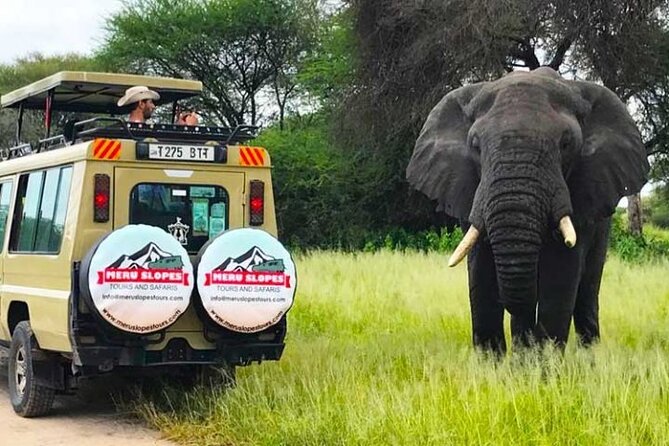
Day 3 is the safari’s strongest wildlife day on paper. You have breakfast early, then spend the day driving through key areas of the Serengeti. With no major park transfer scheduled, the guide has more freedom to search for wildlife rather than simply moving you toward the next overnight stop.
The plan gives special attention to the wildebeest migration. The migration follows a broad annual pattern, but its exact position changes from year to year. June through September is presented as the best period for migration viewing, while January through March is the main calving season.
From July to September, the route may reach northern Serengeti for the Mara River crossings. That possibility sounds exciting, but you should treat it as a seasonal aim, not a guarantee. The northern route can involve extra driving, and the herds do not cross on a timetable. You may see the herds gathering, moving, or spread across another part of the ecosystem instead.
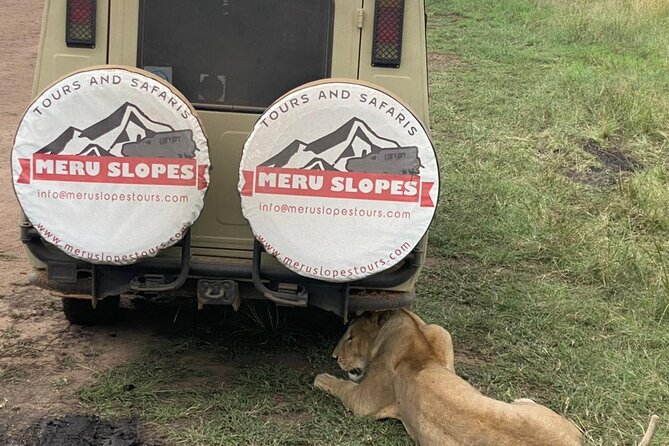
The Serengeti also gives you a chance to see predators. The supplied experiences include sightings of all five traditionally named Big Five, as well as cheetahs and leopards. One guide named Asanteali is praised for making a strong effort to find animals, while Jacob, Saleh, Mohammed, Patrick, Lobulu, Nuru, Douglas, and others are also named in the supplied accounts. Guide assignments can change, so do not book solely around one name.
What matters more is the guide’s ability to read animal behavior, communicate clearly, and position the vehicle respectfully. The strongest accounts repeatedly praise the driver-guides for searching hard, sharing wildlife knowledge, and keeping the days organized. That is especially important in the Serengeti, where the size of the park can make an inexperienced guide feel the difference.
More Maasai village visits:
- Maasai village visit and Chemka hot-springs with hot lunch.
★ 5.0 · 33 reviews - 4-Day Tarangire Serengeti, Ngorongoro & Maasai Guided group tour
★ 5.0 · 16 reviews - Maasai village visit and chemka hot-springs with hot lunch
★ 4.7 · 13 reviews - Private Full-Day Tour Maasai Village and Kikuletwa Hot Spring
★ 5.0 · 12 reviews
Day 4: Sunrise in the Serengeti and night by the crater
The fourth day begins around 5:45 a.m. with an early breakfast. You then set out for sunrise and an early morning game drive until about 11:30 a.m.
This is a good use of time. Morning light brings cooler air and active wildlife, and the sunrise over the Serengeti is one of the trip’s promised highlights. After the drive, you return to camp for a hot lunch, pack your belongings into the vehicle, and continue with another game drive while heading toward Ngorongoro Crater.
This is also one of the hardest days physically. You have an early start, several hours of wildlife viewing, lunch, packing, more driving, and an overnight stay at Simba Campsite near the crater. The schedule offers a lot, but it leaves little room for a slow afternoon or an early rest.
Simba Campsite is well placed for the next morning’s crater descent. Again, confirm the camping conditions in advance. If you prefer a bed, one person found the company willing to arrange a lodge upgrade for an additional charge. That option may suit you if comfort matters more than keeping the standard price low.
Day 5: Ngorongoro Crater and Mto wa Mbu
The final morning begins early, with views of the rising sun over the crater rim. After breakfast, you drive down the adventurous track into Ngorongoro Crater for a full game drive.
The crater is about 610 meters deep and covers roughly 260 square kilometers. Its enclosed shape supports a high concentration of animals, making it one of Tanzania’s most reliable places for seeing wildlife in a limited area. You might see wildebeest, zebra, gazelles, elephants, and many bird species during the drive.
Ngorongoro feels different from the Serengeti. The Serengeti is about distance and open horizons. The crater is about enclosure and concentration. From the rim, you look down into a huge natural basin, then follow the track onto the crater floor.
The crater is often treated as a guaranteed wildlife day, but it still has limits. You are sharing a busy, tightly managed area with other safari vehicles, and the roads can be rough. The early start is worthwhile, though, because it gives you more time before the day becomes hotter and busier.
After the crater, the itinerary includes Mto wa Mbu village. A local guide leads you through community areas and banana plantations, where more than 30 banana varieties are grown. The visit is intended to show social and economic life in the community, and you are encouraged to ask questions along the way.
This stop is particularly useful after several days of wildlife viewing. It gives you contact with everyday life in northern Tanzania instead of ending with one more long vehicle transfer. The title refers to visiting Maasai, but the detailed plan names Mto wa Mbu and does not specifically promise a Maasai boma or Maasai cultural meeting. Ask the operator to clarify exactly what cultural visit is included.
After Mto wa Mbu, you drive to Arusha for the overnight stay. The activity information lists pickup at Kilimanjaro Airport at 7:30 a.m., while the first day says pickup from an Arusha hotel at 8 a.m. Those are not the same starting point, so confirm your pickup location and the final drop-off before booking.
Camping, food, transport, and group size
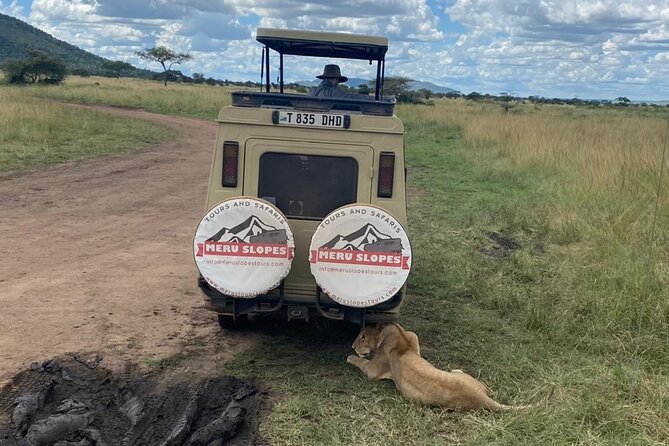
The trip includes breakfast four times, lunch five times, and dinner five times. That generally matches a five-day safari with four breakfasts before the final return, but you should confirm which meals are served on arrival and departure days.
Unlimited drinking water is a useful inclusion. Safari days are long, and buying bottles repeatedly can become a nuisance. Wi-Fi in the safari vehicle is also listed, though you should treat it as a practical extra rather than a reason to expect a strong connection across remote parks.
Private transport gives the itinerary flexibility. The maximum group size is six, which is small enough to keep the vehicle manageable and make it easier to share sightings. The information uses both private transportation and a maximum of six participants, so ask if your booking is fully private or a small shared departure.
AMREF Flying Doctors emergency rescue cover is included. That is reassuring in a remote region, though it is not a substitute for ordinary travel insurance. Flights, visas, and tips are not included, so budget for those separately.
Camping is the main value choice. You trade some comfort for more time near the parks and a lower overall cost than a lodge-based safari. Pack toilet paper, warm clothing for early mornings, and anything you need to sleep comfortably. The available information does not confirm the exact camping kit, so request those details before departure.
What the $1,280 price buys you
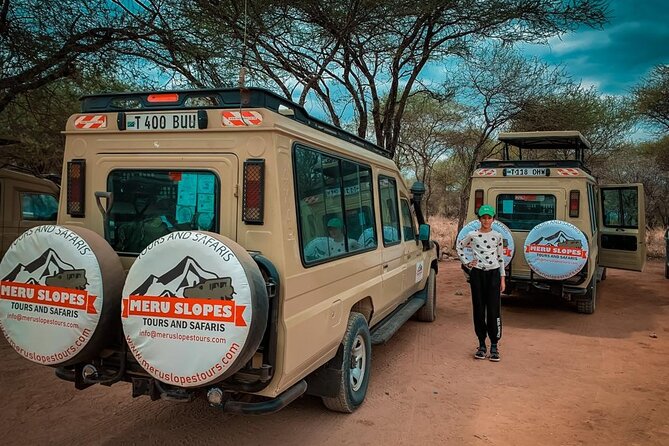
At $1,280 per person, this is not a bargain-basement park visit. It includes five days of transport, meals, water, Wi-Fi, park fees and rescue cover across three major destinations. The two Serengeti days are especially important because park access and fuel add up quickly in a route of this length.
The value is strongest if you want a broad first safari and are happy with camping. You receive a full Tarangire day, a substantial Serengeti stay, a crater tour, and a community visit rather than spending the entire trip on transfers.
The value is weaker if you want slow travel, upscale accommodation, or guaranteed migration crossings. You may also spend a great deal of time driving, particularly if the migration route reaches northern Serengeti.
Communication appears to be a strength. Jerome is described as responding promptly and meeting passengers at the start, while Kelvin is praised for helping with arrangements. The named guides and cooks also receive strong personal praise. Dula, Gideon, Burhan, and other cooks are credited with good meals and attentive service.
Who should book this safari?
I would recommend it to a first-time safari visitor who wants the famous northern circuit in a short period. It suits you if seeing a wide range of wildlife matters more than having a relaxed timetable, and if camping is part of the appeal rather than a compromise you resent.
It is also a good fit for couples or small groups who want the chance of a private or very small departure. The supplied experiences include a last-minute change that turned an open group booking into a two-person safari, though you should not assume that will happen for every departure.
You may want a different plan if you dislike early mornings, rough roads, long drives, or basic campsite facilities. A lodge upgrade may be possible, but it adds cost and should be arranged in advance.
The safari has a perfect 5.0 rating from 58 supplied reviews and a 100 percent recommendation figure. The most praised points are the effort made by the driver-guides, the number of animals seen, the food, the camps, and the company’s communication. Those are meaningful strengths, but animal sightings still depend on season, weather, and luck.
Final booking advice
Book this tour if you want a compact, wildlife-heavy introduction to Tarangire, Serengeti, and Ngorongoro, and you are comfortable with camping and early starts. The best reasons to choose it are the two Serengeti days, the included practical services, and the repeated praise for guides such as Jacob, Saleh, Mohammed, Patrick, Nuru, and Asanteali.
Before you pay, get four points in writing: the exact pickup location, the camping equipment and facilities, the accommodation at Jambo Lodge and Simba Campsite, and what the Maasai visit means in practice. If those details match your expectations, the $1,280 cost offers a solid way to see three of Tanzania’s headline safari areas in five demanding but rewarding days.
FAQ
How long is the safari?
The safari lasts approximately five days.
Where does the safari start?
The meeting information lists Kilimanjaro Airport at 7:30 a.m. The first itinerary day lists pickup from an Arusha hotel at 8 a.m., so you should confirm your exact pickup point with the operator.
Which parks are included?
The route includes Tarangire National Park, Serengeti National Park, and Ngorongoro Conservation Area, including a game drive inside Ngorongoro Crater.
How long do you spend in the Serengeti?
You spend two days focused on the Serengeti. Day 2 includes an afternoon game drive until sunset, and Day 3 is planned as a full game-drive day. Day 4 also includes an early morning drive before continuing toward Ngorongoro.
Is the wildebeest migration guaranteed?
No. The itinerary says the guide will try to follow the migration, but its location changes each year. June through September is identified as the best period for migration viewing, and January through March is the calving season.
Is camping included?
Yes. Camping is part of the advertised experience. The itinerary also names Jambo Lodge and Simba Campsite, so confirm which nights use tents and which use lodge accommodation.
Is food included?
Yes. The inclusions list five lunches, five dinners, and four breakfasts.
Is drinking water included?
Yes. Unlimited drinking water is included during the safari.
What is not included?
Tips, flights, and visas are not included in the price.
Is there a cultural or Maasai visit?
The title refers to visiting Maasai, but the detailed final day describes a visit to Mto wa Mbu village. You visit banana plantations and learn about community life with a local guide. Confirm whether a separate Maasai visit is included.
Can the booking be canceled?
You can cancel at least 24 hours before the experience starts for a full refund. Cancellations or changes made less than 24 hours before the start time are not accepted for a refund.
More five day trips in Moshi & Kilimanjaro
- 5-Day Majestic Tanzania Safari – High End All Inclusive
★ 5.0 · 44 reviews - 5 Day Mid range Tanzania Safari
★ 5.0 · 34 reviews - 5 days Tanzania Camping Safari
★ 5.0 · 29 reviews - Safari in Tanzania 5 days: Manyara, Ngorongoro, Serengeti
★ 5.0 · 29 reviews
Newly listed around Moshi & Kilimanjaro
- Climb Mount Kilimanjaro: 7 Days Machame Route★ 5.0 · 3 reviews
- 6 Days Mount Kilimanjaro Climbing via Rongai Route★ 5.0 · 3 reviews
- Explore 1 day Ngorongoro Crater Budget Group Safari from Arusha★ 5.0 · 3 reviews
- Mt. Kilimanjaro Day Hiking★ 5.0 · 3 reviews
- Chemka (Kikuletwa) Hot Springs, Tanzania★ 5.0 · 3 reviews
- Guided City tour of Moshi★ 4.3 · 3 reviews
- 8 Day Tanzania Family Safari★ 5.0 · 3 reviews
- Serengeti Safari with Sirikwa Travel★ 5.0 · 3 reviews
Serengeti & Ngorongoro Safaris, compared.
Balloon Safari & Bush Breakfast in Serengeti – Miracle Experience
Read our review →
Private 6-Day Tarangire Manyara Crater and Serengeti with Mid-Range Lodges
Read our review →
5 Days Camping Tarangire, Serengeti & Ngorongoro crater & Visiting Maasai
Read our review →Browse the lists this tour appears in