
Reviewed · SERENGETI & NGORONGORO SAFARIS
5 Days Safari In Serengeti And Ngorongoro
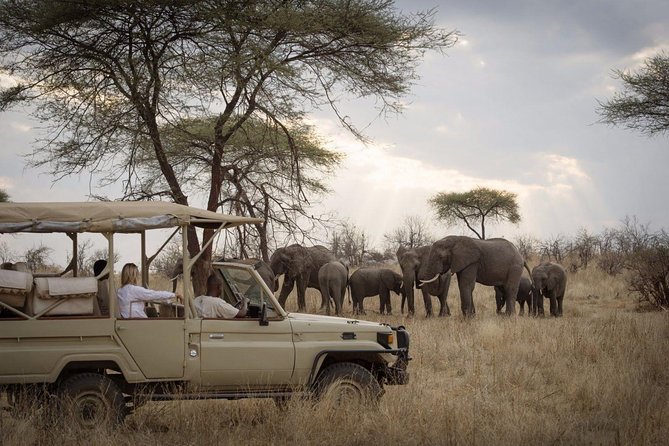
The main attraction here is variety packed into five days: bird-filled Lake Manyara, the ancient discoveries of Olduvai Gorge, two days across the Serengeti, and a final game drive inside Ngorongoro Crater. I like the private format, since your group can focus on the animals you most want to see, and I like the practical safari vehicle, equipped with a fridge, power, and VHF radio.
I also like the gentle start at Arusha Safari Lodge on the slope of Mount Meru. It gives you time to arrive, check equipment, and attend a briefing before the long drives begin. The main consideration is pace: this is an active, road-heavy safari, with several days lasting about seven hours, and the itinerary offers less downtime than a slower luxury safari.
The five things that matter most
- Two full days in the Serengeti: More time in the park gives you a better chance of seeing lions, cheetahs, leopards, elephants, zebra, wildebeest, and other animals.
- Lake Manyara picnic stop: You get forest, open grassland, hot springs, steep slopes, and a lake in one compact park, plus more than 350 recorded bird species.
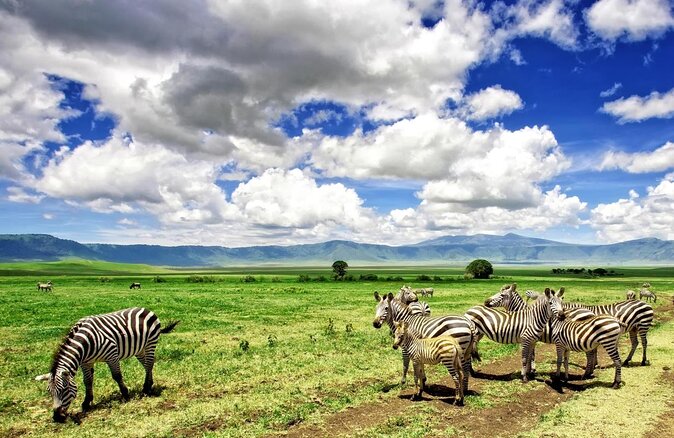
- Ngorongoro Crater game drive: The crater is more than 2,000 feet deep and about 12 miles wide, with a very high concentration of wildlife.
- A private group experience: Only your own party takes part, so the guide can respond to your interests and questions.
- Useful safari equipment: The vehicle includes a fridge, power, and VHF radio, practical touches on long days in the bush.
- Active rather than purely restful: Moderate fitness is recommended, though the scheduled sightseeing is mainly by safari vehicle.
A strong northern Tanzania route in five days
For $3,500 per person, this is not a cheap safari. It is priced as a private, multi-day experience with airport pickup, accommodation, meals, park visits, guiding, and transport across several major destinations.
The value comes from the route. In only five days, you visit three of northern Tanzania’s best-known wildlife areas and add Olduvai Gorge for cultural and scientific context. You also spend two nights in the Serengeti rather than rushing through it in a single game drive.
That said, the price deserves careful thought. The itinerary does not describe a small luxury lodge, private plunge pools, or a high-end vehicle interior. Accommodation is in tented camps and lodges, so you are paying mainly for the private organization, guide, transport, park access, and the concentration of major sights.
I would compare the exact accommodation category and vehicle arrangement before booking. The published plan includes full board on the main safari days, half board on the first night, and dinner on the final night. It also lists breakfast, lunch, and dinner five times each, so it is worth confirming the meal schedule with the operator before departure.
More Safaris in Moshi
- Safari Serengeti And Ngorongoro
★ 5.0 · 288 reviews - Big Five Safari In Tanzania
★ 5.0 · 99 reviews - Unforgettable Tanzania Safari And Zanzibar Beach
★ 5.0 · 97 reviews
Day one: a quiet start beneath Mount Meru
Your arrival point is Kilimanjaro International Airport, with pickup listed for 7:30 a.m. The private transfer takes you to Arusha Safari Lodge, set on the slope of Mount Meru.
This first day is useful because it protects you from starting the safari immediately after a long flight. You have time at leisure, then meet the team for a pre-safari briefing and equipment check. The operator also confirms that you have the required medical coverage and travel insurance.
I would treat this as an orientation day, not a major sightseeing day. Keep your camera, documents, medication, and one change of clothes accessible rather than buried in luggage. The lodge is also connected to the Mount Meru setting, so you begin with a sense of place before the open-country drives start.
The first night is listed as half board at Arusha Safari Lodge. Since the full meal plan begins later, clarify whether lunch is included if you arrive early.
Day two: Lake Manyara’s compact mix of forest and shore
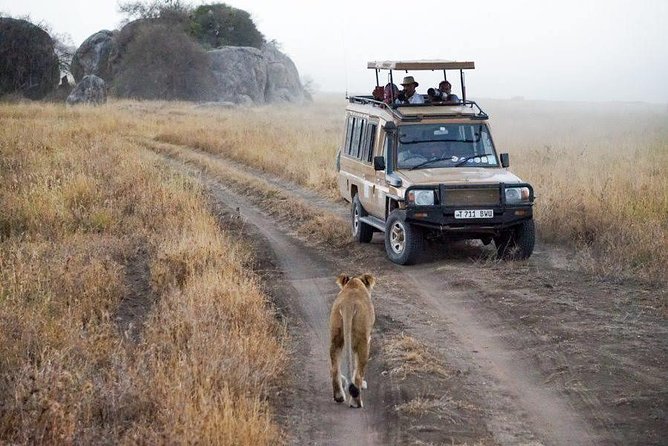
The road from Arusha takes you to Lake Manyara National Park, a relatively small park with a surprising range of habitats. About two-thirds of the park is covered by the lake, while the rest includes groundwater forest, open grassland, hot springs, dense woodland, and steep mountain slopes along the Great Rift Valley.
This is a good first wildlife day because the scenery changes quickly. You are not looking at the same type of country for hours. One moment you may be moving through woodland, and later you may reach open areas near the lake shore.
The picnic lunch is planned within the park. That saves time and keeps the day centered on the reserve rather than sending you out to a restaurant. It also means you should expect a practical outdoor meal rather than a long, formal lunch.
Birdwatchers have a particular reason to value this stop. More than 350 bird species are recorded here. The park is also known for its tree-climbing lions, an unusual sight that can require patience and luck. Wildlife is never guaranteed, so I would see the lions as a bonus rather than the main reason to choose this park.
The listed duration is about six hours, making this one of the more manageable days. You spend the night at Kirurumu Tented Camp on a full-board basis. A tented camp adds atmosphere, but it is still important to check the exact room and bathroom setup if comfort is a major part of your decision.
Day three: Olduvai Gorge and the first Serengeti drive
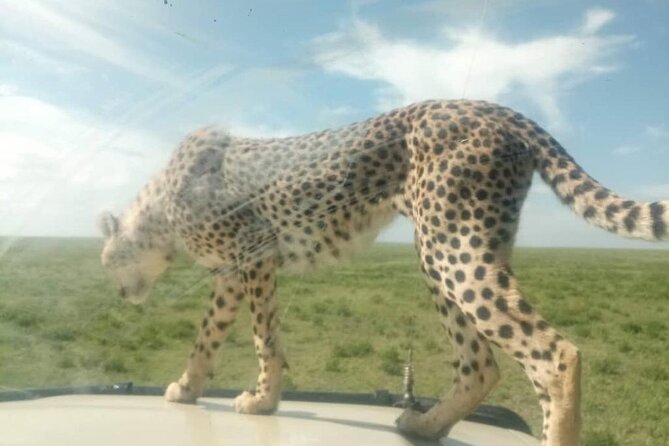
Day three links human origins with one of Africa’s greatest wildlife areas. The route includes Olduvai Gorge, known for the discovery of early hominid remains dating back about two million years.
Olduvai is more than a quick photo stop. It gives the Serengeti region a human story as well as a natural one. The gorge lies within the Great Rift Valley, and its importance helps explain why this part of Tanzania attracts visitors interested in archaeology, geology, and wildlife.
After Olduvai, you continue to Serengeti National Park. The name means endless plains, and the scale becomes clear once you are inside the park. The stated area is about 5,600 square miles, so a single drive can only show you a small portion of it.
That is why the two-night stay matters. You are not simply crossing the Serengeti on the way to Ngorongoro. You have the afternoon game drive on arrival, then another full day in the park.
The Serengeti ecosystem is famous for its large herds and predators. You might see wildebeest, zebra, gazelle, elephant, giraffe, buffalo, lion, leopard, cheetah, hyena, or jackal. The guide’s skill matters here, especially when locating less obvious animals such as leopards and cheetahs.
The day is listed at about seven hours. Expect time on rough or unpaved roads, frequent stops, and long stretches of watching rather than constant action. The vehicle’s fridge is useful for keeping drinks cool, while the power supply helps with cameras and phones. A VHF radio can help the driver communicate in the field, though it does not guarantee a sighting.
You spend the night at Kati Kati Tented Camp, again with full board.
More Serengeti and Ngorongoro itineraries:
- Serengeti, Ngorongoro and Tarangire 4 Days Safari
★ 5.0 · 59 reviews - 5 Days Camping Tarangire, Serengeti & Ngorongoro crater & Visiting Maasai
★ 5.0 · 58 reviews - 4 Days Group Joining Camping Safari to Tarangire Serengeti Ngorongoro Crater
★ 5.0 · 50 reviews - 3-Day Ngorongoro Crater Manyara and Tarangire Safari from Arusha
★ 5.0 · 49 reviews
Day four: the Serengeti gets its full chance
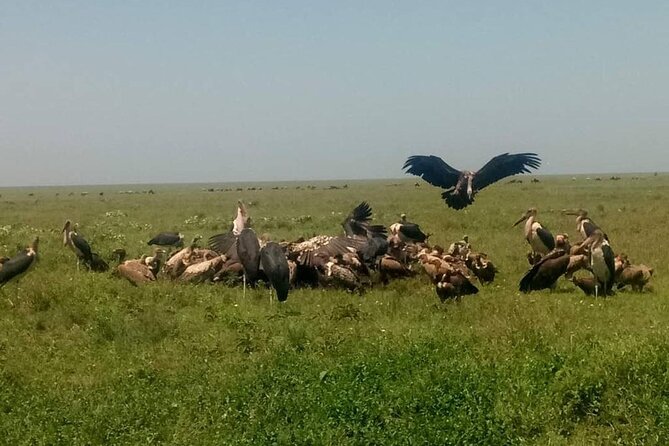
The second Serengeti day is the heart of the trip. Instead of packing up after a quick look, you get an encore game drive across the park.
The annual migration is often the headline attraction, with millions of animals moving between the Serengeti and Kenya’s Masai Mara from roughly May to December. But you should not book this safari only for a migration crossing. Timing, animal movement, and local conditions can change what you see.
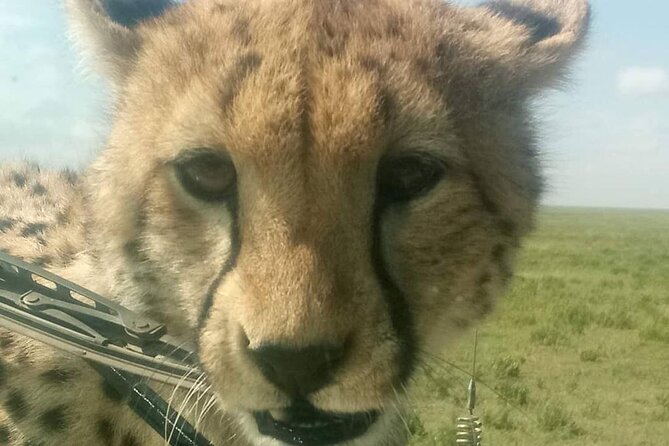
Even outside the peak migration period, the Serengeti supports large groups of wildebeest, zebra, and gazelle, along with predators that follow them. Lions may be easier to spot than leopards. Cheetahs can be visible in open areas, while hyenas and jackals may appear around a kill or along the route. Elephants, giraffes, and buffalo add variety to the drive.
I like the way this day gives your guide room to respond. In a private group, you can say which animals you still hope to find and spend more time with a sighting that matters to you. A previous safari with this operator was especially praised for driver-guide Praygod, who was described as friendly and attentive to requests. Other trips have highlighted guides and drivers named Elias and James. Your assigned guide may be different, but these names suggest the kind of personal guiding the company aims to provide.
Do not underestimate the physical side of the day. The program recommends moderate fitness, and the long hours in a vehicle can be tiring even when you are not walking. Bring a hat, sunscreen, binoculars if you have them, and a camera battery plan. The itinerary does not promise a specific walking excursion, so ask the operator to explain exactly what the trekking reference means.
You return to Kati Kati Tented Camp for another full-board night. Staying in the same camp avoids another packing session and keeps the focus on wildlife.
Day five: Ngorongoro Crater’s concentrated wildlife
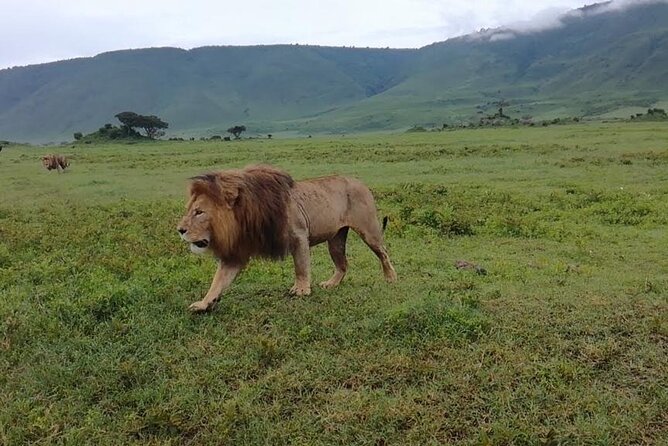
The final wildlife stop is Ngorongoro Crater, one of the most distinctive places on the route. The volcanic caldera is more than 2,000 feet deep and about 12 miles across. Around 30,000 animals are said to live within it, creating a strong chance of seeing several major species in a relatively compact area.
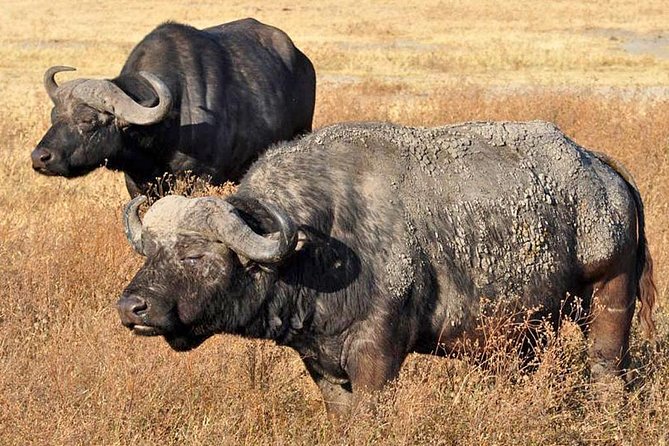
This is the best day for visitors who want a concentrated big-game experience. The crater is associated with the Big Five: lion, elephant, rhino, buffalo, and leopard. Black rhinos are one of the special targets here, though sightings are never certain.
The crater differs from the Serengeti in feel. The Serengeti gives you scale and open distance. Ngorongoro gives you a contained setting where wildlife can be easier to find, though the roads and timing can also make the day feel busy.
The itinerary schedules the crater visit before an afternoon return to Arusha. At about seven hours, it is another full day rather than a brief stop. You should expect an early start and a long ride after the game drive. The final night is at Arusha Safari Lodge on a full-board basis.
If you are flying out soon after the tour, confirm the transfer timing carefully. The published plan returns to Arusha, while the airport pickup is specifically described for Kilimanjaro International Airport. Do not assume the final airport transfer is included unless the operator confirms it.
What the private format changes
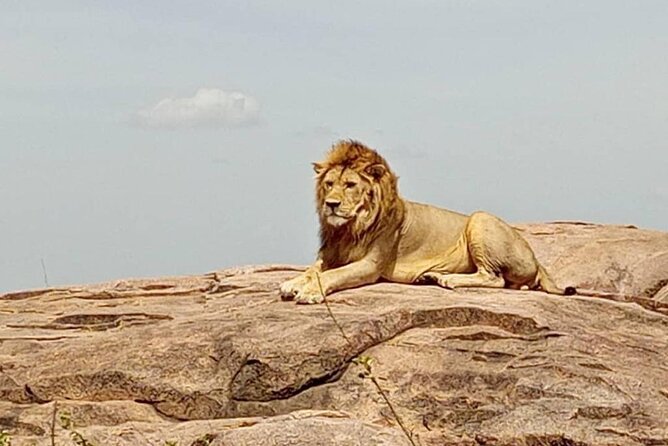
A private tour does not make the roads shorter, but it gives you more control. Your group alone participates, so you can ask questions, discuss animal behavior, and tell the guide what you hope to see.
That matters most on the Serengeti days. A fixed group tour may need to leave a sighting because one person is ready to go. A private group can often make decisions together. The exact freedom depends on park rules, driving conditions, and the guide, but the format is still more personal.
The vehicle equipment also suits this route. A fridge is a small luxury after hours outside town. Power is helpful if you take many photos, and the VHF radio gives the driver a communication tool while working in the park.
The tour is described as suitable for most people, with service animals allowed and public transportation nearby. Still, moderate fitness is recommended, and you should ask for clarification about the trekking element, since the daily schedule centers on vehicle-based touring.
Meals, camps, and practical comfort
All meals and accommodation are included in the package description, with the itinerary specifying half board at Arusha Safari Lodge on the first evening and full board at Kirurumu, Kati Kati, and the final Arusha stay.
The accommodation pattern is practical. You spend the first night in Arusha, one night near Lake Manyara, two nights in the Serengeti, and the final night back in Arusha. That arrangement follows the route and avoids unnecessary backtracking.
Tented camps are a good fit for a safari if you want to remain close to the setting. They are not the same as a standard city hotel, so check what level of tented accommodation is included. Personal items are not covered, and tips are excluded. Budget separately for both.
The company has also handled trips during difficult periods and changing conditions, and the supplied experiences repeatedly highlight clear communication and airport coordination. I would still confirm pickup time, final drop-off, insurance requirements, and the exact accommodation names before paying the balance.
Who should book this safari?
I would recommend this trip to you if you want Tanzania’s best-known northern circuit in a short window, especially if the Serengeti is your priority. The two full game-drive days there are the strongest feature.
It also suits couples, families, and private groups who want a guide focused on their interests. Past bookings have included honeymooners and family groups, and the private setup can make the experience easier to shape around different ages and expectations.
I would be more cautious if you want a slow, restful holiday. The route covers large distances, several days run about seven hours, and the final crater visit is followed by a return to Arusha. If you want serious trekking, ask for a revised itinerary because the listed schedule does not detail a mountain hike or crater walk.
The advertised 90 percent recommendation rate and 4.8 rating from 10 recorded reviews suggest a strong early track record, but the sample is small. The most consistent praise centers on organization, airport transfers, friendly communication, and driver-guides who respond to animal requests. Those are exactly the areas I would value most on a safari.
Should you book the five-day Serengeti and Ngorongoro trip?
Book it if you want a private, tightly planned introduction to northern Tanzania, with two Serengeti days, a Lake Manyara picnic, Olduvai Gorge, and Ngorongoro Crater in one package. The route gives you impressive variety and a serious chance at major wildlife sightings.
Before booking, confirm the accommodation standard, the meaning of the trekking requirement, the final airport transfer, and the precise meal schedule. At $3,500 per person, the tour makes the most sense when you value private guiding and included logistics more than bargain pricing.
The cancellation terms are generous if your plans change: cancellation at least 24 hours before the start time qualifies for a full refund. Poor weather may lead to a new date or full refund. Tips and personal expenses remain yours.
FAQ
Where does the safari start?
The listed meeting point is Kilimanjaro International Airport in Tanzania, with a start time of 7:30 a.m. Pickup is offered.
How long is the experience?
The safari lasts approximately five days.
Is this a private tour?
Yes. Only your group participates in the activity.
Which parks and sites are included?
The route includes Lake Manyara National Park, Olduvai Gorge, Serengeti National Park, and Ngorongoro Crater.
Are meals included?
Yes. Breakfast, lunch, and dinner are listed as included. The itinerary specifies half board on the first night and full board during the main safari stays.
What animals might I see?
Possible sightings include lions, zebras, leopards, cheetahs, wildebeest, gazelles, elephants, giraffes, buffalo, hyenas, jackals, and black rhinos. The route is also intended to offer a chance to see the Big Five.
What is the cancellation policy?
You can cancel at least 24 hours before the experience for a full refund. Cancellations or changes made less than 24 hours before the start time are not accepted for a refund. If poor weather causes cancellation, you are offered another date or a full refund.
More five day trips in Moshi & Kilimanjaro
- 5-Day Majestic Tanzania Safari – High End All Inclusive
★ 5.0 · 44 reviews - 5 Day Mid range Tanzania Safari
★ 5.0 · 34 reviews - 5 days Tanzania Camping Safari
★ 5.0 · 29 reviews - Safari in Tanzania 5 days: Manyara, Ngorongoro, Serengeti
★ 5.0 · 29 reviews
More Safaris in Moshi & Kilimanjaro
- 8-Day Essence of Tanzania Safari – Luxury
★ 5.0 · 72 reviews - Great Migration Safari In Tanzania
★ 5.0 · 71 reviews - 6 Days 5 Night Safari
★ 5.0 · 57 reviews - 7-Day Magical Tanzania Safari -Premium High End Package
★ 5.0 · 53 reviews
Newly listed around Moshi & Kilimanjaro
- Climb Mount Kilimanjaro: 7 Days Machame Route★ 5.0 · 3 reviews
- 6 Days Mount Kilimanjaro Climbing via Rongai Route★ 5.0 · 3 reviews
- Explore 1 day Ngorongoro Crater Budget Group Safari from Arusha★ 5.0 · 3 reviews
- Mt. Kilimanjaro Day Hiking★ 5.0 · 3 reviews
- Chemka (Kikuletwa) Hot Springs, Tanzania★ 5.0 · 3 reviews
- Guided City tour of Moshi★ 4.3 · 3 reviews
- 8 Day Tanzania Family Safari★ 5.0 · 3 reviews
- Serengeti Safari with Sirikwa Travel★ 5.0 · 3 reviews
Serengeti & Ngorongoro Safaris, compared.


Balloon Safari & Bush Breakfast in Serengeti – Miracle Experience
Read our review →




Private 6-Day Tarangire Manyara Crater and Serengeti with Mid-Range Lodges
Read our review →
5 Days Camping Tarangire, Serengeti & Ngorongoro crater & Visiting Maasai
Read our review →Browse the lists this tour appears in