
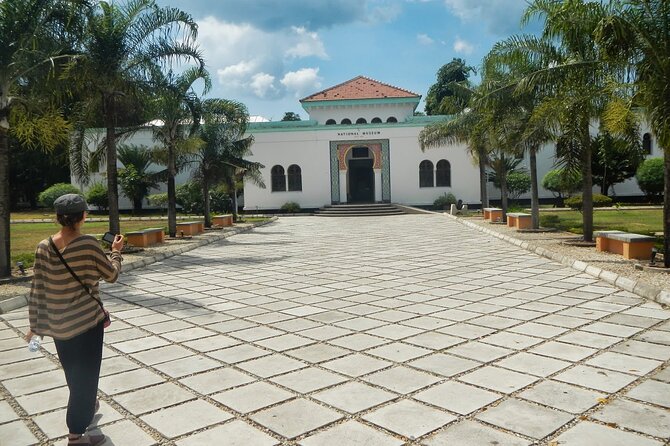
Reviewed · DAR ES SALAAM TOURS
Full-Day Private Tour of Dar es Salaam
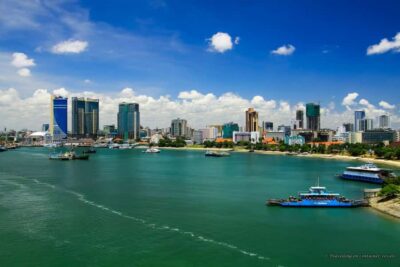
Dar es Salaam reveals itself through places that still serve daily life: fish arriving at market, shoppers moving through Kariakoo, carvers shaping Makonde figures, and historic churches facing the harbor. This private tour packs those scenes into one day, with hotel or port pickup and a guide focused on helping you understand the city.
I like the private format, since your group can ask questions and adjust the pace. I also like the mix of working markets and formal museums, which gives you more than a drive past monuments. The main concern is reliability: several bookings had serious pickup or guide communication problems, so confirm the meeting details before you go.
At a glance: what makes this Dar es Salaam tour useful
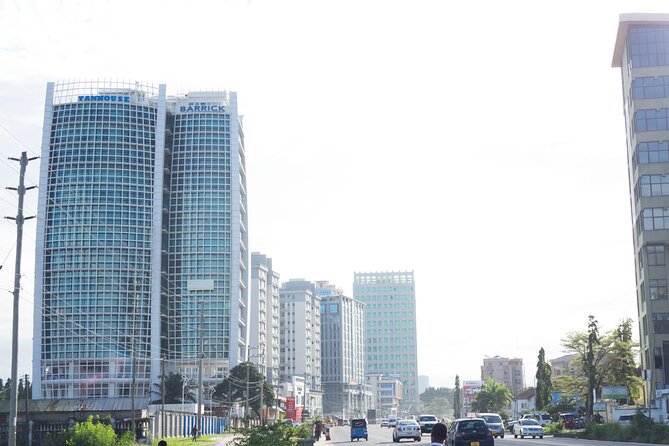
- Fish market access: See the route fish takes from the sea to the city market, then watch the trade in action.
- Six to eight hours in a private vehicle: Pickup, air-conditioned transport, water, snacks, lunch, drinks, and entrance fees are included.
- Strong cultural focus: The National Museum and Village Museum explain Tanzania’s people, history, and more than 130 tribal traditions.
- Historic downtown stops: St. Joseph Cathedral, Azania Front Lutheran Cathedral, and the Askari Monument offer a compact lesson in the city’s German and colonial-era past.
- Shopping with a purpose: Mwenge Woodcarvers Market is the place for Makonde carvings, Tinga Tinga paintings, and Tanzanian handicrafts.
- Language choice, with a warning: English, German, French, and Spanish tours are offered, but language matching has not always worked as promised.
A full day built around Dar’s everyday life
This is not a gentle sightseeing loop. The schedule moves from a war cemetery to a fish market, then to museums, churches, a downtown monument, two large markets, and a cultural village. That range is the point: you see Dar es Salaam as a city of trade, faith, memory, art, and ordinary work.
At $160 per person, the price makes the most sense for a small group that values a private vehicle and a guide. The cost includes lunch, alcoholic beverages, bottled water, snacks, transport, taxes, and admission fees, so you are not constantly reaching for your wallet during the day. Group discounts are also offered, although the exact savings are not specified.
I would compare this with the cost and limits of arranging separate taxis, museum visits, and market stops. For one or two people, the price may feel high. For a group splitting the vehicle and guide cost, it becomes easier to justify, especially if you have only one day in Dar es Salaam.
More full day trips in Dar es Salaam:
- Private Full-Day Trip to Mikumi National Park from Dar es Salaam
★ 5.0 · 54 reviews - Dar Es Salaam City Tour (Full Day With Private Guide And Car)
★ 5.0 · 39 reviews - Explore Dar es Salaam: Full-Day Private City Tour
★ 5.0 · 18 reviews
Dar es Salaam War Cemetery: a quiet first stop
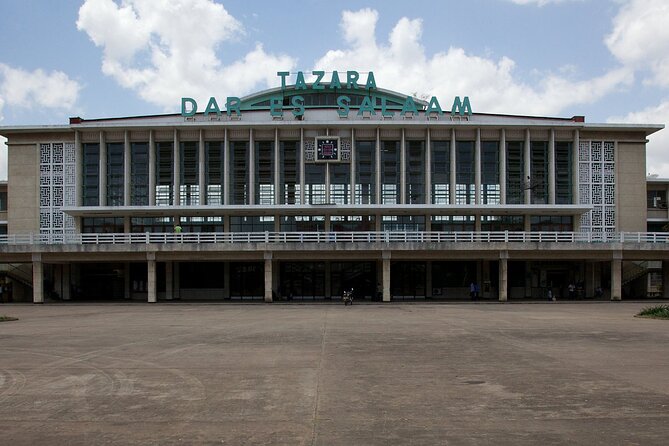
The tour begins with about 20 minutes at Dar es Salaam War Cemetery. It contains 1,764 Commonwealth burials from the First World War, including 60 unidentified people, along with 41 Second World War burials, seven of them unidentified.
You will also find 112 war graves of other nationalities, mainly Belgian and German, dating from the First World War. The Dar-es-Salaam Hindu Cremation Memorial honors 14 Indian servicemen whose remains were cremated according to their faith.
This is a brief stop, but it gives the day a serious opening. The cemetery is not simply a landscaped pause between attractions. It points to the international forces that passed through East Africa during the wars, and to the different faiths represented among those who died.
Admission is free. Give yourself time to read the memorials rather than treating the stop as a quick photograph. Since the planned visit is only 20 minutes, ask your guide to point out the most important sections.
The international fish market: watch the trade unfold
The fish market gets around 30 minutes, and it is one of the tour’s most direct encounters with local commerce. You will see different types of fish and learn about the process from the sea to the main market.
That wording matters. This is not only a market visit where you look at stalls. The guide is meant to explain the chain of work behind the display: fishing, bringing the catch ashore, handling it, and selling it. The value comes from watching a real part of Dar es Salaam’s economy rather than visiting a site built only for sightseeing.
Expect an active setting. If you prefer quiet museums, this may be the most intense stop of the morning. Keep your visit focused, follow your guide’s directions, and ask before taking close photographs of people at work.
Several strong accounts of the tour singled out the fish market as a favorite. I can see why. It gives you a fast, practical introduction to the city, and it lets you watch people going about a normal working day.
National Museum of Tanzania: the historical backbone
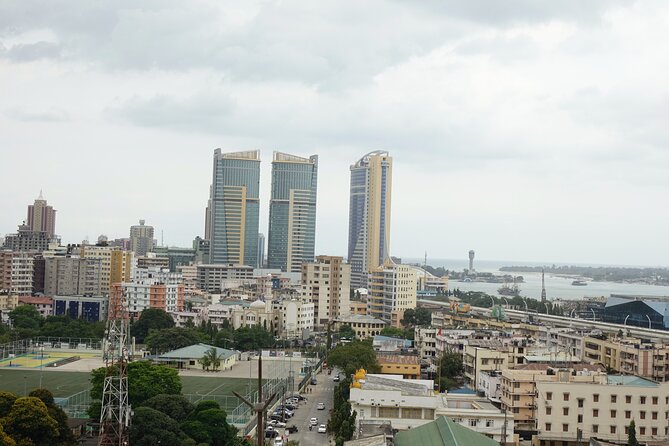
The National Museum receives about an hour. Founded in 1934, it presents exhibits about Tanzania’s past and its people.
This is where the tour’s many separate sights begin to make sense. The cemetery introduces wartime memory, while the museum provides a wider frame for Tanzania itself. You can use the hour to ask about the objects, communities, and historical periods that interest you most.
The museum is especially useful if you are new to Tanzania. A guide can help you connect the displays with later stops, such as the Village Museum and the handicrafts at Mwenge. Without that context, the day could become a long series of names and buildings. With good explanation, the stops form a clearer picture of the country.
One hour is enough for an introduction, not a specialist visit. If museums are your main interest, you may wish you had more time here. If you are trying to see the city in one day, the schedule is sensible.
A few more Dar es Salaam days to compare
- Dar es Salaam: City Tour
★ 4.7 · 159 reviews - Dar es Salaam City Center: Walking Tour
★ 4.8 · 102 reviews - Dar es Salaam City Tour – Everyday
★ 5.0 · 64 reviews - MIKUMI NATIONAL PARK – 3 Days
★ 4.5 · 63 reviews
Three downtown landmarks in a compact stretch
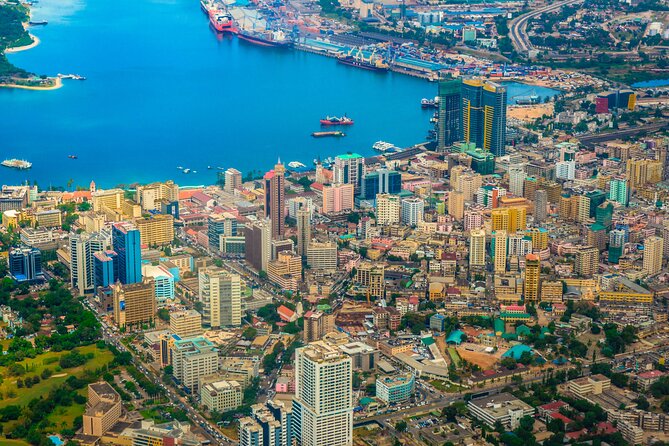
The schedule also includes three central Dar es Salaam sights: St. Joseph Cathedral, Azania Front Lutheran Cathedral, and the Askari Monument. The time allotted for these stops is not separately stated, so your guide may handle them as short visits or exterior views within the city tour.
St. Joseph Cathedral was built by the Germans between 1897 and 1902 and consecrated in 1906. It is more than a small chapel. The building houses the Dar es Salaam Catholic Archdiocese and is noted for its Gothic design.
Azania Front Lutheran Cathedral was built in Gothic style by German missionaries between 1899 and 1902. Its position along Kivukoni Front road, near the Indian Ocean waterfront and harbor, gives it a strong city-center setting.
The Askari Monument sits at the roundabout where Samora Avenue meets Maktaba Street. Built in 1927, it honors Askari soldiers who fought in the First World War. Its location marks a historic focal point in downtown Dar es Salaam.
Together, these sights show how strongly German construction, Christian missions, wartime memory, and later Tanzanian public life overlap in the center. You will not spend an entire morning inside any one building, but the group makes a useful walking or driving orientation.
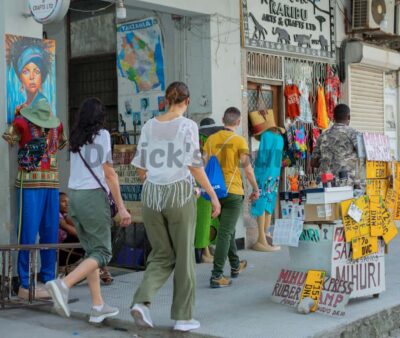
Kariakoo Market: a quick look at city commerce
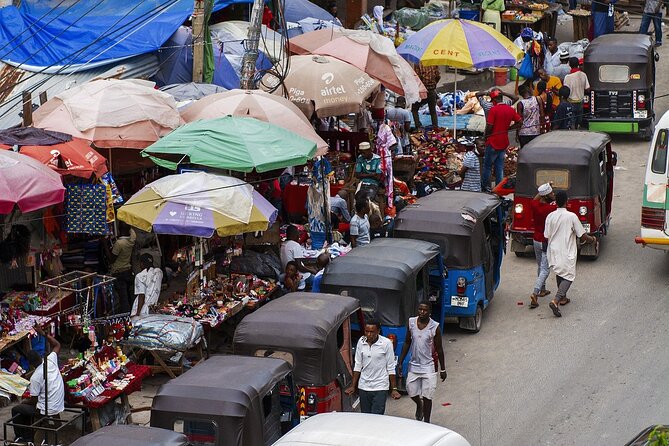
Kariakoo Market receives only about 15 minutes. The market was designed by architect B. J. Amuli and officially opened in December 1975 by Julius Nyerere, Tanzania’s founding president.
Its name reaches back to the First World War. The British Army used the area as a camp for African porters and casual laborers known as the Carrier Corps. That gives the market a link to the earlier cemetery stop, even though Kariakoo today is primarily a major commercial center.
Fifteen minutes is short. You should think of this as an orientation stop rather than a full shopping session. If you want to browse carefully, compare prices, or buy several items, the schedule may not allow it.
Still, the stop helps you see another side of Dar es Salaam’s trade. The fish market shows one specialized route from catch to customer. Kariakoo widens the view to a major urban marketplace. Ask your guide where it is practical to pause, and keep your belongings secure in crowded areas.
Mwenge Woodcarvers Market: time to shop and ask questions
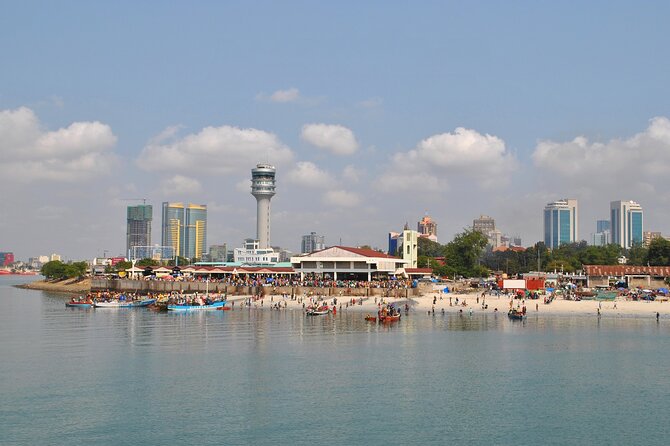
At 45 minutes, Mwenge Woodcarvers Market gives you the longest market visit of the day. More than 200 carvers work there, with a strong focus on Makonde carving. Makonde artists are known in Tanzania for their wood-carving skills.
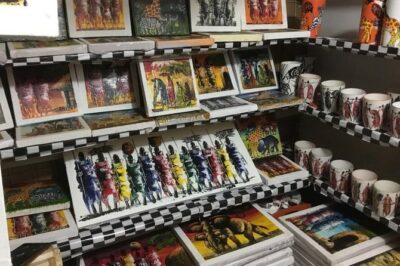
You can also find Tinga Tinga paintings, local souvenirs, and other Tanzanian handicrafts. The market sits outside the center along busy Sam Nujoma Road, so the private vehicle matters here. You are not trying to navigate the route or find a separate ride after the downtown stops.
This is the best place in the program for buying art, but shopping takes judgment. Walk through before buying, compare similar pieces, and ask about the work rather than rushing to the first stall. A guide can help explain the craft traditions and make the visit more than a series of sales pitches.
Forty-five minutes is enough for a look and a purchase or two. It may feel rushed if you want to inspect many carvings or negotiate at length. The stop works best when you decide beforehand whether you are looking for a small souvenir, a painting, or a larger carved piece.
Village Museum: Tanzania in one accessible hour
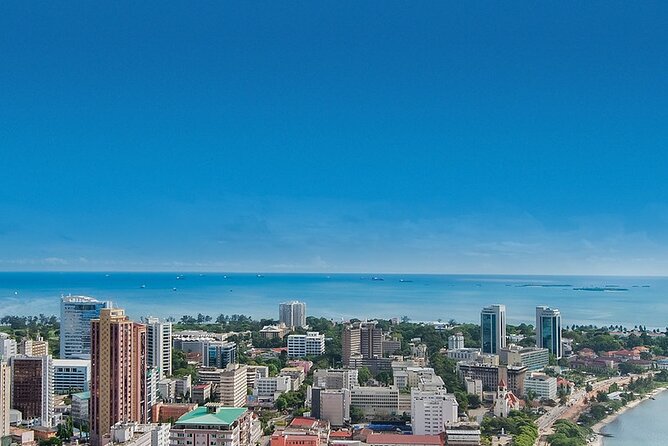
The Makumbusho Village Museum is scheduled for one hour. It presents traditionally constructed homes and equipment from several Tanzanian tribes. Tanzania has more than 130 tribes, so this is a sample rather than a complete portrait of the country.
That limitation is worth remembering. No one museum can represent every community, language, and custom in Tanzania. The strength of this stop is that it gives you visible examples of different building styles and household equipment, helping you connect culture with daily life.
The Village Museum was a favorite for some people who enjoyed the combination of cultural explanation and the fish market’s working atmosphere. I would place the two stops at opposite ends of the day’s purpose: the fish market shows present-day commerce, while Makumbusho offers a structured way to learn about traditional life.
Use the hour actively. Ask your guide how the homes differ and which communities they represent. If you simply walk through without questions, you will miss much of the value.
Guides, language, and the human factor
The guide can make or break a tour with this many stops. Names associated with successful days include Eric, Emmanuel, Gabriel, and driver Mr. Berry. Eric was praised for being kind, flexible, and able to adjust the schedule for people with mobility issues. He also helped with dietary needs on one occasion.
That does not guarantee who will lead your booking, but it shows what to ask for. Confirm the guide’s name, language, pickup point, and phone number before the day begins. English, German, French, and Spanish are offered, yet some bookings were assigned a guide who did not speak the promised language. In those cases, the guide still tried to help, but the mismatch is a real concern if interpretation is central to your visit.
The private setup is a major advantage. Your group alone participates, and the guide can respond to questions instead of delivering a fixed speech to a large crowd. The tour is also suitable for most people, and the pace has been adjusted for guests with mobility issues, though you should explain your needs in advance.
Lunch, drinks, and what the $160 covers
The inclusions are generous for a city day. You receive lunch, alcoholic beverages, snacks, bottled water, an air-conditioned vehicle, private transportation, all taxes and fees, and entrance to the National Museum and Village Museum.
This makes budgeting simple. You do not need to add museum admissions or plan a separate lunch. Tips and gratuities are not included, so carry some money if you feel the guide or driver has earned one.
The food element can also add local flavor. One account described lunch at a typical African restaurant, followed by drinks at a pleasant waterfront location, though that exact arrangement is not guaranteed in the stated program. Dietary needs have been handled successfully before, but tell the operator in advance rather than assuming the menu will suit you.
Timing, pickup, and the main risk to manage
The tour lasts approximately six to eight hours and operates Monday through Saturday, from 9:00 a.m. to 4:30 p.m. Pickup is offered, and the meeting information allows for hotel or port arrangements, but you should confirm the precise point directly.
The schedule is ambitious. The cemetery gets 20 minutes, the fish market 30, Kariakoo only 15, and Mwenge 45. The museums each get about an hour, while the downtown churches and monument fit into the city orientation. You will see a lot, but you will not have long, unplanned stretches at every stop.
The most serious issue is not the packed schedule. It is communication. Some bookings had a guide fail to arrive, a phone number that did not work, or a cancellation late the night before. That is a major problem, especially if you are visiting from a cruise ship or have only one day in port.
After booking, reconfirm the pickup time, exact meeting location, guide language, and an active contact number. Keep the booking confirmation available, and leave enough time before any onward departure. Free cancellation is available up to 24 hours before the start time. Cancellations or changes inside that window are not refundable.
Who should book this private city tour?
I would choose this tour if you have limited time and want Dar es Salaam’s main cultural, historical, and commercial sights in one organized day. It suits first-time visitors who prefer a guide, private transport, and a broad introduction over long visits to one or two museums.
It is also a good match for a family or small group that wants control over the pace. The previous flexibility shown for mobility needs is encouraging, though you should confirm exactly how much walking each stop requires.
I would hesitate if you want a slow market visit, a specialist museum day, or guaranteed service in a particular language. I would also think twice if your schedule cannot absorb a late pickup or communication problem. The included meals and transport help the value, but reliability must be checked carefully.
FAQ
How long does the tour last?
The tour lasts approximately 6 to 8 hours.
What days and hours is the tour available?
It is available Monday through Saturday, during the stated operating hours of 9:00 a.m. to 4:30 p.m.
Is hotel pickup available?
Yes. Pickup is offered, and the experience also provides private transportation.
Is this a private tour?
Yes. Only your group participates in the private activity.
Which languages are offered?
Tours are available for German, English, French, and Spanish speakers. Confirm your requested language before the tour because language matching has not always worked as expected.
What is included in the price?
Lunch, alcoholic beverages, bottled water, snacks, an air-conditioned vehicle, private transportation, all fees and taxes, and the included attraction admissions are covered. Tips and gratuities are not included.
Can I cancel for a full refund?
Yes, if you cancel at least 24 hours before the experience start time. Cancellations or changes made less than 24 hours before the start time are not accepted for a refund.
Should you book it?
Book this tour if you want a private, all-in-one introduction to Dar es Salaam, especially with only one free day. The fish market, Village Museum, Mwenge carvers, and downtown churches give the day a useful local character, while lunch, transport, water, and admissions keep the extra costs under control.
Before paying, confirm the guide’s language, pickup details, and working contact number. If those basics are secure, the tour offers a practical way to see far more of Dar es Salaam than you could easily arrange on your own.
Newly listed around Dar es Salaam
- Mikumi Np Mid Range Tour 3 Days★ 5.0 · 3 reviews
- Private Mikumi Adventure★ 4.5 · 3 reviews
- Ruaha National Park And Mikumi National Park Budget Safari 6 Days 5 Nights★ 5.0 · 3 reviews
- 3 Days 2 Nights Private Safari Tour in Mikumi★ 5.0 · 3 reviews
- Day Trip To Bagamoyo From Dar Es Salaam ..historical town★ 4.5 · 3 reviews
- Dar es Salaam City tour and Beach Leisure – 9 hours★ 5.0 · 3 reviews
- Mikumi National Park Day Trip by Train From Dar Es Salaam★ 5.0 · 4 reviews
- 3-Day at Dar es Salaam To Selous GR (Nyerere NP) Game, Boat & Walking Safari★ 5.0 · 4 reviews
Dar es Salaam Tours, compared.


Private Full-Day Trip to Mikumi National Park from Dar es Salaam
Read our review →Browse the lists this tour appears in