
Reviewed · ARUSHA TOURS
Tanzania Wildlife Cultural Safari from Arusha.
The real draw here is variety. In 11 days, you move from Mount Meru and flamingo-lined lakes to the Serengeti plains, Ngorongoro’s enclosed wildlife world, and a day with the Hadzabe people. The small vehicle limit of six matters, since every passenger gets a window seat and a better view.
I like the two full Serengeti days, which give you time for more than a quick drive-through, and I like the cultural stops at Lake Eyasi and the Iraqw cultural center. The main caution is the amount of driving. This is a full Northern Circuit program, not a slow lodge holiday, and the advertised details contain a small inconsistency about the number of safari days, so confirm the final schedule before paying.
Key points to know before booking
- Six passengers maximum: You travel in a custom 4×4 with an open roof and window seats for everyone.
- Six distinct stops: The route covers Arusha National Park, Lake Manyara, Ngorongoro, Lake Eyasi, Serengeti, and Tarangire.
- Two Serengeti days: This is useful for wider game drives and better odds of finding predators or migrating herds.
- Culture beyond wildlife: You visit the Hadzabe near Lake Eyasi and learn about Iraqw farming traditions near Karatu.
- Major costs included: Meals, accommodation, and park entry fees are included in the package description.
- Free cancellation deadline: You can cancel for a full refund up to 24 hours before the start time.
What this Tanzania safari is really offering
At $4,999 per person, this is a major holiday purchase, but the price covers much more than a few game drives. Accommodation, meals, park entry fees, airport pickup, and transport in a custom safari vehicle are part of the package description. That can make the cost reasonable if you want one booking to handle the main pieces of a Northern Circuit trip.
The value comes from the range of places included. You are not seeing only the famous Serengeti and Ngorongoro Crater. Arusha National Park gives you an early introduction to northern Tanzania, Lake Manyara brings forest and birdlife, Lake Eyasi adds a human and cultural focus, and Tarangire provides baobabs, elephants, and dry-season wildlife around its river.
The tradeoff is pace. The schedule has several long road days, and some entries describe activities as lasting about seven hours, while the actual day may include driving, park gates, meals, and game viewing. I would choose this trip for a first visit when you want a broad sample of northern Tanzania. I would not choose it if you prefer to stay several nights in one lodge and keep each day unhurried.
More Safaris in Arusha
- Balloon Safari & Bush Breakfast in Serengeti – Miracle Experience
★ 5.0 · 1,646 reviews - 4 Days Group Camping Safari
★ 5.0 · 1,101 reviews - 5 Days Group Camping Safari
★ 5.0 · 730 reviews
A practical start in Arusha
Your arrival day is designed to take the edge off an international flight. A driver meets you at the airport with a sign bearing your name, then takes you to Springlands Hotel. You receive a meal and a pre-safari briefing, with time to use the swimming pool, sit in the garden, or visit the bar and restaurant.
That briefing is worth taking seriously. Use it to ask about the daily departure times, lunch arrangements, the order of the parks, and the exact lodging names. The itinerary uses phrases such as or similar for several hotels, so the final accommodation list may vary.
The following morning brings your first game drive in Arusha National Park. Mount Meru dominates the park at 4,565 meters, giving you a striking backdrop before you reach the more famous parks farther west. You may see giraffes, zebras, warthogs, hippos, waterbucks, bushbucks, and flamingos around the alkaline lakes.
Arusha is not presented as the main predator stop. Leopards and hyenas are possible but less regular sightings. I see this day as a gentle introduction to safari country, with mountain scenery, wetlands, and a broad mix of animals rather than a promise of constant big-cat action.
Lake Manyara, where forest meets the Rift Valley
Lake Manyara National Park packs several habitats into a relatively compact area. The park lies below the steep Rift Valley escarpment, with groundwater forest, acacia woodland, grassy plains, swamp, and the lake itself.
That variety explains the long animal list. You may see buffalo, impala, giraffe, bushbuck, waterbuck, hippos, elephants, blue monkeys, vervet monkeys, and lively troops of olive baboons. Birdlife is another strong point, with the lake and wet areas attracting many species.
The park is also associated with tree-climbing lions. That is an appealing possibility, but it should be treated as a chance sighting, not the main reason to book the entire safari. The same advice applies to wildlife everywhere on this route: your guide can work hard and read the signs, but animals do not follow a timetable.
You spend the night at Highview Coffee Lodge or a similar property. Since the same lodging appears after more than one stop, ask how many nights are actually planned there. A clear rooming plan is especially useful if you are comparing this trip with other packages.
Karatu brings a slower, more human day
Day four changes the rhythm. Instead of spending the whole day in a vehicle, you stay around Karatu, the town between Lake Manyara and Ngorongoro. You can shop for souvenirs, then take a two-hour forest hike in the Ngorongoro Conservation Area.
The hike leads through wooded slopes to a waterfall and elephant caves. These are places where elephants have dug into the soil to obtain minerals. Buffalo, bushbuck, waterbuck, and baboons may also appear in the area.
This is a useful break after several hours on rough park roads. Still, a hike is different from a game drive, and you should not expect the same number of animal sightings. The itinerary also includes a visit to an Iraqw cultural center, where you learn about local cultivation methods in an area that is traditionally Iraqw homeland.
I like this section because it gives you more than the standard vehicle-and-lodge routine. It also reminds you that the area is not simply a wildlife stage. People farm, trade, and live around these protected places.
More Wildlife Tours in Arusha
- Tanzania Wildlife Encounters – 6 Days
★ 5.0 · 277 reviews - 6 Day Tanzania Wildlife Mid range Safari
★ 5.0 · 54 reviews - 5 Days 4 Nights Tarangire, Serengeti , Ngorongoro & Manyara Wildlife Safari
★ 5.0 · 40 reviews - 4 Days Wildlife Safari and Cultural Experience in Tanzania
★ 5.0 · 23 reviews
Lake Eyasi and the Hadzabe encounter
Lake Eyasi is a mildly alkaline lake about 55 kilometers long. It is a strong stop for birdwatchers, with flamingos, pelicans, spoonbills, weavers, spurfowls, storks, barbets, and egrets among the species you might see.
The main reason for coming here, however, is the visit with the Hadzabe people. The Hadzabe are an Indigenous hunter-gatherer community, and the day focuses on their homes, daily practices, hunting with bows and arrows, and the use of local plants for medicine.
This can be one of the most meaningful parts of the route, provided you approach it with care. You are not visiting a performance built only for tourists. You are entering a living community, so listen to your guide, ask before taking photographs, and treat the encounter as an exchange rather than a show.
The schedule describes this as a full-day visit, though the activity listing also shows a short duration beside the stop. That is another reason to ask for the final daily timetable. The trip includes several cultural elements, but the exact length and order can affect how much time you have with the community.
The road to Serengeti, with two worthwhile options
After breakfast, you head toward Serengeti National Park. The name comes from the Maasai language and means endless plain, a fitting description of the open country that has made this park famous.
Along the way, the itinerary offers an optional Maasai village visit or a stop at Olduvai Gorge. The Maasai option gives you a chance to learn about local culture and take part in tribal activities. Olduvai Gorge, often called the Cradle of Humanity, centers on a museum tracing early human development in East Africa.
These choices are important because the drive to Serengeti can take much of the day. If you care most about archaeology, Olduvai may be the better fit. If your trip is focused on living culture, the Maasai visit may appeal more. Confirm whether either option costs extra, since the supplied information does not specify that detail.
You stay at Serengeti Safari Lodge or a similar property. Some accommodation is described as being inside parks, while other lodges are outside park boundaries. That distinction affects the feel of your mornings and evenings, so ask where your specific lodge is located.
Two days on the Serengeti plains
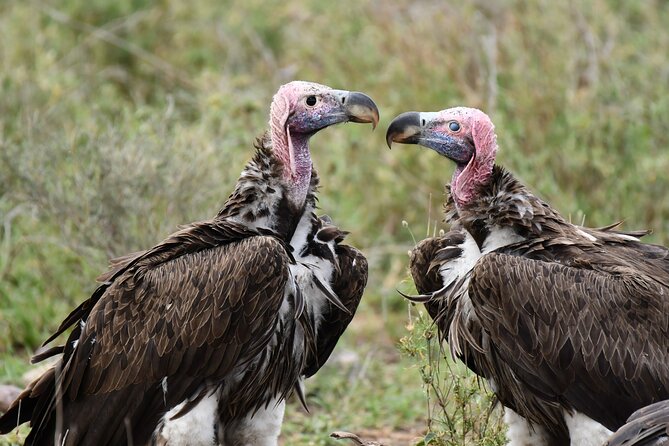
The Serengeti is the heart of the trip, and two full days here are a real advantage. One short game drive can produce a memorable lion sighting, but two days give your guide more room to search across different areas and respond to changing animal movements.
The park is famous for the Great Wildebeest Migration, with large herds of wildebeest, zebra, and antelope moving through the region. Lions and cheetahs may be found among the kopjes, the rocky outcrops that break up the grasslands. You may also see the park’s scenery shift from open southern plains to acacia country, wooded grassland, and black clay plains.
The word may is doing useful work here. Migration timing changes, and no itinerary can guarantee a river crossing, a cheetah, or a particular herd. A strong guide can improve your chances by knowing the roads and sharing information with other drivers. Past departures have been led by guides including Yusuph, Marck, Baraka, Swai, and Moses, but your assigned guide is not specified.
The vehicle setup should help. An open roof gives you a clear upward view for birds, giraffes, and kopjes, while six passengers or fewer keeps the cabin from feeling packed. The long hours can still be tiring, especially on rough roads, so use the included meal stops and lodge nights as chances to rest rather than trying to stay alert every minute.
Ngorongoro Crater, a concentrated wildlife day
On day nine, you take a morning game drive en route to Ngorongoro Crater, then descend to the crater floor. The crater is about 600 meters deep, 16 kilometers across, and 265 square kilometers in area.
The appeal is concentration. Grassland, water, and shelter support many large animals in a contained setting. You may see lions, cheetahs, eland, zebra, gazelle, and flamingos at Makat Soda Lake. Black rhinos are among the most sought-after sightings in the crater.
The scenery is as important as the animals. From the crater rim, the enclosed floor gives you a grand view before the vehicle drops toward the game-drive area. Roads can be busy at popular sightings, and the crater day may feel more structured than the open Serengeti, but it remains one of Tanzania’s great wildlife experiences.
You return to Highview Coffee Lodge or a similar property. Because the crater visit follows the Serengeti, this day also breaks up the long transfer toward Tarangire and Arusha.
Tarangire closes the wildlife circuit
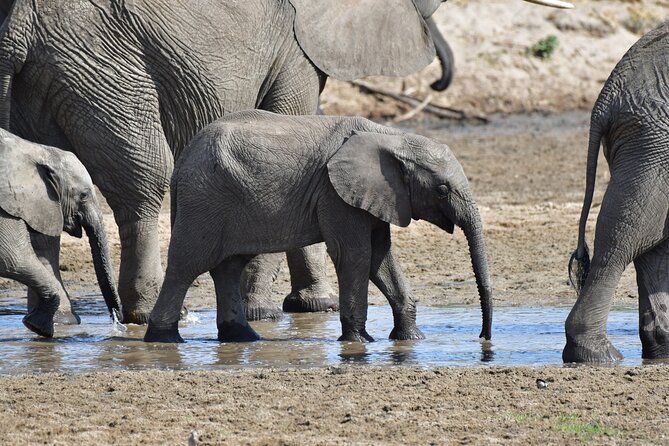
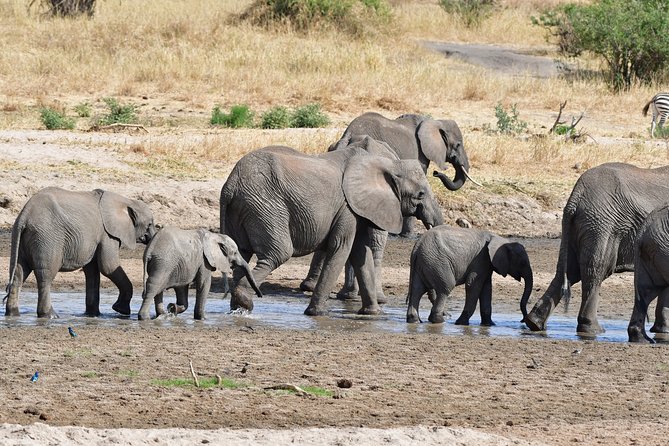
Tarangire National Park is the final major game stop. The Tarangire River does not dry up, and in the dry season it draws animals from a wide area. That makes the river a key place for wildlife viewing, especially when other water sources are limited.
The park also brings a different visual character, with grassy savanna, swamps, hills, and large baobab trees. Elephants are a major attraction, while the varied habitats support a wide range of birds and other animals.
I like placing Tarangire near the end because it gives you one more full day in the bush before returning to Arusha. It also stops the itinerary from becoming a simple repeat of Serengeti grassland and Ngorongoro open plains.
The final night is at Highview Coffee Lodge. Day 11 allows a morning at leisure before transfer to Kilimanjaro Airport. Check your flight time carefully, since the package gives no exact transfer duration or flight schedule.
Guides, vehicles, and the feel of the group
The guide is central to a safari. Past departures have praised Yusuph, Isdory, Marck, Baraka, Swai, and Moses for friendly service, smooth planning, and strong safari skills. You should not assume one of these people will lead your departure, but the company has a roster of named guides with experience on this route.
The custom 4×4 has an open roof for game viewing. All passengers receive window seats, and the maximum group size is six per vehicle. That is a useful middle ground: more affordable than a private safari, but less crowded than a large coach.
Pickup is offered, and the tour begins at 8:30 a.m. Most travelers can participate, and the meeting area is near public transportation. The package includes meals, lodging, and park fees, but you should ask specifically about drinks, optional cultural visits, gratuities, and any airport transfer limits before booking.
Who should book this 11-day route?
I would recommend it to a first-time Tanzania visitor who wants the classic parks plus cultural encounters. Families and small groups may appreciate the six-person vehicle cap, while photographers should like having a window seat and an open roof.
The trip also suits you if you want park fees and accommodation bundled into one price. The named guides and repeated praise for organization suggest that communication and planning are intended to be major parts of the service.
I would pause if you dislike long road transfers, want a private vehicle, or prefer high-end lodging with every property fixed in advance. The use of or similar accommodations means you need to confirm the final hotels. The itinerary also has a few unclear duration notes and describes both 11 days and a shorter four-day safari in different sections, so get the exact version in writing.
Should you book it?
Book this safari if your priority is seeing a wide slice of northern Tanzania in one organized trip. Six parks and cultural stops provide strong variety, and the two Serengeti days give the wildlife portion enough time to feel substantial.
Before you commit to the $4,999 price, ask for the confirmed hotel list, guide assignment if available, final park order, exact inclusions, and clarification of the four-day wording. If those details match your expectations, this is a practical, ambitious route with real value for someone who wants wildlife, scenery, and culture rather than a single-park stay.
FAQ
How long is the Tanzania Wildlife Cultural Safari?
The tour is described as an approximately 11-day experience, beginning in Arusha and ending with transfer to Kilimanjaro Airport.
What is the price?
The listed price is $4,999 per person.
What parks and areas are included?
The route includes Arusha National Park, Lake Manyara National Park, the Ngorongoro Conservation Area and Crater, Lake Eyasi, Serengeti National Park, and Tarangire National Park.
How many people can travel in one vehicle?
Each vehicle has a maximum of six travelers. Every passenger is assigned a window seat.
What kind of vehicle is used?
You travel in a custom-designed 4×4 safari vehicle with an open roof for game viewing.
Are meals and accommodation included?
Yes. The package description includes meals and accommodation.
Are park entry fees included?
Yes. Park entry fees are included in the package description.
Does the tour include cultural visits?
Yes. The itinerary includes an Iraqw cultural center near Karatu, a visit with the Hadzabe near Lake Eyasi, and an optional Maasai village visit or Olduvai Gorge stop on the way to Serengeti.
Where does the safari start?
The experience starts in Arusha, with airport pickup offered. The listed start time is 8:30 a.m.
Can I cancel for a full refund?
Yes. You can cancel at least 24 hours before the experience start time for a full refund. Cancellations or changes made less than 24 hours before the start time are not accepted for a refund.
Newly listed around Arusha
- 5-Day Private Safari Tour in Tanzania’s Wildlife★ 5.0 · 3 reviews
- 3 Days private safari Tarangire ,Ngorongroro crater &Manyara★ 5.0 · 3 reviews
- 3 Day Sharing Safari – Manyara, Ngorongoro Crater and Tarangire National Parks★ 5.0 · 3 reviews
- Tarangire National Park Day Trip★ 5.0 · 3 reviews
- 2 Days Tarangire and Ngorongoro Crater Tour★ 5.0 · 3 reviews
- 6 -Day Tarangire, Manyara, Serengeti & Ngorongoro★ 5.0 · 3 reviews
- 5 Days Group Camping Safari★ 4.7 · 3 reviews
- 4 Days Tanzania Safari★ 4.5 · 3 reviews
Arusha Tours, compared.

Balloon Safari & Bush Breakfast in Serengeti – Miracle Experience
Read our review →






Browse the lists this tour appears in