
Reviewed · ARUSHA TOURS
8 Days Follow the Wildebeest Migration River Crossing Safari
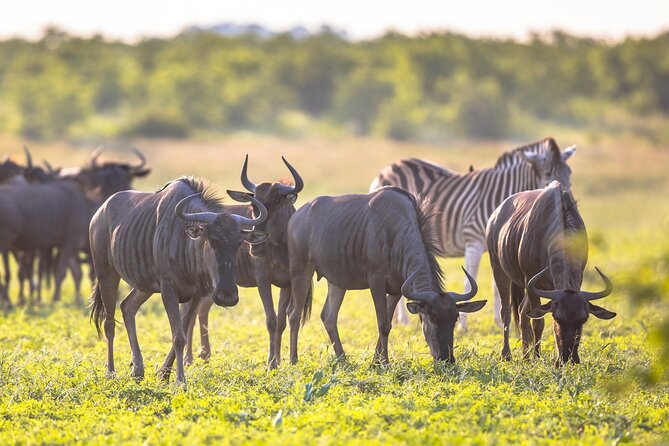
The main draw here is the chance to follow the Serengeti wildebeest migration during the December to April calving season, when the herds gather around Lake Ndutu and the southern plains. You also get Tarangire, central Serengeti, the northern Serengeti, and Ngorongoro Crater in one long circuit.
I like the private format, since your group alone takes part, and I like that park fees, crater fees, meals, bottled water, unlimited game mileage, and an English-speaking driver-guide are included. Congema’s team, including Musa Osman and Sebastien, has also earned strong praise for organizing custom trips and keeping close control of budgets.
The key caution is the itinerary’s timing. The overview points to December through April, but Days 4 and 5 focus on Mara River crossings in the northern Serengeti, a July to October event. Confirm the exact route and seasonal plan before paying, because a calving-season safari and a river-crossing safari are not the same experience.
Key points to know before booking
- Calving-season focus: The stated plan follows wildebeest around Lake Ndutu and southern Serengeti from December through April.
- Northern Serengeti mismatch: Days 4 and 5 describe Mara River crossings, usually linked here with July to October.
- Private safari format: Only your group participates, with pickup offered and a listed start time of 6:00 am.
- Strong inclusions: Park entry, 24-hour single-entry crater fees, three daily meals, bottled water, game mileage, and AMREF Flying Doctor Insurance are included.
- Two accommodation levels: Day 6 lists Embalakai Authentic Camp for the mid-range option and Serengeti Serena Lodge for the semi-luxury option.
- Crossing sightings are never guaranteed: Even when herds gather beside the river, they may wait for days before moving.
Why this eight-day safari is appealing
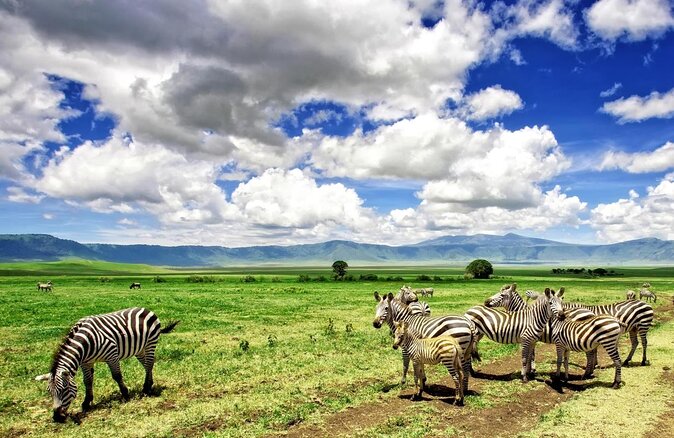
This is a serious wildlife trip, not a quick park sampler. In eight days, you cover Tarangire National Park, several parts of the Serengeti, Ngorongoro Crater, and the road back to Arusha.
That range matters. Tarangire gives you a quieter start and a chance to see elephants and birds. Serengeti provides the great open plains and the main migration action. Ngorongoro adds a compact crater setting where many large animals can be seen in a single game drive.
You also get time in different Serengeti zones. The southern area is tied to calving from December through April, while central Serengeti offers resident wildlife and varied birdlife. The northern Wagakuria area has kopjes, woodland, river vegetation, open grassland, lions, and the Mara River.
The private setup is useful if you want to adjust the pace of a sighting or spend longer watching animals. It also makes the safari more personal than a fixed-seat group departure. The tradeoff is that the $4,539 price is per person, so the value improves when several people share the private vehicle and room arrangements.
More Safaris in Arusha
- Balloon Safari & Bush Breakfast in Serengeti – Miracle Experience
★ 5.0 · 1,646 reviews - 4 Days Group Camping Safari
★ 5.0 · 1,101 reviews - 5 Days Group Camping Safari
★ 5.0 · 730 reviews
Day 1: Kilimanjaro Airport to Arusha
The trip begins with airport pickup at Kilimanjaro International Airport. A transfer driver meets you, introduces you to Tanzania, and takes you roughly 55 kilometers to Arusha, a drive listed at about one hour.
This first day is mainly for arrival, rest, and preparation. That is a sensible choice after an international flight. Arusha is the practical base for northern Tanzania safaris, and having the night here avoids rushing straight from the airport into a national park.
Your accommodation is described as your chosen lodging, but the exact property is not stated. Ask for the name before arrival, especially if location, room style, or meal arrangements matter to you.
The published meeting time is 6:00 am. That likely matters most for the first full safari day, but confirm the precise pickup time with Congema. Also confirm whether your international arrival transfer is included as described, since the tour starts and ends in Arusha but the airport transfer is part of the opening and closing plan.
Day 2: Tarangire’s elephants and quiet game roads
After breakfast, you drive about 120 kilometers, roughly two hours, to Tarangire National Park. The day is built around a full game drive after entry procedures at the gate.
Tarangire is known for elephants, birding, and a quieter atmosphere than some of the better-known northern parks. That makes it a good opening park. You begin with a different setting before moving into the Serengeti’s wide plains.
The itinerary calls Tarangire’s elephant movement a major feature. Birdwatchers should pay attention here, since birding is one of the park’s stated strengths. The tour does not promise particular species, so think of this as a strong general wildlife day rather than a specialized bird tour.
You spend the night on full board, with breakfast, lunch, and dinner included. The 9-hour day includes driving and game viewing, so expect a full schedule rather than a relaxed hotel day.
Day 3: Entering the Serengeti at Seronera
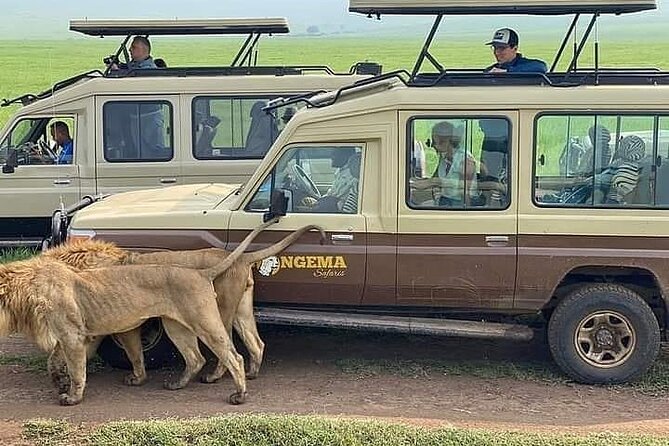
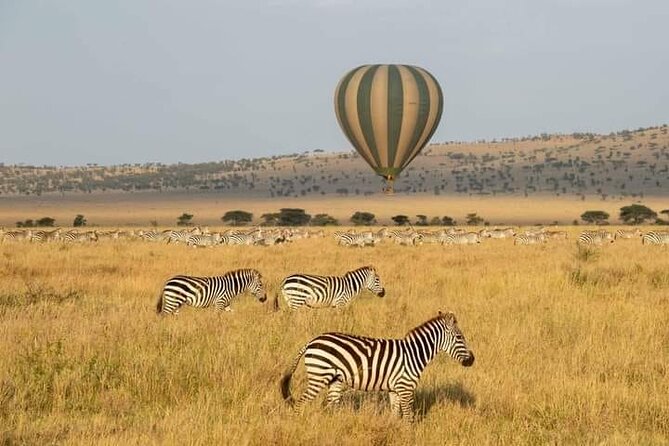
Day 3 takes you about 245 kilometers to Seronera, with a listed drive of approximately four and a half hours. The destination is Serengeti National Park, described by its familiar name, the Endless Plain.
The appeal here is scale. The Serengeti supports large numbers of resident animals, including the Big Five: lion, leopard, elephant, rhinoceros, and buffalo. The wider ecosystem also includes about 200,000 zebras and 300,000 Thomson’s gazelles that move with the wildebeest in search of fresh grazing.
This is the point when the safari begins to feel like a migration trip rather than a general northern Tanzania circuit. You might see the herds, but movement depends on rain, grass, and timing. No itinerary can promise a particular animal or exact herd position.
The day includes full board and an included Serengeti admission fee. The wording suggests game viewing on the way and arrival at accommodation later, so you should ask how much time is planned for the first Serengeti drive compared with road travel.
A change of scene while you are in Arusha:
- Tanzania Classic – 7 Days
★ 5.0 · 1,151 reviews - Materuni Waterfalls, coffee tour & Kikuletwa Hot Springs
★ 5.0 · 643 reviews - 3 Days Serengeti & Ngorongoro Group Camping Safari
★ 5.0 · 574 reviews - 7-Day Premium Luxury Tanzania Safari All-Inclusive
★ 5.0 · 426 reviews
Days 4 and 5: The northern Serengeti and the Mara River question
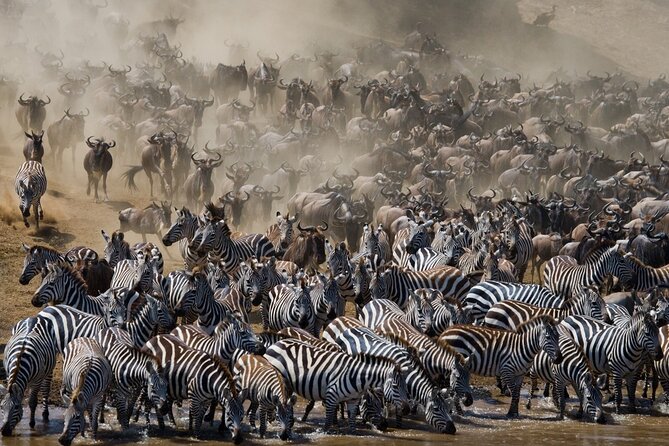
Days 4 and 5 are the most important part to clarify. The plan sends you north toward the Wagakuria area, about 155 kilometers and five hours from the previous Serengeti stop. You then get a full game drive in the same region the following day.
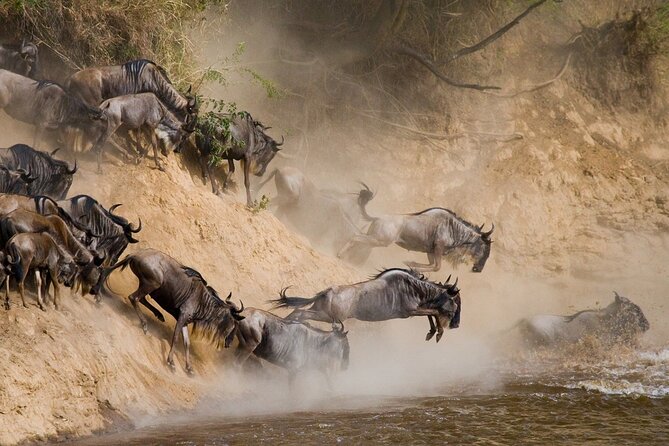
Wagakuria has resident wildlife in high numbers, with lion prides that can reach about 30 animals. Its scenery changes from open plains to kopjes, woodland, and river vegetation. The area is compared with Kenya’s Masai Mara, and the Mara River is its main feature.
This is excellent territory for a river-crossing safari during the right months. But the crossing itself is uncertain. A herd may gather beside the water and remain there for days. It may cross north, return south later, or refuse to move at all. Even a long stay in the area gives you a chance, not a guarantee.
The timing issue deserves plain treatment. The opening description says the safari is designed for December through April, with a focus on Lake Ndutu and the southern Serengeti, where wildebeest calve. Days 4 and 5 instead describe the northern Serengeti and say the area becomes a wildlife paradise from July to October.
Those are different seasonal patterns and different driving plans. If you book for December, January, February, March, or April, ask Congema whether the northern section will be replaced by southern Serengeti and Ndutu. If you book from July to October, ask whether the calving-season language is simply general description and the actual plan is for the Mara River.
That clarification could determine the value of the entire trip. A person hoping to see newborn calves should spend time in the south. A person hoping for a dramatic river crossing should choose the northern route in the river-crossing season.
Day 6: Central Serengeti wildlife and birdlife
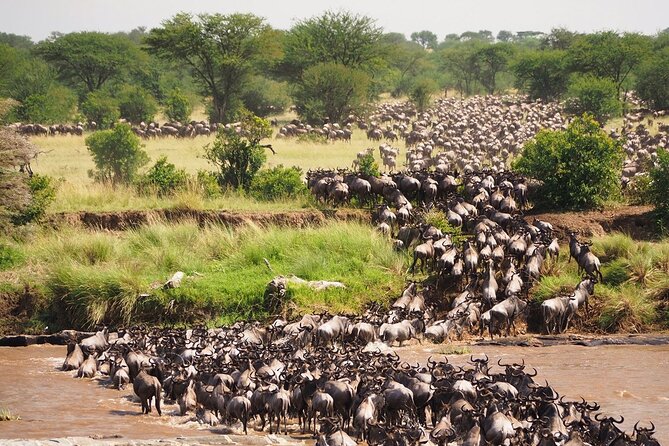
After the northern section, the plan returns to central Serengeti for another full game drive. The listed distance is again about 155 kilometers and five hours, though the actual drive depends on the camp location and the route taken.
Central Serengeti is useful because it has resident wildlife beyond the migration itself. The description points to agama lizards, rock hyraxes around granite kopjes, dung beetles, and roughly 500 recorded bird species.
That variety makes this a good day for slowing down. You are not only scanning for wildebeest. You might find ostriches and secretary birds on the open grassland, or black eagles above the Lobo Hills. The itinerary gives no specialist bird guide, so the quality of identification will depend on your driver-guide and your own interest.
Two lodging levels are listed for this night. The mid-range choice is Embalakai Authentic Camp, located inside the park. The semi-luxury choice is Serengeti Serena Lodge, also inside the park.
Staying inside the park is valuable because it reduces the need to begin or end the day outside the gates. It can mean more useful time for game viewing, although the exact schedule and room category should be confirmed before booking. The itinerary does not name the other night-by-night lodgings, so request a full accommodation list.
Day 7: Ngorongoro Crater’s compact wildlife setting
Day 7 shifts from the Serengeti to the Ngorongoro Conservation Area. The drive is listed at about 145 kilometers and three and a half hours, followed by an early morning game drive inside Ngorongoro Crater.
The crater is a striking contrast to the open Serengeti. It is a large enclosed wildlife area within the eastern arm of the Rift Valley, and the conservation area has a wider purpose than wildlife viewing. It protects natural resources, supports indigenous communities, and manages tourism.
An early start is the right idea here. You have a better chance of making good use of the crater drive before the day’s return journey and lodge check-in. The tour includes a crater fee for a 24-hour single entry, which is important because these fees can add a substantial amount to a Tanzania safari.
The itinerary says you drive to a lodge in the evening for rest and an overnight stay. The exact lodge is not supplied. Ask whether this is inside the conservation area or elsewhere, and confirm what the semi-luxury or mid-range package includes on this night.
Day 8: Returning to Arusha and the airport
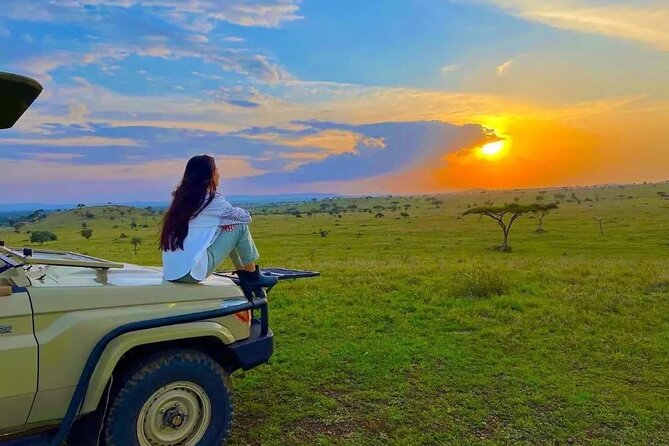
The final day covers about 245 kilometers and four hours back to Arusha. The route includes a stop at a shopping market before the transfer to Kilimanjaro International Airport.
This is a practical ending, but allow plenty of time between the road journey and your flight. The listed drive time does not include the market stop, traffic, gate delays, or airport check-in. The tour ends back at the meeting point, and airport transfer is then facilitated for your onward flight.
If you have an early departure, confirm that this schedule works. The published plan appears better suited to a flight later in the day, but no exact airport timing is provided.
What the $4,539 price really covers
At $4,539 per person, this is not a budget safari. The price is easier to assess when you look at what is bundled into it.
Included are park entry fees, Ngorongoro Crater fees, unlimited game mileage, bottled drinking water during game viewing, an English-speaking professional driver-guide, and AMREF Flying Doctor Insurance. You also receive seven breakfasts, seven lunches, and seven dinners, which covers the seven nights of the eight-day schedule.
Those inclusions reduce the risk of small costs piling up during the trip. Unlimited game mileage is especially useful on a migration safari, where finding the herds may require long drives. Bottled water is another practical inclusion during hot, dusty game-viewing days.
The price does not include international flights, tips, personal purchases, alcohol, visa fees, general travel insurance, or medical repatriation beyond the stated AMREF Flying Doctor Insurance. Budget separately for those items.
Tipping guidance is listed at $20 per person per day. Over eight days, that works out to $160 per person if you follow the suggested daily amount. Clarify whether this is intended for the driver-guide alone or for a broader safari team.
The accommodation choice will affect the value. Embalakai Authentic Camp is listed as the mid-range option, while Serengeti Serena Lodge is the semi-luxury choice. Since only Day 6 names the properties, get the full lodging schedule and room plan before comparing this package with another operator.
The Congema team and the private format
The strongest personal details connected with this safari are the names Musa Osman and Sebastien. Congema’s team has been praised for arranging tailor-made circuits, watching the budget, and coordinating the operation on the ground.
That matters because an eight-day safari has many moving parts: airport transfers, park permits, long road sections, accommodation changes, meal plans, and shifting animal locations. You should ask who your actual driver-guide will be, how much experience the guide has in the southern and northern Serengeti, and who handles support if the route changes.
The tour is private, so only your group participates. This gives you more control over stops and makes the price more sensible for couples, families, or friends sharing the vehicle.
It also means you should be clear about the vehicle setup and group size. The supplied details confirm a private activity but do not specify the vehicle model, number of seats, or whether a window seat is guaranteed.
Practical drawbacks to weigh
The biggest concern is not the driving. It is the seasonal wording. The advertised calving focus and the northern river-crossing days need to be reconciled before you book.
The second issue is the amount of time on the road. Several days include four to five hours of driving, and the route covers large distances between parks. That is normal in northern Tanzania, but you should want full safari days and accept some long transfers.
Accommodation information is also incomplete. You know two Day 6 options, but not the full list of camps and lodges. Ask for names, locations, meal arrangements, and the exact difference between the mid-range and semi-luxury prices.
Finally, the safari cannot control animal behavior. A river crossing may not happen. A leopard may stay hidden. The migration may move outside the expected area. You are paying for access, time, and a well-planned route, not a guaranteed wildlife scene.
Who should book this safari?
I would look closely at this trip if you want a private Tanzania circuit with major parks, full-board meals, and a strong focus on the wildebeest migration. It suits someone who accepts long drives in exchange for reaching different wildlife zones.
It is also a good fit if you want Ngorongoro Crater included without arranging a separate extension. Birdwatchers may appreciate the Serengeti’s stated variety of about 500 recorded species, while families and small groups may value having one private vehicle.
I would be more cautious if your only goal is a Mara River crossing. Book only after confirming the travel dates, northern Serengeti plan, and the operator’s approach when the herds do not cross.
For a December to April departure, ask for a revised itinerary centered on Lake Ndutu and southern Serengeti. For a July to October departure, ask for firm details on time in Wagakuria and the Mara River area.
Should you book the eight-day itinerary?
Book it if you want a broad northern Tanzania safari and value having major park fees, meals, water, game mileage, and private guiding included in one price. The combination of Tarangire, Serengeti, and Ngorongoro gives you a strong wildlife route.
Before booking, get written answers to three questions: Which migration zone matches your dates? Which lodges and camps are included each night? Who will be your driver-guide?
If Congema resolves the calving-season and river-crossing mismatch, the package could offer solid value for a private safari. If the answer remains vague, choose a route built clearly around your main goal. The migration is always moving, and your itinerary should move with the season.
FAQ
Where does the safari start?
The safari starts in Arusha, Tanzania. Pickup is offered, and the first arrival transfer is from Kilimanjaro International Airport to Arusha.
Where does the safari end?
The activity ends back at the meeting point in Arusha, followed by assistance with transfer to Kilimanjaro International Airport for your onward flight.
How long is the safari?
The safari lasts approximately eight days and includes seven breakfasts, seven lunches, and seven dinners.
Is this a private tour?
Yes. Only your group participates in the activity.
What time does the safari start?
The listed start time is 6:00 am. Confirm the exact pickup time with Congema, especially if you are arriving at Kilimanjaro International Airport.
Are park and crater fees included?
Yes. Park entry fees and Ngorongoro Crater fees are included. The crater fee is listed as a 24-hour single entry.
Is accommodation included?
Accommodation is part of the safari package, with full-board meals. Day 6 lists Embalakai Authentic Camp as the mid-range option and Serengeti Serena Lodge as the semi-luxury option. Ask for the complete accommodation schedule.
Can I cancel for a full refund?
Yes, if you cancel at least 24 hours before the experience start time. Cancellations made less than 24 hours before the start time are not refunded, and changes within that period are not accepted.
Newly listed around Arusha
- 5-Day Private Safari Tour in Tanzania’s Wildlife★ 5.0 · 3 reviews
- 3 Days private safari Tarangire ,Ngorongroro crater &Manyara★ 5.0 · 3 reviews
- 3 Day Sharing Safari – Manyara, Ngorongoro Crater and Tarangire National Parks★ 5.0 · 3 reviews
- Tarangire National Park Day Trip★ 5.0 · 3 reviews
- 2 Days Tarangire and Ngorongoro Crater Tour★ 5.0 · 3 reviews
- 6 -Day Tarangire, Manyara, Serengeti & Ngorongoro★ 5.0 · 3 reviews
- 5 Days Group Camping Safari★ 4.7 · 3 reviews
- 4 Days Tanzania Safari★ 4.5 · 3 reviews
Arusha Tours, compared.

Balloon Safari & Bush Breakfast in Serengeti – Miracle Experience
Read our review →





