
Reviewed · SERENGETI & NGORONGORO SAFARIS
7-Day Group Camping Tarangire/Serengeti/Ngorongoro/lake Manyara
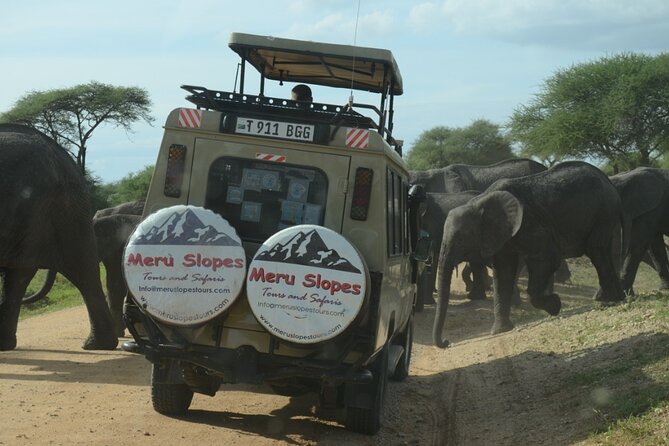
The most exciting part of this safari is the amount of ground you cover in one week: Tarangire, Serengeti, Ngorongoro Crater, and Lake Manyara. You get elephants among baobabs, long Serengeti game drives, a crater descent, and a final look at tree-climbing lions and flamingos. I like the full-day Serengeti time and the chance to follow the migration instead of treating the park as a quick overnight stop.
I also like that the $1,790 price includes park fees, a pop-up-roof 4×4, all listed meals, airport transfers, and two Arusha hotel nights. Guides such as Jacob, Mohamed, Nuru, and Fredy have been praised for sharp animal spotting and route knowledge. The main consideration is the pace: several days involve 8 to 10 hours in the vehicle, and the migration dates need careful checking because the advertised October to December period does not match the itinerary’s stronger July to September river-crossing advice.
Key points to know before booking
- Four major wildlife areas in seven days: Tarangire, Serengeti, Ngorongoro Crater, and Lake Manyara all appear on the route.
- Three UNESCO World Heritage sites: The itinerary includes Serengeti National Park, Ngorongoro Conservation Area, and Tarangire National Park.
- A real camping safari: Campsites, meals, and a safari cook are part of the package, with two hotel nights in Arusha included.
- Your guide matters most: Jacob, Mohamed, Nuru, and Fredy are praised for finding animals and adjusting the route to wildlife activity.
- Migration timing needs a phone call: October to December is advertised, but the itinerary says July to September offers the best chance of Mara River crossings.
- Long driving days are part of the bargain: Expect early breakfasts, packed lunches, and extended time on rough park roads.
Why this seven-day route works
This is a serious wildlife trip, not a gentle sampler. You begin near Arusha and work west toward the Serengeti, spend several days among the herds, then return through Ngorongoro and Lake Manyara. That route gives you variety, but it also means long transfers between parks.
I like the order. Tarangire starts the trip with a strong chance of seeing elephants and gives you a first taste of Tanzania’s dry-country scenery. The Serengeti then gets the largest share of your time, which is sensible because wildlife sightings depend on patience, timing, and luck. Ngorongoro follows as a concentrated wildlife day, and Lake Manyara provides a smaller, more varied finale.
The safari costs $1,790 per person. That is not a bare-bones vehicle-only price. It includes all fees and taxes, airport transfers in both directions, an extended 4×4 safari jeep with a pop-up roof, two nights in Arusha, and listed breakfast, lunch, and dinner service. For a seven-day trip across four major destinations, the package offers solid value if you are comfortable with camping and long days on the road.
The price becomes less attractive if you want a private vehicle, higher-end lodges, or a relaxed schedule. The information describes the activity as private to your group, while the camping details and past bookings also refer to shared trips. Ask the operator to confirm the exact vehicle arrangement, maximum party size, and whether the quoted rate is for a private departure or a shared safari.
More Serengeti and Ngorongoro itineraries:
- Balloon Safari & Bush Breakfast in Serengeti – Miracle Experience
★ 5.0 · 1,646 reviews - 3 Days Serengeti & Ngorongoro Group Camping Safari
★ 5.0 · 574 reviews - 5-Day Highlights mid-Range Crater, Serengeti, Tarangire
★ 5.0 · 296 reviews
Day 1: elephants and baobabs in Tarangire
Pickup from an Arusha hotel is scheduled around 8:00 a.m., with the formal meeting time listed as 7:30 a.m. The drive to Tarangire takes about three hours, and the park lies roughly 115 kilometers from Arusha.
Tarangire covers about 2,800 square kilometers and takes its name from the Tarangire River, an important water source for wildlife. The park is especially known for its large elephant population, giant baobab trees, and pythons that can climb trees. You might also find lions, leopards, and other plains animals during the full-day game drive.
This is a good first park because the scenery changes quickly and the animal focus is clear. Elephants around baobabs make for memorable first photographs, while the river helps explain why wildlife gathers here. Your guide’s ability to read animal movement will matter, particularly when looking for predators that are much harder to spot than elephants.
After the game drive, you go to Jambo Lodge for dinner and overnight accommodation. The day is listed at about eight hours, but the transfer from Arusha plus a full park outing can make it feel longer. Carry water, sunscreen, and a light layer for the open vehicle.
The itinerary repeats the Tarangire stop in its description, so confirm the exact first-night accommodation and the expected departure time before you leave Arusha.
Days 2 to 5: giving the Serengeti enough time
After breakfast on Day 2, you pack your luggage into the jeep and begin the journey toward Serengeti National Park. Lunch is carried in the vehicle, and the route includes views toward the Rift Valley and Ngorongoro Crater before reaching the Serengeti at about 3:00 p.m.
An evening game drive in central Serengeti follows, with sunset viewing before dinner and overnight camping at Seronera. This is a long day, listed at around ten hours, so do not expect a leisurely transfer. The reward is that you begin looking for animals as soon as you reach the park rather than losing the afternoon to camp setup.
Day 3 takes you farther into the Serengeti. The stated plan is to drive toward northern Serengeti and focus on areas connected with the wildebeest movement. The Mara River and Kogatende are named as key points, while Ndutu Plains are also mentioned as a migration area.
Here is where you need realistic expectations. Wildebeest do not follow a fixed timetable, and river crossings are not guaranteed on a particular day. The itinerary explains that herds can cross back and forth, responding to rain and fresh grass. A good guide can adjust the route and wait in the right zone, but no operator can order a crossing on schedule.
The timing information deserves special attention. The tour is presented as a migration safari from October to December, yet the itinerary says the best chance for Mara River crossings is from July through September. It also places wildebeest calving mainly from January to March. Before paying, tell the company your exact dates and ask which migration behavior is realistic then.
Day 4 gives you another full day in the Serengeti. That is one of the strongest features of the trip. You have time to follow the herds, look for big cats, and revisit a promising area instead of ticking off sightings during a single hurried drive.
The Serengeti is vast, so the quality of your day depends heavily on your driver-guide. Mohamed is specifically praised for getting to the right spot before other vehicles arrived, while Jacob is praised for spotting animals that were difficult to see. Those names may not be assigned to your departure, but they show the kind of guide performance you should value: good radio communication, patience, safe driving, and an eye for movement in the grass.
Day 5 begins very early, around 5:45 a.m., with breakfast and sunrise inside the Serengeti. You then take a morning game drive until about 11:30 a.m., return to camp for a hot lunch, pack the vehicle, and continue toward Ngorongoro.
This split day is practical but tiring. You get a prime early-morning wildlife period, when the light is attractive and animals may be active, then use the afternoon to relocate. Dinner and overnight accommodation are at Simba Campsite near the crater.
Camping adds a useful sense of place. You are not simply sleeping in a town and commuting into the park each morning. At the same time, you should be comfortable with basic camp routines, early starts, shared safari life, and limited time to relax. The cook is an important part of the experience. Salim, described affectionately as the stomach engineer, is praised for producing fresh breakfast, lunch, and dinner, and Gadi is also named as a cook and supplier on one departure.
Ngorongoro Crater: a concentrated wildlife day
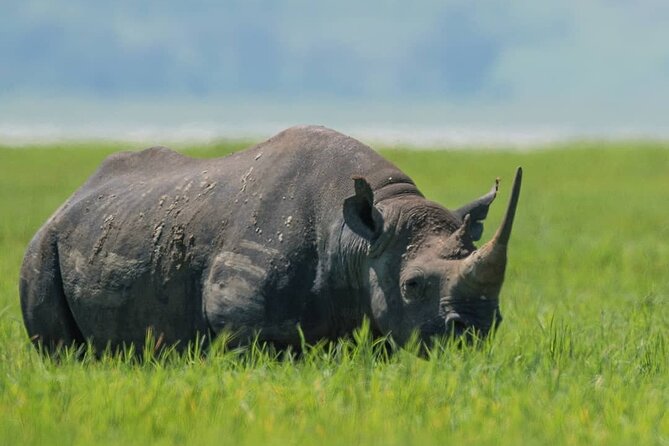
Day 6 starts around 5:30 a.m. After breakfast, you descend into Ngorongoro Crater for six to seven hours of game viewing. The crater floor is famous for its high concentration of animals, so this is your best chance on the route to see several species in a relatively compact area.
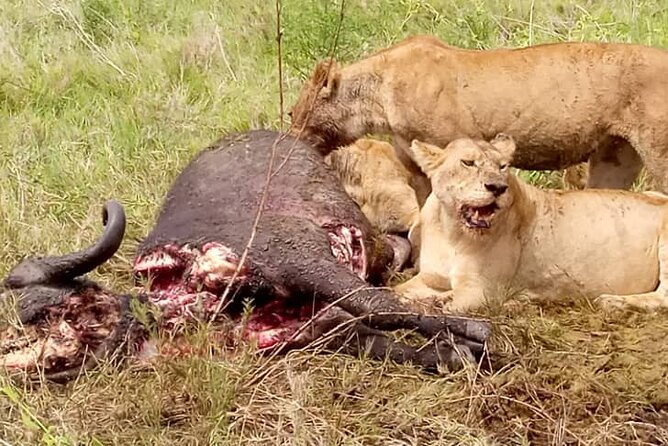
The itinerary specifically lists all of the Big Five as possible sightings, along with black rhino, many bird species, and flamingos. No wildlife sighting is certain, but the crater’s compact setting makes it easier to spend time watching animal behavior without the huge distances required in Serengeti.
Lunch is eaten inside the crater while you continue observing the natural setting. The crater walls are a major part of the experience, and the change from open Serengeti plains to a contained volcanic basin gives this day a different feel.
After the crater drive, you ascend and return to Jambo Lodge for dinner and overnight accommodation. The schedule also includes a walking tour in Mto wa Mbu village, with banana plantations, local food tasting, and a chance to see daily life in the area.
I like this village stop because it adds a human element after several days focused almost entirely on wildlife. Still, the day is full. A six or seven-hour crater drive, the ascent, luggage packing, and a village walk can make for a demanding afternoon. If the cultural visit matters greatly to you, ask how much time is reserved for it and whether it can be adjusted.
More week long trips in Arusha:
- Tanzania Classic – 7 Days
★ 5.0 · 1,151 reviews - 7-Day Premium Luxury Tanzania Safari All-Inclusive
★ 5.0 · 426 reviews - Group Safari 7 Days in Tanzania’s Main Parks
★ 5.0 · 240 reviews - 7 Days Tanganyika Wilderness Safari
★ 5.0 · 159 reviews
Lake Manyara and the journey back to Arusha
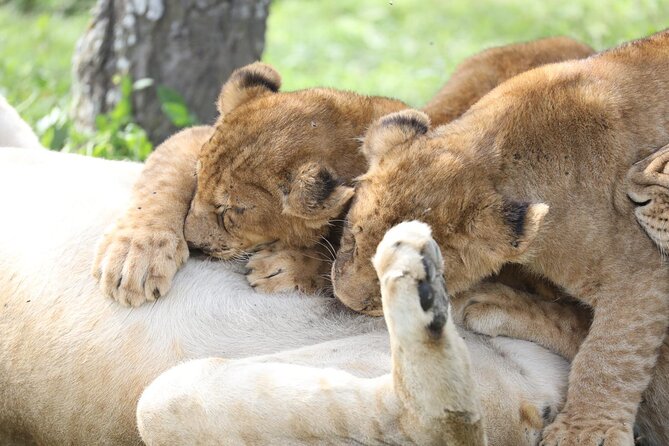
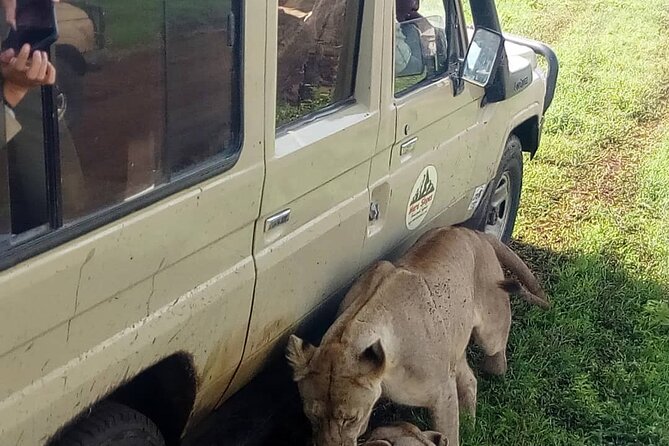
After breakfast on Day 7, you head to Lake Manyara National Park for a full-day game drive. The park is associated here with tree-climbing lions, large numbers of flamingos, and a hot spring. Flamingos are drawn to the lake’s algae, although numbers can vary with conditions.
Lake Manyara makes a good contrast with Serengeti and Ngorongoro. It is not simply another open-grassland safari. You have a chance to see a different setting, look for animals in woodland, and finish with birdlife and the hot spring.
The day also includes a Maasai boma visit, where you learn about local culture, traditions, and daily life. This can be a meaningful addition, but the experience will depend on how it is organized and how much time you receive. Ask what is included in the visit and whether any additional payment is expected, since the supplied details do not specify that.
After Lake Manyara, you drive back to Arusha for dinner and overnight accommodation. The schedule is listed at about eight hours, so this is not a short farewell outing followed by an early arrival. If you have a late flight that night, confirm the return time carefully. The package includes two nights in Arusha, one before and one after the safari, which is useful for airport planning.
The vehicle, food, and daily rhythm
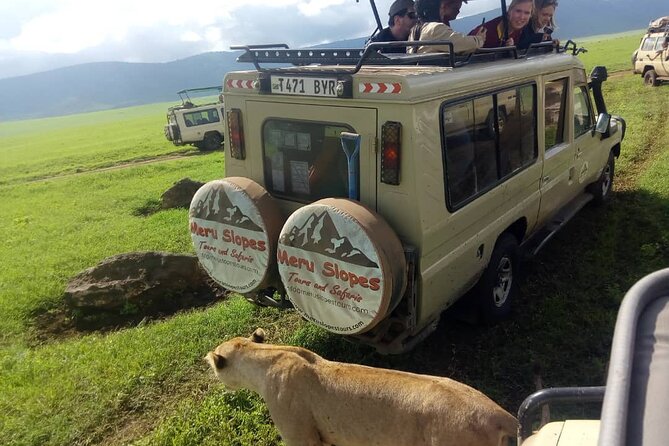
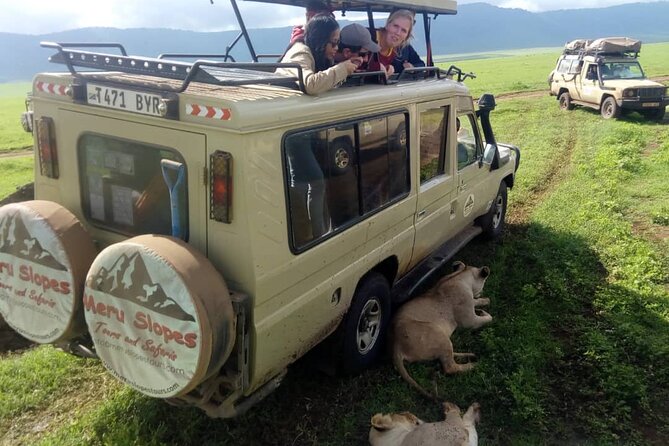
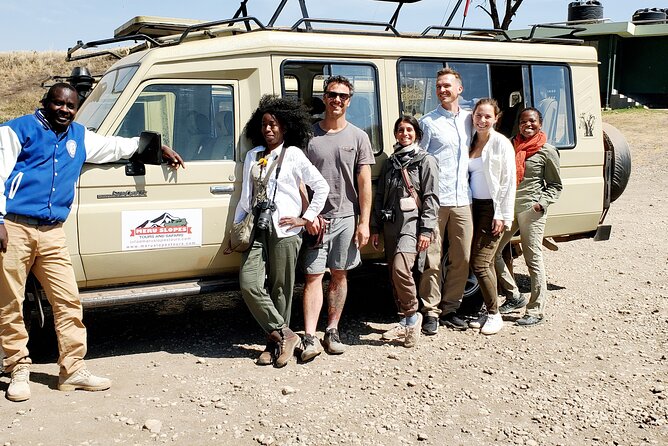
The safari uses an extended 4×4 with a pop-up roof. That roof gives you a better viewing position and lets you stand or sit higher when animals are nearby, while still keeping you in the vehicle. The vehicle is the center of your week, so ask about seating, luggage space, and the number of people sharing it.
The activity description calls the group small, which should mean more direct attention from the guide. Yet the additional information also calls it a private activity, and past departures included another couple and a solo traveler. Get the group size in writing. A smaller vehicle group makes long drives easier and gives everyone a better chance to use the roof opening during sightings.
All listed meals are included. Breakfast comes before early drives, lunch may be packed inside the jeep or served at camp, and dinner follows the day’s final transfer. The food is a practical strength of a camping safari because you are not searching for restaurants between parks. You should still tell the operator about dietary needs before arrival.
Airport transfers and two Arusha hotel nights are included, a helpful benefit if you arrive through Kilimanjaro International Airport or need a place before and after the park circuit. Tips and gratuities for the guide and cook are not included, so budget separately for those.
What the ratings suggest about the service
The experience has a five-out-of-five rating from 12 submitted ratings, with 100 percent recommending it. The strongest pattern is not a single animal sighting. It is the work of the guide and cook.
Jacob is praised for spotting animals and sharing useful facts. Mohamed is praised for timing and positioning in the huge Serengeti. Nuru helped create a close-knit shared group with cook Gadi, while Fredy is described as an experienced English and Spanish-speaking guide. These details matter because a safari can feel very different with a guide who scans carefully, explains what you are seeing, and listens to what you want.
The company is locally owned, and the director, Geofrey Nassari, is described as responsive during planning. One booking was changed to remove Lake Manyara and add another Serengeti day, showing that route flexibility may be possible. Do not assume every change is included, but it is worth asking if your priority is migration viewing rather than visiting all four parks.
There are limits to what a small set of ratings can prove. They do not establish a guaranteed guide, exact vehicle condition, or fixed group size for your departure. Treat the positive service record as encouraging, then confirm the operational details that matter to you.
Who should book this safari?
I would choose this trip if you want a broad first safari, care more about wildlife time than luxury lodging, and can handle early mornings and long drives. It suits people who want the Big Five as a goal but also care about elephants, birds, local culture, scenery, and the mechanics of a working safari camp.
It is also a good fit for couples, solo visitors, and small groups willing to share the vehicle if that is how the departure is arranged. The included meals and Arusha nights reduce planning work, and the price covers many costs that can otherwise appear later.
I would think twice if you want a slow holiday, private luxury, or a guaranteed migration crossing. Four parks in seven days is ambitious. You will see a lot, but you will spend substantial time driving between those places.
Practical details before you reserve
Pickup is offered from Arusha, with a listed start time of 7:30 a.m. and a Day 1 pickup around 8:00 a.m. Confirmation is provided at booking, and the tour is described as suitable for most participants and near public transportation.
Free cancellation is available up to 24 hours before the local start time for a full refund. Changes made inside that 24-hour window are not accepted, and poor weather can lead to a new date or full refund.
Before booking, I would ask four direct questions:
- What are the exact migration prospects for my travel dates?
- Is the departure private or shared, and how many people will ride in the jeep?
- Which guide and cook are assigned?
- Where are the campsites and what type of camping equipment is supplied?
Should you book it?
Book this safari if you want Tanzania’s main northern circuit in one well-filled week and are happy to trade lodge comfort for more time in the parks. The included transport, meals, park costs, Arusha accommodation, and several days in Serengeti make $1,790 a reasonable package price.
My strongest advice is to settle the migration timing and group arrangement before you commit. If your dates fall in July through September, ask specifically about northern Serengeti and Mara River conditions. If you are traveling from October to December, ask what wildlife pattern the guide expects then.
For a first safari with a strong chance of varied wildlife, capable driver-guides, fresh camp meals, and a route that includes four major destinations, this is a compelling choice. Just bring patience, an early-rising habit, and realistic expectations about how much Tanzania you can cover in seven days.
FAQ
Where does the safari start?
The safari starts in Arusha, Tanzania, with pickup offered from an Arusha hotel. The listed start time is 7:30 a.m., while the Day 1 itinerary gives an approximate pickup time of 8:00 a.m.
Which parks and protected areas are included?
The route includes Tarangire National Park, Serengeti National Park, Ngorongoro Conservation Area and Crater, and Lake Manyara National Park.
Are meals included?
Yes. The package lists breakfast, lunch, and dinner for the seven-day experience. A safari cook prepares meals during the camping portion.
Is accommodation included before and after the safari?
Yes. Two nights of accommodation in Arusha are included, one night before the tour and one night after it.
Are airport transfers included?
Yes. Transfers in both directions between the international airport and Arusha are included.
What is not included in the price?
Tips and gratuities for the safari guide and cook are not included.
Newly listed around Arusha
- 5-Day Private Safari Tour in Tanzania’s Wildlife★ 5.0 · 3 reviews
- 3 Days private safari Tarangire ,Ngorongroro crater &Manyara★ 5.0 · 3 reviews
- 3 Day Sharing Safari – Manyara, Ngorongoro Crater and Tarangire National Parks★ 5.0 · 3 reviews
- Tarangire National Park Day Trip★ 5.0 · 3 reviews
- 2 Days Tarangire and Ngorongoro Crater Tour★ 5.0 · 3 reviews
- 6 -Day Tarangire, Manyara, Serengeti & Ngorongoro★ 5.0 · 3 reviews
- 5 Days Group Camping Safari★ 4.7 · 3 reviews
- Private 4×4 Vitara Safari in Arusha National Park★ 5.0 · 3 reviews
Serengeti & Ngorongoro Safaris, compared.


Balloon Safari & Bush Breakfast in Serengeti – Miracle Experience
Read our review →




Private 6-Day Tarangire Manyara Crater and Serengeti with Mid-Range Lodges
Read our review →
5 Days Camping Tarangire, Serengeti & Ngorongoro crater & Visiting Maasai
Read our review →Browse the lists this tour appears in