
Reviewed · SERENGETI & NGORONGORO SAFARIS
5-Days Private Serengeti Wildebeest Migration Lodge Safaris
The main draw here is simple: five days give you a serious taste of northern Tanzania’s best wildlife country, including Tarangire, Serengeti, and Ngorongoro Crater. The strongest parts are the private vehicle, which lets your group set the pace, and the chance to spend several days around the Serengeti rather than rushing through it.
I like the included airport transfers and two Arusha hotel nights, since they remove some awkward arrival-day planning. I also like the mix of lodge and tented-lodge stays, which gives you comfort without losing the feel of being close to the bush. The main consideration is timing: the wildebeest do not follow a calendar, so a Mara River crossing is possible only when the herds are in the north, usually from July through September.
Key points at a glance
- Private pop-up-roof 4×4: Your group travels alone, with room for your guide to adjust the day around wildlife sightings.
- Three major parks: Tarangire, Serengeti, and Ngorongoro Crater each offer a different kind of safari.
- Migration timing matters: The best stated chance for Mara River crossings is June through September, while calving usually takes place from January through March.
- Full Serengeti days: The schedule gives you an evening game drive on arrival, a full day, and another morning drive before leaving.
- Lodging is built in: Marera View Lodge, Serengeti Heritage Tented Lodge, and Ngorongoro Wildlife Lodge are named in the plan.
- Strong guide focus: Past trips have highlighted guides including Mudi, Salehe, Lobulu, and Robert for wildlife spotting and practical care.
Why this five-day route works
This is a compact northern Tanzania safari with a sensible sequence. You begin with Tarangire, move to the Serengeti, then finish at Ngorongoro Crater before returning to Arusha.
That order matters. Tarangire eases you into safari life with a full day of wildlife watching. The Serengeti then gets the largest share of your attention, which is important if the migration is your main goal. Ngorongoro closes the trip with one of Africa’s most concentrated wildlife settings.
The tour is private, so the vehicle is not shared with strangers. That can make a real difference on long driving days. You can ask for a little more time at a sighting, discuss which animals matter most to you, and keep the day focused on your own group.
The listed price is $2,300. Since the supplied details do not state whether that amount is per person or for the whole group, confirm the pricing basis before booking. As a package, the value comes from the number of items included: private transport, park fees and taxes, meals, airport transfers, an extended 4×4 safari vehicle, and two Arusha hotel nights around the safari.
More Serengeti and Ngorongoro itineraries:
- Balloon Safari & Bush Breakfast in Serengeti – Miracle Experience
★ 5.0 · 1,646 reviews - 3 Days Serengeti & Ngorongoro Group Camping Safari
★ 5.0 · 574 reviews - 5-Day Highlights mid-Range Crater, Serengeti, Tarangire
★ 5.0 · 296 reviews
Day 1: elephants and baobabs in Tarangire
Pickup is scheduled from your Arusha hotel at about 8:00 a.m., followed by roughly three hours on the road to Tarangire National Park. The park is about 115 kilometers from Arusha and covers approximately 2,800 square kilometers.
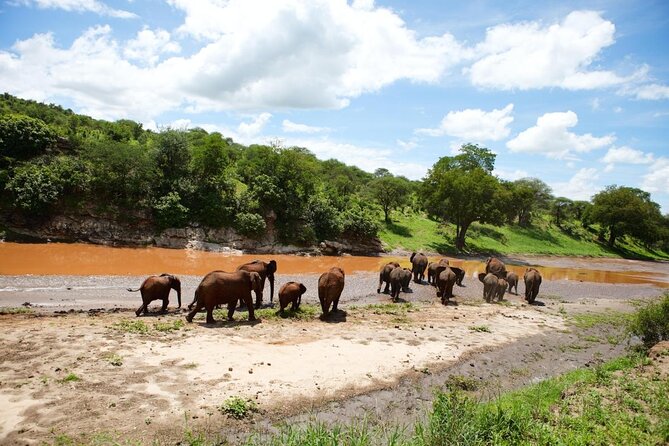
Tarangire is known for its elephants, baobab trees, and the Tarangire River. That river gives the park its name and draws animals seeking water. During a full-day game drive, you might see lions, leopards, zebra, and other plains animals, along with the park’s famous elephants.
There is also a less usual attraction here: pythons that climb trees. That detail gives Tarangire a different character from the Serengeti, where open grassland and large herds tend to dominate the view.
You spend the night at Marera View Lodge, with dinner included. The first day is long, but the timing is practical. You leave Arusha after breakfast hours and still get a full wildlife day rather than treating Tarangire as a quick stop on the way to another park.
I would not choose this safari only for Tarangire, since the migration is the headline attraction. Still, the park earns its place. The elephants and baobabs give you strong wildlife and scenery right away, and the shorter transfer from Arusha keeps the opening day manageable.
Day 2: crossing the Rift Valley into the Serengeti
After breakfast, you pack the vehicle and travel toward Serengeti National Park. Lunch is taken in the safari jeep, so this is partly a transport day and partly a moving game drive.
The route includes views of the Great Rift Valley and Ngorongoro Crater. You are expected to reach the Serengeti at around 3:00 p.m., then continue with an evening game drive in central Serengeti.
That late-afternoon timing is useful. The light softens, animals often become more active, and you may catch sunset in the park before heading to Serengeti Heritage Tented Lodge for dinner and the night.
The plan says your guide will search for part of the wildebeest migration. Keep that wording in mind. The migration is a moving cycle involving roughly 1.5 million wildebeest, along with zebra, gazelles, eland, and impala. The herds follow rainfall and fresh grazing, so no guide can promise a particular sighting on a particular day.
Central Serengeti is a sensible base for general wildlife, but it is not the same as being in northern Serengeti during a Mara River crossing. If your dates fall in July through September, ask before departure where the herds are being seen and how much driving north is built into your plan.
Day 3: your main Serengeti wildlife day
Day 3 is the heart of the safari. After breakfast, you spend a full day on game drives in the Serengeti, with your guide choosing promising areas and returning to Serengeti Heritage Tented Lodge for dinner and another night.
This extra day is valuable because wildlife sightings rarely run to a neat schedule. One hour may be quiet, while the next brings a lion, leopard, cheetah, or a moving herd. A full day gives you time to wait, reposition, and watch animal behavior rather than simply collect quick photographs.
The migration is best understood as a year-round movement, not a single event. From January through March, the focus is usually wildebeest calving. From June through September, the stated chance of seeing the great herds is strongest, including possible movement toward northern Serengeti and the Mara River.
A river crossing is dramatic, but it is also unpredictable. The animals may gather for hours, turn back, cross at another point, or move on before you arrive. A good guide’s judgment matters here, and several guides connected with this operator have been singled out for careful animal spotting. Mudi has been praised for staying with a difficult cheetah sighting, while Salehe and Lobulu have also been associated with strong wildlife days.
Do not judge the safari only by a river crossing. The Serengeti can be rewarding through predator sightings, huge open plains, zebra and gazelle herds, and the chance to watch animals behave naturally. The river is a bonus, not a guarantee.
More lodge safaris in Arusha:
- 4 Days Tanzania Lodge Safari With Two Nights at Serengeti
★ 5.0 · 62 reviews - 4 Days lodge safari Tarangire , Ngorongoro crater & Walking
★ 5.0 · 39 reviews - 5 Days Safari in Tanzania | Camping and Lodge Safaris
★ 5.0 · 31 reviews - 4 Days 3 Nights Tarangire Serengeti & Ngorongoro Lodge Safari
★ 5.0 · 24 reviews
Day 4: sunrise, a final Serengeti drive, and the crater highlands
You wake at about 5:45 a.m. for an early breakfast, then set out for a morning game drive until approximately 11:30 a.m. The aim is to see the Serengeti at sunrise, when the cooler air and low light can make the start of the day especially memorable.
After the morning drive, you return for a hot lunch and pack your belongings into the vehicle. You then continue with another game drive while heading toward Ngorongoro Crater, ending at Ngorongoro Wildlife Lodge for dinner and the night.
This is another demanding day. You are not simply transferring from one hotel to another. You combine a dawn drive, a midday break, and more wildlife viewing with the journey toward Ngorongoro.
The schedule also means you should pack lightly and keep essential items easy to reach. A camera, binoculars, sun protection, water, and a warm layer will be more useful in the vehicle than buried in a bag.
One point deserves clarification before booking. The accommodation descriptions vary between the stated lodge plan and the wording about a campsite and hot lunch. Ask the operator to confirm the exact property, room type, and meal arrangements for each night. That is a small step that can prevent confusion after a long day in the vehicle.
Day 5: the Ngorongoro Crater finale
Your final wildlife day begins around 5:30 a.m. with breakfast. You then descend into Ngorongoro Crater for six to seven hours of game driving on the crater floor.
The crater is often called the Garden of Eden because of its dense concentration of wildlife. You may see the Big Five, including the black rhino, as well as many bird species and flamingos. Lunch is served inside the crater, allowing you to eat while still surrounded by the setting you came to see.
Ngorongoro feels different from the Serengeti. The Serengeti is broad and open, with wildlife spread across enormous distances. The crater is enclosed and compact, so the odds of seeing a variety of animals during a single drive can be appealing, especially if this is your first safari.
The tradeoff is that the crater can feel busy, particularly around well-known sightings. Your private vehicle does not mean you will have the entire crater to yourself, but it does give your own group control over the vehicle and guide relationship.
After the crater drive, you ascend, collect your luggage, and drive back to Arusha. The supplied plan describes this as an overnight return arrangement, with the second Arusha hotel night included in the package. Confirm your expected arrival time if you have a flight or another activity afterward.
Lodges, meals, and the long hours on the road
This is a lodge safari, but you should read that term carefully. The named stays include Marera View Lodge, Serengeti Heritage Tented Lodge, and Ngorongoro Wildlife Lodge. The plan also uses the words tented lodge and campsite in places, so accommodation standards may vary across nights.
The package includes five breakfasts, five lunches, and five dinners. That is useful on a route where restaurants and shops are not always part of the day. Lunch may be eaten in the vehicle or inside the crater, so you should expect safari-style meals rather than a fixed dining routine every day.
The extended 4×4 has a pop-up roof for game viewing. That is one of the most important practical features. You can stand or sit beneath the raised roof to see animals, take photographs, and get a wider view than you would through a side window.
The schedule lists about eight hours for each day, but the actual rhythm can feel longer because of road time, park entry, wildlife stops, and early starts. Day 2 includes about three hours from Arusha to Tarangire on the first day, while later transfers connect Tarangire, Serengeti, Ngorongoro, and Arusha.
WiFi is listed onboard, but I would still treat it as a convenience rather than the main reason to book. The real value is having transport, meals, park fees, and lodging arranged in one plan.
What private travel changes
A private safari is especially helpful when your group has different priorities. One person may want birds, another may want big cats, and someone else may prefer fewer rushed stops. You can discuss those preferences with your guide instead of fitting into a fixed group schedule.
The guide is central to the experience. Names connected with past safari arrangements include Mudi, Salehe, Lobulu, and Robert, but you should ask who is assigned to your departure. Specific strengths described for the guiding team include careful animal searches, patience at sightings, and attention to comfort.
That does not remove every risk. One airport pickup has reportedly failed in the past, with conflicting explanations until the company was contacted. Airport transfers are included, but I would keep the emergency contact for Meru Slopes Tours and Safaris handy and reconfirm the pickup time before arrival.
The operator has also acknowledged concerns about Arusha accommodation and said hotel changes would be made. Ask for the exact Arusha hotel names, especially if location, WiFi, or room comfort matters to you.
Best timing for the wildebeest
If your priority is a Mara River crossing, target July through September and ask for a northern Serengeti plan. Even then, weather and herd movement control the outcome.
June through September is given as the strongest general period for seeing the migration. January through March is the stated calving season, which offers a different kind of wildlife experience. The right month depends on whether you want river action, large moving herds, or newborn animals.
The five-day format gives the Serengeti more time than a quick park-hopping safari, but it may still feel short if the migration is your only goal. One full day plus arrival and departure drives can produce excellent sightings, yet three full Serengeti days would give you more flexibility. Some schedules connected with this trip have included three Serengeti days and the Ndutu area, so ask if that version is available for your dates.
Who should book this safari
I would recommend it to a first-time safari visitor who wants the major northern Tanzania highlights in five days. It suits couples, families, and small private groups that value an arranged package, a dedicated vehicle, and lodge-based comfort.
It is also a good fit if you are combining the safari with Kilimanjaro or an Arusha stay. The included night before and night after the park circuit can make the wider trip easier to organize.
I would hesitate if you want slow travel, luxury properties with clearly defined room standards, or a guaranteed migration crossing. The route is active, the drives are long, and the accommodation details should be confirmed carefully.
At $2,300, the package can be good value if that price includes all the stated items for your group or covers the expected per-person safari cost with no major additions. Before paying, confirm the price basis, exact lodges, guide, migration zone, airport arrangements, and whether any conservation or crater charges differ from the quoted total.
Cancellation is free up to 24 hours before the start time for a full refund. Inside 24 hours, the amount is not refunded, and poor weather may lead to a new date or full refund.
Should you book it?
Book this tour if you want a private, well-organized introduction to Tanzania’s headline parks and you accept that wildlife follows its own timetable. The strongest reasons are the dedicated 4×4, several Serengeti outings, included meals and transfers, and the chance to work with guides such as Mudi, Salehe, Lobulu, or Robert.
Before booking, get the migration plan in writing. If your dream is a Mara River crossing, confirm the month, the intended Serengeti region, and how much time is reserved for the north. If those details line up, this five-day route offers a lot of wildlife for a compact schedule.
FAQ
Where does the safari start?
The safari starts in Arusha, with pickup offered from an Arusha hotel. The stated start time is 7:00 a.m., while the Day 1 schedule describes pickup at about 8:00 a.m., so confirm the exact time for your departure.
Which parks are included?
The route includes Tarangire National Park, Serengeti National Park, and Ngorongoro Crater.
Is this a private tour?
Yes. Only your group participates, and private transportation is included.
Is airport pickup included?
Yes. Transfers in both directions between the international airport and Arusha are included.
When is the best chance to see the wildebeest migration?
The strongest stated period is June through September, with July through September offering a chance to see wildebeest moving through northern Serengeti and crossing the Mara River. The crossing cannot be guaranteed.
What is included in the $2,300 price?
The package lists private transportation, park fees and taxes, an extended 4×4 safari jeep with a pop-up roof, WiFi onboard, five breakfasts, five lunches, five dinners, airport transfers, and two Arusha hotel nights. Confirm whether the price is per person or for the full group before booking.
Newly listed around Arusha
- 5-Day Private Safari Tour in Tanzania’s Wildlife★ 5.0 · 3 reviews
- 3 Days private safari Tarangire ,Ngorongroro crater &Manyara★ 5.0 · 3 reviews
- 3 Day Sharing Safari – Manyara, Ngorongoro Crater and Tarangire National Parks★ 5.0 · 3 reviews
- Tarangire National Park Day Trip★ 5.0 · 3 reviews
- 2 Days Tarangire and Ngorongoro Crater Tour★ 5.0 · 3 reviews
- 6 -Day Tarangire, Manyara, Serengeti & Ngorongoro★ 5.0 · 3 reviews
- 5 Days Group Camping Safari★ 4.7 · 3 reviews
- 4 Days Tanzania Safari★ 4.5 · 3 reviews
Serengeti & Ngorongoro Safaris, compared.


Balloon Safari & Bush Breakfast in Serengeti – Miracle Experience
Read our review →




Private 6-Day Tarangire Manyara Crater and Serengeti with Mid-Range Lodges
Read our review →
5 Days Camping Tarangire, Serengeti & Ngorongoro crater & Visiting Maasai
Read our review →Browse the lists this tour appears in