
Reviewed · ARUSHA TOURS
7-Day Great Migration Safari
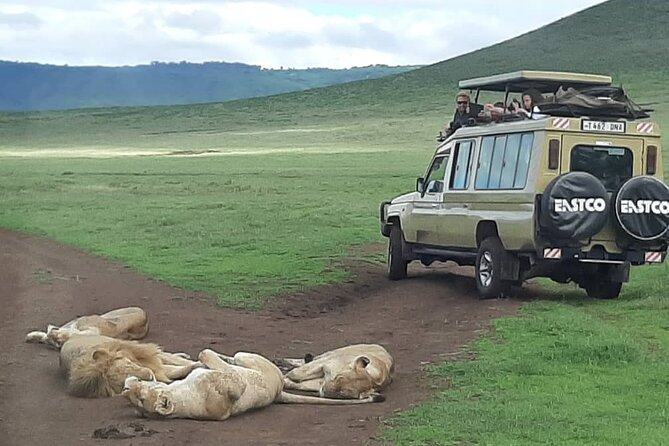
The big draw here is the classic Northern Tanzania route in one well-paced seven-day trip: Tarangire, Serengeti, and Ngorongoro Crater are all included, with Lake Manyara adding a shorter park visit. I like the private format, which lets your group adjust game-drive timing, and I like that park fees, six breakfasts, six lunches, seven dinners, water, and lodging are built into the $3,850 price.
The main consideration is distance. You will spend many hours on rough park roads and in the safari vehicle, especially on the transfers to and from Serengeti. Also, the title promises the Great Migration, but no travel dates or migration location are specified, so a wildebeest river crossing is not guaranteed.
Key points to know before booking
- Four major Northern Tanzania parks and reserves: Tarangire, Lake Manyara, Serengeti, and Ngorongoro are covered in seven days.
- Private vehicle and guide: Only your group participates, with guide names such as Wilson, Emmanuel, Mathieu, and others associated with the company.
- Two full days in Serengeti: This gives you time for both broad game viewing and a more flexible morning and afternoon rhythm.
- Lodges mix comfort with safari character: Overnight stays include Boundary Hill Lodge, Rhotia Valley Lodge, Serengeti Pure Luxury Camp, and Ngorongoro Sopa Lodge.
- Optional extras cost extra: A Tarangire night drive is $30 per adult, and the Ngorongoro rim walk is $30 per adult.
- Migration timing matters: The route reaches Serengeti, but the itinerary does not state when or where the migration will be seen.
How this seven-day safari fits together
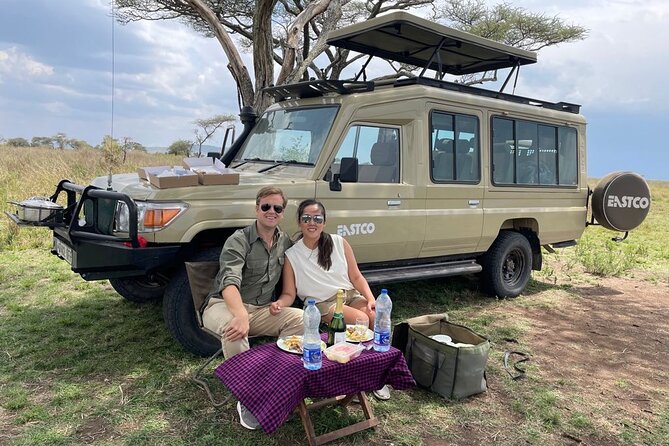
This is a private safari from Arusha with an 8:00 am start. You travel by road through several of Tanzania’s best-known wildlife areas, staying in lodges and a luxury camp rather than returning to one base each night.
That moving format is part of the appeal. You see how the country changes from the lower, drier Tarangire area to the open Serengeti plains and then the high rim of Ngorongoro. The tradeoff is that this is not a relaxed lodge holiday. Several days combine long drives with game viewing, and picnic lunches keep you out in the parks instead of bringing you back for a midday meal.
The trip is private, so your guide can make practical choices with your group. On the two full Serengeti days, you can take a picnic lunch and remain out for much of the day, or return to camp for lunch between an early morning and late afternoon drive. That flexibility matters. Wildlife is not on a timetable, and your best day may come from staying out longer rather than following a fixed schedule.
More Safaris in Arusha
- Balloon Safari & Bush Breakfast in Serengeti – Miracle Experience
★ 5.0 · 1,646 reviews - 4 Days Group Camping Safari
★ 5.0 · 1,101 reviews - 5 Days Group Camping Safari
★ 5.0 · 730 reviews
Day 1: Tarangire’s elephants and Boundary Hill Lodge
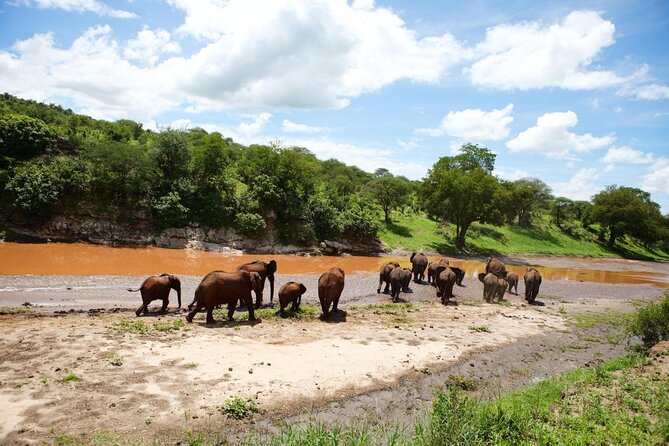
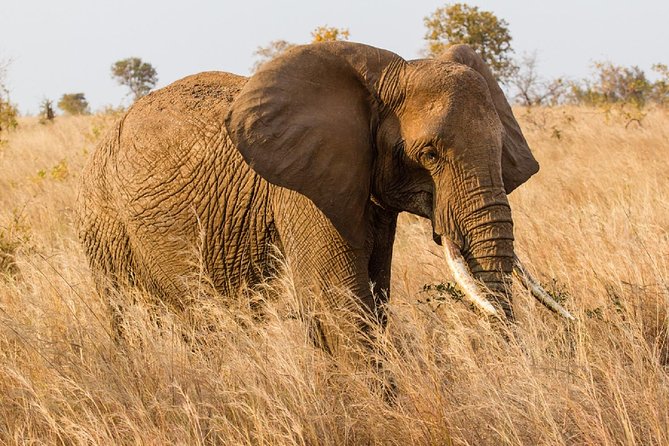
The safari begins with Tarangire National Park and a picnic lunch. The park is especially associated with elephants, and the supplied description refers to its elephant swamps, giving you a clear idea of the day’s main character: large herds, broad open areas, and game viewing among Tarangire’s seasonal water sources.
You spend the afternoon on a game drive before continuing to Boundary Hill Lodge for dinner and the night. This is a useful first day because it gets you into a major wildlife area right away, rather than using the entire day simply to reach a distant camp.
The schedule may feel full. You leave early, carry a picnic lunch, spend the afternoon on park roads, and then continue to the lodge. I would pack binoculars, sunscreen, a hat, and a light layer where you can reach them without unpacking your main bag.
A night drive is available as an optional extra for $30 per adult and $20 per child. Since it is not part of the base price, ask at booking how it fits the day’s timing and park rules. It can add a different kind of wildlife viewing, but it also makes an already busy opening day longer.
Day 2: Lake Manyara and the Great Rift Valley
Day 2 begins with a scheduled morning walk before the group heads to Lake Manyara National Park. The exact length and format of the walk are not stated, so clarify the details if this activity is important to you. It is a welcome change from sitting in the vehicle and gives the day a different pace.
The park visit includes a picnic lunch and game viewing. Lake Manyara is a compact and varied stop on this route, though the itinerary allows only one day here. You should think of it as an introduction to Tanzania’s wildlife parks, not as the main wildlife portion of the trip.
After the park, you ascend the Great Rift Valley for dinner and an overnight stay at Rhotia Valley Lodge. This change in elevation gives the day a scenic finish, but it also adds another transfer after the morning walk and game drive.
I like the contrast between the two opening days. Tarangire provides a strong first wildlife experience, while Manyara breaks up the drive toward the Serengeti. If your priority is maximum time in the Serengeti, though, you may find Lake Manyara’s one-day stop less important than the longer Serengeti stay.
Day 3: The long road into Serengeti
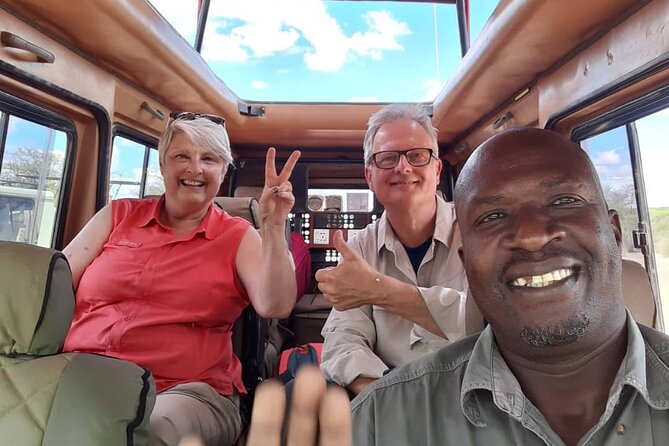
From Karatu, the group travels toward Serengeti with a picnic lunch and game viewing along the way. You arrive in the Seronera area for dinner and an overnight stay at Serengeti Pure Luxury Camp.
This is one of the trip’s long travel days. The itinerary combines the transfer with wildlife viewing, which is the sensible way to handle Tanzania’s distances, but you should still expect a substantial amount of time in the vehicle. A private safari makes this easier because you can ask your guide for comfort stops and discuss how much time to spend at sightings.
Arriving at Seronera is important because it places you in the central Serengeti for the next two nights. That location gives the itinerary a proper block of time in Tanzania’s best-known park rather than treating Serengeti as a quick pass-through.
The camp name promises a higher level of comfort than a basic tented site, but the supplied details do not describe room types, electricity, internet, or laundry. Ask the operator for current accommodation details if those points affect your choice.
A change of scene while you are in Arusha:
- Tanzania Classic – 7 Days
★ 5.0 · 1,151 reviews - Materuni Waterfalls, coffee tour & Kikuletwa Hot Springs
★ 5.0 · 643 reviews - 3 Days Serengeti & Ngorongoro Group Camping Safari
★ 5.0 · 574 reviews - 7-Day Premium Luxury Tanzania Safari All-Inclusive
★ 5.0 · 426 reviews
Days 4 and 5: Two full days in central Serengeti
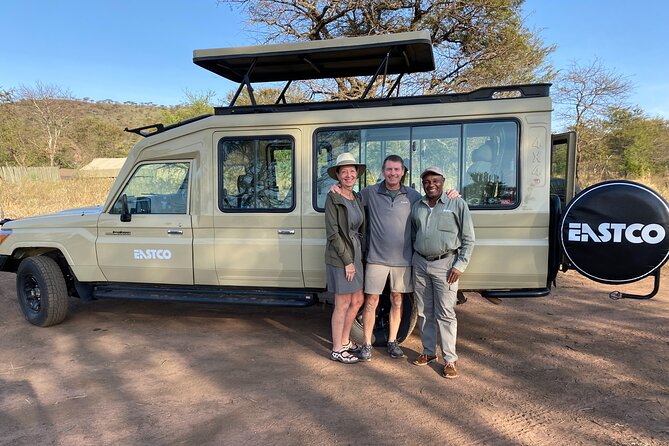
The two full Serengeti days are the heart of the safari. You can take a picnic lunch and spend the day out on the plains, or choose an early morning drive, return to camp for lunch, and head out again in the late afternoon.
I like having both options. A full-day drive is useful when a particular sighting is far away or when you want to cover more ground. Returning to camp is better if you prefer a slower day, a proper lunch, or a break from the vehicle. Since this is a private tour, your group can make that choice together.
The itinerary does not promise a specific animal sighting, and no safari can honestly do so. Still, the two-day stay gives your guide more than one chance to look for the animals you most want to see. Past safari arrangements connected with this company have included guides such as Wilson, Emmanuel, Mathieu, and Jamal Njarita. Names are not assigned in advance here, so confirm your guide before departure.
The supplied feedback places strong emphasis on guides who could identify animals at a distance, explain what was happening, and make the trip engaging for families. One account specifically praised Mathieu for a close-up sighting, while others highlighted Wilson for his animal knowledge and ability to make a first safari enjoyable. Those are useful qualities to ask about, especially if photography or family travel is central to your plans.
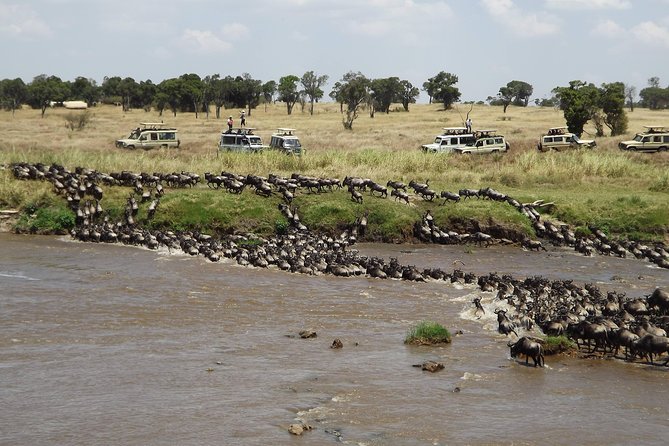
The phrase Great Migration needs a little care. Serengeti is one of the key places to see the annual movement of wildebeest and zebra, and the route is well chosen for that possibility. But the migration shifts through the year. This itinerary gives no dates, no northern Serengeti section, and no guarantee of a Mara River crossing. If that crossing is your main goal, ask for a date-specific plan rather than relying on the tour title alone.
Day 6: Leaving Serengeti for Ngorongoro
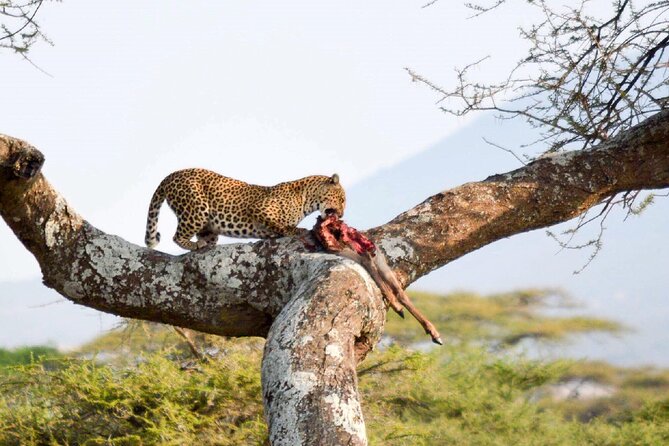
You leave Serengeti with a picnic lunch and continue toward the Ngorongoro Conservation Area, with game viewing along the way. Dinner and the night are at Ngorongoro Sopa Lodge.
This is another day when the route does double duty. You are transferring between major areas, but the drive also remains part of the safari. Keep your camera and binoculars close, not packed away in luggage.
Ngorongoro Sopa Lodge is positioned for the crater portion that follows, though the supplied information does not specify its facilities or room arrangements. The overnight here is practical because Day 7 begins with an early descent into the crater.
There is also an optional crater rim walk with an NCCA guide for $30 per adult and $20 per child. This is a good add-on for people who want time on foot and a closer look at the rim area. It is not included, so confirm availability and timing with the operator before counting on it.
Day 7: Ngorongoro Crater before returning to Arusha
The final day starts early with a descent onto the Ngorongoro Crater floor. You spend about six hours on game viewing with a picnic lunch before returning to Arusha, arriving in the late afternoon.
The early start makes sense. It gives you a better chance to enjoy the crater before the return drive and keeps the day focused on wildlife rather than rushing through a short visit. The crater is also a strong final stop because it offers a concentrated game-viewing experience after the wide-open Serengeti.
Do not underestimate the return journey. After six hours on the crater floor, you still have a road transfer to Arusha. If you have an evening flight, a separate hotel booking, or a tight onward connection, confirm the estimated arrival time before making plans. The listed end point is back at the Arusha meeting point.
What the $3,850 price includes
At $3,850 per person, this is not a budget safari. The value depends on the fact that it is private and includes a large share of the unavoidable safari costs.
Included items are:
- National park fees
- All taxes, fees, and handling charges
- Private tour service
- All accommodation stated in the program
- Bottled water
- Six breakfasts
- Six lunches
- Seven dinners
The private format is the biggest value point for me. You are not sharing the vehicle with strangers, and your group can choose between full-day drives and split morning and afternoon drives in Serengeti. That can make a real difference over seven days.
The price also removes much of the guesswork around meals and park access. You still pay separately for alcoholic drinks, unspecified food and drinks, tips, visas, and optional activities. Budget for those before you arrive, especially if you want the night drive or crater rim walk.
Group discounts are offered, but the amount is not stated. Ask for the exact price based on your party size. Children must be accompanied by an adult, and the child rate applies only when a child shares with two paying adults.
Food, comfort, and practical planning
Breakfast, lunch, and dinner are included for the stated number of days, with picnic lunches used on several transfer and park days. This is convenient and keeps you out in the parks, but it also means you should tell the operator about dietary needs when booking.
Vegetarian food is available if requested in advance. Specific dietary requirements should also be shared before the safari, not on the first morning in Arusha.
The tour operates in all weather, so pack for changing conditions. Comfortable clothing, a warm layer, closed shoes, sun protection, and a waterproof layer are sensible choices. The supplied information does not give a luggage limit, so ask before arrival if you are also carrying bags for a beach stay or flight.
Pickup is offered, and the activity begins in Arusha at 8:00 am. Confirmation is provided at booking, and the tour ends back at the meeting point. Free cancellation is available up to 24 hours before the start time, while changes or cancellations inside that window are not accepted for a refund.
Who will enjoy this route most
I would recommend this safari to a first-time visitor who wants the main Northern Tanzania sights without building a custom trip from scratch. It also suits families and couples who value a private vehicle, a named guide, and the ability to adjust the daily rhythm.
It is a good fit for photographers because two full Serengeti days provide time to wait, reposition, and return to a promising area. The reported sightings include the Big Five and, on related safaris with the company, a Mara River crossing. Treat those as possible outcomes, not promises.
You may want a different plan if you dislike long road transfers, need a slow holiday, or are visiting specifically for the migration at a precise place and time. In that case, ask for a seasonal route that confirms the likely migration zone and adds more nights in the most relevant part of Serengeti.
Should you book this safari?
Book it if you want a private seven-day circuit with the big Northern Tanzania names, included park fees and meals, two full days in Serengeti, and a flexible guide-led schedule. The strong points are the route, the private format, and the chance to work with guides such as Wilson, Emmanuel, or Mathieu, depending on assignment.
Before paying, confirm the exact guide, accommodation details, the morning walk at Lake Manyara, group discount terms, and how the company handles the Great Migration during your dates. If you accept the long drives and understand that wildlife sightings and river crossings cannot be guaranteed, this is a well-rounded first safari at a substantial but defensible price.
FAQ
Where does the safari start?
The safari starts in Arusha, in Tanzania’s Arusha Region, at 8:00 am. Pickup is offered.
Where does the safari end?
The activity ends back at the meeting point in Arusha.
How long does the safari last?
The safari lasts approximately seven days. The final Ngorongoro Crater visit lasts about six hours before the return to Arusha.
Which parks and reserves are included?
The route includes Tarangire National Park, Lake Manyara National Park, Serengeti National Park, the Ngorongoro Conservation Area, and Ngorongoro Crater.
Is this a private tour?
Yes. Only your group participates in the activity.
Are meals included?
Yes. The package includes six breakfasts, six lunches, and seven dinners. Picnic lunches are used on several park and transfer days.
Are park fees included?
Yes. National park fees, taxes, handling charges, and other listed fees are included.
Are there optional activities?
Yes. A Tarangire night drive costs $30 per adult and $20 per child. A crater rim walk with an NCCA guide costs $30 per adult and $20 per child.
Can dietary requirements be accommodated?
Vegetarian food is available. You should advise the operator of vegetarian needs or other dietary requirements when booking.
More week long trips in Arusha
- Group Safari 7 Days in Tanzania’s Main Parks
★ 5.0 · 240 reviews - 7 Days Tanganyika Wilderness Safari
★ 5.0 · 159 reviews - 7-Day Machame Kilimanjaro Summit Tour from Arusha
★ 5.0 · 125 reviews - 7 days great migration safari
★ 5.0 · 77 reviews
Newly listed around Arusha
- 5-Day Private Safari Tour in Tanzania’s Wildlife★ 5.0 · 3 reviews
- 3 Days private safari Tarangire ,Ngorongroro crater &Manyara★ 5.0 · 3 reviews
- 3 Day Sharing Safari – Manyara, Ngorongoro Crater and Tarangire National Parks★ 5.0 · 3 reviews
- Tarangire National Park Day Trip★ 5.0 · 3 reviews
- 2 Days Tarangire and Ngorongoro Crater Tour★ 5.0 · 3 reviews
- 6 -Day Tarangire, Manyara, Serengeti & Ngorongoro★ 5.0 · 3 reviews
- 5 Days Group Camping Safari★ 4.7 · 3 reviews
- Private 4×4 Vitara Safari in Arusha National Park★ 5.0 · 3 reviews
Arusha Tours, compared.

Balloon Safari & Bush Breakfast in Serengeti – Miracle Experience
Read our review →






Browse the lists this tour appears in