
Reviewed · ARUSHA TOURS
5 Days_Haking_Mount_Kilimanjaro by_Using_Marangu Route
The Marangu Route gives you a bed, a dining hut, and a shorter path to Uhuru Peak, Africa’s highest point. That sounds easy, but the summit day still means a steep, cold, pre-dawn climb to 5,895 meters. The route’s huts make it more comfortable than camping, not effortless.
I like the communal hut life, where climbers from several countries eat together and share the nervous excitement of summit night. I also like the practical package: park and rescue fees, meals, purified water, guides, transfers, and hotel nights are included. The main drawback is the five-day schedule. It is short for altitude adjustment, and the itinerary gives you little spare time if your body needs a slower pace.
Key points to know before booking
- Marangu is the only Kilimanjaro route with sleeping huts at every camp, including bunks, mattresses, and pillows.
- The 2:00am summit start is the hardest part, with several hours of steep scree or snow before Gilman’s Point.
- The five-day plan is efficient but demanding, and an extra acclimatization day at Horombo is worth considering.
- Maundi Crater offers an optional first-day side trip with views toward northern Tanzania and Kenya.
- Meals, purified water, park fees, rescue fees, guides, transfers, and two hotel nights are included, which strengthens the $1,809.50 price.
- Porter and guide tips are not included, so bring cash and plan for this important final cost.
Why the Marangu Route feels different
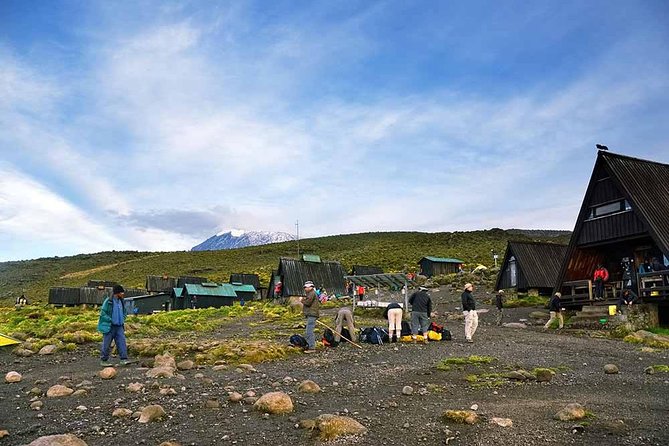
Most Kilimanjaro routes use tents. Marangu uses huts. At Mandara and Kibo, you sleep in communal rooms with 60 beds, while Horombo has 120 beds. Each bunk has a sponge mattress and pillow, and the huts have solar lighting.
That arrangement is the route’s defining feature. You avoid carrying a tent or sleeping on the ground, and you have a proper room for sorting clothes and resting. The tradeoff is privacy. You share sleeping quarters and dining space with other climbing groups, often from several countries.
The dining huts can feel lively, especially before the summit attempt. Soft drinks, bottled water, and beer may be sold at the camps, but prices rise with altitude. Bring small Tanzanian notes if you want to buy anything along the way.
The Marangu Route is often called the Coca Cola Route because it is popular and comparatively direct. Do not read that nickname as a promise of a gentle walk. The route is shorter than many alternatives, and that means fewer days for your body to adjust to thin air.
A few more Arusha days to compare
- Balloon Safari & Bush Breakfast in Serengeti – Miracle Experience
★ 5.0 · 1,646 reviews - Tanzania Classic – 7 Days
★ 5.0 · 1,151 reviews - 4 Days Group Camping Safari
★ 5.0 · 1,101 reviews
What the $1,809.50 price really covers
At $1,809.50 per person, this is not a basic walk into the park. The price includes all park fees and rescue fees, professional mountain guides, arrival and departure transfers, meals, clean purified drinking water, and two nights of hotel accommodation.
Dinner, lunch, and breakfast are listed for all five days. The description also says nutritious food is provided, which matters on a climb where you use a lot of energy. You should still confirm the exact hotel nights and meal schedule before departure, since the itinerary itself places you in huts for the mountain portion.
The package has real value because Kilimanjaro costs include more than the guiding itself. Park access, rescue coverage, food, transfers, and hut arrangements can add up quickly when arranged separately. You also have a private trip, meaning only your own group participates, rather than being placed with an unknown group.
The missing cost is tipping. Tips for guides and porters are not included, and the operator specifically asks you to remember the support crew at the end. Keep this separate from your tour budget. International flights are also excluded.
Day 1: Marangu Gate to Mandara Hut
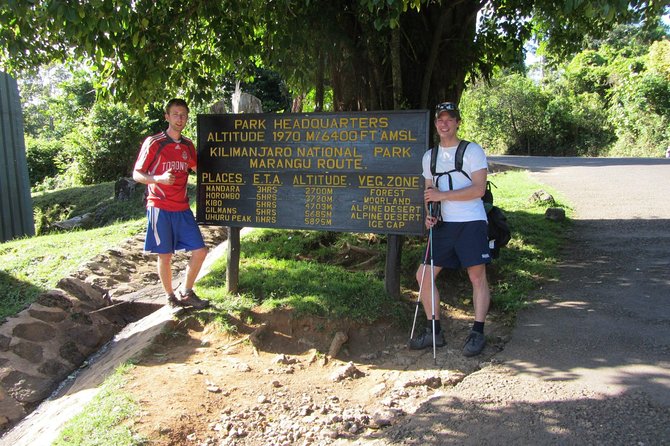
After breakfast and a briefing, you drive about 45 minutes to the Kilimanjaro park gate. Registration takes place there, and then the climb begins through rainforest toward Mandara Hut at about 2,740 meters, or 9,000 feet.
This first section is pleasant but not trivial. The forest is thick, and you may see towering eucalyptus trees, bird life, and colobus monkeys. The path feels shaded and green, a sharp contrast to the volcanic slopes higher up.
Maundi Crater is an optional side trip. It is a good choice if you still have energy because it gives you wider views of northern Tanzania and Kenya. If the weather is poor or you are already feeling the effort, staying focused on Mandara is sensible.
The first hut has 60 beds, solar lights, and shared facilities. Bathrooms and running water are available at the two lower huts, including Mandara. This is where you learn how the hut system works: communal bunks, shared dining, and a steady stream of climbers arriving from the forest.
Day 2: Moorland views at Horombo Hut
The trail leaves the rainforest and climbs through open moorland toward Horombo Hut. The walk is listed at about five hours, with the elevation reaching roughly 3,720 meters.
This is one of the most rewarding walking days because the trees open up and the views toward Mawenzi and Kibo become clearer. Giant lobelias and groundsels give the moorland a distinctly high-altitude appearance.
You may begin to feel altitude effects here. Headache, tiredness, or shortness of breath can appear even when the walking pace feels manageable. Tell your guide early if you feel unwell. A professional guide is there not only to lead the route but also to help judge how your body is responding.
Horombo has 120 beds, so it is a larger and busier camp than Mandara. You can spend an extra day here to rest or take a walk toward the smaller peak of Mawenzi. The published five-day plan does not include this extra acclimatization day, but it is the most useful adjustment available on this route.
If you have any flexibility, ask about extending the itinerary at Horombo. A longer schedule costs more time, but it can give you a better chance of reaching the summit safely and with enough energy to enjoy it.
A change of scene while you are in Arusha:
- 5 Days Group Camping Safari
★ 5.0 · 730 reviews - Materuni Waterfalls, coffee tour & Kikuletwa Hot Springs
★ 5.0 · 643 reviews - 3 Days Serengeti & Ngorongoro Group Camping Safari
★ 5.0 · 574 reviews - 7-Day Premium Luxury Tanzania Safari All-Inclusive
★ 5.0 · 426 reviews
Day 3: Kibo Hut and the volcanic moonscape
From Horombo, the trail crosses the saddle between Mawenzi and Kibo. The walk takes about six hours and passes through upper heathland before the vegetation fades into bare volcanic ground.
This section can feel stark and exposed. The green forest and moorland are gone, replaced by wide, quiet stretches of rock and soil. Kibo Hut is the final camp before the summit attempt, so the mood changes here. You eat dinner, rest, and prepare your clothing and equipment for an early start.
There is no regular water source beyond the last point, so follow the operator’s guidance closely about carrying purified drinking water. The huts provide shelter, but Kibo is still a high, cold camp. You will want warm layers ready before dinner rather than buried at the bottom of your bag.
The short schedule becomes most obvious on this day. You have climbed steadily upward and now need to sleep, or at least rest, before beginning the summit climb around 2:00am. Keep your expectations realistic. The goal is not speed. It is a slow, steady pace that saves energy.
Day 4: The long push to Uhuru Peak
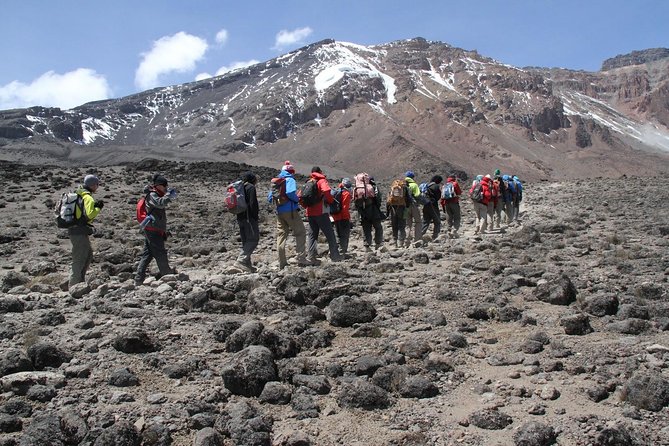
Summit day begins at about 2:00am. You climb steep ground covered in heavy scree or snow toward Gilman’s Point on the crater rim. The schedule allows roughly four to seven hours for this section, depending on conditions and pace.
This is the toughest physical portion of the trip. It is dark, cold, and steep, and every step can feel slow at high altitude. Your guide will set the rhythm, but you need patience. The climb is not a race, and the early start is designed to get you to the crater rim in time to continue toward the summit.
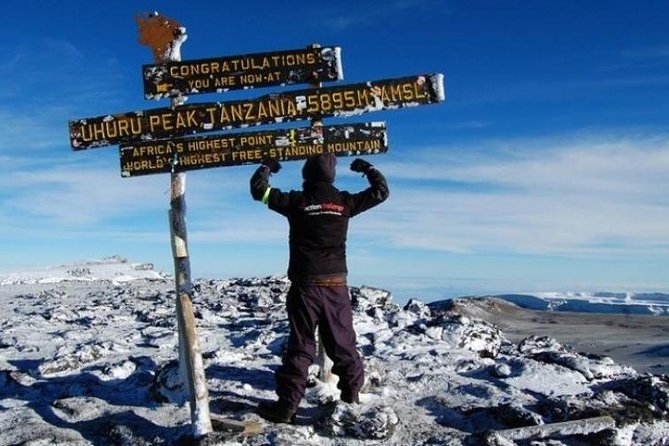
At Gilman’s Point, the route reaches about 5,861 meters according to the tour details. From there, you continue for another one to two hours to Uhuru Peak at 5,895 meters. Uhuru is the highest point in Africa, and the views can be extraordinary when the weather is clear.
Take the summit photograph, but do not linger too long. At this height, cold and fatigue matter. After the summit, you descend to Kibo Hut for lunch and a rest before continuing to Horombo for dinner and the night.
That descent makes Day 4 unusually long. The listed walking time is about six hours, but the summit section alone can take much of the morning, and the full day may feel longer in practice. The reward is a summit attempt without camping, followed by a proper hut at Horombo rather than another night at Kibo.
Day 5: Forest descent and the return to Moshi or Arusha
After breakfast, you descend through moorland to Mandara Hut, at about 2,700 meters. From there, the route continues through lush forest on a good path to the Marangu park gate at about 1,830 meters.
The descent is easier on the lungs but can be hard on tired knees. Lower sections may be wet and muddy, so gaiters and trekking poles are useful. You may be comfortable in shorts and a T-shirt at this elevation, but keep rain gear and warmer clothing within reach because conditions can change.
A vehicle meets you at Marangu village and takes you back to your hotel in Moshi or Arusha. The return transfer is included, which removes one practical worry after five days on the mountain.
This is the day to thank your guides and porters and arrange tips. Carry small Tanzanian bills for camp purchases and keep your tipping money separate so you are not caught short at the finish.
Guides, support, and the human side of the climb
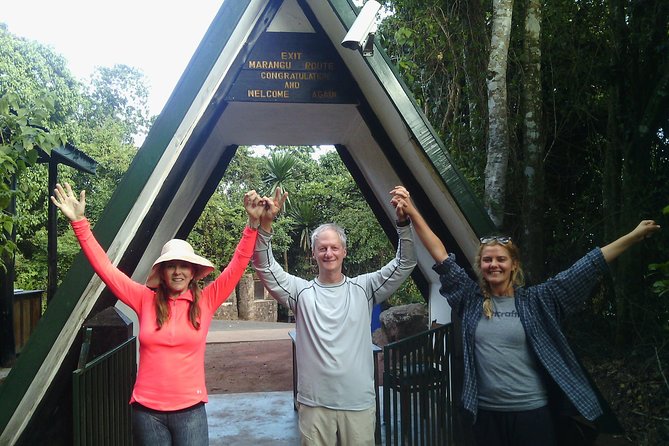
The operator is Three Peaks Tanzania Safari Ltd. The experience includes professional mountain guides and a private group format. Names associated with the company’s Kilimanjaro trips include Gabriel, Rafael, and Mary. One account specifically identifies Chief Gabriel during the summit hike, while Rafael is described as kind and positive, and Mary is associated with an airport welcome.
You should not assume a particular person will lead your departure unless the company confirms it. Still, these details suggest that the support side of the operation is a major part of the experience.
The strongest praise centers on the guide and porter team. The descriptions emphasize patience, humor, encouragement, good organization, and plentiful food. Those qualities matter more than fancy camp facilities when you are tired, cold, and dealing with altitude.
Your porters carry much of the group equipment, while you still need to carry your personal day items. Treat the crew with respect, follow the operator’s luggage guidance, and budget properly for tips. A good mountain experience depends on this support system.
Food, water, and hut life
Meals are included throughout the five-day program, along with clean purified drinking water. The food is described as nutritious and generous, which is exactly what you need after several hours of uphill walking.
Meals take place in shared dining huts. This creates a social atmosphere, but it can also mean noise and less personal space than you would have in a private lodge. The huts are communal from the sleeping area to the dining room, so this route suits you if you prefer practical shelter over solitude.
Bathrooms and running water are available at Mandara and Horombo. At the final camp, facilities are much more basic, with separate men’s and women’s latrines. Prepare mentally for a drop in comfort as you move higher.
Soft drinks, bottled water, and beer may be available for purchase at the huts. Prices rise with elevation, so bring small Tanzanian bills. Do not count on card payment based on the information provided.
Who should choose this five-day climb?
This route suits you if you want hut accommodation, a private group, included meals, and a direct Kilimanjaro plan. It is also a good fit if the idea of sleeping in a tent is a deal breaker.
You need a moderate level of physical fitness. The route includes several hours of walking on multiple days, a pre-dawn summit climb, and a long descent after reaching the top. You should be comfortable with sustained uphill walking before booking.
The route is less suitable if you want a quiet, remote mountain experience. Communal huts and dining rooms bring a social, international atmosphere, but they also mean more people and less privacy.
The biggest question is time. Five days is the shortest Marangu schedule described here. If you can add a day at Horombo, you gain extra rest and acclimatization. If you cannot, you should arrive prepared, listen closely to your guide, and avoid treating the shorter route as an easy route.
Booking, cancellation, and practical details
Pickup is offered, and the package includes arrival and departure transfers. Confirmation is provided when you book, and the activity is private for your group.
Free cancellation is available if you cancel at least 24 hours before the start time. Cancellations within 24 hours are not refunded, and changes inside that window are not accepted. The cut-off follows local time.
Before paying, confirm the exact start point, hotel nights, luggage rules, expected tipping arrangements, and whether an extra Horombo day can be added. Those questions are especially important because the five-day schedule leaves little room for changes once you are on the mountain.
Should you book this Marangu Route experience?
I would choose this trip if you value hut sleeping and an all-in-one package more than a slow, quiet route. The price covers many major costs, the private format keeps your group together, and the support team is presented as a strong part of the experience.
I would hesitate if you have never prepared for high altitude or if you want a generous acclimatization schedule. The Marangu Route may be the easiest and shortest route in the Kilimanjaro lineup, but summit day remains a serious test.
For the best chance of success, ask about spending an extra night at Horombo. If your schedule is fixed at five days, train for long uphill walks, bring proper rain and cold-weather layers, carry small Tanzanian bills, and reserve money for tips. With those points handled, this is a practical way to attempt Uhuru Peak without giving up the basic comfort of a bed.
FAQ
Where does the Kilimanjaro climb take place?
The experience is based in Arusha, Tanzania, and the climb begins at the Kilimanjaro park gate on the Marangu Route.
How long is the experience?
The climb lasts approximately five days.
What is the Marangu Route also called?
It is also known as the Coca Cola Route or the tourist route.
Do I sleep in tents or huts?
You sleep in communal mountain huts at every camp. The huts have bunk beds, sponge mattresses, pillows, and solar lights.
How many beds are in the huts?
Mandara and Kibo Huts each have 60 beds. Horombo Hut has 120 beds.
Are bathrooms and running water available?
Bathrooms and running water are available at the two lower huts. At the last camp, only very basic men’s and women’s latrines are available.
What time does the summit climb begin?
The summit climb starts at about 2:00am on Day 4.
Is Uhuru Peak included in the route?
Yes. The itinerary takes you from Kibo Hut to Gilman’s Point and then onward to Uhuru Peak, the highest point in Africa at 5,895 meters.
What does the price include?
The price includes park fees, rescue fees, arrival and departure transfers, guides, meals, purified drinking water, and two nights of hotel accommodation.
Are tips and international flights included?
No. Tips and international flights are not included.
Can I cancel for a full refund?
Yes, if you cancel at least 24 hours before the experience start time. Cancellations within 24 hours are not refunded.
Newly listed around Arusha
- 5-Day Private Safari Tour in Tanzania’s Wildlife★ 5.0 · 3 reviews
- 3 Days private safari Tarangire ,Ngorongroro crater &Manyara★ 5.0 · 3 reviews
- 3 Day Sharing Safari – Manyara, Ngorongoro Crater and Tarangire National Parks★ 5.0 · 3 reviews
- Tarangire National Park Day Trip★ 5.0 · 3 reviews
- 2 Days Tarangire and Ngorongoro Crater Tour★ 5.0 · 3 reviews
- 6 -Day Tarangire, Manyara, Serengeti & Ngorongoro★ 5.0 · 3 reviews
- 5 Days Group Camping Safari★ 4.7 · 3 reviews
- 4 Days Tanzania Safari★ 4.5 · 3 reviews
Arusha Tours, compared.

Balloon Safari & Bush Breakfast in Serengeti – Miracle Experience
Read our review →





