

Reviewed · SERENGETI & NGORONGORO SAFARIS
3 Days /2 nights Serengeti and Ngorongoro crater
The big draw here is simple: in just three days, you reach both the Serengeti plains and the wildlife-packed Ngorongoro Crater. The route also takes you through Karatu and the Ngorongoro Conservation Area, so the journey is part of the experience, not just a transfer between parks.
I like the chance to spend time in the Seronera area, where the river attracts a broad mix of animals. I also like that meals, park charges, camping, pickup, and transport are built into the price, which makes budgeting easier.
The main drawback is the pace. You will spend long hours on rough roads and have only two nights in camp. The group-size information also needs checking, since the stated maximum is six, while one shared departure had seven people.
Key points to know before booking
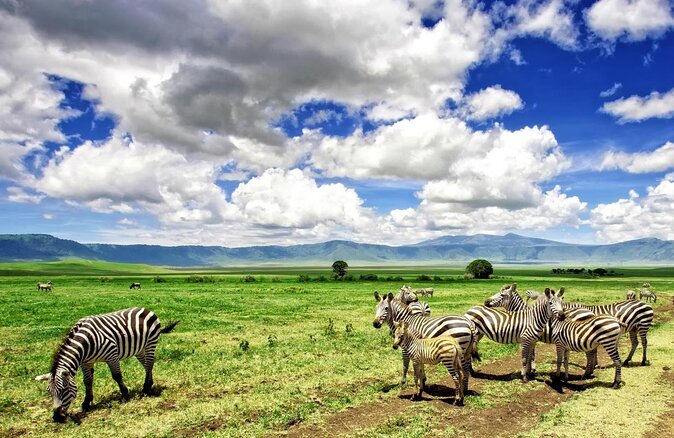
- Two famous parks in three days: You visit the Serengeti and Ngorongoro Crater from an Arusha starting point.
- Seronera is the wildlife focus: The central Serengeti area is known for its river and wide range of animal species.
- Camping keeps the price down: Two nights at campsites are included, along with two breakfasts, three lunches, and two dinners.
- A guide matters greatly: One guide named Mandela received especially strong praise for finding animals and explaining their behavior.
- The schedule is road-heavy: Each day is listed at roughly six hours, but game drives and transfers make this a full, active trip.
- Check group size before paying: The official limit is six participants, but one departure reportedly had seven.
Why this short safari works
This tour is aimed at people who want a first look at northern Tanzania without committing to a week-long safari. It gives you the two destinations most often placed at the top of a Tanzania wish list: the Serengeti, with its open grassland and famous wildlife, and Ngorongoro, a compact natural enclosure where many animals can be seen in one day.
That combination is the tour’s strongest feature. The Serengeti gives you space and changing scenery. The crater gives you density. You can spend one section of the trip scanning a huge plain for distant animals, then another watching wildlife gathered in a much smaller area.
The tradeoff is time. Arusha is not next door to the central Serengeti, so reaching Seronera takes much of the first day. You do not get a leisurely arrival, a free afternoon, or a second chance to linger at camp. This is a practical sampler, not a slow safari.
The advertised cost is $820 per person. For that price, you receive pickup, transport, park-related fees and taxes, meals, two nights of camping, and the services of a guide. Since safari costs can rise quickly once park access, food, and transport are added separately, this package can offer solid value if the vehicle, campsite arrangements, and group size match what you expect.
More Serengeti and Ngorongoro itineraries:
- Balloon Safari & Bush Breakfast in Serengeti – Miracle Experience
★ 5.0 · 1,646 reviews - 3 Days Serengeti & Ngorongoro Group Camping Safari
★ 5.0 · 574 reviews - 5-Day Highlights mid-Range Crater, Serengeti, Tarangire
★ 5.0 · 296 reviews
From Arusha to the Serengeti on day one
The meeting point is Shoppers Supermarket in Arusha, with pickup scheduled between 6:00 and 7:00 in the morning. That early start is necessary. You have a long road ahead, first through the high farmland around Karatu and then toward the Ngorongoro Conservation Area.
The change in scenery is one of the pleasures of the route. You begin near Arusha and move through higher country before descending toward the open Serengeti. The trip gives you a sense of how quickly Tanzania’s terrain changes, from cultivated areas to broad, wild country.
You are scheduled to reach the Serengeti in time for lunch, followed by an afternoon game drive. The central Seronera area is an important wildlife zone because the Seronera River provides water. Water draws animals, and that makes this part of the park a useful place to begin looking for the Serengeti’s well-known species.
I would treat the first game drive as both a wildlife outing and an introduction to safari travel. Your guide has to read the terrain, watch for movement, and position the vehicle without knowing in advance what will appear. One account praised guide Mandela for explaining animal behavior and locating animals effectively. That is exactly the kind of skill that matters more than a polished speech.
Do not expect a quick roadside attraction. The Serengeti is vast, and animals can be spread far apart. You may see a great deal in one afternoon, or you may spend stretches simply crossing open country and watching the horizon. That uncertainty is part of the park, but it can feel tiring after a long drive.
Dinner and overnight camping follow the afternoon drive. The supplied details do not specify the exact campsite, tent style, or sleeping arrangements, so ask for those details before departure. A sleeping bag can be rented, but one sleeping bag was reported to have a faulty zipper and felt cold. If you are sensitive to cold, bringing your own sleeping bag is sensible.
What Seronera adds to the trip
Seronera is not included just because it is a convenient name on the route. The area is valued for its water source and the animals that gather around it. That gives you a reasonable chance of seeing several types of wildlife rather than focusing on one species.
The setting also changes how you watch. In a large open park, you may first notice small shapes in the distance, then use the guide’s experience to identify them. A good guide will help you understand why an animal is in a particular place, not simply point and name it.
You should keep your camera ready, but do not let photography turn the drive into a checklist. The supplied description points to varied weather, scenery, animals, and people. That is a useful reminder that a Serengeti safari is more than collecting photographs of lions.
The first night may feel basic. That is not necessarily a fault, since camping is part of how this trip keeps its price within reach. Still, you should be comfortable with a short, active schedule and outdoor sleeping conditions. If you want lodge comfort, private space, or time to rest between drives, this is probably not the right format.
Day two, a morning in the park and the road to Ngorongoro
The second day begins with breakfast and a morning game drive. The schedule then calls for lunch, followed by a drive toward Ngorongoro with a game drive along the way. The wording leaves some room for interpretation about where the morning drive takes place, so confirm the exact plan with the operator before you go.
This day is useful because it does not treat the Serengeti as a single afternoon stop. You get another chance to look for animals, see the park in different light, and continue across the region rather than rushing straight out after one drive.
Lunch is included, and the plan says you will carry lunch with you. That is practical. It avoids returning to camp simply to eat, and it lets the guide use the day’s time for wildlife viewing and travel.
The move to Ngorongoro changes the feel of the safari. The Serengeti is defined by openness and distance. Ngorongoro is more enclosed, with the crater walls creating a clear boundary around the floor. You will not get the same sense of endless space, but you may find the animal viewing more concentrated.
Dinner and another campsite night follow. As with the first night, ask whether tents, mattresses, bedding, and sleeping bags are supplied or rented. The package includes camping, but the exact comfort level is not fully explained in the supplied details.
More three day trips in Arusha:
- 3-Day Classic Serengeti Safari
★ 5.0 · 263 reviews - 3 Day Serengeti National Park & Ngorongoro Crater Camping Safari
★ 5.0 · 142 reviews - 3 Days Tarangire, Ngorongoro & Lake Manyara Group Camping Safari
★ 5.0 · 102 reviews - 3 Days Private Safari – manyara, Ngorongoro & Tarangire
★ 5.0 · 94 reviews
Ngorongoro Crater on day three
After breakfast, you descend into Ngorongoro Crater with a packed lunch for a full-day game drive. This is the most concentrated wildlife day in the program.
The crater has a year-round water supply and grazing areas, which help support a large animal population. The expected species list includes wildebeest, zebra, buffalo, eland, warthog, hippo, and large African elephants. You may also look for lions, hyenas, jackals, cheetahs, and the much harder-to-find leopard.
Black rhino are among the crater’s most important possible sightings. The area is home to some of Tanzania’s remaining black rhino, but no safari can promise one. That is worth keeping in mind when you compare this tour with advertisements that make rare animals sound certain.
I like the picnic lunch idea here because it keeps you on the crater floor during the middle of the day. You can continue the drive instead of losing time to a return journey. At the same time, a full day in a vehicle can be tiring, especially after two previous days of long road travel.
The crater is likely to feel more immediately rewarding than the Serengeti if your main goal is to see many species in a limited window. It is not a replacement for the Serengeti, though. The two places offer different experiences, and the value of this tour comes from seeing both.
Late in the afternoon, you drive back to Arusha. The activity ends at the original meeting point. Because the return follows a full day in the crater, I would avoid scheduling a flight or an important connection immediately afterward.
Meals, camping, and the daily rhythm
The price includes two breakfasts, three lunches, and two dinners. That covers the food listed for each day, including packed lunches for the game drives. You will not need to budget separately for those meals, although personal snacks and drinks are not described as included.
The daily rhythm is early breakfast, driving, wildlife viewing, lunch, more driving or a game drive, then dinner and camp. That routine suits you if you like active days and do not need much downtime.
Camping can be a strong part of the experience because it keeps you close to the setting and helps control the overall cost. It also asks more of you than a lodge safari. Bring clothing for changing temperatures and confirm sleeping-bag arrangements in advance, especially if you tend to feel cold at night.
The food receives favorable attention, with the cooks described as preparing good meals. That is welcome on a schedule with long drives. Still, the package does not specify menus, dietary options, or special meal arrangements, so share any dietary needs before booking.
The guide and the group size
A safari guide can make or break a short itinerary. With only one afternoon in Seronera and one full day in the crater, you need someone who can explain what you are seeing and make sensible use of the available time.
Guide Mandela was singled out by name on one shared departure. The description of his work is specific: he explained animal behavior and was able to locate animals. Those are the skills I would value most here. Animal names are easy to memorize. Knowing where to look and what an animal’s movement means is far more useful.
The stated maximum is six participants. A separate account describes a group of seven, so I would ask for written confirmation of the vehicle’s capacity and the exact number of people on your departure.
A group of six or fewer usually gives you a better chance at window space and easier communication with the guide. An extra person may not ruin the safari, but it can matter on long drives and during busy wildlife sightings. The supplied information also suggests that some departures may be shared with another safari company, so confirm which operator, guide, and vehicle will handle your trip.
Price, value, and the points to verify
At $820 per person, this is not a budget day trip, but a three-day northern Tanzania safari cannot be judged against a simple excursion. You are paying for transport from Arusha, park access and taxes as listed, meals, two nights of camping, and game drives in two major wildlife areas.
The price makes the most sense if you want a compact introduction and do not want to arrange each part yourself. It is especially useful if you are already in Arusha and can start from the listed meeting point.
Before paying, I would confirm these details:
- The exact vehicle and whether it has enough room for the confirmed group
- The name of the guide assigned to your departure
- The campsite names and sleeping arrangements
- Whether sleeping bags are included, rented, or something you must provide
- The precise park fees and taxes covered by the package
- The pickup plan from your Arusha accommodation, since the listed meeting point is Shoppers Supermarket
One serious complaint described a broken vehicle after dark, uncertainty about park fees, and poor rescue support. The operator issued an apology and reaffirmed its commitment to safari service. I would not treat one account as proof of a routine problem, but I would take it as a reason to ask how vehicle breakdowns, replacement transport, and emergency support are handled.
The other available accounts describe good organization, functioning tents and equipment, friendly staff, strong cooking, and plenty of animals. Taken together, the sensible view is that the experience can be very good when the logistics work properly, but you should not skip basic checks simply because the itinerary looks attractive.
Who should book this safari?
I would consider this trip if you have only three days, want both the Serengeti and Ngorongoro, and accept camping and long road hours. It also suits a first safari visitor who wants meals, transport, park arrangements, and guiding combined in one booking.
It is a good fit for people who care more about reaching famous wildlife areas than about hotel comfort. You will appreciate having lunch prepared for the drives and not needing to arrange the parks independently.
I would hesitate if you need a relaxed pace, private accommodation, guaranteed vehicle comfort, or a firm promise of a particular rare animal. The itinerary is full, and the road time is a major part of the experience.
The free-cancellation rule gives you some protection if you cancel at least 24 hours before the start time. Changes or cancellations inside that window are not accepted for a refund, and the local cutoff time applies.
Should you book the Serengeti and Ngorongoro trip?
Book it if your priority is maximum wildlife access in a short window. The pairing of Seronera and Ngorongoro is strong, the meals and park costs simplify the budget, and the guide can add real value by finding animals and explaining their behavior.
Before you commit, get clear answers about the vehicle, campsite, sleeping bag, park fees, and group size. If those details are confirmed and you are comfortable with two nights of camping, $820 can be a fair price for a compact northern Tanzania safari. If you want more rest or more time in each park, spend extra days instead of trying to stretch two major destinations into three.
FAQ
Where does the safari start?
The meeting point is Shoppers Supermarket in Arusha, Tanzania. Pickup is offered, and the listed start window is 6:00 AM to 7:00 AM.
Where does the safari end?
The activity ends back at the meeting point in Arusha.
How long is the tour?
The tour lasts three days and two nights. Each listed day is approximately six hours, although the full schedule includes long drives, meals, and game drives.
Which parks does the tour visit?
The trip visits Serengeti National Park and the Ngorongoro Crater.
How many people can join?
The stated maximum is six participants. One shared departure had seven people, so confirm the group size before booking.
Are meals included?
Yes. The package includes two breakfasts, three lunches, and two dinners.
Are park fees included?
All fees and taxes are listed as included. You should still confirm the exact fee coverage with the operator before departure.
Can I cancel for a full refund?
Yes, if you cancel at least 24 hours before the experience start time. Cancellations or changes made less than 24 hours before the start are not accepted for a refund.
Newly listed around Arusha
- 5-Day Private Safari Tour in Tanzania’s Wildlife★ 5.0 · 3 reviews
- 3 Days private safari Tarangire ,Ngorongroro crater &Manyara★ 5.0 · 3 reviews
- 3 Day Sharing Safari – Manyara, Ngorongoro Crater and Tarangire National Parks★ 5.0 · 3 reviews
- Tarangire National Park Day Trip★ 5.0 · 3 reviews
- 2 Days Tarangire and Ngorongoro Crater Tour★ 5.0 · 3 reviews
- 6 -Day Tarangire, Manyara, Serengeti & Ngorongoro★ 5.0 · 3 reviews
- 5 Days Group Camping Safari★ 4.7 · 3 reviews
- 4 Days Tanzania Safari★ 4.5 · 3 reviews
Serengeti & Ngorongoro Safaris, compared.


Balloon Safari & Bush Breakfast in Serengeti – Miracle Experience
Read our review →




Private 6-Day Tarangire Manyara Crater and Serengeti with Mid-Range Lodges
Read our review →
5 Days Camping Tarangire, Serengeti & Ngorongoro crater & Visiting Maasai
Read our review →Browse the lists this tour appears in